


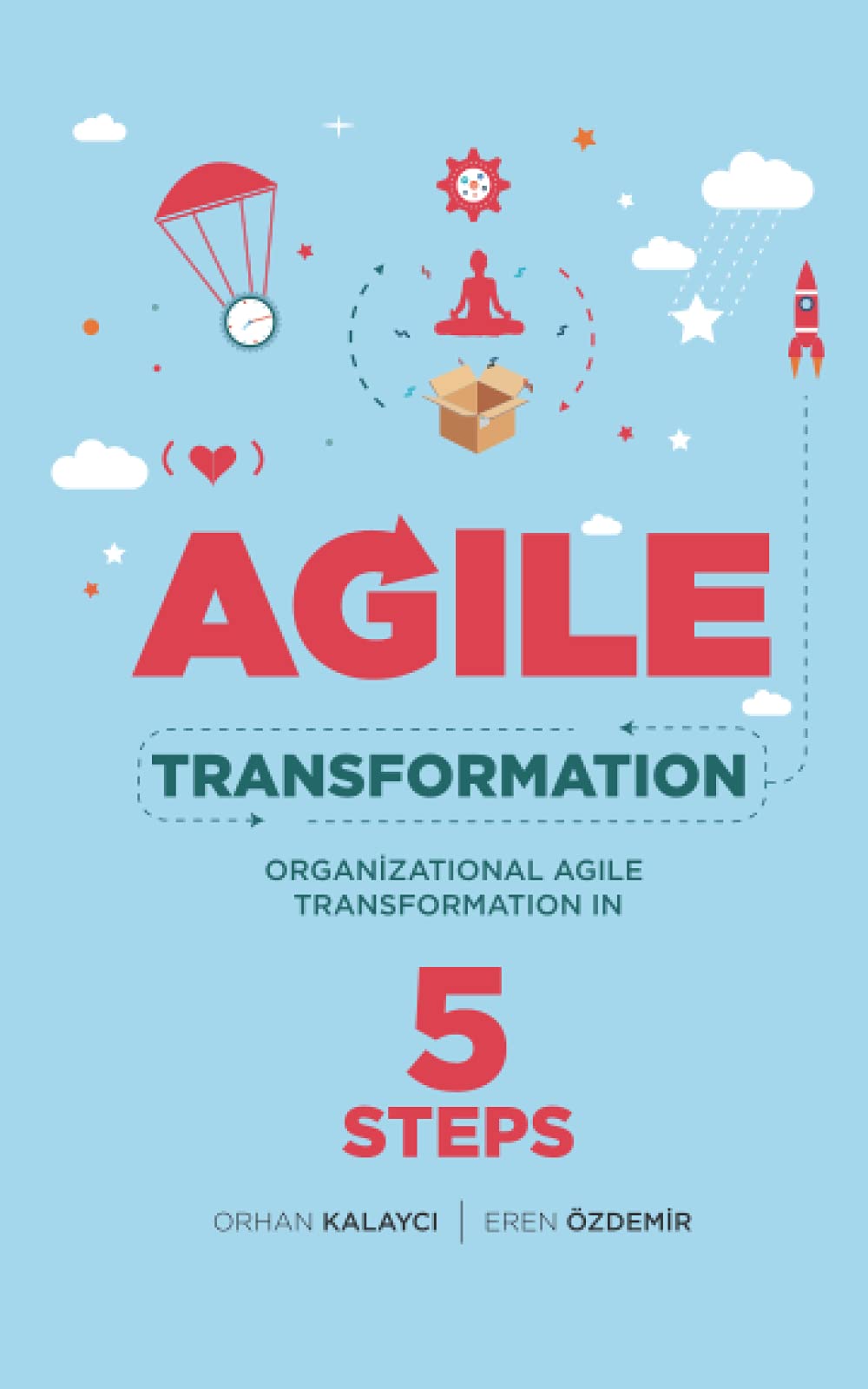
I recently had the pleasure of reading Agile Transformation: Organizational Agile Transformation in 5 Steps by Eren Ozdemir and Orhan Kalayci. As the title suggests, the book describes strategies for agile transformation. The approach reflects the Disciplined Agile (DA) mindset and other aspects of the DA toolkit, which is what got my attention.
To describe the transformation process the book applies the analogy of treating a patient. As a result, they describe the five steps of agile transformation as:
- Occurrence of the disease. In this case, the organizational disease is not serving your customers well as the result of not working in a rapid, faultless, efficient, and integrated manner.
- Diagnosing the patient. The aim is to assess what is going wrong and why it is going wrong. This requires expertise and experience. It also requires you to look at the whole picture, not just portions of it. To help illustrate this point, they use the DA Value Stream to illustrate the interconnectedness of your overall way of working (WoW) and work through the implications of that.
- Making a treatment plan. Every person, team, and organization is unique. You need to identify an improvement strategy that reflects the context that you face. Furthermore, it's about improving your WoW, it isn't about adopting a prescriptive agile framework (regardless of what the purveyors of such frameworks may tell you).
- Administration of the treatment. This is the execution of your improvement strategy, which will evolve as you learn and as your situation changes. Flexibility is key and it requires you to put your people at the center of the transformation.
- Healing of the patient and sustaining a healthy life. The true goal of any transformation is to become a learning organization, one that has the ability to adapt and improve over time. In DA we promote the strategy of Guided Continuous Improvement (GCI) to do exactly that, and it is a skill that you want to teach your people during step 4.
Here is what I think you will find valuable about this book:
- It is based on the real-world experience of its authors.
- It is insightful, providing great advice that you will be able to apply in your own environment.
- It recognizes that agile transformations tend to be fragile, requiring flexibility and context sensitivity.
- It doesn't present a "one size fits all roadmap" and is clear from the start that there are no simple solutions.
- It is a short, easy read at less than 100 pages.
- It aligns well with DA's Transformation Strategy - Steps 1-3 map to the Align stage, Step 4 maps to the Improve stage, and Step 5 maps to the Thrive stage.
In short, if you are in the process of an agile transformation, or thinking about embarking on one, this book contains significant wisdom that you will benefit from. It is worth your while to read Agile Transformation: Organizational Agile Transformation in 5 Steps.




