A Good Reason Not To Be A Project Manager
Categories:
Career Development
Categories: Career Development


|
The first question I ask of students when I do career coaching is whether or not this is even the right choice for you. Here is a primary consideration if you are considering a career switch into project management. Individual Contributor?In what role do you get the majority of your satisfaction? Contributing directly in an individual role or by leading others who are contributing directly?Make no mistake, the project management role is about facilitating the real work that is producing a new product or service. When I point to the result of something my project teams have produced, I say "this is what my team did", not "this is what I did." I guided my teams to create the product, I didn't create it myself.
The Goal: Love What You DoHave you ever had a manager (project or otherwise) who just didn't seem like they loved what they do? Of course, we all have! If you do not have a passion for working with people and deriving your satisfaction through them, you probably should not be a manager of any kind. You'll end up being on the extreme: a micromanager or an apathetic manager.
It becomes a problem when they want to write big chunks of applications themselves because "no one else can do it like I can." and so forth. Or in some cases, the job becomes a meaningless cycle of paperwork because they just don't get jazzed by developing people, enabling team communication, or removing obstacles to help their teams succeed. Do you have the DNA of a project manager, or an individual contributor? Neither is better or worse, they are just different.
| |||||


Experience and Competence
| Sometimes, we equate things that don't really mean the same thing. Competence requires experience, but experience does not equate to competence. I can infer experience from observing competence....but I can not accurately infer competence from a list of positions you've held. Experienced ≠ CompetentWe fall prey to common cognitive biases which lead us to believe that if someone is experienced, they are therefore competent. It can trip us up when hiring for our teams. Another aspect of this, and the more pernicious one, is that new professionals may lead themselves to believe that once they have some experience under their belt they will have 'made it'. Complacency can set in after you've landed a job for instance, because you've tricked yourself into believing that simply holding that position makes you more valuable. Certifications and Degrees ≠ CompetenceThe same goes for certifications and degrees. Many people believe that holding a particular credential implies a level of competence. Unless the credential is formulated specifically to assess competence, no such correlation is warranted however. Organizations fall prey by hiring people and screening them on the basis of particular certifications or degrees. Individuals fall prey by thinking they will have 'made it' once they get a slip of paper certifying them as 'master of the universe'. Strive for Competence
If you make experience, certification or degrees your primary goals, you run the risk of gaining those primary goals without acheiving a true level of competence for yourself. These window dressings and indications of possible competence should only come about as a result of your journey towards something substantive; real competence. It doesn't matter if you had the right answer or not; what matters is that you understand why it is wrong or right. Seek to understand why. Practical Ways to Target CompetenceHere are some ideas you can use immediately to strive for competence. Add your own ideas in the comments!
| |||||
 Do not go after experience or certification as your primary goal. They will come as a result of your journey towards competence.
The Role of Project Manager: Is it For You?
Categories:
Career Development
Categories: Career Development
| I receive many passionate questions from the studio audience about which degree they should go after, how to prepare for a certification, and how to land a job as a project manager. But many of them missed a step. Is This For You?Before diving in to the world of project management, it's important to take a step back and evaluate if this is even something you want to do. A good starting point are my previous articles, the 10 Attributes I Look for in New Project Managers, and Run Away! (And Other Helpful Advice For A Career in Project Management). Besides those attributes and passions I discussed in those articles, I tend to see one trait in common among people who end up being good at managing projects. You know how they say if you love your work, it never feels like work? That's not entirely true, but it is mostly true. Loving to Bridge the GapThis is the one thing that will carry you through tough times while managing projects. But only if you really love it.
I wasn't even particularly good at it in the beginning, and I continue to get better. The second part of the process that I love it figuring out the right questions to ask, in the moment, to get people on the same page. It's not a matter of demanding answers or chiding people; it's about asking the leading questions that will force clarity into the conversation. For me, there's nothing better than the epiphany people get when they realize what the other person was really talking about, when all along they thought it was something different altogether. Sometimes it's a look of astonishment, sometimes it's laughter, sometimes it's a groan. Either way, suddenly the conversation 'clicks' into place and real progress starts being made. And this is why project management is perfect for me. In my role, I can find at least one situation like this every day. Between my team members...stakeholders...managers and directors...customers. Every communication channel contains the possibility of miscommunication, and therefore an opportunity for me to help resolve the disturbance. This is just one of the things I love about project management. Every day, I can do what I love. Ask YourselfBefore you head down any career path, ask yourself honestly what it is that you love to do. I don't mean as a job, but what are the little things you enjoy and would like to do more of? What are the things you abhor and want to do less of? Only after this analysis should you decide whether or not project management is for you. I feel strongly about this and so the first 2 (out of 5) modules of my PM Career Coaching course are dedicated to finding the answers to these questions for yourself. I have a structured approach with worksheets, but you can just get out a sheet of paper and start writing down the things you enjoy and the things you don't enjoy. These are activities and behaviors, not jobs. You might be disuaded from going after a career in project management. If so, great! The primary goal is to find the work you love. If that is not project management, so be it. Go find out what it is you love.
| |||||
 What I mean is a love for helping people understand each other. I found very early in my career that I really enjoyed finding the little clues in a group conversation where I could tell people were not on the same page. They were talking past each other, or at each other, many times without even realizing it.
Continuous Integration and Testing is a Must
Categories:
Integration and Test
Categories: Integration and Test
|
Learning a lesson the hard way for the second time is a bitter pill to swallow. It will suffice to say that my believe in continuous I&T has been strongly reinforced. Partially due to my late arrival on one of my projects, and partially due to circumstances beyond the control of myself or my team, we were only able to do real integrated testing in the last few months. We're still reeling from the consequences of not having started doing so much earlier. Benefits of end-to-end testing, early and often:
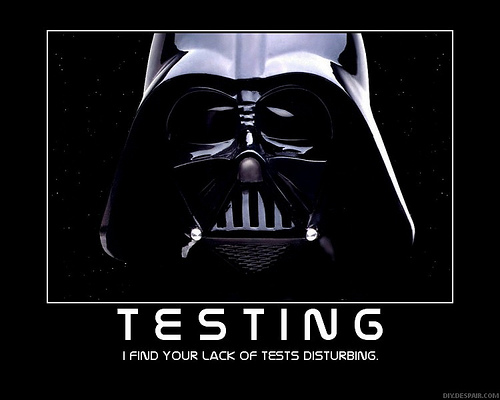
So, even if you are not doing an agile approach, it's still important to do a build of your system every few weeks or once a month and see what breaks. After all, the purpose of testing is to try to break what you've built. Your team may be uncomfortable with this, especially if they are used to being able to polish their own individual pieces before displaying them to the world. In this case, it pays dividends to be uncomfortable. Discipline yourself and your teams to be comfortable with little, continuous simulated failures, so that you don't have to deal with a large, catastrophic failure on your project.
| |||||


10 Attributes I Look For in New Project Managers
Categories:
Career Development
Categories: Career Development
| I was recently interviewed and asked the question, "What should hiring managers be looking for in a new project manager?"
These are the top 10 qualities I look for:
What do you think of these attributes? Do you have more to add?
| |||||