

The Problem with Project Management


|
Project management is often thought of as overhead.
Why is that?
Because in many cases, it's true.
Waste Have you ever tried doing a value stream map of the processes you are engaged with personally as a project manager? Have you ever tried doing a value stream map of the processes you are engaged with personally as a project manager?
No?
You should. It's enlightening.
A value stream map is simply the series of steps taken from the start to finish of the tangible or intangible products.
As a project manager, some of these products really are the end products of your project.
Some are support deliverables like schedules, reports, presentations, etc.
If you are like most project managers, you have a minimum of 5 'things' like this you directly take part in.
Value stream mapping is simply a way of making those processes explicit. With the maps in front of you, it becomes apparent pretty quickly where the waste is.
Sometimes the waste is time. When something sits on your desk waiting for action, that's waste.
Sometimes the waste is rework. Defects in a product of any kind that generate more work, or delivering the wrong thing.
There are many kinds of waste and sources of that waste. Here are a few examples you may find in relation to the role of project management on a project.
Bottlenecks
The best project managers can take vacations.
If your process for delivering projects requires your intervention and only you can do something, it's likely you haven't empowered your team enough.
It's also likely that even when you are present, someone is waiting on you.
A good example of this may be the bridge between the end users and your staff. Are you the only bridge there? Or do your end users and other stakeholders communicate effectively directly with your team?
Meetings
For the next week, look around the room at every meeting you attend. How many people are there and how much labor cost is going into that meeting? How much value is being generated by holding the meeting?
Is more value being generated than the cost involved? What's the ROI of the meeting?
As a general rule, the more people involved in a meeting, the lower ROI you can expect to find.
How many meetings could be cut out entirely? Is the same message being communicated multiple times - are you hearing it in multiple meetings?
How many meetings could be shorter while accomplishing same value?
In my anecdotal experience, you quickly run into diminishing returns after 30 minutes - and yet in our corporate culture it is common for the default meeting length to be 1 hour.
Work expands to fill the time alloted, and it's the same with meetings. Try making your default meeting length 30 minutes instead of an hour. Better yet, are there regular meetings that could be 15 minutes?
Process for Process' Sake
It's easy to add steps to a process over time.
It's very difficult to take steps away from a process.
People get used to the process, they sometimes get protective over their portion of a process.
The same goes for project managers.
Documentation gets created or versioned when no one will ever read it - because that's the process.
Project staff spend a half hour every day writing down details of exactly what they worked on that day when there is no effort to use any of that historical data for future project planning - because that's the process.
Change requests are generated for work that is really already part of the project plan - because that's the process.
Signature pages are routed around the building with 5-10 signatories even though this is just a minor update with little to no real content change and you'll be doing it again next month - because that's the process.
Well?
These are just a few examples.
The weird thing about waste is that it's all around us, but very hard to see unless you are looking for it.
Go try this yourself - for the work you do daily and the processes around you that you interact with.
The Problem With Project Management Series:
What will you discover?Project management is often thought of as overhead.
Why is that?
Because in many cases, it's true.
Waste
Have you ever tried doing a value stream map of the processes you are engaged with personally as a project manager?
No?
You should. It's enlightening.
A value stream map is simply the series of steps taken from the start to finish of the tangible or intangible products.
As a project manager, some of these products really are the end products of your project.
Some are support deliverables like schedules, reports, presentations, etc.
If you are like most project managers, you have a minimum of 5 'things' like this you directly take part in.
Value stream mapping is simply a way of making those processes explicit. With the maps in front of you, it becomes apparent pretty quickly where the waste is.
Sometimes the waste is time. When something sits on your desk waiting for action, that's waste.
Sometimes the waste is rework. Defects in a product of any kind that generate more work, or delivering the wrong thing.
There are many kinds of waste and sources of that waste. Here are a few examples you may find in relation to the role of project management on a project.
Bottlenecks
The best project managers can take vacations.
If your process for delivering projects requires your intervention and only you can do something, it's likely you haven't empowered your team enough.
It's also likely that even when you are present, someone is waiting on you.
A good example of this may be the bridge between the end users and your staff. Are you the only bridge there? Or do your end users and other stakeholders communicate effectively directly with your team?
Meetings
For the next week, look around the room at every meeting you attend. How many people are there and how much labor cost is going into that meeting? How much value is being generated by holding the meeting?
Is more value being generated than the cost involved? What's the ROI of the meeting?
As a general rule, the more people involved in a meeting, the lower ROI you can expect to find.
How many meetings could be cut out entirely? Is the same message being communicated multiple times - are you hearing it in multiple meetings?
How many meetings could be shorter while accomplishing same value?
In my anecdotal experience, you quickly run into diminishing returns after 30 minutes - and yet in our corporate culture it is common for the default meeting length to be 1 hour.
Work expands to fill the time alloted, and it's the same with meetings. Try making your default meeting length 30 minutes instead of an hour. Better yet, are there regular meetings that could be 15 minutes?
Process for Process' Sake
It's easy to add steps to a process over time.
It's very difficult to take steps away from a process.
People get used to the process, they sometimes get protective over their portion of a process.
The same goes for project managers.
Documentation gets created or versioned when no one will ever read it - because that's the process.
Project staff spend a half hour every day writing down details of exactly what they worked on that day when there is no effort to use any of that historical data for future project planning - because that's the process.
Change requests are generated for work that is really already part of the project plan - because that's the process.
Signature pages are routed around the building with 5-10 signatories even though this is just a minor update with little to no real content change and you'll be doing it again next month - because that's the process.
Well?
These are just a few examples.
The weird thing about waste is that it's all around us, but very hard to see unless you are looking for it.
Go try this yourself - for the work you do daily and the processes around you that you interact with.
What will you discover?
|
The Problem with Project Management
Value
Does your team know what value you bring to the process of creating products?
 Do your stakeholders know? Do your stakeholders know?
Do you know?
One sad truth is the real value being added by project managers in some cases is very little.
Sometimes project managers get in the way of making progress in product development.
But even if a project manager is adding value, exactly how? And if people don't know about it, are you just fooling yourself?
If your team thinks you are just there to create slide decks, go to meetings, and be the book boss on the schedule - you're probably not as valuable as you think you are.
If your stakeholders and sponsor think you are just there so they have a single point of contact to interact with instead of having to talk to the team members - you're probably not as valuable as you think you are.
How To Really Add Value
It's going to be different on the various project sizes and types out there.
But in general you have to ask yourself one question.
"What would this project look like if I were not here?"
I have seen teams with a strong lead developer or just a strong internal leader within the team excel after a project manager leaves. They were holding the team back.
In my experience, these types of value-negative project managers come in two flavors.
The Bean Counter
The bean counter spends all day in spreadsheets and schedules.
The technical aspects of the product being developed are better left entirely to the team from his perspective.
As a result, the bean counter must rely heavily on technical staff even for briefings to stakeholders or sponsors.
The bean counter spends many hours of the teams' time and their own getting very detailed and micro-managing on things like charge codes, ity-bity estimates, etc.
Very little value is being added - the technical staff would likely be making more progress without the bean counter.
The Guru Who Won't Let Go
The guru has come up through the ranks and is seen as one of the top technical resources around.
She probably got bored at being so awesome and wanted to branch out into project management.
But now she won't let go.
She may be very helpful and go out of her way to do everything she can. She carries the weight of the project on her shoulders. Everyone looks to her.
She's become a bottleneck for the project. All technical decisions go through her, even if she's not asking for it. The rest of the team just sees her as the person who should be making all decisions.
Chances are, if she were to leave the rest of the team is fully capable of stepping up and making those decisions. Their work would get done more quickly as they stop waiting on decisions for this over-worked guru.
She'd love to empower her team but doesn't know how. It just feels like she'd be letting them down if she told them to make their own decisions about the details.
Any of this sound familiar? Is project management a value-added activity in your organization?
How so?
The Problem With Project Management Series:
Any of this sound familiar? Is project management a value-added activity in your organization? How so?The Problem with Project Management: Value
Does your team know what value you bring to the process of creating products?
Do your stakeholders know?
Do you know?
One sad truth is the real value being added by project managers in some cases is very little.
Sometimes project managers get in the way of making progress in product development.
But even if a project manager is adding value, exactly how? And if people don't know about it, are you just fooling yourself?
If your team thinks you are just there to create slide decks, go to meetings, and be the book boss on the schedule - you're probably not as valuable as you think you are.
If your stakeholders and sponsor think you are just there so they have a single point of contact to interact with instead of having to talk to the team members - you're probably not as valuable as you think you are.
How To Really Add Value
It's going to be different on the various project sizes and types out there.
But in general you have to ask yourself one question.
"What would this project look like if I were not here?"
I have seen teams with a strong lead developer or just a strong internal leader within the team excel after a project manager leaves. They were holding the team back.
In my experience, these types of value-negative project managers come in two flavors.
The Bean Counter
The bean counter spends all day in spreadsheets and schedules.
The technical aspects of the product being developed are better left entirely to the team from his perspective.
As a result, the bean counter must rely heavily on technical staff even for briefings to stakeholders or sponsors.
The bean counter spends many hours of the teams' time and their own getting very detailed and micro-managing on things like charge codes, ity-bity estimates, etc.
Very little value is being added - the technical staff would likely be making more progress without the bean counter.
The Guru Who Won't Let Go
The guru has come up through the ranks and is seen as one of the top technical resources around.
She probably got bored at being so awesome and wanted to branch out into project management.
But now she won't let go.
She may be very helpful and go out of her way to do everything she can. She carries the weight of the project on her shoulders. Everyone looks to her.
She's become a bottleneck for the project. All technical decisions go through her, even if she's not asking for it. The rest of the team just sees her as the person who should be making all decisions.
Chances are, if she were to leave the rest of the team is fully capable of stepping up and making those decisions. Their work would get done more quickly as they stop waiting on decisions for this over-worked guru.
She'd love to empower her team but doesn't know how. It just feels like she'd be letting them down if she told them to make their own decisions about the details.
Any of this sound familiar? Is project management a value-added activity in your organization? How so?
|
Project Managers Should Understand System Architecture
| Project managers should understand system/software architecture. It's important for you to be an effective leader on a software project! |
Product Life Cycle Thinking in Project Management
Categories:
Lean
Categories: Lean
|
Initial Scope
This is probably the place we do best at identifying and trying to quantify the full life cycle costs of the product. There is at least a small section of the projects out there with a strong initiation phase that consider life beyond the final project milestone.
Change Control
When your project deals with a change request, what are the factors taken into account? Is it just a matter of how many hours or dollars it will take to implement the change? Documentation
When you decide to add another document into the mix or just on the initial number of documents required for your project, do you figure in the total impact for maintaining those documents across the entire product life cycle? Code
If you aren’t doing automated software builds and automated unit testing of code, have you figured in the lifetime costs during development and in operations of that decision? Processes
With all of the many processes that occur on your project, what’s the difference between their optimal state and the current state? Does saving an hour a day collectively across the project team because of a process improvement make a difference?
Training
Are you short-sighted in thinking that training your project staff or spending time learning how to get continually better is something you can’t afford? |
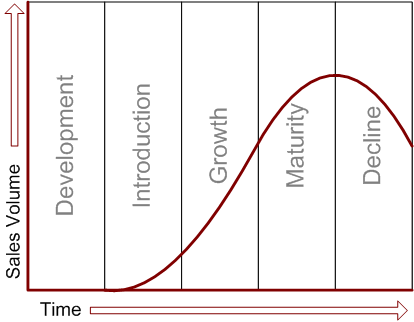 Do you manage your projects with the perspective of the full life cycle of the product(s) you are creating?
You've Got Muda On Your Shoes
Categories:
Lean
Categories: Lean
|
Waste. Shoveling Muda
For a long time now corporate offices have been intent on efficiency, on productivity. We have been shoveling value littered with muda, in some cases mostly muda. Self-Induced Muda
Now what if I tell you the muda involved in the above scenario is mostly self-induced? We’re actually creating the muda ourselves in many different ways. Eliminating Muda
What if there was a way to go about delivering what the customers wanted, without the mud? Or at least without bringing along our own mud to the project?
By the way, an answer like “upper management gets value because hey, they asked for it” is not good enough. Doing something just because somebody wants it isn’t good enough. Why do they want it? Are you sure they want it? |
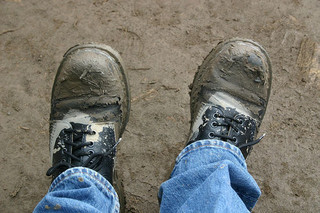 We have been focused on getting better at shoveling. More efficient shoveling is the only way to get more done, right?

