
The Problem with Project Management


Value
Does your team know what value you bring to the process of creating products?
 Do your stakeholders know? Do your stakeholders know?
Do you know?
One sad truth is the real value being added by project managers in some cases is very little.
Sometimes project managers get in the way of making progress in product development.
But even if a project manager is adding value, exactly how? And if people don't know about it, are you just fooling yourself?
If your team thinks you are just there to create slide decks, go to meetings, and be the book boss on the schedule - you're probably not as valuable as you think you are.
If your stakeholders and sponsor think you are just there so they have a single point of contact to interact with instead of having to talk to the team members - you're probably not as valuable as you think you are.
How To Really Add Value
It's going to be different on the various project sizes and types out there.
But in general you have to ask yourself one question.
"What would this project look like if I were not here?"
I have seen teams with a strong lead developer or just a strong internal leader within the team excel after a project manager leaves. They were holding the team back.
In my experience, these types of value-negative project managers come in two flavors.
The Bean Counter
The bean counter spends all day in spreadsheets and schedules.
The technical aspects of the product being developed are better left entirely to the team from his perspective.
As a result, the bean counter must rely heavily on technical staff even for briefings to stakeholders or sponsors.
The bean counter spends many hours of the teams' time and their own getting very detailed and micro-managing on things like charge codes, ity-bity estimates, etc.
Very little value is being added - the technical staff would likely be making more progress without the bean counter.
The Guru Who Won't Let Go
The guru has come up through the ranks and is seen as one of the top technical resources around.
She probably got bored at being so awesome and wanted to branch out into project management.
But now she won't let go.
She may be very helpful and go out of her way to do everything she can. She carries the weight of the project on her shoulders. Everyone looks to her.
She's become a bottleneck for the project. All technical decisions go through her, even if she's not asking for it. The rest of the team just sees her as the person who should be making all decisions.
Chances are, if she were to leave the rest of the team is fully capable of stepping up and making those decisions. Their work would get done more quickly as they stop waiting on decisions for this over-worked guru.
She'd love to empower her team but doesn't know how. It just feels like she'd be letting them down if she told them to make their own decisions about the details.
Any of this sound familiar? Is project management a value-added activity in your organization?
How so?
The Problem With Project Management Series:
Any of this sound familiar? Is project management a value-added activity in your organization? How so?The Problem with Project Management: Value
Does your team know what value you bring to the process of creating products?
Do your stakeholders know?
Do you know?
One sad truth is the real value being added by project managers in some cases is very little.
Sometimes project managers get in the way of making progress in product development.
But even if a project manager is adding value, exactly how? And if people don't know about it, are you just fooling yourself?
If your team thinks you are just there to create slide decks, go to meetings, and be the book boss on the schedule - you're probably not as valuable as you think you are.
If your stakeholders and sponsor think you are just there so they have a single point of contact to interact with instead of having to talk to the team members - you're probably not as valuable as you think you are.
How To Really Add Value
It's going to be different on the various project sizes and types out there.
But in general you have to ask yourself one question.
"What would this project look like if I were not here?"
I have seen teams with a strong lead developer or just a strong internal leader within the team excel after a project manager leaves. They were holding the team back.
In my experience, these types of value-negative project managers come in two flavors.
The Bean Counter
The bean counter spends all day in spreadsheets and schedules.
The technical aspects of the product being developed are better left entirely to the team from his perspective.
As a result, the bean counter must rely heavily on technical staff even for briefings to stakeholders or sponsors.
The bean counter spends many hours of the teams' time and their own getting very detailed and micro-managing on things like charge codes, ity-bity estimates, etc.
Very little value is being added - the technical staff would likely be making more progress without the bean counter.
The Guru Who Won't Let Go
The guru has come up through the ranks and is seen as one of the top technical resources around.
She probably got bored at being so awesome and wanted to branch out into project management.
But now she won't let go.
She may be very helpful and go out of her way to do everything she can. She carries the weight of the project on her shoulders. Everyone looks to her.
She's become a bottleneck for the project. All technical decisions go through her, even if she's not asking for it. The rest of the team just sees her as the person who should be making all decisions.
Chances are, if she were to leave the rest of the team is fully capable of stepping up and making those decisions. Their work would get done more quickly as they stop waiting on decisions for this over-worked guru.
She'd love to empower her team but doesn't know how. It just feels like she'd be letting them down if she told them to make their own decisions about the details.
Any of this sound familiar? Is project management a value-added activity in your organization? How so?
|
Theory X Software Project Managers
Categories:
Project Leadership
Categories: Project Leadership
|
Let's review the Theory X / Theory Y models of McGregor, knowing full well they are just models. There is no purely Theory X or Theory Y manager. Theory XAssumes project team members:
Assumes project team members need:
Results in:
Theory YAssumes project team members:
Assumes project team members need:
Results in:
Knowledge Work, Specifically Software Project ManagementMy verdict is that software project managers exist out there in numbers who are heavily geared towards the Theory X side of things. And that the more they are, the more their teams succeed in spite of them rather than because of them. And even when they do succeed, it's far below the potential of the team. Now, what's your verdict? |
 I'm going to make a very specific case today.
Entropy is Winning
| Shim Marom posted an interesting metaphor using the Second Law of Thermodynamics recently to describe how tendency towards disorder is the norm. I am also reading "The Black Swan" by Nassim Nicholas Taleb at the moment and am finding some interesting thoughts running both ways through my brain.
One one hand I see the evidence of self-organizing teams as a real phenomenon with the challenge of being able to use these dynamics of a social species to move towards a [predefined] goal. On the other I am starting to see Taleb's point about how utterly terrible we are at predicting the future and planning for it due to our living at least sometimes in "Extremistan" although all of our models assume only "Mediocristan" exists. Our expectations mess up project estimates and we are overconfident in our ability to plan. Taking Shim's metaphorical lead, perhaps it can be said our goal as project managers is not to simply fight disorder by expending energy towards control. Perhaps it is to find other forces available to us and use the natural order instead. The curvature of space-time (gravity) and the electromagnetic and strong nuclear force can be used to naturally overthrow entropy, if only for a finite amount of time. The shared goals and common interests of a team, desire to do good work, and a myriad of other factors common in the psychological makeup of most people of our social species can be facilitated and reinforced through the removing of interference. By removing interference and leveraging the properties already inherent in a team of individuals, we enable the best qualities to surface and the most extraordinary results to be achieved. Image by jurvetson via Flickr |

Taking Over a Train Wreck
Categories:
Project Leadership
Categories: Project Leadership
| The team is awesome. They are smart, motivated, and want to do a great job. The last project manager? FAIL You're the new project manager, and you're speaking to variances on a baseline that forgot what reality was last fall. The WBS is structured to look nice, not to model the actual breakdown of work on the project. The schedule was made to be convenient for upper management, not to be a representation of the actual work that has to get done. Arrrrgh! How To CopeThe first thing is to get a handle on your scope. Without that, trying to manipulate a schedule is futile. The WBS (Work Breakdown Structure) to the rescue! Scared at what the reaction of the developers will be, you decide to sit down with them and create a WBS together anyway. Oddly enough, a little while later you have a draft that looks pretty darn good, actually. The team is already getting used to the idea that they can glance at this diagram to get a clear sense of what they need to deliver. Now that your structure for work breakdown is solid, you can start breaking down the deliverables into the tasks it will take to produce them. I do this in a BOE (Basis of Estimate).1 Then, you can start to produce a schedule (at least a working schedule) that really tries to model reality. Depending on the project environment you are in, you may be able to re-baseline the project right away or you may have to wait. You may have to speak to variances for a long time however.
What advice do you have for others in this situation? Have you been in this situation yourself? -Josh 1 WBS Coach, WBS and BOE integration on page 50 of the textbook |
The Genius of the 'AND'
Categories:
Project Leadership
Categories: Project Leadership
| Ty posted an interesting piece on leadership that I commented on, and am about to expound upon here. He referred to successful project work being led, not managed.
Leadership is a sexy attribute that everyone wants to be associated with. However, do not forget about the importance of effective management. Frankly, I don't want to hire project managers who can not manage teams, stakeholders, and projects effectively. To use a sports analogy, it's about blocking and tackling combined with inspiration and empowerment. A good coach needs to be effective at both leadership and management, not one or the other. We are project coaches. |
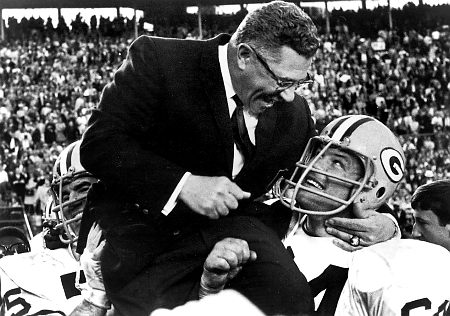 A general, CEO, technical innovator, or scientist can get away with being a great leader and lousy manager if and only if they surround themselves with great managers. The general and CEO in that case rely on their vision and strategic capabilities, and the technical innovator and scientist rely on their ability to create movements through technical breakthroughs.

