
Viewing Posts by Lynda Bourne


The Problem with Waterfall, Agile & ‘Other’
Categories:
Agile
Categories: Agile


| By Lynda Bourne
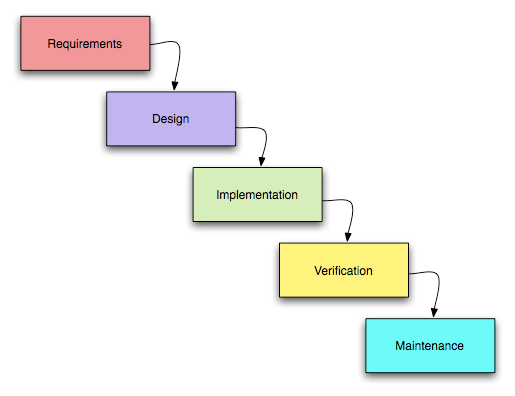
A couple of days ago, I received a survey from PMI asking about portfolio management. There’s nothing unusual about PMI undertaking a survey, but the types of project management approaches mentioned for the projects in the portfolio gave me cause for concern. The three choices offered were Agile, Waterfall and Other. My response was ”Other”—the portfolios I have direct experience with involve heavy engineering. Here is my perspective on the options offered by PMI: Agile: A well-defined flexible process, based on the Agile Manifesto, applicable to software development and a wide range of other “soft projects” such as business change. Waterfall: A five-stage software development methodology from the 1970s focused on designing a product (based on requirements) before starting development. The waterfall methodology is still used in some software development projects, but has never been applied to other types of projects.
Other: The vast majority of projects in the construction, engineering, oil & gas, defense, and aerospace industries based on the approaches described in A Guide to the Project Management Body of Knowledge (PMBOK® Guide)—Sixth Edition. These “other” projects generally have three phases:
The design of the product (ship, building, rocket, etc.) may be undertaken in full or in part during any one of the three phases. A minimum level of design is required to initiate procurement, but for simple buildings and civil engineering projects, it is not unusual for a complete design and specification to be provided by the client. The procurement phase may be a simple pricing exercise, or a complex and phased design process (sometimes even involving the production of working prototypes), with selection being based on the capabilities of the design produced by the successful tenderer. In many projects, a significant amount of detailed design is still required during the delivery phase, including shop drawings produced by subcontractors and suppliers. Similarly, the procurement arrangements vary widely. The client may choose to enter into some form of alliance or partnership with the preferred delivery agent based on shared risk and profits, or the client may choose a hard-dollar contract based on a fixed price to deliver a fixed scope, or some other setup. There are multiple forms of contract arrangement. The only certainties are that the typical project approaches used for the vast majority of “other” projects bear no resemblance to the waterfall approach, and this “other” classification includes more than two-thirds of the world’s projects by value. So, my questions are:
How should different types of project management be described? Your thoughts and ideas are welcome. |

The Evolution of Project Management
Categories:
Reflections on the PM Life
Categories: Reflections on the PM Life
| By Lynda Bourne.
Over the last few months, I have been part of a group working on a series of papers looking at the history of project management and project controls. This required the classification of the various stages in the development of the practice of project management. However, almost every author of project management history has a different view of the major change points. Our take on the major phases of development of project management is driven by changes in the project control tools and processes being used. Better control processes provide new insights, allowing improved or changed management approaches. Based on this framework, the major phases in the development of project management seem to be:
Prior to the 1950s, the primary control tools showed static representations of cost and other deterministic data. The sophistication of both the management data and its representation in reports improved over the centuries, but the controls processes focused on reactive management actions to correct observed deviations from the plan. The people managing projects were priests, builders, engineers or other authority figures. The current phase of development of project controls uses largely deterministic information to predict future outcomes. This phase of development started in the late 1950s with the creation of PERT and CPM schedules, and has progressed through to the point where there is general acceptance that earned value and earned schedule are among the best of the predictive control tools. This phase saw the creation of “modern project management” as the pioneers of computer-assisted project controls worked together to form the various project management institutes (including PMI in October 1969), and the institutes in turn defined and codified the practice of “modern project management.” As a result, the people managing projects were increasingly identified as project managers. Various styles of project management are emerging (this was discussed in my post on The Entropy at the Heart of Project Management), but regardless of the approach, the concept of a project—run by a project manager, to create value for a client—is consistent. Project management is now expected to be proactive, working to minimize the negative effect of future problems identified using predictive tools, as well as dealing with any current negative variances. The next generation of project controls is starting to emerge. These tools are predicted to be integrated, adaptive and intelligent, with a focus on maximizing the efficient use of the project’s resources. They will use machine learning, and be integrated into the systems used to design and develop the project’s outputs rather than operating as standalone processes. One example is the emergence of 5D BIM (five-dimensional building information modeling) in the construction/engineering industries. A three-dimensional design is integrated with the schedule (4D) and cost information (5D) to provide a single system accessed and used by everyone involved in the design, construction and future maintenance of a building or facility. Project control tools with embedded intelligence are also emerging. These developments are too new to have much impact on the nature of project management today, but by the end of the 2020s we are likely to see as much change in the way projects are managed as occurred in the 1960s. Do you think these phases in the development of project management are reasonable, or are there other major inflexion points? |

The Entropy at the Heart of Project Management
Categories:
Best Practices
Categories: Best Practices
|
By Lynda Bourne Over the last few weeks, I’ve been thinking about the concept of modern project management. How did we get here and where are we going? People have been doing things that require planning and organization for millennia. But no one involved in leading these endeavors called themselves a project manager until the concept of being a project manager emerged from general business management in the United States starting in the 1930s and ’40s. Following on from this start, the catalyst for modern project management was the development of PERT and the critical path method of scheduling in 1957. Practitioners of this new craft formed the early project management associations: INTERNET (now IPMA) in Europe in 1964, and PMI in the U.S. in 1969. These new associations defined and created the concept of modern project management. In particular, PMI created the first project management body of knowledge in 1987 to support its original PMP examination. The structure of the PMBOK® Guide was reorganized in 1996 and remained fundamentally unchanged through to the Sixth Edition published in 2017. The project phases, knowledge areas and processes defined in the PMBOK® Guide had a major influence on the emerging understanding of project management worldwide. The 20th century version of modern project management was based on reductionism (WBS, etc.), and focused on control (CPM, PERT, EVM). The prevailing view was the work of a project involved people with hard hats creating something you can kick. Project success was achieved by implementing the processes in the standards effectively. Consequently, project failure could be overcome by the better application of better processes. Internationally, efforts were focused on identifying and defining the required processes, training people in the processes, and qualifying trained people as project managers (the PMP credential being the pre-eminent example). Almost everyone involved in these developments through to the early 2000s believed projects were special and distinguishable, that project management was a transferrable skill, and that good project management could be defined. We thought that with a bit more work, we would be able to fully define projects, project management and the processes needed for project success. Then there was entropy! For 40 years, project management associations had worked to create order in the discipline of project management. But in the last 10 years, a range of external influences have caused a rapid increase in entropy. And because of these influences, it looks as though efforts to standardize project management into a single structure are no longer feasible. The three primary drivers of entropy are: 1. Everything is a project. In the 21st century, almost anything can be a project. Traditional “hard hat” projects have been joined by:
2. Methodology overload. Approaches to project delivery now include:
3. Project scope is expanding. Project management has expanded to include:
It appears there is no longer one right way to manage a project; the processes used to successfully run an agile project are fundamentally different to those needed to run a “hard hat” project. This dilemma led to the fundamental change in the structure of the Seventh Edition of the PMBOK® Guide. But this also means the concept of a project manager and the skills the person require are extremely variable. This divergence is recognized in the way PMI is restructuring its range of credentials and qualifications. But both the revised PMBOK® Guide and the qualification framework seem to be adapting to the symptoms, rather than the fundamental changes occurring in the global understanding pf projects and project management. The challenges for PMI, and all project management associations globally, are:
This approach would produce a knowledge framework with a constant set of core skills and knowledge, supported by workplace skills such as being a scrum master of a construction scheduler. What future do you want for PMI and the project management associations? |

How Are You Finding Information?
Categories:
Communications Management
Categories: Communications Management
|
By: Lynda Bourne We now live in an age where Google search is ubiquitous, and the “find” function in Word and PDF documents is almost instantaneous. The challenge for most people is sorting through the long lists of information returned from a search to locate the most useful items. This was not always the case. As Dennis Duncan—a British writer, translator and lecturer—set out in his book Index, A History of the: A Bookish Adventure[1], the need for indexing first emerged in the 13th century and has been evolving ever since. There are basically two indexing systems. The simplest is a listing of the important words that occur in a reference book, identifying the pages or sections in which the word is used. The more complex system is built around topics and identifies the section of a book in which the topic is discussed, often indexing multiple publications. Both systems were developed around the year 1230, and marks the change from a time when books were a valued artifact to be read and enjoyed, to one where books became an information repository to be used as a resource. The invention of the printing press would not occur for another 200 years (1440), so in 1230 books were an incredibly valuable resource in limited supply. The word “index” was invented in Paris by a Dominican Abbot named Hugh of Saint-Cher. The Dominicans are a preaching or mendicant religious order, founded in 1216. Their calling was to have Friars live among the people in big cities and preach sermons to stop the flock from going astray. To help his Friars write their sermons, Saint-Cher instructed a group at the Dominican Friary of Saint-Jacques to create a word index, or a concordance, of the Bible. Every single word in the Bible was put in alphabetical order with a locator indicating where that word appears. The friars listed about 10,000 individual words and 129,000 locations. As a consequence of this work (that still exists), the preaching Friars writing new sermons were able to find the information they needed reliably and consistently.
In the 13th century, very few people could read, and books were scarce, making the oral delivery of information vital either as a lecture or a sermon. But delivering a lecture (or sermon), required information to be sourced, organized, synthesised and written down in preparation for the delivery. This means the presenter needed to use books—not just read books, but to be able to go back and use the contents of books as an information resource. Engaging with a book transitioned from being a linear process where the reader had all the time in the world to journey from end to end, to one where books became seen as storehouses of morsels of information. The invention of indexes allowed people to use and research their books more efficiently, enabling them to preach or lecture at short notice. 800 years later, these concepts are still evolving. Unfortunately, the traditional concept of indexing is rapidly disappearing. The fundamental requirement for an index is a page number, and e-books don’t have set pages; the page a word appears on changes depending on the font size and screen size selected by the reader. This is a pity; creating a good index is both an art and a craft, requiring interpretation and judgement to look at each passage and decide what words a person would use to look for that specific text. On the other hand, Robert Grosseteste’s concept of the general (or subject) index has moved from the world of academia to mainstream. Google indexes millions of pages of new information every day. Both Google and the various feeds to your PDA index then select what you see based on the topics you are interested in, filtered by the application of a liberal dose of artificial intelligence (AI). The challenge for everyone in the modern era is being able to filter and validate the thousands of returns from a typical Google search and to make sure their feeds are not too limited. The various systems will order the information you see in a way its AI systems calculate will give you the best experience. But best from the system’s perspective is that you like the result and will therefore use it again. This is not the same as offering the most accurate selection of information, particularly if there are contradictory viewpoints. How reliable do you find the search engines and indexes you use to find information? [1] Index, A History of the: A Bookish Adventure, Duncan, D. Allen Lane, UK, 2021. ISBN: 9780241374238 |

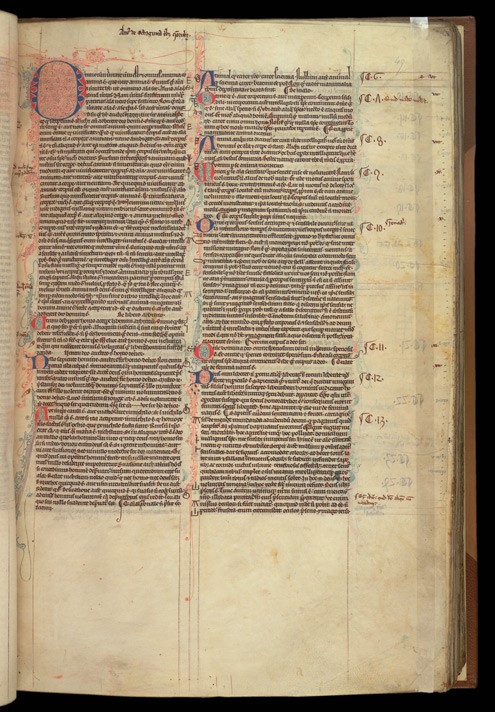 A parallel driver for indexing was the creation of universities, with Oxford being one of the earliest. Robert Grosseteste, a medieval English scholastic philosopher, taught at Oxford until his appointment as Bishop of Lincoln in 1235. Grosseteste read widely, and to help locate materials for his lectures, invented an indexing system based on symbols made up of curved and straight lines, circles, E-shapes, etc., which were added as annotations in each of his books. Different symbols represented different subjects, and in a separate general index he kept a record of where they were located. The result was a kind of parchment Google—once he's read and annotated a book, he knew where information on a subject was for future reference. This type of index is still called a general index.
The Planning Paradox
| By Lynda Bourne
How much detail is too much? Traditional views tend to favour a management approach built on the assumption more detail is better, and to a point this is undoubtedly correct, insufficient detail in a plan of any type is a sure way to fail – ‘just-do-it’ at the overall project level does not help. But looking at the ‘Coastline Paradox’ and using the length of a coastline as a synonym for the duration of a project suggests there is a point where too much detail is counterproductive. The coastline paradox states that as you increase the detail by using smaller units of measure, the measured length of the coastline increases. If you use a small enough unit of measure, the length becomes infinite. For a more detailed explanation see: The Coastline Paradox Explained https://en.wikipedia.org/wiki/Coastline_paradox So, what does this mean for project controls and project management? No one navigating a ship into a UK port would be happy using a map where the smallest measurement was 50 km, significantly more detail is needed, but they do not need absolutely everything about their intended destination. What’s needed is useful information at an appropriate level of detail, the same goes for you, when navigating your car in a strange city[1]:
Finessing project plans to present useful information at the right level of detail is not easy, decisions have to be made! Take a typical risk register, if you tried listing every conceivable risk, the document would emulate the ‘coastline paradox’, and be of almost infinite length, which means the register is never finished and the project does not start. Conversely, miss one or two significant risks and the project team may have a very unpleasant experience, possibly causing the project to fail. Pragmatic guidelines about the risks to be considered are needed and these have to be tailored to the project. Similar guidelines are needed for the schedule, cost plan and all of the other sub-plans needed for a project. How much detail do you feel is appropriate for your projects? [1] Image source: Understanding Design, The challenge of informed consent. Dr. Lynda Bourne, 27th November 2014; maps of North Sydney |




