




Guessing is not a strategy: How to build decision velocity with AI and real-time data
June 10, 2026 | Live Webinar

The Emerging Tensions of Adaptive Governance
From Statistical Patterns to Operational Judgment
ORGANIZATIONAL MEMORY & DECISION CONTINUITY
RESPONSIBLE DECISION ARCHITECTURE™
Decision Architecture Under Pressure
Agile, Career Development, Career Development, Career Development, Career Development, Career Development, Career Development, Career Development, Career Development, Career Development, Career Development, Career Development, Career Development, Career Development, Career Development, Career Development, Career Development, Career Development, Career Development, Career Development, Career Development, Career Development, Career Development, Career Development, Career Development, Career Development, Career Development, Career Development, Career Development, Career Development, Career Development, Career Development, Career Development, Career Development, Career Development, Career Development, Career Development, Career Development, Career Development, Career Development, Career Development, Career Development, Career Development, Career Development, Career Development, Career Development, Career Development, Career Development, Career Development, Career Development, Career Development, Career Development, Career Development, Career Development, Career Development, Career Development, Career Development, Career Development, Career Development, Career Development, Career Development, Career Development, Career Development, Career Development, Career Development, Career Development, Career Development, Career Development, Career Development, Career Development, Career Development, Career Development, Career Development, Career Development, Career Development, Career Development, Career Development, Interpersonal Skills, Interpersonal Skills, Interpersonal Skills, Interpersonal Skills, Interpersonal Skills, Interpersonal Skills, Interpersonal Skills, Interpersonal Skills, Interpersonal Skills, Interpersonal Skills, Interpersonal Skills, Interpersonal Skills, Interpersonal Skills, Interpersonal Skills, Interpersonal Skills, Interpersonal Skills, Interpersonal Skills, Interpersonal Skills, Interpersonal Skills, Interpersonal Skills, Interpersonal Skills, Interpersonal Skills, Interpersonal Skills, Interpersonal Skills, Interpersonal Skills, Interpersonal Skills, Interpersonal Skills, Interpersonal Skills, Interpersonal Skills, Interpersonal Skills, Interpersonal Skills, Interpersonal Skills, Interpersonal Skills, Interpersonal Skills, Interpersonal Skills, Interpersonal Skills, Interpersonal Skills, Interpersonal Skills, Interpersonal Skills, Interpersonal Skills, Interpersonal Skills, Interpersonal Skills, Interpersonal Skills, Interpersonal Skills, Interpersonal Skills, Interpersonal Skills, Interpersonal Skills, Interpersonal Skills, Interpersonal Skills, Interpersonal Skills, Interpersonal Skills, Interpersonal Skills, Interpersonal Skills, Interpersonal Skills, Interpersonal Skills, Interpersonal Skills, Interpersonal Skills, Interpersonal Skills, Interpersonal Skills, Interpersonal Skills, Interpersonal Skills, Interpersonal Skills, Interpersonal Skills, Interpersonal Skills, Interpersonal Skills, Interpersonal Skills, Interpersonal Skills, Interpersonal Skills, Interpersonal Skills, Interpersonal Skills, Interpersonal Skills, Interpersonal Skills, Interpersonal Skills, Interpersonal Skills, Interpersonal Skills, Interpersonal Skills, Leadership, Leadership, Leadership, Leadership, Leadership, Leadership, Leadership, Leadership, Leadership, Leadership, Leadership, Leadership, Leadership, Leadership, Leadership, Leadership, Leadership, Leadership, Leadership, Leadership, Leadership, Leadership, Leadership, Leadership, Leadership, Leadership, Leadership, Leadership, Leadership, Leadership, Leadership, Leadership, Leadership, Leadership, Leadership, Leadership, Leadership, Leadership, Leadership, Leadership, Leadership, Leadership, Leadership, Leadership, Leadership, Leadership, Leadership, Leadership, Leadership, Leadership, Leadership, Leadership, Leadership, Leadership, Leadership, Leadership, Leadership, Leadership, Leadership, Leadership, Leadership, Leadership, Leadership, Leadership, Leadership, Leadership, Leadership, Leadership, Leadership, Leadership, Leadership, Leadership, Leadership, Leadership, Leadership, Leadership, Leadership, Strategy, Strategy, Strategy, Strategy, Strategy, Strategy, Strategy, Strategy, Strategy, Strategy, Strategy, Strategy, Strategy, Strategy, Strategy, Strategy, Strategy, Strategy, Strategy, Strategy, Strategy, Strategy, Strategy, Strategy, Strategy, Strategy, Strategy, Strategy, Strategy, Strategy, Strategy, Strategy, Strategy, Strategy, Strategy, Strategy, Strategy, Strategy, Strategy, Strategy, Strategy, Strategy, Strategy, Strategy, Strategy, Strategy, Strategy, Strategy, Strategy, Strategy, Strategy, Strategy, Strategy, Strategy, Strategy, Strategy, Strategy, Strategy, Strategy, Strategy, Strategy, Strategy, Strategy, Strategy, Strategy, Strategy, Strategy, Strategy, Strategy, Strategy, Strategy, Strategy, Strategy, Strategy, Strategy, Strategy, Sustainability, Talent Management, Talent Management, Talent Management, Talent Management, Talent Management, Talent Management, Talent Management, Talent Management, Talent Management, Talent Management, Talent Management, Talent Management, Talent Management, Talent Management, Talent Management, Talent Management, Talent Management, Talent Management, Talent Management, Talent Management, Talent Management, Talent Management, Talent Management, Talent Management, Talent Management, Talent Management, Talent Management, Talent Management, Talent Management, Talent Management, Talent Management, Talent Management, Talent Management, Talent Management, Talent Management, Talent Management, Talent Management, Talent Management, Talent Management, Talent Management, Talent Management, Talent Management, Talent Management, Talent Management, Talent Management, Talent Management, Talent Management, Talent Management, Talent Management, Talent Management, Talent Management, Talent Management, Talent Management, Talent Management, Talent Management, Talent Management, Talent Management, Talent Management, Talent Management, Talent Management, Talent Management, Talent Management, Talent Management, Talent Management, Talent Management, Talent Management, Talent Management, Talent Management, Talent Management, Talent Management, Talent Management, Talent Management, Talent Management, Talent Management, Talent Management, Talent Management


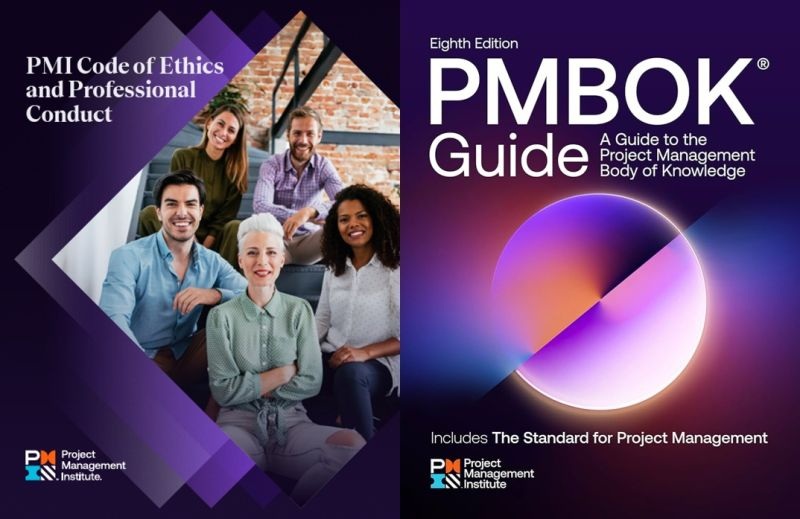 A question emerged several times throughout this series: “What is more important for our profession - the PMBOK® Guide or PMI’s four new ethics documents?” The answer is clear, structural, and unavoidable: The ethical documents are more important than the PMBOK® Guide - 8th Edition. Here’s why. 1. The PMBOK guides how to manage projects. Ethics guides how professionals must behave. The PMBOK is a body of knowledge. The Code of Ethics is a professional obligation. When process and integrity collide, Ethics always prevails. 2. No one loses a certification for violating the PMBOK. But one can lose it for violating the Code of Ethics. This defines the hierarchy. The PMBOK can be interpreted, tailored, or adapted. Ethics is not optional, it is mandatory. 3. The PMBOK shapes technique. Ethics shapes the professional. A technically imperfect but ethical practitioner: - Can grow. A highly skilled but unethical practitioner: - Endangers projects, teams, organizations, and trust. 4. In audits, disputes, or ethical investigations it is the Code that determines correct conduct. The four ethical documents: • PMI Code of Ethics and Professional Conduct (2025) • EDMF – Ethical Decision-Making Framework • Practitioner Ethics Toolkit • Chapter Board Ethics Toolkit Are disciplinary, regulatory, and binding. The PMBOK is not. 5. These four documents form the new ethical architecture of the profession. They transform: • Implicit values → explicit expectations • Instinctive decisions → intentional decisions • Passive culture → active ethical culture • Individual responsibility → shared responsibility The PMBOK structures the work. Ethics protects people, projects, and reputation. Direct conclusion The PMBOK evolves with time. Ethics sustains the profession. Without the PMBOK, projects can still be managed in other ways. Without ethics, there is no trust, no credibility, and no profession. Methodology matters. Conduct is essential. And PMI’s four ethical documents represent the most significant ethical evolution in our profession in more than a decade. To explore all official PMI ethics resources: PMI members’ ethics commitments Note: This reflection is personal and independent, based on my study of PMI’s published materials, and does not represent an official PMI position. |
 With this four-part series, dedicated to the 2025 PMI Code of Ethics, the EDMF, the Practitioner Ethics Toolkit and the Chapter Board Ethics Toolkit, we reach the end of a reflection that, in truth, has no ending. Because ethics is not something we visit. It is a place we must inhabit. What PMI has done with this renewed ethical ecosystem represents a structural shift: - From implicit values to explicit expectations, - From intentions to processes, - From hope to responsibility, - From principles on paper to decisions in practice. Throughout this series, we explored four complementary dimensions: 1. The Code (2025): Sets a clear, current, and unambiguous standard for responsibility, respect, fairness, and honesty. 2. The EDMF: Transforms ethics into a disciplined process of critical thinking and intentional decision-making. 3. The Practitioner Ethics Toolkit: Brings ethics into daily practice, helping teams turn integrity into a consistent habit. 4. The Chapter Board Ethics Toolkit: Strengthens ethical governance in Chapters, where trust, transparency, and accountability define community leadership. What emerges from all this is more than an update. It is a profound and necessary evolution. Ethics is no longer an accessory, it becomes part of the architecture of our profession. And perhaps the most important message of this entire series is this: Ethics is not something we apply only when dilemmas appear. It is what shapes the culture so dilemmas can be addressed with clarity. As project leaders, professionals, volunteers, and members of the PMI community, it is now our task to turn these tools into living practices: • Questioning assumptions • Making dilemmas discussable • Keeping decision-making transparent • Placing impact above comfort • Treating integrity as a competence, not a hope Thank you to everyone who followed this series and contributed with insights, reflections, and meaningful dialogue. May this not be the conclusion, but the beginning of a more conscious, mature, and practiced form of ethical leadership across our profession. For those who want to explore PMI’s ethical resources, here is the official link: Ethics Guidelines Note: This reflection is personal and independent, based on my study of PMI’s published materials, and does not represent an official PMI position. |
 The final component of PMI’s renewed ethical ecosystem is designed for a group that often faces complex, visible dilemmas with real impact on community wellbeing: Chapter Board members. The Chapter Board Ethics Toolkit supports leaders and volunteers who operate in environments where ethical leadership, transparency, and accountability are essential to sustaining trust within the PMI community. While the Code of Ethics defines the principles, the EDMF guides decision-making, and the Practitioner Toolkit translates ethics into daily behaviour, the Chapter Board Ethics Toolkit serves a distinct purpose: - To strengthen the ethical governance of community-driven structures that represent PMI at the local level. This toolkit provides practical guidance to help Boards: • Reinforce transparency and accountability in governance decisions • Handle conflicts of interest in a structured and predictable way • Promote ethical communication between the Board, volunteers, and the wider community • Apply fairness, respect, and responsibility during moments of tension • Create processes that reduce ambiguity and prevent unilateral decisions • Protect the integrity and reputation of the Chapter as an institution Its true value lies in recognising a fundamental reality: Leading a Chapter is not only about managing activities, it is about managing trust. Chapter Boards make decisions that influence volunteers, members, partners, students, and the PMI brand in their region. Having a clear, actionable ethical reference point is essential for ensuring coherence, fairness, and institutional maturity. In a world where professional communities demand transparency and integrity, this toolkit provides Boards with a structure that turns values into solid practices, preventing issues before they emerge and strengthening governance as an act of service. For those who wish to consult PMI’s official ethics guidelines, here is the link: Chapter Board Ethical Assessment ToolkitNote: This reflection is personal and independent, based on my study of PMI’s published materials, and does not represent an official PMI position. |
| As part of its strengthened ethical ecosystem, PMI introduced the Practitioner Ethics Toolkit - a practical resource designed to bring ethics out of theory and into the daily reality of project work.. While the Code defines the principles and the EDMF provides the decision-making process, the Practitioner Ethics Toolkit focuses on application. It translates ethical values into concrete behaviours, helping professionals navigate the subtle, real-world situations that emerge in fast-paced environments. The Toolkit supports practitioners by helping them: • Recognize ethical dilemmas that arise in everyday interactions • Identify behaviours that reinforce responsibility, respect, fairness, and honesty • Act with greater awareness in conversations with clients, colleagues, and stakeholders • Manage conflicts transparently and in alignment with PMI’s values • Transform ethical choices into consistent, repeatable habits Its strength lies in its practicality. This is not abstract guidance - it is actionable direction that can be applied across contexts, roles, industries, and maturity levels. In environments where speed, pressure, and ambiguity can easily create ethical “grey zones,” the Practitioner Ethics Toolkit offers a simple, accessible foundation for maintaining integrity and coherence. When ethics becomes part of daily habits - reflected in conversations, communication, reviews, and decision-making - leadership gains depth, and teams gain trust. In the coming days, I will continue this series with the final component of PMI’s ethical ecosystem: the Chapter Board Ethics Toolkit - a resource dedicated to strengthening ethical governance within PMI Chapters and professional communities. For those who wish to explore PMI’s official ethics guidelines, here is the correct link: Ethics Toolkit for PMI PractitionersNote: This reflection is personal and independent, based on my study of PMI’s published materials, and does not represent an official PMI position. |
 As part of its renewed ethical ecosystem, PMI introduced the Ethical Decision-Making Framework (EDMF), and this tool represents one of the most significant evolutions in our profession. For years, ethics has been expressed through values and principles. The EDMF goes further: it turns ethics into a process. The EDMF provides a structured approach for navigating ethical dilemmas, situations where values collide and where the “right” choice is not immediately clear. It guides professionals through five disciplined steps: • Gather all relevant facts and challenge assumptions • Identify alternative choices • Analyze potential impacts on stakeholders, society, and the environment • Test alignment with the four PMI values (Responsibility, Respect, Fairness, Honesty) • Make a clear, intentional decision and take responsibility for it In a world defined by complexity, competing pressures, and accelerated decision cycles, the EDMF helps leaders slow down, think critically, reduce bias, and act with integrity. Its true power lies in its practicality. The EDMF transforms ethical reflection from an abstract notion into a repeatable, teachable, and improvable discipline, accessible to teams, PMOs, volunteers, and executives. Ethical leadership is not defined by perfect decisions, but by how decisions are made. The EDMF provides a shared language and a consistent method for navigating the difficult moments that shape culture and character. Over the next days, I will continue exploring the remaining components of PMI’s new ethical ecosystem, including the Practitioner Ethics Toolkit and the Chapter Board Ethics Toolkit, and how they strengthen ethical leadership across projects and organizations. For those who wish to consult PMI’s official EDMF, here is the link: PMI Ethical Decision-Making Framework (EDMF)Note: This reflection is personal and independent, based on my study of PMI’s published materials, and does not represent an official PMI position. |
|
Half this game is ninety percent mental. - Yogi Berra |