




Guessing is not a strategy: How to build decision velocity with AI and real-time data
June 10, 2026 | Live Webinar

The Emerging Tensions of Adaptive Governance
From Statistical Patterns to Operational Judgment
ORGANIZATIONAL MEMORY & DECISION CONTINUITY
RESPONSIBLE DECISION ARCHITECTURE™
Decision Architecture Under Pressure
Agile, Career Development, Career Development, Career Development, Career Development, Career Development, Career Development, Career Development, Career Development, Career Development, Career Development, Career Development, Career Development, Career Development, Career Development, Career Development, Career Development, Career Development, Career Development, Career Development, Career Development, Career Development, Career Development, Career Development, Career Development, Career Development, Career Development, Career Development, Career Development, Career Development, Career Development, Career Development, Career Development, Career Development, Career Development, Career Development, Career Development, Career Development, Career Development, Career Development, Career Development, Career Development, Career Development, Career Development, Career Development, Career Development, Career Development, Career Development, Career Development, Career Development, Career Development, Career Development, Career Development, Career Development, Career Development, Career Development, Career Development, Career Development, Career Development, Career Development, Career Development, Career Development, Career Development, Career Development, Career Development, Career Development, Career Development, Career Development, Career Development, Career Development, Career Development, Career Development, Career Development, Career Development, Career Development, Career Development, Career Development, Interpersonal Skills, Interpersonal Skills, Interpersonal Skills, Interpersonal Skills, Interpersonal Skills, Interpersonal Skills, Interpersonal Skills, Interpersonal Skills, Interpersonal Skills, Interpersonal Skills, Interpersonal Skills, Interpersonal Skills, Interpersonal Skills, Interpersonal Skills, Interpersonal Skills, Interpersonal Skills, Interpersonal Skills, Interpersonal Skills, Interpersonal Skills, Interpersonal Skills, Interpersonal Skills, Interpersonal Skills, Interpersonal Skills, Interpersonal Skills, Interpersonal Skills, Interpersonal Skills, Interpersonal Skills, Interpersonal Skills, Interpersonal Skills, Interpersonal Skills, Interpersonal Skills, Interpersonal Skills, Interpersonal Skills, Interpersonal Skills, Interpersonal Skills, Interpersonal Skills, Interpersonal Skills, Interpersonal Skills, Interpersonal Skills, Interpersonal Skills, Interpersonal Skills, Interpersonal Skills, Interpersonal Skills, Interpersonal Skills, Interpersonal Skills, Interpersonal Skills, Interpersonal Skills, Interpersonal Skills, Interpersonal Skills, Interpersonal Skills, Interpersonal Skills, Interpersonal Skills, Interpersonal Skills, Interpersonal Skills, Interpersonal Skills, Interpersonal Skills, Interpersonal Skills, Interpersonal Skills, Interpersonal Skills, Interpersonal Skills, Interpersonal Skills, Interpersonal Skills, Interpersonal Skills, Interpersonal Skills, Interpersonal Skills, Interpersonal Skills, Interpersonal Skills, Interpersonal Skills, Interpersonal Skills, Interpersonal Skills, Interpersonal Skills, Interpersonal Skills, Interpersonal Skills, Interpersonal Skills, Interpersonal Skills, Interpersonal Skills, Leadership, Leadership, Leadership, Leadership, Leadership, Leadership, Leadership, Leadership, Leadership, Leadership, Leadership, Leadership, Leadership, Leadership, Leadership, Leadership, Leadership, Leadership, Leadership, Leadership, Leadership, Leadership, Leadership, Leadership, Leadership, Leadership, Leadership, Leadership, Leadership, Leadership, Leadership, Leadership, Leadership, Leadership, Leadership, Leadership, Leadership, Leadership, Leadership, Leadership, Leadership, Leadership, Leadership, Leadership, Leadership, Leadership, Leadership, Leadership, Leadership, Leadership, Leadership, Leadership, Leadership, Leadership, Leadership, Leadership, Leadership, Leadership, Leadership, Leadership, Leadership, Leadership, Leadership, Leadership, Leadership, Leadership, Leadership, Leadership, Leadership, Leadership, Leadership, Leadership, Leadership, Leadership, Leadership, Leadership, Leadership, Strategy, Strategy, Strategy, Strategy, Strategy, Strategy, Strategy, Strategy, Strategy, Strategy, Strategy, Strategy, Strategy, Strategy, Strategy, Strategy, Strategy, Strategy, Strategy, Strategy, Strategy, Strategy, Strategy, Strategy, Strategy, Strategy, Strategy, Strategy, Strategy, Strategy, Strategy, Strategy, Strategy, Strategy, Strategy, Strategy, Strategy, Strategy, Strategy, Strategy, Strategy, Strategy, Strategy, Strategy, Strategy, Strategy, Strategy, Strategy, Strategy, Strategy, Strategy, Strategy, Strategy, Strategy, Strategy, Strategy, Strategy, Strategy, Strategy, Strategy, Strategy, Strategy, Strategy, Strategy, Strategy, Strategy, Strategy, Strategy, Strategy, Strategy, Strategy, Strategy, Strategy, Strategy, Strategy, Strategy, Sustainability, Talent Management, Talent Management, Talent Management, Talent Management, Talent Management, Talent Management, Talent Management, Talent Management, Talent Management, Talent Management, Talent Management, Talent Management, Talent Management, Talent Management, Talent Management, Talent Management, Talent Management, Talent Management, Talent Management, Talent Management, Talent Management, Talent Management, Talent Management, Talent Management, Talent Management, Talent Management, Talent Management, Talent Management, Talent Management, Talent Management, Talent Management, Talent Management, Talent Management, Talent Management, Talent Management, Talent Management, Talent Management, Talent Management, Talent Management, Talent Management, Talent Management, Talent Management, Talent Management, Talent Management, Talent Management, Talent Management, Talent Management, Talent Management, Talent Management, Talent Management, Talent Management, Talent Management, Talent Management, Talent Management, Talent Management, Talent Management, Talent Management, Talent Management, Talent Management, Talent Management, Talent Management, Talent Management, Talent Management, Talent Management, Talent Management, Talent Management, Talent Management, Talent Management, Talent Management, Talent Management, Talent Management, Talent Management, Talent Management, Talent Management, Talent Management, Talent Management


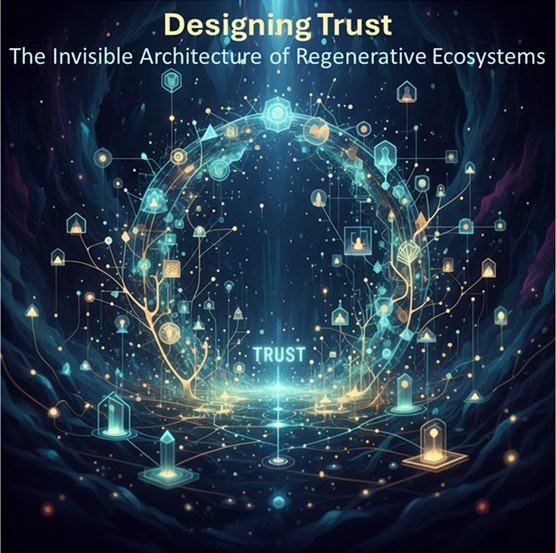 Complementary post to Pillar 10 - Integration with the Ecosystem To trust is to integrate, not to delegate. In a regenerative ecosystem, value grows when trust circulates. As someone recently wrote in this space: “Integration with the ecosystem is not only about designing projects. It is about designing trust.” That phrase says it all. Trust is the invisible infrastructure that sustains regeneration. Without it, there is no transparency, no learning, and no innovation. Organizations that share data, knowledge, and responsibility build systems where everyone wins. They turn uncertainty into partnership and fear into collective intelligence. Practical example: In a circular supply chain, several SMEs decided to share forecasts, risks, and opportunities in real time. Transparency reduced waste and costs, but more importantly, it created trust. The network stopped being transactional and became relational, a living system that learns while delivering value. In practice, this means:
If a company’s growth harms the ecosystem it depends on, that’s not growth, it’s extraction. Regenerative leadership means embedding trust in the very design of the organization. When trust is designed from the start, impact stops being a promise and becomes culture. And in your reality: is your ecosystem designed to compete or to trust? This post is part of the series The 11 Keys to Regenerative Leadership |
 This is the tenth post in the series “The 11 Keys to Regenerative Leadership.” No organization is an island. We are all part of a system that breathes with us. The system is not the stage, it’s the partner. Regenerative leadership recognizes this interdependence. It integrates purpose, decisions, and impact within a wider context, communities, suppliers, customers, and the planet itself. Every decision, no matter how small, creates ripples that extend beyond the organization’s formal boundaries. To lead is to integrate, not to isolate. Regenerative impact begins when we stop optimizing parts and start caring for the whole. In practice, regenerative leaders:
Practical example: A mid-sized food company redesigned its value chain in partnership with suppliers and the local municipality. They introduced circular materials, reverse logistics, and community collection points. The result? Less waste, lower logistical costs, and a stronger reputation, a virtuous cycle of collaborative innovation. ·This pillar connects directly with frameworks such as VMCL + RCPCV™ and Positive Impact by Design™, translating into practice what we explored in Pillar 5 - Purpose & Impact: The most sustainable decisions are those that regenerate the system we belong to.And in your context: do your decisions optimize the part… or regenerate the whole? This post is part of the series The 11 Keys to Regenerative Leadership |
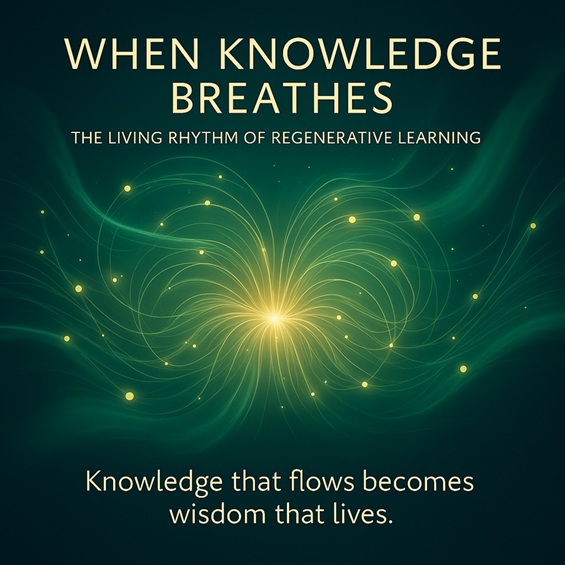 Complementary post to Pillar 9 - Regenerative Learning A reader recently shared a reflection that stayed with me: “Learning in a living organization is not a program but a rhythm that renews itself.” That phrase captures the very heart of regenerative leadership. Living organizations learn. They don’t react mechanically. They transform organically. In a living system, learning isn’t an event. It’s a rhythm, the ongoing movement between intention, reflection, and sharing. Learning stops being an event and becomes a form of breathing. A natural cycle between pause and action, between seeing and doing. But this rhythm only exists when there is safety. People share what they learn only when trust is stronger than fear. When leaders create spaces where curiosity matters more than certainty, knowledge stops being stored and starts to circulate, turning into collective wisdom. Practical example: In an engineering company, leadership introduced a Learning Pulse: Short biweekly meetings where each team shared one mistake, one discovery, and one applied improvement. No slides. No vanity metrics. The result was remarkable: Within weeks, spontaneous patterns of innovation emerged, and reflection became a shared practice. Regenerative Synthesis Living knowledge needs rhythm, not just process. Psychological safety is the heartbeat of learning. Curiosity is the oxygen that keeps systems regenerative. Because living organizations don’t learn out of obligation, they learn because they breathe. In your team: is knowledge circulating… or just being stored? Every organization has its own rhythm. What matters is to keep knowledge alive and breathing. This post is part of the series The 11 Keys to Regenerative Leadership |
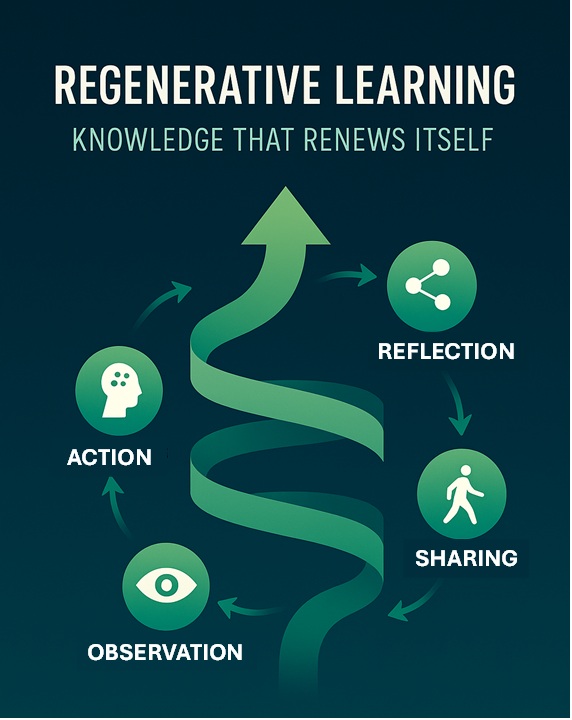 This is the ninth post in the series “The 11 Keys to Regenerative Leadership.” In a living organization, learning is not an event. It’s a continuous cycle of regeneration. Regenerative leadership understands that knowledge is not something we store, it’s something we renew. To learn is to observe, experiment, reflect, transform… and begin again. It’s the same principle we find in PDCA, Toyota Kata, and SECI 2.0. All showing that true learning emerges from the interaction between action, reflection, and sharing. But there’s one crucial difference: In regenerative leadership, we learn with intention, not just from mistakes. Regenerative leaders create environments where: Mistakes become sources of insight,Successes are documented and shared,Knowledge evolves into collective wisdom. Practical example: In a manufacturing company, the operations team started documenting weekly “micro-lessons”, small process improvements observed, reflected upon, and applied. The result was a visible cycle of continuous learning: less rework, greater autonomy, and a culture of living improvement. To learn regeneratively is to give back more knowledge to the system than we take from it. Because knowledge that doesn’t circulate stagnates Knowledge that renews itself transforms. In your organization: is learning a living cycle, or just a report at the end of the project? This post is part of the series The 11 Keys to Regenerative Leadership |
|
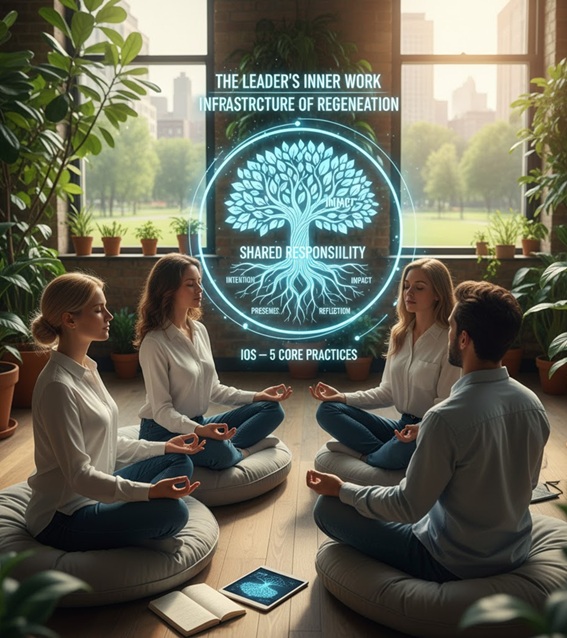
Complementary post to Pillar 8 - Authenticity & Presence Not every transformation starts with a new strategy. Because before regenerating systems, a leader must regenerate awareness. Regenerative leadership doesn’t rely only on frameworks, it thrives on inner growth. It’s the invisible work that sustains every visible decision. Regenerative leaders reflect on themselves, share responsibility, and consciously shape their impact within the system. They don’t react with haste, they respond with presence. And they know: no external regeneration exists without internal evolution. The Leader’s Inner Operating System (IOS) - 5 Core Practices: 1. Presence check-in (3 minutes daily) - observe body, heart, mind and spirit before deciding. A brief pause to align action, emotion, thought, and purpose, the four dimensions that sustain ethical and living decisions. “The spiritual dimension is your center, your commitment to value and purpose, the source of your drive and vision.” 2. Ethical intention (RCPCV™) - before acting, ask: who is affected and how? 3. Shared-responsibility map - make visible who decides, who contributes, and who validates. 4. Impact journal - record what endures in people and processes beyond KPIs. 5. Reflection cadence - bi-weekly learn–unlearn–relearn sessions with the team. Field note: Within roughly eight weeks, the average time needed to consolidate new team habits, a visible pattern emerged: less defensiveness, stronger alignment, and naturally distributed ownership. Regenerative Synthesis In your context: which inner practice could add depth without losing speed? This post is part of the series “The 11 Keys to Regenerative Leadership.” |
|
I've never heard of a relationship being affected by punctuation. - Jerry Seinfeld |