






Guessing is not a strategy: How to build decision velocity with AI and real-time data
June 10, 2026 | Live Webinar

The Emerging Tensions of Adaptive Governance
From Statistical Patterns to Operational Judgment
ORGANIZATIONAL MEMORY & DECISION CONTINUITY
RESPONSIBLE DECISION ARCHITECTURE™
Decision Architecture Under Pressure
Agile, Career Development, Career Development, Career Development, Career Development, Career Development, Career Development, Career Development, Career Development, Career Development, Career Development, Career Development, Career Development, Career Development, Career Development, Career Development, Career Development, Career Development, Career Development, Career Development, Career Development, Career Development, Career Development, Career Development, Career Development, Career Development, Career Development, Career Development, Career Development, Career Development, Career Development, Career Development, Career Development, Career Development, Career Development, Career Development, Career Development, Career Development, Career Development, Career Development, Career Development, Career Development, Career Development, Career Development, Career Development, Career Development, Career Development, Career Development, Career Development, Career Development, Career Development, Career Development, Career Development, Career Development, Career Development, Career Development, Career Development, Career Development, Career Development, Career Development, Career Development, Career Development, Career Development, Career Development, Career Development, Career Development, Career Development, Career Development, Career Development, Career Development, Career Development, Career Development, Career Development, Career Development, Career Development, Career Development, Career Development, Interpersonal Skills, Interpersonal Skills, Interpersonal Skills, Interpersonal Skills, Interpersonal Skills, Interpersonal Skills, Interpersonal Skills, Interpersonal Skills, Interpersonal Skills, Interpersonal Skills, Interpersonal Skills, Interpersonal Skills, Interpersonal Skills, Interpersonal Skills, Interpersonal Skills, Interpersonal Skills, Interpersonal Skills, Interpersonal Skills, Interpersonal Skills, Interpersonal Skills, Interpersonal Skills, Interpersonal Skills, Interpersonal Skills, Interpersonal Skills, Interpersonal Skills, Interpersonal Skills, Interpersonal Skills, Interpersonal Skills, Interpersonal Skills, Interpersonal Skills, Interpersonal Skills, Interpersonal Skills, Interpersonal Skills, Interpersonal Skills, Interpersonal Skills, Interpersonal Skills, Interpersonal Skills, Interpersonal Skills, Interpersonal Skills, Interpersonal Skills, Interpersonal Skills, Interpersonal Skills, Interpersonal Skills, Interpersonal Skills, Interpersonal Skills, Interpersonal Skills, Interpersonal Skills, Interpersonal Skills, Interpersonal Skills, Interpersonal Skills, Interpersonal Skills, Interpersonal Skills, Interpersonal Skills, Interpersonal Skills, Interpersonal Skills, Interpersonal Skills, Interpersonal Skills, Interpersonal Skills, Interpersonal Skills, Interpersonal Skills, Interpersonal Skills, Interpersonal Skills, Interpersonal Skills, Interpersonal Skills, Interpersonal Skills, Interpersonal Skills, Interpersonal Skills, Interpersonal Skills, Interpersonal Skills, Interpersonal Skills, Interpersonal Skills, Interpersonal Skills, Interpersonal Skills, Interpersonal Skills, Interpersonal Skills, Interpersonal Skills, Leadership, Leadership, Leadership, Leadership, Leadership, Leadership, Leadership, Leadership, Leadership, Leadership, Leadership, Leadership, Leadership, Leadership, Leadership, Leadership, Leadership, Leadership, Leadership, Leadership, Leadership, Leadership, Leadership, Leadership, Leadership, Leadership, Leadership, Leadership, Leadership, Leadership, Leadership, Leadership, Leadership, Leadership, Leadership, Leadership, Leadership, Leadership, Leadership, Leadership, Leadership, Leadership, Leadership, Leadership, Leadership, Leadership, Leadership, Leadership, Leadership, Leadership, Leadership, Leadership, Leadership, Leadership, Leadership, Leadership, Leadership, Leadership, Leadership, Leadership, Leadership, Leadership, Leadership, Leadership, Leadership, Leadership, Leadership, Leadership, Leadership, Leadership, Leadership, Leadership, Leadership, Leadership, Leadership, Leadership, Leadership, Strategy, Strategy, Strategy, Strategy, Strategy, Strategy, Strategy, Strategy, Strategy, Strategy, Strategy, Strategy, Strategy, Strategy, Strategy, Strategy, Strategy, Strategy, Strategy, Strategy, Strategy, Strategy, Strategy, Strategy, Strategy, Strategy, Strategy, Strategy, Strategy, Strategy, Strategy, Strategy, Strategy, Strategy, Strategy, Strategy, Strategy, Strategy, Strategy, Strategy, Strategy, Strategy, Strategy, Strategy, Strategy, Strategy, Strategy, Strategy, Strategy, Strategy, Strategy, Strategy, Strategy, Strategy, Strategy, Strategy, Strategy, Strategy, Strategy, Strategy, Strategy, Strategy, Strategy, Strategy, Strategy, Strategy, Strategy, Strategy, Strategy, Strategy, Strategy, Strategy, Strategy, Strategy, Strategy, Strategy, Sustainability, Talent Management, Talent Management, Talent Management, Talent Management, Talent Management, Talent Management, Talent Management, Talent Management, Talent Management, Talent Management, Talent Management, Talent Management, Talent Management, Talent Management, Talent Management, Talent Management, Talent Management, Talent Management, Talent Management, Talent Management, Talent Management, Talent Management, Talent Management, Talent Management, Talent Management, Talent Management, Talent Management, Talent Management, Talent Management, Talent Management, Talent Management, Talent Management, Talent Management, Talent Management, Talent Management, Talent Management, Talent Management, Talent Management, Talent Management, Talent Management, Talent Management, Talent Management, Talent Management, Talent Management, Talent Management, Talent Management, Talent Management, Talent Management, Talent Management, Talent Management, Talent Management, Talent Management, Talent Management, Talent Management, Talent Management, Talent Management, Talent Management, Talent Management, Talent Management, Talent Management, Talent Management, Talent Management, Talent Management, Talent Management, Talent Management, Talent Management, Talent Management, Talent Management, Talent Management, Talent Management, Talent Management, Talent Management, Talent Management, Talent Management, Talent Management, Talent Management


|
Complementary post to Pillar 5 – Purpose & Impact Projects don’t end when they’re delivered. In regenerative leadership, delivery is not the finish line, it’s the beginning of something greater: a living legacy that grows through systems, behaviors and decisions that endure long after the team has stepped away. A reader of this series expressed it perfectly: “Designing for impact means anticipating not only how value is created during execution, but how it is sustained when the team steps away.” Exactly. When we design with intention, we’re not just managing scope, we're cultivating meaning. And that requires more than planning, it demands an architecture of continuity. Regenerative projects leave behind:
Practical example: The real impact emerged months later: That’s why approaches like the Benefits Realization Management practices (PMI) (focused on ensuring and sustaining long-term value) and frameworks like the GPM P5™ Standard, which embed sustainability into every dimension of project design, are so essential. Impact is not measured at delivery. It’s measured by what remains. And in your context: does the project end — or does it transform? This post is part of the series The 11 Keys to Regenerative Leadership
|
|
Complementary post to Pillar 5 – Purpose & Impact A reader of this series wrote: “Impact is not what we declare, but what others experience and what endures after us.” That phrase captures the essence. True impact is not what we publish in reports, goals or manifestos. It’s what people feel when we are no longer in the room. Regenerative impact is often quiet, yet alive:
Practical example:
Real impact is not what we intend. It’s what we provoke, even unknowingly. In your context: how will impact be measured… when no one is watching? This post is part of the series The 11 Keys to Regenerative Leadership
|
|
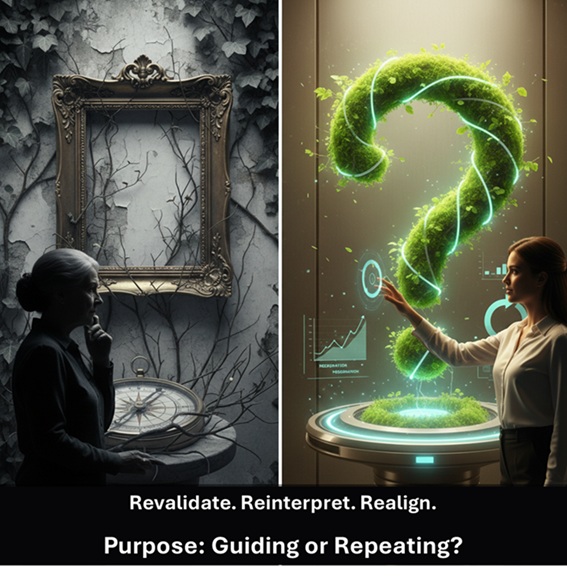
Complementary post to Pillar 5 – Purpose & Impact One of the most striking comments I received in this series said: “Even the most well-intentioned frameworks risk becoming static if leaders fail to revisit them as contexts change.” And it’s true. In regenerative leadership, purpose is not just a starting point, it’s a cycle. It’s not enough to align it once. Revalidate. Reinterpret. Realign. Whenever needed — with strategic humility. A living purpose:
Practical example: Revisiting purpose is also part of the final step of the RCPCV™ cycle: Verify. A regenerative leader doesn’t just ask “Did we execute the plan?”
Purpose doesn’t fail when it evolves. In your organization: is purpose still guiding — or just repeating? This post is part of the series The 11 Keys to Regenerative Leadership |
|
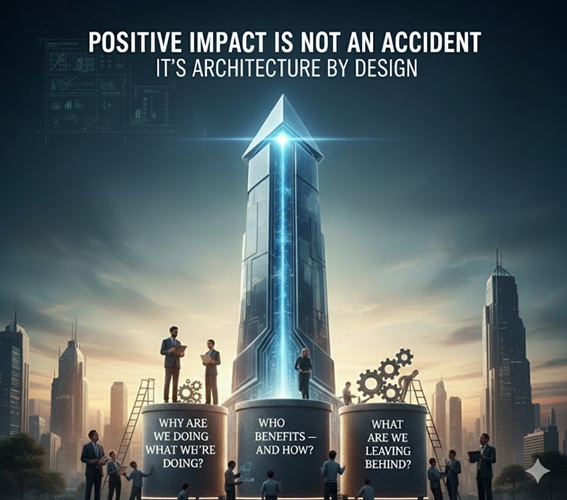
Complementary post to Pillar 5 – Purpose & Impact This post was inspired by a thoughtful reflection from a reader of this series, who wrote: “Creating effect is not a by-product but the result of intentional design, governance, and alignment with values.” That phrase stayed with me — because it says everything. That’s why I developed the Positive Impact by Design™ framework:
Across the projects I’ve supported (from industrial innovation to institutional transformation) I’ve seen that the earlier purpose is integrated into project design, the greater the clarity, alignment and stakeholder support. This approach aligns with leading frameworks such as:
Because leading a project is not just about delivering scope. In your context: is impact an outcome of intention or just a by-product? This post is part of the series The 11 Keys to Regenerative Leadership |
|
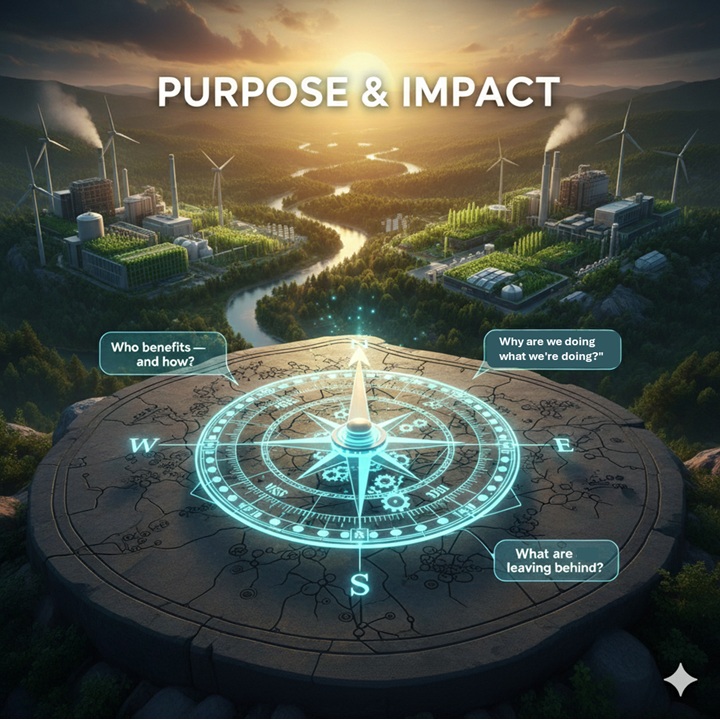
This is the fifth post in the series “The 11 Keys to Regenerative Leadership” Leading with purpose is not about having a beautiful sentence on the wall. In regenerative leadership, purpose is not an abstract idea. It’s a practical compass that guides decisions, mobilizes teams, and measures impact beyond short-term results. That’s why I developed the Positive Impact by Design™ framework, a model that helps leaders and organizations intentionally design impact, using three essential questions:
Practical example:
The result: greater clarity, stronger internal support, and a decision with regenerative legitimacy. This framework also resonates with Stephen R. Covey’s four dimensions of human nature:
Leading with purpose is not just a strategic choice. It’s an integrated response to who we are, what we do, and what we leave behind. And in your context: is purpose truly guiding impact or just decorating the mission statement? This post is part of the series The 11 Keys to Regenerative Leadership
|
|
"I have made it a rule never to smoke more than one cigar at a time." - Mark Twain |