


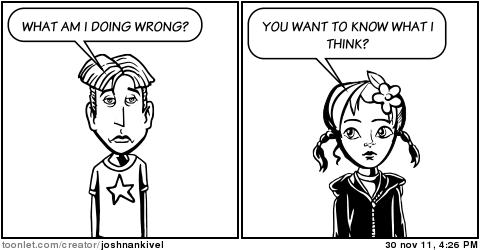
 A project manager was struggling deeply with his project.
He was doing everything he had been taught to manage projects effectively, and yet it seemed as if more time was being spent on rework and just getting things done.
A fellow colleague was doing well. Her projects were not only going well, but she and her team seemed much less stressed.
"I'm in trouble here, I need to know your secret. Can we chat?" he asked.
"Of course," she replied.
The struggling project manager laid out his problems, one after the other.
"I'm working my tail off, and so is my team. Yet every day is like putting out one fire after another. We are always re-working something because it wasn't what the customer really wanted. And all of our tasks seem to take so long, especially when I compare my team to yours. Heck, even updating a document seems to be a monumental effort. My team is very skilled, just as good as yours. What am I doing wrong?"
"You want to know what I think?" she asked.
"Yes! Tell me!" he replied with exasperation.
"You are focused on getting work done."
"Aaaaand? Isn't that what I am supposed to do, get things done?"
"No. That shouldn't be your goal. You should be adding value." she replied.
"Oh come on! What's the difference?" he whined.
"Work which does not add value is wasted, and non-valuable work usually ends up causing even more waste work. Stop looking at what your team is doing as a collection of tasks. Start questioning what is adding value from the customer's perspective. If it doesn't add value, why are you doing it?
Also, start seeking out waste and eliminating it. Time lags between steps on an individual feature or item is a form of waste. It takes your team longer to update documentation because they have to go back and remember what they did with their code in order to make the updates. The longer it takes for anything to go from initial design to being delivered to the customer, the more waste you incur and the less value your customer gets."
"I never thought of it that way" he said.
"Think about it. Observe your processes in action and you'll start to see what I mean. Well, I've got to run, but it's been nice talking with you." she said with a wave as she walked away.
He thought about her words for a moment. Immediately, his mind was inundated with examples from what his team had been doing just in the last week which fit her definition of waste perfectly.
"Oh crap" he thought. "We have got to do something about this. Now!"




