


Reflections on PM Congress 2019 (TU Delft)


|
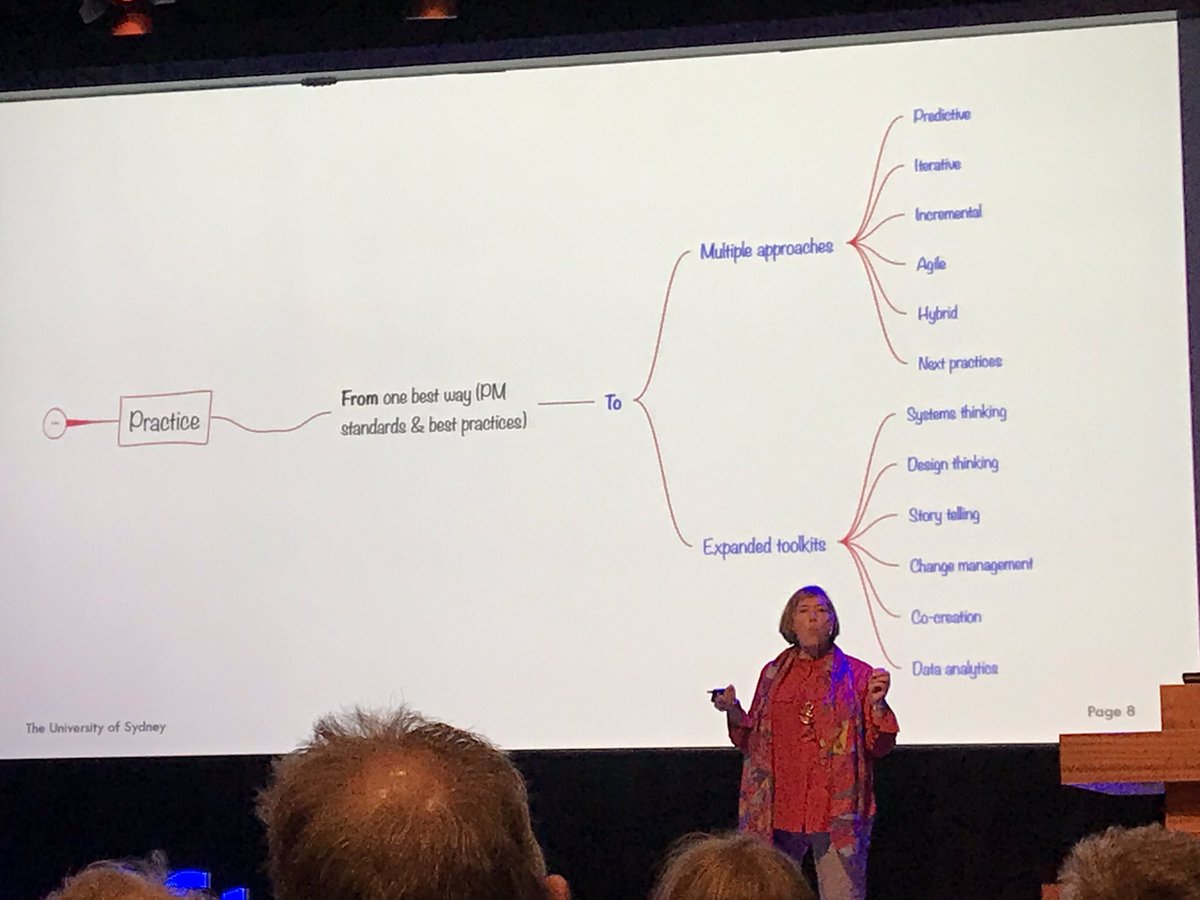
The PM Congress 2019 ran April 11-12 on the campus of the Delft University of Technology (TU Delft) in Netherlands. The conference had the provocative tag line "Adapt or Die", but its theme was the more-grounded "Research Meets Practice". There was good mix of academics, practitioners, and students from TU Delft in attendance at the conference. The organizers had the forethought to include several breaks during the two days and evening events to allow networking and sharing of ideas. This edition of my retrospective will focus on the conference key note sessions. Key Note presentations:Prof. Lynn Crawford (Dir. of the Project Management Program at The University of Sydney, Australia) used a mind map visualization to organize her presentation themes: Forces of change, Research, Practice, and People. (Very nice technique that I will have to use someday!) Lynn challenged the conference attendees with the question: "Are project management practices behind the times?" Essentially our profession and its related training needs to move from a focus on technical skills to assisting project managers develop a variety of skills, abilities, and different mindsets currently not central to our profession. Lynn also noted that we will move from project management to "project leadership". The usage of "Project Leadership" is a subtle change that I am starting to hear more and more as I attend international project management conferences. The evolution is one I welcome.
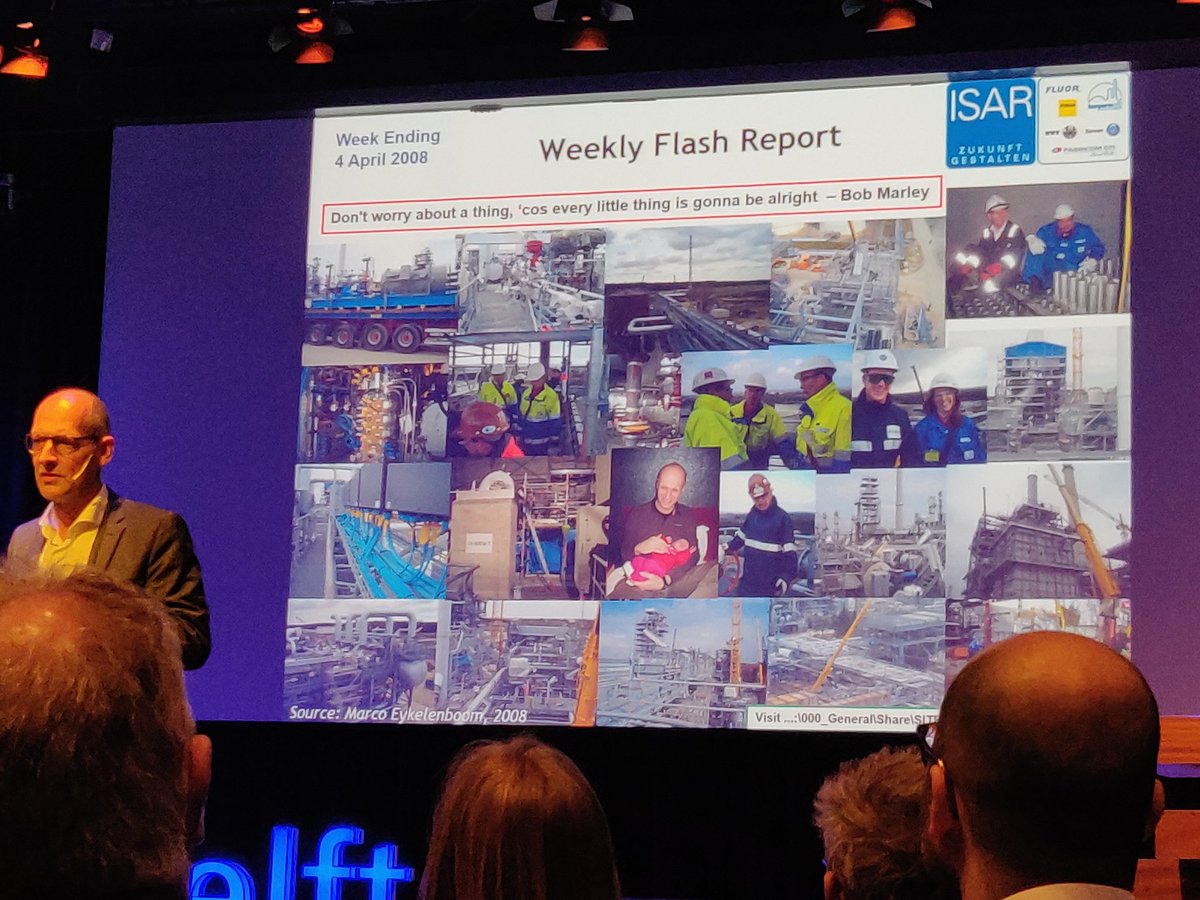
Marco Eykelenboom (Exec. Project Director at Fluor Corporation) addressed the complexity and challenges of the project management profession. Marco shared learnings, insights, and experiences from managing large, complex projects in the energy sector. One useful takeaway was the use of visual status reporting on Marco's teams. The teams at Fluor would generate one-page "Weekly Flash Reports" with pictures of the project's progress. These artifacts resonated with both stakeholders and team members. A second key insight from Marco's presentation were polling results to the question: "From your last successful project, what were the key success ingredients?" Not surprising, the top three responses were:
Marco's last key takeaway for managing complex projects was to emphasize the focus on Mission, People, and Balance between human versus technical aspects of project management.
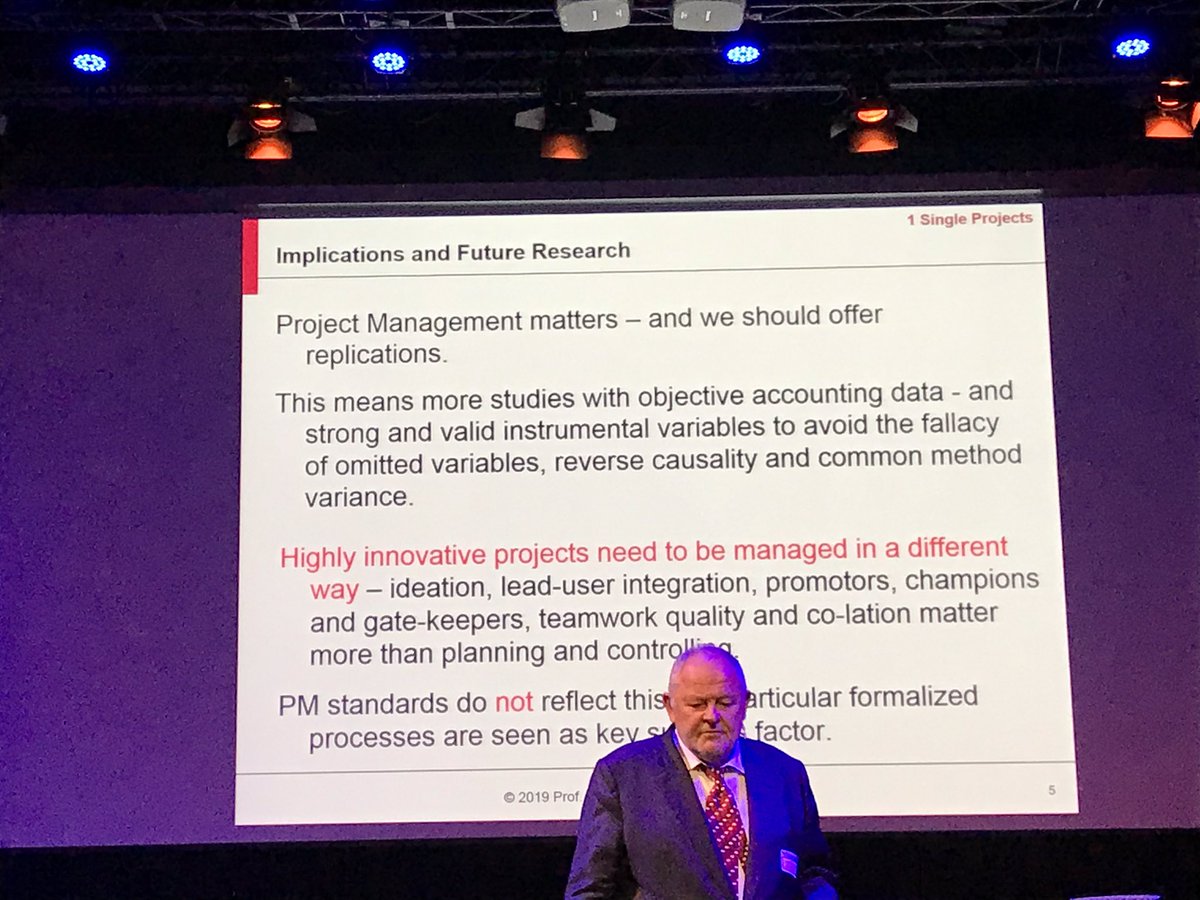
Prof. Dr. Hans Georg Gemünden (Chair for Technology and Innovation Management, Berlin University of Technology) shared research findings on the value of Project Management on innovation projects. The research focused on answering the questions: Does Project Management delivery value? Or is Project Management only a self-deception based on an illusion of control? Based on his research, "project organizing" does indeed create business value but with diminishing returns. Project Management creates higher value for more complex projects versus those with lower complexity. Hans Georg advised the audience that Project Management matters, but we cannot manage projects as we always have. Highly innovative projects need to be managed in a different manner. Ideation, user centric, and collaboration are more important than planning and controlling. Hans Georg correctly noted that current PM standards do not this as they have a focus on formalized processes as key success factors.
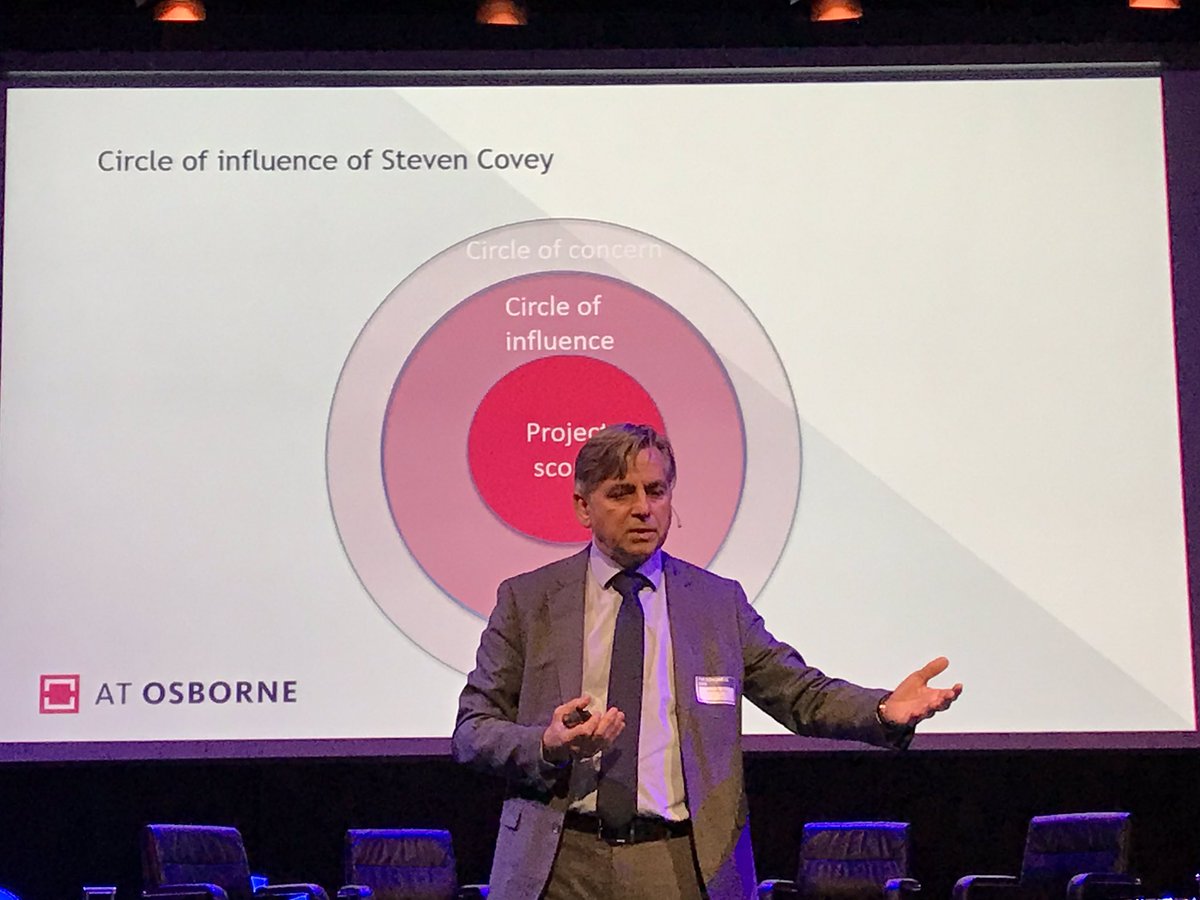
Gerard Scheffrahn (Project Director at OT Osborne) spoke about project organizing and innovation, using Amsterdam's long-delayed North-South metro line expansion project as a great case study. Gerard encouraged Project Managers to spend the majority of their time in what Stephen Covey termed the "Circle of Influence”. In other words, PMs should focus on the decision making process and proactively work from the center of their influence and constantly expand it. Hearing stories about the complexities of building the North-South metro line were also interesting and enlightening.
Connect with me here on Linkedin, at www.brucegay.com, or follow me on Twitter @brucegay |
Design Thinking Introduction for Project Leaders
|
The pace of change and disruption in the business environment demands that we, as Project Leaders, grow and acquire new skills. To be successful, we need to look past the rigor and discipline of managing projects and embrace agility and collaboration, thinking about customers first, with innovation and adaptive leadership. Design Thinking has emerged as a successful methodology that organizations use to approach problem-solving and delivery of innovative solutions that delight their customers. Design Thinking provides models for project leaders to be more successful in this every-changing profession. My webinar from May 2016 outlines the benefits of incorporating design on projects while providing a high-level overview of methods and tools:
https://www.projectmanagement.com/videos/330087/Design-Thinking---Project-Management
Connect with me on Linkedin or follow me on Twitter @brucegay |

Comparison of PM Approaches - Help Needed
|
Fellow Project Leaders - I need help validating the information in the chart above comparing management of communications, quality, and risks across PMBOK, PRINCE2, Agile and Lean approaches. I plan to use this summary as a starting point to show areas where incorporating design methodologies on projects could show benefit. Feedback is most welcome.
|

Thoughts on PMI 's Strategy Refresh
|
The PMI Board of Directors is discussing what the organization should be doing to facilitate implementation of its “strategy refresh". The objective of the "refresh" appears to be a return to the original mission when the organization was founded in 1969 - service and support project management practitioners. Over the years, however, PMI has drifted from this initial focus. The current Board of Directors' discussions are asking the question: What can PMI do to demonstrate that it has the right focus and is providing value to its members? From my perspective, there is a clear sense of PMI's shift toward the individual (not just chapters), as evidenced by the EMEA Congress 2019 program theme of “Innovation Made Possible by a Project Manager.” This shows movement toward serving the members better, but it also has me thinking about PMI's “strategy refresh". Here are some of my thoughts on implementing PMI's “strategy refresh":
What opinions or recommendations do other members have around PMI's "strategy refresh"? |

Professional Development Day Volunteering
|
The PDD is our chapter's largest event of the year and after staging it in the city's suburbs for the past 5 years, the event returned to downtown Pittsburgh. We found the central location boosted attendance and we actually had to cut off registration in advance of the event. I played the role of both volunteer organizer and session speaker, so I had the unique vantage of what was going on behind the scenes as well as on stage at the PDD. Here are some observations that I made leading up to and during the day of the PDD:
Looking forward to an event bigger Professional Development Day (PDD) in November 2019! |
 Last week, the PMI Pittsburgh Chapter held its annual

