





Guessing is not a strategy: How to build decision velocity with AI and real-time data
June 10, 2026 | Live Webinar

The Emerging Tensions of Adaptive Governance
From Statistical Patterns to Operational Judgment
ORGANIZATIONAL MEMORY & DECISION CONTINUITY
RESPONSIBLE DECISION ARCHITECTURE™
Decision Architecture Under Pressure
Agile, Career Development, Career Development, Career Development, Career Development, Career Development, Career Development, Career Development, Career Development, Career Development, Career Development, Career Development, Career Development, Career Development, Career Development, Career Development, Career Development, Career Development, Career Development, Career Development, Career Development, Career Development, Career Development, Career Development, Career Development, Career Development, Career Development, Career Development, Career Development, Career Development, Career Development, Career Development, Career Development, Career Development, Career Development, Career Development, Career Development, Career Development, Career Development, Career Development, Career Development, Career Development, Career Development, Career Development, Career Development, Career Development, Career Development, Career Development, Career Development, Career Development, Career Development, Career Development, Career Development, Career Development, Career Development, Career Development, Career Development, Career Development, Career Development, Career Development, Career Development, Career Development, Career Development, Career Development, Career Development, Career Development, Career Development, Career Development, Career Development, Career Development, Career Development, Career Development, Career Development, Career Development, Career Development, Career Development, Career Development, Interpersonal Skills, Interpersonal Skills, Interpersonal Skills, Interpersonal Skills, Interpersonal Skills, Interpersonal Skills, Interpersonal Skills, Interpersonal Skills, Interpersonal Skills, Interpersonal Skills, Interpersonal Skills, Interpersonal Skills, Interpersonal Skills, Interpersonal Skills, Interpersonal Skills, Interpersonal Skills, Interpersonal Skills, Interpersonal Skills, Interpersonal Skills, Interpersonal Skills, Interpersonal Skills, Interpersonal Skills, Interpersonal Skills, Interpersonal Skills, Interpersonal Skills, Interpersonal Skills, Interpersonal Skills, Interpersonal Skills, Interpersonal Skills, Interpersonal Skills, Interpersonal Skills, Interpersonal Skills, Interpersonal Skills, Interpersonal Skills, Interpersonal Skills, Interpersonal Skills, Interpersonal Skills, Interpersonal Skills, Interpersonal Skills, Interpersonal Skills, Interpersonal Skills, Interpersonal Skills, Interpersonal Skills, Interpersonal Skills, Interpersonal Skills, Interpersonal Skills, Interpersonal Skills, Interpersonal Skills, Interpersonal Skills, Interpersonal Skills, Interpersonal Skills, Interpersonal Skills, Interpersonal Skills, Interpersonal Skills, Interpersonal Skills, Interpersonal Skills, Interpersonal Skills, Interpersonal Skills, Interpersonal Skills, Interpersonal Skills, Interpersonal Skills, Interpersonal Skills, Interpersonal Skills, Interpersonal Skills, Interpersonal Skills, Interpersonal Skills, Interpersonal Skills, Interpersonal Skills, Interpersonal Skills, Interpersonal Skills, Interpersonal Skills, Interpersonal Skills, Interpersonal Skills, Interpersonal Skills, Interpersonal Skills, Interpersonal Skills, Leadership, Leadership, Leadership, Leadership, Leadership, Leadership, Leadership, Leadership, Leadership, Leadership, Leadership, Leadership, Leadership, Leadership, Leadership, Leadership, Leadership, Leadership, Leadership, Leadership, Leadership, Leadership, Leadership, Leadership, Leadership, Leadership, Leadership, Leadership, Leadership, Leadership, Leadership, Leadership, Leadership, Leadership, Leadership, Leadership, Leadership, Leadership, Leadership, Leadership, Leadership, Leadership, Leadership, Leadership, Leadership, Leadership, Leadership, Leadership, Leadership, Leadership, Leadership, Leadership, Leadership, Leadership, Leadership, Leadership, Leadership, Leadership, Leadership, Leadership, Leadership, Leadership, Leadership, Leadership, Leadership, Leadership, Leadership, Leadership, Leadership, Leadership, Leadership, Leadership, Leadership, Leadership, Leadership, Leadership, Leadership, Strategy, Strategy, Strategy, Strategy, Strategy, Strategy, Strategy, Strategy, Strategy, Strategy, Strategy, Strategy, Strategy, Strategy, Strategy, Strategy, Strategy, Strategy, Strategy, Strategy, Strategy, Strategy, Strategy, Strategy, Strategy, Strategy, Strategy, Strategy, Strategy, Strategy, Strategy, Strategy, Strategy, Strategy, Strategy, Strategy, Strategy, Strategy, Strategy, Strategy, Strategy, Strategy, Strategy, Strategy, Strategy, Strategy, Strategy, Strategy, Strategy, Strategy, Strategy, Strategy, Strategy, Strategy, Strategy, Strategy, Strategy, Strategy, Strategy, Strategy, Strategy, Strategy, Strategy, Strategy, Strategy, Strategy, Strategy, Strategy, Strategy, Strategy, Strategy, Strategy, Strategy, Strategy, Strategy, Strategy, Sustainability, Talent Management, Talent Management, Talent Management, Talent Management, Talent Management, Talent Management, Talent Management, Talent Management, Talent Management, Talent Management, Talent Management, Talent Management, Talent Management, Talent Management, Talent Management, Talent Management, Talent Management, Talent Management, Talent Management, Talent Management, Talent Management, Talent Management, Talent Management, Talent Management, Talent Management, Talent Management, Talent Management, Talent Management, Talent Management, Talent Management, Talent Management, Talent Management, Talent Management, Talent Management, Talent Management, Talent Management, Talent Management, Talent Management, Talent Management, Talent Management, Talent Management, Talent Management, Talent Management, Talent Management, Talent Management, Talent Management, Talent Management, Talent Management, Talent Management, Talent Management, Talent Management, Talent Management, Talent Management, Talent Management, Talent Management, Talent Management, Talent Management, Talent Management, Talent Management, Talent Management, Talent Management, Talent Management, Talent Management, Talent Management, Talent Management, Talent Management, Talent Management, Talent Management, Talent Management, Talent Management, Talent Management, Talent Management, Talent Management, Talent Management, Talent Management, Talent Management


|
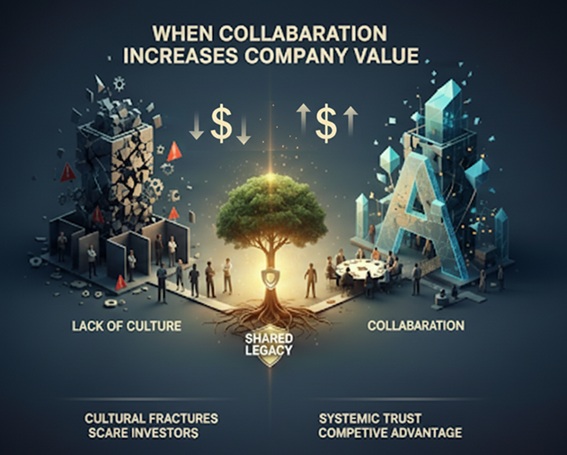
Collaboration is not just a cultural issue. This week, a comment caught my attention: “In M&A, I often see how collaboration between owners and managers directly impacts the transaction value: either the company demonstrates maturity and transparency, or internal conflicts destroy its capitalization. True partnership is born where shared decisions are valued over slogans.” This idea touches on a critical point in regenerative leadership: Collaboration as an Intangible Asset In mergers and acquisitions, collaborative culture is far from invisible.
All of this directly affects valuation, either raising the company’s value or undermining its credibility. When Lack of Culture Reduces the Price I’ve seen promising companies lose value because:
The result? Regenerative Leadership as a Value Strategy A truly collaborative culture — not a decorative one — contributes to:
In summary: Collaboration creates value inside and outside the organization. Reflection question: In your experience, how has internal culture influenced the real value of an organization whether to grow, attract investment, or prepare for a transition? This post is part of the series The 11 Keys to Regenerative Leadership |
|
Leadership that listens, co-creates, and transforms teams What many still see as a “soft ideal” is, in fact, a high-impact strategy in real-world projects. This post was inspired by a comment shared on the previous article in the series — “The Time for Regenerative Collaboration.” In that comment, a professional shared a concrete example of how trust, active listening, and shared purpose led to sustainable results in complex projects, such as:
Collaboration as a strategy in complex environments In agile, collaborative, and highly interdependent contexts, collaboration is not a luxury — it's a requirement for real value creation. Especially when:
Regenerative collaboration provides the relational structure needed to act with clarity, even in high-uncertainty environments. Leading without controlling: what changes in practice This kind of collaboration requires a different kind of leadership. It requires leaders who can:
Visible results - not just desirable intentions When these principles are applied:
In summary: Regenerative collaboration is not a soft aspiration. What about your experience?
Share your experience in the comments or tag someone who knows how to lead with presence.
This post is part of the series The 11 Keys to Regenerative Leadership |
|
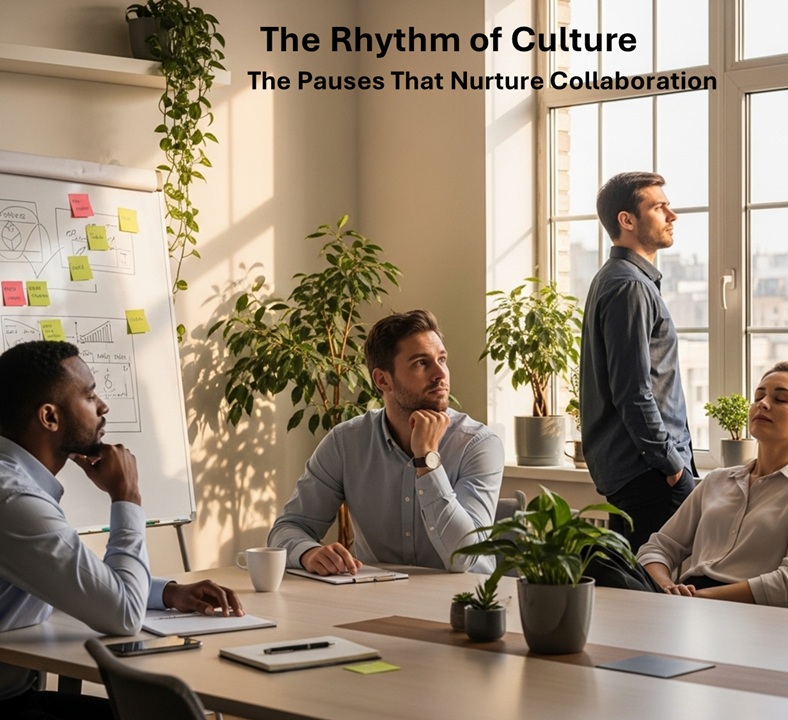
This post was born from a comment shared on the previous article: In that response, a reader brought forward a vital perspective: Regenerative collaboration does not live on action alone. Many teams confuse rhythm with urgency. Pauses are not interruptions. Culture is not built in urgency. Intentional pauses are not wasted time. Without them, a team may produce but it won’t deepen what it’s living. What pauses allow: - Consolidating learning before moving forward Without pauses, there is movement. What transforms collaboration into a living culture is not speed - it is awareness of the journey. And that includes knowing when to stop, listen, integrate, and breathe. In your experience:
Share your insights or tag someone who cultivates culture with patience and presence. Special thanks To the comment that inspired this post, which read: “Collaboration also needs pauses and reflection... Pauses create space for meaning to evolve, for shared language to emerge, and for trust to settle more deeply.” That sentence became the seed of a new chapter in this journey. This post is part of the series The 11 Keys to Regenerative Leadership |
|
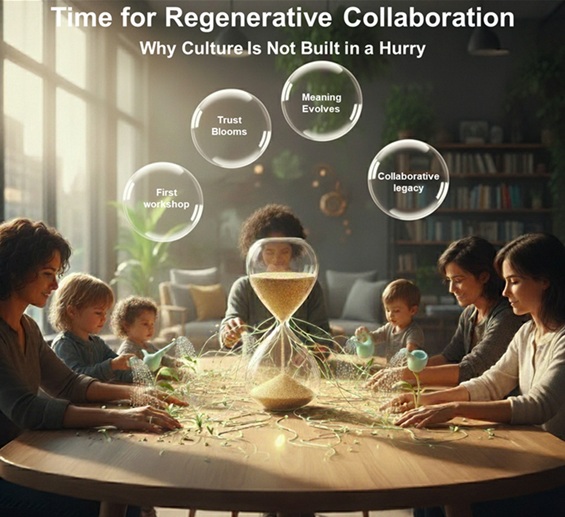
Why Culture Isn’t Built in a Hurry Regenerative collaboration is not a moment. Without continuous rhythm, what we call “culture” is often just temporary enthusiasm. 1. Culture doesn’t grow from the first workshop Models help. Dynamics inspire. The first time we listen with attention or decide together is important — Culture begins in practice. But it only takes root through the conscious persistence of that practice. 2. Trust doesn’t bloom immediately Saying “we trust each other” is not enough.
Without continuity, trust becomes fragile. 3. Time allows meaning to evolve Regenerative collaboration requires shared meaning but that meaning is not fixed, and it doesn’t reveal itself all at once. It deepens over time. Without time, there is misalignment. 4. Collaborative legacy is what remains after True collaboration isn’t measured only by what we accomplish together but by what we leave together for those who come next. That’s where culture begins. And you? In your experience:
Share in the comments — or tag someone who knows how to cultivate culture with patience and presence.
Did you miss the previous posts in this series?
• Post 2 — Pillar 1 — Regenerative Trust • Post 3 — Pillar 2: Effective Decision-Making (RCPCV™) • Post 5 — Deciding in Uncertain Times — Imperfect Confidence and Regenerative Growth • Post 6 — Deciding Together — Collective Intelligence as a Source of Regenerative Clarity |
|
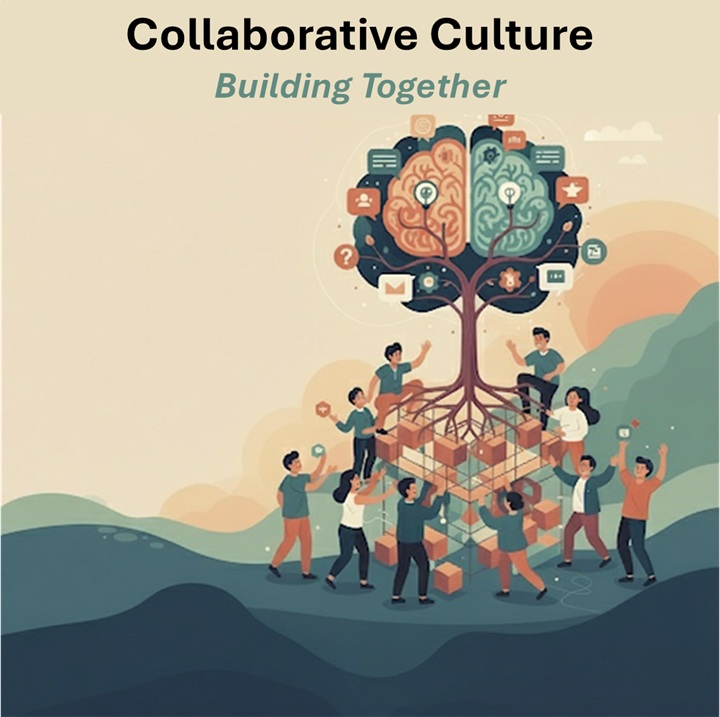
This is the fourth post in the series “The 11 Keys of Regenerative Leadership.” Collaboration is not a slogan. Regenerative leadership recognizes that a collaborative culture doesn’t happen by chance. In a collaborative team:
That’s why I developed the Collaborative Model in 3 Steps:
Real-world example: In a critical project involving departments that had historically competed for resources, we adopted this model. Result: the team shifted from “position-based negotiation” to solution-building grounded in shared meaning. Collaboration isn’t just kindness — it’s regenerative strength. A collaborative culture is not just a nicer environment. It is also the fertile ground where the kind of humble yet determined leadership described by Jim Collins as Level 5 Leadership can thrive — In your experience, what makes collaboration truly regenerative? Did you miss the previous posts in this series?
|
|
"I might repeat to myself, slowly and soothingly, a list of quotations from beautiful minds profound; if I can remember any of the damn things." - Dorothy Parker |