When Collaboration Increases Company Value
From the Support to Develop Blog
by Luis Branco

This blog addresses management-related topics and has three areas of focus: 1. Technical skills; 2. Competencies in the field of interpersonal relations and communication (including personal organization and delegation, leadership, teamwork, conflict resolution, conducting meetings, and negotiation); and 3. Strategy (including diagnosis, strategic guidelines, and implementation).4.Technology
Recent Posts
Delegation with Purpose: Building Autonomy and Developing Capability
RCPCV™: A Method for Decision-Making and Continuous Improvement
The Same Change Can Succeed and Fail at the Same Time
What Must Exist Even When No Single Role Owns the Whole?
PHASE 4 – THE EMERGENCE
Categories
Agile,
Career Development,
Career Development,
Career Development,
Career Development,
Career Development,
Career Development,
Career Development,
Career Development,
Career Development,
Career Development,
Career Development,
Career Development,
Career Development,
Career Development,
Career Development,
Career Development,
Career Development,
Career Development,
Career Development,
Career Development,
Career Development,
Career Development,
Career Development,
Career Development,
Career Development,
Career Development,
Career Development,
Career Development,
Career Development,
Career Development,
Career Development,
Career Development,
Career Development,
Career Development,
Career Development,
Career Development,
Career Development,
Career Development,
Career Development,
Career Development,
Career Development,
Career Development,
Career Development,
Career Development,
Career Development,
Career Development,
Career Development,
Career Development,
Career Development,
Career Development,
Career Development,
Career Development,
Career Development,
Career Development,
Career Development,
Career Development,
Career Development,
Career Development,
Career Development,
Career Development,
Career Development,
Career Development,
Career Development,
Career Development,
Career Development,
Career Development,
Career Development,
Career Development,
Career Development,
Career Development,
Career Development,
Career Development,
Career Development,
Career Development,
Career Development,
Career Development,
Career Development,
Career Development,
Career Development,
Career Development,
Career Development,
Career Development,
Career Development,
Career Development,
Career Development,
Career Development,
Career Development,
Career Development,
Career Development,
Career Development,
Career Development,
Career Development,
Career Development,
Career Development,
Career Development,
Career Development,
Career Development,
Career Development,
Career Development,
Career Development,
Career Development,
Career Development,
Career Development,
Career Development,
Career Development,
Career Development,
Career Development,
Career Development,
Career Development,
Career Development,
Career Development,
Career Development,
Career Development,
Career Development,
Career Development,
Career Development,
Career Development,
Career Development,
Career Development,
Career Development,
Career Development,
Career Development,
Education,
Governance,
Governance,
Governance,
Governance,
Governance,
Governance,
Governance,
Governance,
Governance,
Governance,
Governance,
Governance,
Governance,
Governance,
Governance,
Governance,
Governance,
Governance,
Governance,
Governance,
Governance,
Governance,
In,
Integration Management,
Interpersonal Skills,
Interpersonal Skills,
Interpersonal Skills,
Interpersonal Skills,
Interpersonal Skills,
Interpersonal Skills,
Interpersonal Skills,
Interpersonal Skills,
Interpersonal Skills,
Interpersonal Skills,
Interpersonal Skills,
Interpersonal Skills,
Interpersonal Skills,
Interpersonal Skills,
Interpersonal Skills,
Interpersonal Skills,
Interpersonal Skills,
Interpersonal Skills,
Interpersonal Skills,
Interpersonal Skills,
Interpersonal Skills,
Interpersonal Skills,
Interpersonal Skills,
Interpersonal Skills,
Interpersonal Skills,
Interpersonal Skills,
Interpersonal Skills,
Interpersonal Skills,
Interpersonal Skills,
Interpersonal Skills,
Interpersonal Skills,
Interpersonal Skills,
Interpersonal Skills,
Interpersonal Skills,
Interpersonal Skills,
Interpersonal Skills,
Interpersonal Skills,
Interpersonal Skills,
Interpersonal Skills,
Interpersonal Skills,
Interpersonal Skills,
Interpersonal Skills,
Interpersonal Skills,
Interpersonal Skills,
Interpersonal Skills,
Interpersonal Skills,
Interpersonal Skills,
Interpersonal Skills,
Interpersonal Skills,
Interpersonal Skills,
Interpersonal Skills,
Interpersonal Skills,
Interpersonal Skills,
Interpersonal Skills,
Interpersonal Skills,
Interpersonal Skills,
Interpersonal Skills,
Interpersonal Skills,
Interpersonal Skills,
Interpersonal Skills,
Interpersonal Skills,
Interpersonal Skills,
Interpersonal Skills,
Interpersonal Skills,
Interpersonal Skills,
Interpersonal Skills,
Interpersonal Skills,
Interpersonal Skills,
Interpersonal Skills,
Interpersonal Skills,
Interpersonal Skills,
Interpersonal Skills,
Interpersonal Skills,
Interpersonal Skills,
Interpersonal Skills,
Interpersonal Skills,
Interpersonal Skills,
Interpersonal Skills,
Interpersonal Skills,
Interpersonal Skills,
Interpersonal Skills,
Interpersonal Skills,
Interpersonal Skills,
Interpersonal Skills,
Interpersonal Skills,
Interpersonal Skills,
Interpersonal Skills,
Interpersonal Skills,
Interpersonal Skills,
Interpersonal Skills,
Interpersonal Skills,
Interpersonal Skills,
Interpersonal Skills,
Interpersonal Skills,
Interpersonal Skills,
Interpersonal Skills,
Interpersonal Skills,
Interpersonal Skills,
Interpersonal Skills,
Interpersonal Skills,
Interpersonal Skills,
Interpersonal Skills,
Interpersonal Skills,
Interpersonal Skills,
Interpersonal Skills,
Interpersonal Skills,
Interpersonal Skills,
Interpersonal Skills,
Interpersonal Skills,
Interpersonal Skills,
Interpersonal Skills,
Interpersonal Skills,
Interpersonal Skills,
Interpersonal Skills,
Interpersonal Skills,
Interpersonal Skills,
Interpersonal Skills,
Interpersonal Skills,
Interpersonal Skills,
Interpersonal Skills,
Interpersonal Skills,
Interpersonal Skills,
Knowledge Management,
le,
lea,
Leadership,
Leadership,
Leadership,
Leadership,
Leadership,
Leadership,
Leadership,
Leadership,
Leadership,
Leadership,
Leadership,
Leadership,
Leadership,
Leadership,
Leadership,
Leadership,
Leadership,
Leadership,
Leadership,
Leadership,
Leadership,
Leadership,
Leadership,
Leadership,
Leadership,
Leadership,
Leadership,
Leadership,
Leadership,
Leadership,
Leadership,
Leadership,
Leadership,
Leadership,
Leadership,
Leadership,
Leadership,
Leadership,
Leadership,
Leadership,
Leadership,
Leadership,
Leadership,
Leadership,
Leadership,
Leadership,
Leadership,
Leadership,
Leadership,
Leadership,
Leadership,
Leadership,
Leadership,
Leadership,
Leadership,
Leadership,
Leadership,
Leadership,
Leadership,
Leadership,
Leadership,
Leadership,
Leadership,
Leadership,
Leadership,
Leadership,
Leadership,
Leadership,
Leadership,
Leadership,
Leadership,
Leadership,
Leadership,
Leadership,
Leadership,
Leadership,
Leadership,
Leadership,
Leadership,
Leadership,
Leadership,
Leadership,
Leadership,
Leadership,
Leadership,
Leadership,
Leadership,
Leadership,
Leadership,
Leadership,
Leadership,
Leadership,
Leadership,
Leadership,
Leadership,
Leadership,
Leadership,
Leadership,
Leadership,
Leadership,
Leadership,
Leadership,
Leadership,
Leadership,
Leadership,
Leadership,
Leadership,
Leadership,
Leadership,
Leadership,
Leadership,
Leadership,
Leadership,
Leadership,
Leadership,
Leadership,
Leadership,
Leadership,
Leadership,
Leadership,
Leadership,
Leadership,
Leadership,
or,
Organizational Project Management,
Portfolio Management,
Program,
Program Management,
Strategy,
Strategy,
Strategy,
Strategy,
Strategy,
Strategy,
Strategy,
Strategy,
Strategy,
Strategy,
Strategy,
Strategy,
Strategy,
Strategy,
Strategy,
Strategy,
Strategy,
Strategy,
Strategy,
Strategy,
Strategy,
Strategy,
Strategy,
Strategy,
Strategy,
Strategy,
Strategy,
Strategy,
Strategy,
Strategy,
Strategy,
Strategy,
Strategy,
Strategy,
Strategy,
Strategy,
Strategy,
Strategy,
Strategy,
Strategy,
Strategy,
Strategy,
Strategy,
Strategy,
Strategy,
Strategy,
Strategy,
Strategy,
Strategy,
Strategy,
Strategy,
Strategy,
Strategy,
Strategy,
Strategy,
Strategy,
Strategy,
Strategy,
Strategy,
Strategy,
Strategy,
Strategy,
Strategy,
Strategy,
Strategy,
Strategy,
Strategy,
Strategy,
Strategy,
Strategy,
Strategy,
Strategy,
Strategy,
Strategy,
Strategy,
Strategy,
Strategy,
Strategy,
Strategy,
Strategy,
Strategy,
Strategy,
Strategy,
Strategy,
Strategy,
Strategy,
Strategy,
Strategy,
Strategy,
Strategy,
Strategy,
Strategy,
Strategy,
Strategy,
Strategy,
Strategy,
Strategy,
Strategy,
Strategy,
Strategy,
Strategy,
Strategy,
Strategy,
Strategy,
Strategy,
Strategy,
Strategy,
Strategy,
Strategy,
Strategy,
Strategy,
Strategy,
Strategy,
Strategy,
Strategy,
Strategy,
Strategy,
Strategy,
Strategy,
Strategy,
Strategy,
Strategy,
Strategy,
Sustainability,
Talent Management,
Talent Management,
Talent Management,
Talent Management,
Talent Management,
Talent Management,
Talent Management,
Talent Management,
Talent Management,
Talent Management,
Talent Management,
Talent Management,
Talent Management,
Talent Management,
Talent Management,
Talent Management,
Talent Management,
Talent Management,
Talent Management,
Talent Management,
Talent Management,
Talent Management,
Talent Management,
Talent Management,
Talent Management,
Talent Management,
Talent Management,
Talent Management,
Talent Management,
Talent Management,
Talent Management,
Talent Management,
Talent Management,
Talent Management,
Talent Management,
Talent Management,
Talent Management,
Talent Management,
Talent Management,
Talent Management,
Talent Management,
Talent Management,
Talent Management,
Talent Management,
Talent Management,
Talent Management,
Talent Management,
Talent Management,
Talent Management,
Talent Management,
Talent Management,
Talent Management,
Talent Management,
Talent Management,
Talent Management,
Talent Management,
Talent Management,
Talent Management,
Talent Management,
Talent Management,
Talent Management,
Talent Management,
Talent Management,
Talent Management,
Talent Management,
Talent Management,
Talent Management,
Talent Management,
Talent Management,
Talent Management,
Talent Management,
Talent Management,
Talent Management,
Talent Management,
Talent Management,
Talent Management,
Talent Management,
Talent Management,
Talent Management,
Talent Management,
Talent Management,
Talent Management,
Talent Management,
Talent Management,
Talent Management,
Talent Management,
Talent Management,
Talent Management,
Talent Management,
Talent Management,
Talent Management,
Talent Management,
Talent Management,
Talent Management,
Talent Management,
Talent Management,
Talent Management,
Talent Management,
Talent Management,
Talent Management,
Talent Management,
Talent Management,
Talent Management,
Talent Management,
Talent Management,
Talent Management,
Talent Management,
Talent Management,
Talent Management,
Talent Management,
Talent Management,
Talent Management,
Talent Management,
Talent Management,
Talent Management,
Talent Management,
Talent Management,
Talent Management,
Talent Management,
Talent Management,
Talent Management,
Talent Management,
Talent Management
Date
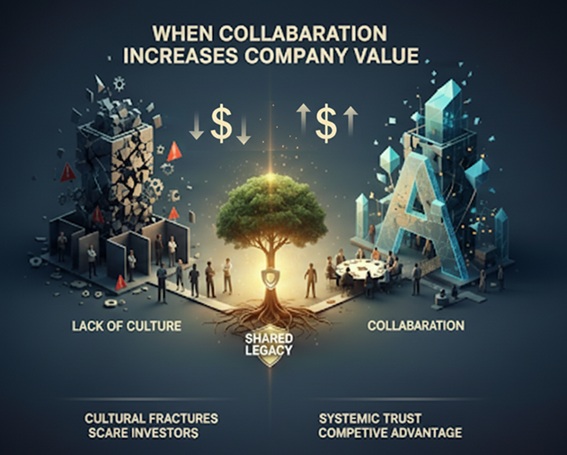
Collaboration is not just a cultural issue.
It’s also a matter of capital.
This week, a comment caught my attention:
“In M&A, I often see how collaboration between owners and managers directly impacts the transaction value: either the company demonstrates maturity and transparency, or internal conflicts destroy its capitalization. True partnership is born where shared decisions are valued over slogans.”
This idea touches on a critical point in regenerative leadership:
Collaboration creates value — not just symbolic value, but real value.
Collaboration as an Intangible Asset
In mergers and acquisitions, collaborative culture is far from invisible.
It reveals itself in:
- Alignment between ownership and management
- Maturity in conflict resolution
- Clarity in shared decision-making
- Relational stability and projected trust
All of this directly affects valuation, either raising the company’s value or undermining its credibility.
When Lack of Culture Reduces the Price
I’ve seen promising companies lose value because:
- They operate in silos and internal power struggles
- Management hides weaknesses instead of exposing them with transparency
- Leadership centralizes decisions instead of co-creating paths with their teams
The result?
During due diligence, cultural fractures emerge, scaring off investors and lowering acquisition interest.
Regenerative Leadership as a Value Strategy
A truly collaborative culture — not a decorative one — contributes to:
- Visible organizational maturity
- Relational stability that reduces risk
- Systemic trust as a competitive advantage
- A shared legacy, ready for sustainable transitions
In summary:
Collaboration creates value inside and outside the organization.
What starts as internal culture can become a strategic advantage in a multimillion-dollar deal.
Reflection question:
In your experience, how has internal culture influenced the real value of an organization whether to grow, attract investment, or prepare for a transition?
This post is part of the series The 11 Keys to Regenerative Leadership
Posted on: September 22, 2025 10:45 AM |
Permalink
Comments (4)
Please login or join to subscribe to this item
Collaboration is one of those invisible KPIs — you only notice it when it’s missing. I’ve seen great projects stall not because the strategy was off, but because trust and transparency weren’t there.
Question for you: do you think collaboration gets undervalued more during the fast growth stage or during big transitions like M&A?

Luis Branco
CEO| Business Insight, Consultores de Gestão, Ldª
Carcavelos, Lisboa, Portugal
Tanisha Elias
Thank you.
Your phrase “Collaboration is one of those invisible KPIs” is spot on.
It captures something we often sense but don’t always name: when collaboration is present, things flow.
When it’s missing, even the best-designed strategies stall.
To your question — I would say collaboration is often undervalued during fast growth, and exposed during big transitions.
In the early growth stages, urgency often replaces intentionality. Silos form, decisions accelerate, and relational health is seen as “nice to have.”
It works until you need to transition, raise capital, or bring in new partners.
That’s when the lack of collaborative maturity shows up as risk, instability, or even valuation loss.
That’s why regenerative leadership sees collaboration not just as a value, but as a form of capital, a shared asset that can either compound or erode over time.
Would love to hear more from your experience in what stage did collaboration (or lack of it) have the greatest strategic consequence?
Let’s keep this conversation going.
Luis Branco
CEO| Business Insight, Consultores de Gestão, Ldª
Carcavelos, Lisboa, Portugal
Abolfazl Yousefi Darestani
You're most welcome, and thank you for reading!
If the topic of collaboration as a strategic asset resonates with your experience, I’d love to hear your perspective.
Every example adds to the collective insight.
Please Login/Register to leave a comment.
|
"Men occasionally stumble over the truth, but most of them pick themselves up and hurry off as if nothing ever happened."
- Winston Churchill
|






