


How To Get Into Project Management
Categories:
Career Development
Categories: Career Development


| How do you get into project management?
Especially when you have little to no experience, and the jobs require experience managing projects?
|
Why Risk Management Rocks
Categories:
Risk Management
Categories: Risk Management
|
The "It's All About Science Festival" was the first of it's kind in my city.
Since I love science and support the promotion of the public understanding of science, I volunteered to help out with the event.
I was just a grunt, volunteering my time and back to help get exibitors set up and carrying heavy equipment and tables for the displays.
Still, it's difficult to take my project management hat off.
In the process I was reminded of an important fact today.
Contingency Planning Is A Must
The venue was set.
Plans had been made.
Exhibitors had assigned tents to set up under, the food vendors were in a good spot, and when the public came to the event everything was set up for ease of access and flow of the crowd.
Had everything gone to plan, I probably wouldn't be writing this post.
But it didn't.
It rained.
We haven't had rain in a long time, we're in a drought. But it rained.
They Had A Contingency Plan
Sort of.
There was ample space inside to accommodate the majority of the exhibitions.
And that was good.
But that's where the contigency planning stopped *I think*.
This resulted in several key problems and lessons learned for the future.
I am not trying to blame the organizers, the event still went very well and they worked very hard.
But this is also an opportunity to reflect on lessons learned so the next event is even better.
Exhibitors Were Confused
There were no assigned spaces for inside the building. So exhibitors were confused and didn't know where to set up.
The resulting layout was not optimal in several ways.
First, exhibitors weren't clear on what the main entrance would be. There were several entry points possible.
Because they had moved from outside to the inside, we all hauled everything through a side door.
Many assumed this would also be the entry point for the public.
It wasn't.
Because of this miscommunication and lack of contingency planning, many exhibitors were set up in exactly the wrong direction.
When the public walked in, they saw the exhibition tables from the rear.
The user experience was 1) walk in 2) be confused about where to go
Food Vendors Were Isolated
Had this project gone to plan, the food vendors would have been set up in an optimal spot for the crowd.
Because we were now inside and food vendors had trucks they were selling from, they couldn't set up where the people were.
And now they were set up way on the other side of the building from the front entrance too, and where some of the larger exhibitors were still set up outside.
I pointed out that if we could get the food vendors to drive around to the front and set up, it would be a better situation for them and the hungry masses.
Alas, because this eventuality was not anticipated, other less mobile and huge exhibitions were blocking entry to the best contingency location for the food vendors.
So in the end this resulted in a hungry crowd. Many of them probably left prematurely to go get something to eat elsewhere because they never even saw the food vendors. And many were likely dissatisfied by the lack of available food and beverages.
And of course this had a major impact on the vendors' sales - making them dissatisfied and less likely to come back next year.
In The Moment
Although it could have been handled better with some planning, there were some bright spots.
Two of the exhibitors who hadn't moved inside were still set up outside.
Over on the side of the building away from the front entrance and flow of the crowd.
I saw them and also noticed two empty spots available right next to the front entrance where the foot traffic would be high.
One hadn't moved because he had a rather large solar panel display that had to stay on the parking lot, and I think the other was just too nice and didn't want to be a bother.
I tried to find the event coordinator to verify that it would be acceptable for them to move since the spaces were (apparently) open.
I was unable to find her, so I just made an executive decision.
I asked both of them if I could help them relocate to the two open spaces. They accepted, and we got everything hauled over to the new locations.
As a result, they had a massive amount of foot traffic and interest they wouldn't have otherwise gotten.
And we even got better southern exposure for the solar panels!
Lesson Learned: Risk Management Rocks!
I think many people don't do much contingency planning because they fear it's a waste of time.
After all if it hadn't rained that contingency plan would have been a waste, right?
Wrong.
That's like saying car insurance is a waste if you never get into an accident.
Being prepared for the most likely and most impactful risks is never a waste.
It's just good project management.
|
 Today I volunteered to help with an awesome event.
World Governments Call For Better Project Management
|
Like the UK example earlier, this is a call for better project management in government. Again we see recommendations for the establishment of a "Centre for Excellence" in Project Management for Governments.
Here are some highlights from the report with my summaries.
Major Finding 1 - "Government does not have a sound governance framework for the development of major capital projects"
Major Finding 2 - "Project management practices for the new high schools projects were deficient"
Major Finding 3 - "Government Administration Building employed good project management practices"
Some good news! This project had a competent and well-trained project manager and came in on time and within budget.
What can the rest of us learn from these examples from the Cayman Islands? Share your thoughts in the comments. |
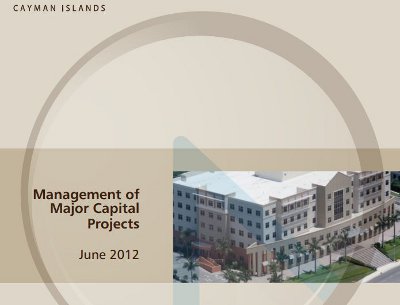 In another example of governments around the world realizing they need to focus on better project management, the Cayman Islands' Auditor General
 Project Managers Should Understand System Architecture
| Project managers should understand system/software architecture. It's important for you to be an effective leader on a software project! |
Technical Project Managers - Get Out Of The Way
Categories:
Leadership
Categories: Leadership
|
I did this for about 6 months without even realizing it. People on the team were used to coming to me for advice and decisions on technical aspects of the projects, so they kept doing so even after the transition. We all want to be helpful, so I continued to answer their questions and provide technical leadership. I only directed people to the technical lead sporadically...if I was confident about my position on the matter, I just answered the question. Signs of TroubleThen I noticed my technical lead wasn't really doing all the things a technical lead should do...at first I thought perhaps they weren't 'stepping up' as much as they should to lead the team from a technical perspective. Then I realized it was ME who was crippling their ability to be a leader on the project. After that, when people would come to me for technical input, I would direct them to the lead to ask their advice. Rather than make decisions about implementation details, I would defer to them. Let me tell you, the difference is tremendous. A Technical Foundation Is ImportantI still firmly believe that every effective project manager must have a foundation of knowledge and experience in the domain they are managing. But when you empower your team (leads and all your team members) to take responsibility for most of the technical design and architecture, it makes everyone feel better about their job and frees you up to focus on strategic aspects of managing projects well. Right and Wrong ApproachesFurthermore, you and your technical lead may have a different opinion about the "right" way to implement something. Sometimes it's not a choice between "right" and "wrong" though, just two or more different possibilities that have their own pros and cons. If you as the project manager take the decision making power away from your lead and team members, you risk undermining them for no good reason. Even if you prefer option A, it's likely that option B is just as good. I'd rather let the team choose their own path as much as possible and only intervene when I have compelling reasons to believe one approach is far superior to the other. Get Strategic - It's Your JobSometimes as the project manager you can spot dependencies and additional risks that one approach will create that your team members don't see. Things like code maintenance and other product life cycle considerations may not be at the forefront of your team member's minds as they do their day-to-day work, but as the project manager that is part of your responsibility. Empowering Leadership From Your Team MembersEven in that case, whenever possible I like to educate the team about the risks I see and let them still make their own decision after getting all the facts. People who are actively involved with making decisions about the work they do have higher job satisfaction, are more productive, and a pleasure to work with. Share your experiences and thoughts in the comments. Technical Project Managers - Get Out Of The Way! <-- Click to Tweet This |
 I've been guilty in the past of transitioning from a technical lead role into project management and continuing to make technical decisions that should have been the responsibility of the new lead who replaced me.

