





Guessing is not a strategy: How to build decision velocity with AI and real-time data
June 10, 2026 | Live Webinar

The Emerging Tensions of Adaptive Governance
From Statistical Patterns to Operational Judgment
ORGANIZATIONAL MEMORY & DECISION CONTINUITY
RESPONSIBLE DECISION ARCHITECTURE™
Decision Architecture Under Pressure
Agile, Career Development, Career Development, Career Development, Career Development, Career Development, Career Development, Career Development, Career Development, Career Development, Career Development, Career Development, Career Development, Career Development, Career Development, Career Development, Career Development, Career Development, Career Development, Career Development, Career Development, Career Development, Career Development, Career Development, Career Development, Career Development, Career Development, Career Development, Career Development, Career Development, Career Development, Career Development, Career Development, Career Development, Career Development, Career Development, Career Development, Career Development, Career Development, Career Development, Career Development, Career Development, Career Development, Career Development, Career Development, Career Development, Career Development, Career Development, Career Development, Career Development, Career Development, Career Development, Career Development, Career Development, Career Development, Career Development, Career Development, Career Development, Career Development, Career Development, Career Development, Career Development, Career Development, Career Development, Career Development, Career Development, Career Development, Career Development, Career Development, Career Development, Career Development, Career Development, Career Development, Career Development, Career Development, Career Development, Career Development, Interpersonal Skills, Interpersonal Skills, Interpersonal Skills, Interpersonal Skills, Interpersonal Skills, Interpersonal Skills, Interpersonal Skills, Interpersonal Skills, Interpersonal Skills, Interpersonal Skills, Interpersonal Skills, Interpersonal Skills, Interpersonal Skills, Interpersonal Skills, Interpersonal Skills, Interpersonal Skills, Interpersonal Skills, Interpersonal Skills, Interpersonal Skills, Interpersonal Skills, Interpersonal Skills, Interpersonal Skills, Interpersonal Skills, Interpersonal Skills, Interpersonal Skills, Interpersonal Skills, Interpersonal Skills, Interpersonal Skills, Interpersonal Skills, Interpersonal Skills, Interpersonal Skills, Interpersonal Skills, Interpersonal Skills, Interpersonal Skills, Interpersonal Skills, Interpersonal Skills, Interpersonal Skills, Interpersonal Skills, Interpersonal Skills, Interpersonal Skills, Interpersonal Skills, Interpersonal Skills, Interpersonal Skills, Interpersonal Skills, Interpersonal Skills, Interpersonal Skills, Interpersonal Skills, Interpersonal Skills, Interpersonal Skills, Interpersonal Skills, Interpersonal Skills, Interpersonal Skills, Interpersonal Skills, Interpersonal Skills, Interpersonal Skills, Interpersonal Skills, Interpersonal Skills, Interpersonal Skills, Interpersonal Skills, Interpersonal Skills, Interpersonal Skills, Interpersonal Skills, Interpersonal Skills, Interpersonal Skills, Interpersonal Skills, Interpersonal Skills, Interpersonal Skills, Interpersonal Skills, Interpersonal Skills, Interpersonal Skills, Interpersonal Skills, Interpersonal Skills, Interpersonal Skills, Interpersonal Skills, Interpersonal Skills, Interpersonal Skills, Leadership, Leadership, Leadership, Leadership, Leadership, Leadership, Leadership, Leadership, Leadership, Leadership, Leadership, Leadership, Leadership, Leadership, Leadership, Leadership, Leadership, Leadership, Leadership, Leadership, Leadership, Leadership, Leadership, Leadership, Leadership, Leadership, Leadership, Leadership, Leadership, Leadership, Leadership, Leadership, Leadership, Leadership, Leadership, Leadership, Leadership, Leadership, Leadership, Leadership, Leadership, Leadership, Leadership, Leadership, Leadership, Leadership, Leadership, Leadership, Leadership, Leadership, Leadership, Leadership, Leadership, Leadership, Leadership, Leadership, Leadership, Leadership, Leadership, Leadership, Leadership, Leadership, Leadership, Leadership, Leadership, Leadership, Leadership, Leadership, Leadership, Leadership, Leadership, Leadership, Leadership, Leadership, Leadership, Leadership, Leadership, Strategy, Strategy, Strategy, Strategy, Strategy, Strategy, Strategy, Strategy, Strategy, Strategy, Strategy, Strategy, Strategy, Strategy, Strategy, Strategy, Strategy, Strategy, Strategy, Strategy, Strategy, Strategy, Strategy, Strategy, Strategy, Strategy, Strategy, Strategy, Strategy, Strategy, Strategy, Strategy, Strategy, Strategy, Strategy, Strategy, Strategy, Strategy, Strategy, Strategy, Strategy, Strategy, Strategy, Strategy, Strategy, Strategy, Strategy, Strategy, Strategy, Strategy, Strategy, Strategy, Strategy, Strategy, Strategy, Strategy, Strategy, Strategy, Strategy, Strategy, Strategy, Strategy, Strategy, Strategy, Strategy, Strategy, Strategy, Strategy, Strategy, Strategy, Strategy, Strategy, Strategy, Strategy, Strategy, Strategy, Sustainability, Talent Management, Talent Management, Talent Management, Talent Management, Talent Management, Talent Management, Talent Management, Talent Management, Talent Management, Talent Management, Talent Management, Talent Management, Talent Management, Talent Management, Talent Management, Talent Management, Talent Management, Talent Management, Talent Management, Talent Management, Talent Management, Talent Management, Talent Management, Talent Management, Talent Management, Talent Management, Talent Management, Talent Management, Talent Management, Talent Management, Talent Management, Talent Management, Talent Management, Talent Management, Talent Management, Talent Management, Talent Management, Talent Management, Talent Management, Talent Management, Talent Management, Talent Management, Talent Management, Talent Management, Talent Management, Talent Management, Talent Management, Talent Management, Talent Management, Talent Management, Talent Management, Talent Management, Talent Management, Talent Management, Talent Management, Talent Management, Talent Management, Talent Management, Talent Management, Talent Management, Talent Management, Talent Management, Talent Management, Talent Management, Talent Management, Talent Management, Talent Management, Talent Management, Talent Management, Talent Management, Talent Management, Talent Management, Talent Management, Talent Management, Talent Management, Talent Management


|
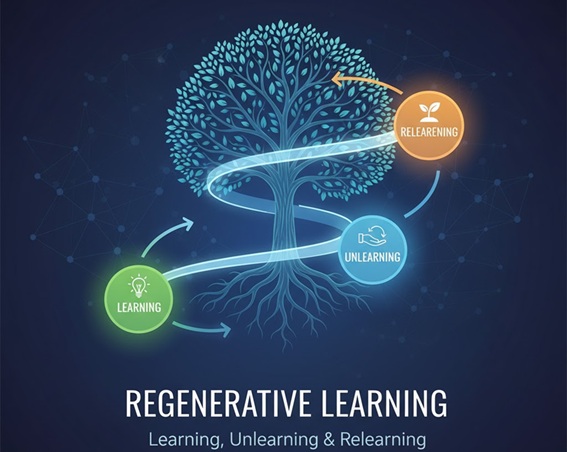
Complementary Post to Pillar 7 - Evolutionary Mindset This reflection was born from the dialogues and insights inspired by Pillar 7: Evolutionary Mindset. Because leading regeneratively is exactly that: learning in motion. Learning is more than acquiring knowledge To learn regeneratively is to transform the way we see Not to accumulate answers, but to improve the quality of our questions. It means replacing the need to master with the curiosity to understand. As one reader beautifully wrote: “Regenerative thinking isn’t about collecting knowledge; it’s about learning through movement, not mastery.” Leaders with this mindset don’t react to change, they dialogue with it. Unlearning is liberation Unlearning is one of the most mature forms of growth. It’s the art of letting go of what was once useful but now limits us. As someone commented: “Letting go is not loss, it’s making space for better questions.” Cognitive detachment is what allows us to see anew. Relearning is regeneration Relearning is the humble act that turns error into feedback and uncertainty into design. It means seeing the world again with steady purpose but renewed eyes. Practical example:
The result was more collaboration, more humility, and decisions that felt alive. Regenerative Synthesis
True learning isn’t about knowing more (it’s about seeing better) and allowing the system itself to teach us, even as we transform it. And in your own experience: Growth is not accumulation. This post is part of the series The 11 Keys to Regenerative Leadership |
|
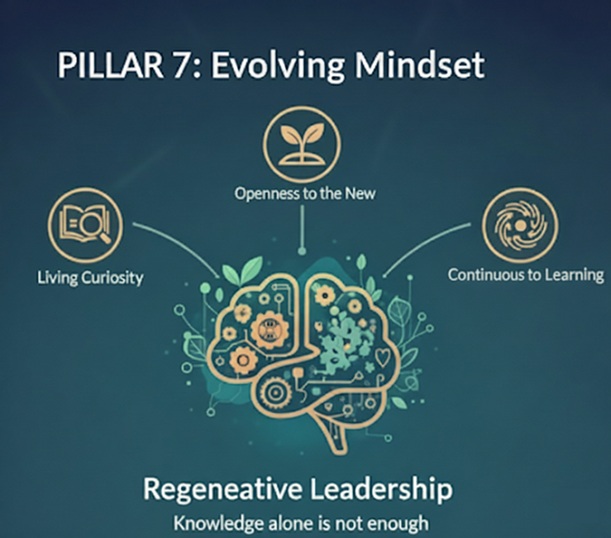
This is the seventh post in the series “The 11 Keys to Regenerative Leadership” Knowledge alone is not enough. Regenerative leadership requires a living curiosity, openness to the new, and continuous learning. An evolving mindset is more than a willingness to learn.
A leader with an evolving mindset:
This pillar connects with models such as:
Practical example: The impact was deeper, not because they got it right the first time, but because they evolved with intention. Regenerative mindset is not about knowing more In your experience: what habits strengthen a truly evolving mindset? This post is part of the series The 11 Keys to Regenerative Leadership |
|
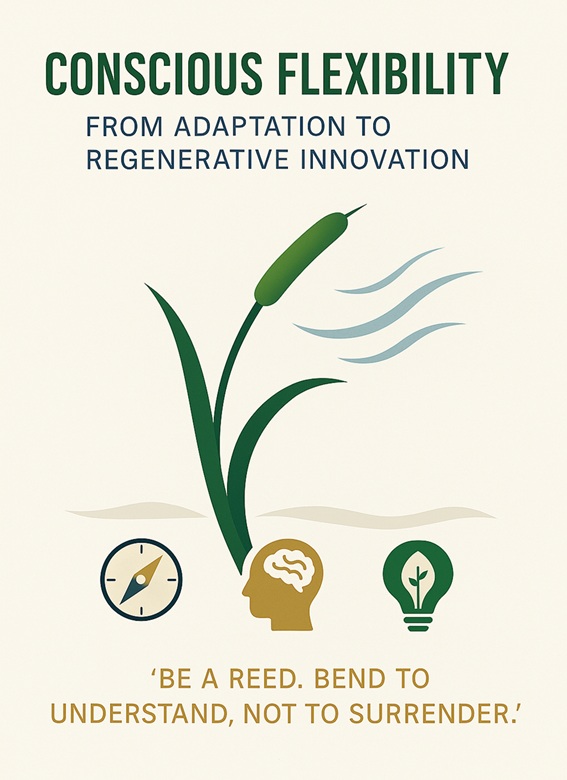
Complementary post to Pillar 6 — Flexibility Not every change is evolution. True flexibility is not just the ability to adapt. It is awareness in motion. It is discernment applied to context, transforming change into learning, innovation, and real impact. As one reader of this series shared: “Flexibility anchored in purpose drives regeneration and learning.” Exactly so. It’s about responding wiser to what the system needs. When flexibility is anchored in purpose:
Practical example:
Be a reed. In your organization: is flexibility a reaction… or awareness in action? This post is part of the series The 11 Keys to Regenerative Leadership |
|
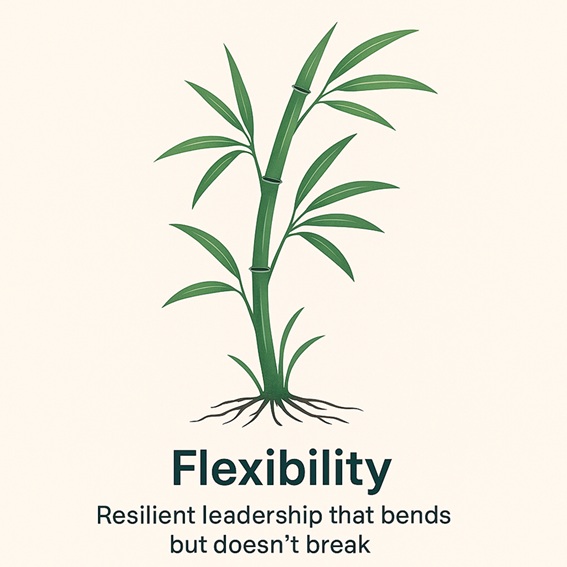
This is the sixth post in the series “The 11 Keys to Regenerative Leadership” Flexibility is not weakness. In regenerative leadership, flexibility is a conscious response to context, not an impulsive reaction to pressure. It’s knowing when to hold the line… and when to redesign. Healthy flexibility grows from three sources:
In complex, unpredictable environments, flexible leaders are like bamboo: they bend, but don’t break. They know when to pause, when to reposition, and when to move forward with renewed courage. Practical example: Instead of pushing forward blindly, we opened space for short feedback loops and iterative redesign, without losing sight of our purpose. The result: greater agility, less resistance, and decisions with stronger collective buy-in. Regenerative flexibility doesn’t abandon the vision, it adapts the path. In your context: where is flexibility the key to protecting what truly matters? This post is part of the series The 11 Keys to Regenerative Leadership |
|
Complementary post to Pillar 5 – Purpose & Impact A purpose that listens is a purpose that lives. A recent comment in this series captured it perfectly: “Purpose gains strength when it is not only redefined by leaders but revalidated through the voices of employees, partners and communities.” And that changes everything. In regenerative leadership, purpose is not a sentence on a wall This demands strategic humility:
Practical example: That shift in mindset transformed partnerships, communication, and even KPIs. Revalidating purpose with those who live it is a core practice in the final phase of the RCPCV™ cycle: Verify. And in your organization: This post is part of the series The 11 Keys to Regenerative Leadership |
|
Fiction writing is great. You can make up almost anything. - Ivana Trump |