Disciplined Agile
by Tatsiana Balshakova,
Mark Lines, Mike Griffiths, James Trott, Bjorn Gustafsson, Curtis Hibbs, Scott Ambler

This blog contains details about various aspects of PMI's Disciplined Agile (DA) tool kit, including new and upcoming topics.
View Posts By:
Tatsiana Balshakova
Mark Lines
Mike Griffiths
James Trott
Bjorn Gustafsson
Curtis Hibbs
Scott Ambler
Past Contributors:
Joshua Barnes
Michael Richardson
Daniel Gagnon
Valentin Tudor Mocanu
Kashmir Birk
Glen Little
Klaus Boedker
Recent Posts
DA 5.6 is released
Disciplined Agile 5.5 Released
Choose Your WoW! Second Edition Is Now Available
Requisite Agility applied in Project Management
Disciplined Agile and PMBoK Guide 7th Edition
Categories
#ChoiceIsGood,
#ChooseYourWoW,
#ConsumableSolution,
#ContinuousImprovement,
#CoreAgilePractices,
#experiment,
#Experimentation,
#GuidedContinuousImprovement,
#Kaizen,
#LifeCycles,
#ProcessImprovement,
#TealOrganizations,
Adoption,
agile,
agile adoption,
Agile Alliance,
Agile Business Analyst,
Agile certification,
agile data,
agile governance,
agile lifecycle,
agile metrics,
agile principles,
agile transformation,
Agile2018,
Agile2019,
Agile20Reflect,
AgileData,
Analogy,
announcement,
Architecture,
architecture,
architecture owner,
Articles and publications,
Asset Management,
Atari,
Backlog,
Barclays,
being agile,
benefits,
bi,
blades,
book,
Branching strategies,
Browser,
Business Agility,
business intelligence,
business operations,
capex,
Case Study,
Certification,
certification,
charity,
Choose your WoW,
CMMI,
cmmi,
Coaching,
Collaboration,
Communications Management,
Compliance,
Compliancy,
Conference,
Construction,
Construction phase,
Context,
Continuous Improvement,
coordination,
COVID-19,
Culture,
culture,
Cutter,
DA,
DAD,
DAD Book,
DAD discussions,
DAD press,
DAD roles,
DAD supporters,
DAD webcast,
DADay2019,
Data Management,
database,
dependencies,
Deployment,
Development Strategies,
DevOps,
disaster,
Discipline,
discipline,
Disciplined Agile,
disciplined agile delivery,
disciplined agile delivery blog,
Disciplined Agile Enterprise,
disciplined devops,
Documentation,
Domain complexity,
dw,
DW/BI,
Energy Healing,
Enterprise Agile,
Enterprise Architecture,
Enterprise Awareness,
enterprise awareness,
Essence,
estimation,
Evolving DA,
Executive,
Experiment,
facilitation,
FailureBow,
feedback-cycle,
finance,
Financial,
FLEX,
Flow,
foundation layer,
Funding,
GCI,
GDD,
Geographic Distribution,
gladwell,
global development,
Goal-Driven,
goal-driven,
goals,
Governance,
GQM,
Guideline,
Hybrid,
Improvement,
inception,
Inception phase,
India,
information technology,
infosec,
Introduction,
iterations,
Kanban,
large teams,
layer,
lean,
Lean Startup,
learning,
Legal Project Management,
LeSS,
Lifecycle,
lifecycle,
Manifesto,
mark lines,
marketing,
MBI,
Metaphor,
Metrics,
metrics,
mindset,
Miscellaneous,
MVP,
News,
News and events,
Non-Functional Requirements,
non-functional requirements,
Non-solo development,
offshoring,
Operations,
opex,
Organization,
Outsourcing,
outsourcing,
paired programming,
pairing,
paper,
People,
People Management,
phases,
Philosophies,
Planning,
PMBoK,
PMI,
PMI and DA,
PMI Chapter,
Portfolio Management,
post-format-quote,
Practices,
practices,
Principle,
Process,
process improvement,
process tailoring,
Product Management,
product owner,
Product Owners,
productivity,
Program Management,
Project Management,
project-initiation,
Promise,
Quality,
quality,
rational unified process,
Refactoring,
Reiki,
Release Management,
release management,
Remote Training,
Remote Work,
repeatability,
requirements,
Requirements Management,
research&development,
responsibilities,
retrospectives,
Reuse,
Reuse Engineering,
ride for heart,
rights,
Risk Management,
Risk Management,
Risk management,
Roles,
RUP,
SAFe,
sales,
Scaling,
scaling,
scaling agile,
Scheduled Workshops,
SCM,
scorecard,
Scrum,
ScrumMaster,
SDLC,
Security,
security,
self-organization,
SEMAT,
serial,
skill,
solutions software consumable shippable,
Stakeholder Management,
strategy,
Support,
Surveys,
Teal organizations,
team development,
Team Lead,
team lead,
Teams,
Technical Debt,
Teleconferencing,
Terminology,
terraforming,
test strategy,
testing,
time tracking,
Tool kit,
Toolkit,
tools,
traditional,
Transformation,
Transition iteration,
transition phase,
Uncategorized,
Upmentors,
Using PMI Standards,
value stream,
velocity,
vendor management,
Virtual Training,
Workflow,
workflow,
workspaces
Date
Viewing Posts by Scott Ambler
| Reuse engineering is an important, and arguably advanced, aspect of the Disciplined Agile toolkit. The challenge is that reuse engineering requires significant discipline and organizational maturity to be successful, hence we tend to run into far more talk about reuse than action. Having said that, many organizations have been very successful with reuse. The following diagram overviews the internal workflow of a reuse engineering team, capturing key activities (the blue bubbles) that the team performs. This blog posting explores what reuse engineers do in practice.
.jpg)
Let’s work through the primary activities performed by reuse engineers:
- Guide teams in reuse. An important activity for reuse engineers is to provide guidance to delivery teams regarding what is available for reuse, how to go about accessing and applying the reusable artifacts, and educating teams in why reuse is important to both the team and to your organization. Very often a team’s architecture owner will collaborate with the reuse engineering team to bring a reuse engineer into the team at the right time.
- Obtain assets. Reuse engineers will obtain reusable assets from a variety of sources, including from the marketplace and from internal delivery teams. Based on the various organizational roadmaps, and the needs of the delivery teams that they’re working with, the reuse engineering team will often work with delivery teams to identify and obtain the appropriate assets from the marketplace. The goal is to find assets that fit the needs of individual teams in a way that aligns with the direction of the organization. Furthermore, reuse engineers tend to monitor what delivery teams are doing, often by working closely with the organization’s enterprise architecture team and the architecture owners on delivery teams, to help them identify potentially reusable assets. When a team believes it has built something that is potentially reusable by others, or when the reuse engineers believe they have done so, then the reuse engineers will work with the team to understand and harvest that asset.
- Publish reusable assets. An asset is potentially reusable when it is of high quality, it is appropriately documented, one or more examples exist of how to use it, and it is findable by others. The publishing process ensures that all of these criteria are true. The reuse engineers will do the work to publish the asset, refactoring and documenting it as needed and harvesting any usage examples if available (and creating some when not). After doing so, they will save the asset and its related supporting artifacts into your organization’s reuse repository, announcing the availability of the new asset after doing so. Note that reuse repositories, also called asset managers, have fallen out of favor in the past few years due to the complexity of the available products on the market and the propensity of organizations to use products like Git or Microsoft SharePoint as repositories.
- Configure asset for specific use. Reuse engineers will often work with a team to help them to configure an asset for specific use. The goal is to make it as easy as possible for others to reuse existing assets, thereby increasing the chance of rate of successful reuse within your organization.
- Integrate reusable assets into a solution. Reuse engineers will often work with delivery teams to integrate a reusable asset into their solution, once again to make it as easy as possible for teams to reuse existing assets. Interestingly, an important aspect of harvesting an asset for reuse is to help the source team to integrate the improved version of the asset back into their solution. This helps to increase the likelihood that teams will offer up potential assets for harvesting and publishing.
- Evolve reusable assets. Assets need to evolve over time to reflect changing requirements and implementation technologies. The implication is that the owners of the assets, often the reuse engineering team, will need to evolve their assets, publish new versions, and deprecate old versions. This is work that must be funded and supported properly.
If your organization is serious about reuse engineering then they will explicitly fund a reuse engineering team and enable them to work in the manner that we’ve described here. For more information, you will find the article Reuse Engineering to be of value.
|
Posted
by
Scott Ambler
on: January 24, 2017 10:41 AM
|
Permalink |
Comments (0)
| IT Portfolio Management addresses how an IT organization goes about identifying, prioritizing, organizing, and governing their various IT endeavors. Disciplined Agile Portfolio Management seeks to do this in a lightweight and streamlined manner that maximizes the creation of business value in a long-term sustainable manner. IT endeavors typically include solution delivery initiatives/projects, stable product development teams, business experiments (along the lines of a lean startup strategy), and the operation of existing IT-based solutions.
Being agile, having an agile mindset, is foundational to working in an agile manner. The Disciplined Agile Manifesto and the principles of lean software development provide an important start at this mindset. In this blog we explore similar agile philosophies that are specific to successful portfolio management. These philosophies are:
- Keep it simple. Keep your portfolio management activities as streamlined and lightweight as can be. Your goal should be to focus on making good decisions and providing guidance to people, not on maintaining extensive documentation or reviewing documentation. You still may choose to maintain artifacts such as a portfolio roadmap and portfolio budget, but those too should be as lightweight and concise as possible.
- Focus on value over cost. Shifting your mindset from “what is this going to cost?” to “what value will this generate?” is critical to your success because it helps you to focus making better IT investments. You want to invest in IT endeavors that enhance your organization’s ability to produce value for your customers. This in turn provides the profits required for further investment.
- Reduce the cost of delay. One of the strategies for maximizing stakeholder value is to invest in developing functionality that will provide value to the organization soonest. For example, if you delay developing functionality that will generate annual revenue of $10 million for six months you have an effective cost of delay of $5 million because you missed out on half a year of revenue. Disciplined agile portfolio managers consider the cost of developing a solution, the cost of delay that results from putting off said development, and the revenue generated (or cost savings) when calculating the overall value of a solution.
- Invest in streamlining the creation of value. Not only do we want to produce value for our customers, we also want to be good at doing so. The implication is that we sometimes need to invest in ourselves through process or environment improvements.
- Prefer stable teams over project teams. Although portfolio management is often believed to be the oversight of project teams, it really is more about the coordination and oversight of teams in general. In Disciplined Agile we recognize that an initiative is seldom finished at the end of a “project”. There are usually subsequent changes required over time requiring future releases of the solution. The agile community has discovered that long-lived stable teams, whose membership evolves over time, have significant advantages over short-lived project teams. A significant productivity improvement occurs when IT organizations shift away from the project mindset of bringing people to the work and instead decide to bring work to the people (the stable teams).
- Align teams to value streams. These stable teams should be aligned long-term to value streams or lines of business (LOBs). High performing agile teams reliably deliver value frequently to their business stakeholders. As a result the business learns to trust the teams aligned to their areas. This positive feedback cycle maximizes the effectiveness of your agile teams. Additionally, over time they learn more about the business adding to their effectiveness.
- Enable diversity. Every person, every team, and every organization is unique. Every team faces a unique situation that evolves over time. The implication is that teams must be allowed to organize themselves and to tailor their process to meet the context of the situation that they face. This is why the Disciplined Agile (DA) toolkit focuses on providing, and comparing and contrasting, a wealth of process choices. The implication for portfolio managers is that they need to be flexible in their approach. They will work differently with each team because each team works differently, yet they must still provide good guidance to these teams and monitor the effectiveness of each team appropriately.
- Trust but verify. Effective governance is based on enabling and then trusting your teams to do the right thing. However, effective teams monitor themselves through the use of automated dashboard technology and close collaboration, and the metrics that teams collect should be made visible to senior management and other stakeholders so that they may monitor what is happening.
- Govern by risk not by artifacts. Traditional governance often focuses on the review of common artifacts such as requirement documents, architecture models, and test results. Because it is relatively easy for teams to create the documentation that you want to see, in practice there is very little governance value in reviewing these artifacts. Agile governance instead focuses on addressing common risks such as ensuring there is an agree to vision for what the team should accomplish, that the architectural strategy has been proven to be viable early in the lifecycle, and that the team has produced sufficient business value for their stakeholders.
- Rolling wave over annual planning. Annual planning often begins in earnest mid-year which means that prioritized initiatives may not be actually delivered for up to 18 months in the following year. This is not business agility. Make your planning a continuous “rolling wave” activity year round with more detail devoted to planning initiatives no longer than 6 months out. Initiatives planned beyond 6 months should be described at a very high level.
- Prefer small initiatives over large initiatives. It is a proven fact that the larger the initiative the greater the chance of failure. Smaller initiatives are easier to plan and are lower risk to execute. Keep your initiatives small to allow for more frequent delivery of value with less investment in work in progress (WIP).
- Invest in quality. Ensuring that IT delivery teams produce new business value for your organization is clearly important. But so is ensuring that you will still be able to continue doing so a few years from now. To ensure the long-term sustainability of your IT teams you must allow them to make investments in quality. These investments include building high quality assets in the first place but also fixing low quality assets, what agilists refer to as paying down technical debt, as well.
- Optimize the whole. Disciplined agilists are enterprise aware. We choose to optimize the whole instead of locally optimizing a single activity. The implication is that you cannot consider portfolio management on its own but instead must consider it in the context of the other parts of your organization that it affects. A strategy that may make things easier to manage your portfolio, such as having a single way to fund IT delivery teams, may make it easier for your portfolio management efforts but could inflict undue costs and bureaucracy on the teams that you’re funding. For example, does it really make sense for a team asking for $50,000 in funding to go through the same level of rigor as a team asking for $5,000,000? Likely not. Context counts.
Our experience is that the philosophies describe above enable portfolio managers to be more effective in practice. We hope you have found this blog of value and we welcome your feedback.
|
Posted
by
Scott Ambler
on: December 11, 2016 05:44 PM
|
Permalink |
Comments (0)
| 
A common challenge that we run into when working with organizations adopting Disciplined Agile strategies is helping them to identify and then coach people for the Product Owner (PO) role. This is often easier said than done due to the dearth of people with the required sill and mindset. In this blog we explore several strategies to address this challenge.
What Are You Looking for in a Product Owner?
Let’s begin with a review of the requirements for a good product owner:
- Analysis skills. POs need to be able to elicit requirements, explore them with stakeholders, negotiate priorities, facilitate modeling sessions, and in some cases document requirements.
- Decision-making authority. POs need to be empowered to prioritize the work of the team AND need to be comfortable with doing so.
- Good stakeholder contacts. POs need to know who to work with in the entire range of stakeholders, including both business and technical stakeholders.
- Full-time availability. This is a full time job, and at scale often proves to require more than a single person in the role (more on this in future blog postings). They’re available to the team on a daily basis.
- You want them in the position for several years. It takes time to grow an effective PO, depending on the background of the person we’ve seen people take between six and eighteen months to truly become comfortable in the role. This is a fairly large investment for your organization, so once you’ve made that investment its reasonable to want someone to stay in the role for at least a few years.
- They understand both your business domain and IT infrastructure. When taking a Disciplined Agile approach to product ownership the PO is responsible for representing all stakeholders, including both technical and business stakeholders. An implication of that is that POs should have a good understanding of the business domain and direction as well as your existing IT infrastructure and the direction that it’s going in. These understandings will be very important for prioritizing the work effectively.
Given the skill requirements it shouldn’t be surprising to anyone that there is a shortage of candidates for the PO role in most organizations. Let’s explore your options.
Potential Sources
There are several potential sources of new product owners. The following table compares and contrasts these options. As you can see there is no ideal option available to you, and the reality is that you will likely need to obtain PO candidates from whatever source you can find.
| Potential Source |
Advantages |
Disadvantages |
| Business analyst |
- Strong analysis skills
- May have a very good understanding of the overall business
- Likely to have good stakeholder contacts
- Likely available full time
|
- May not have decision making authority nor be comfortable with it
- May not have an understanding of the technical infrastructure
|
| Business architect |
- May have a very good understanding of the overall business
- Likely to have good stakeholder contacts
- Likely available full time
|
- May not have decision making authority nor be comfortable with it
- May not have an understanding of the technical infrastructure
|
| Business executive |
- Has decision making authority and experience
- Likely has a good understanding of the business
|
- Unlikely to have the time to be a product owner
- Many only be focused on a single line of business (LoB)
- Unlikely to have a sufficient understanding of the technical infrastructure
- Unlikely to have good analysis skills
|
| New hire |
- You can potentially hire someone with the requisite skills
- Available full time
|
- They are unlikely to have the stakeholder contacts, or understanding of your organization, required to be effective (in the short term)
|
| Project manager |
- Has decision making authority and experience
- Might have decent analysis skills
- Likely available full time
|
- May not have a sufficient understanding of the technical infrastructure
- May not have full range of stakeholder contacts
- May not have good relationship with delivery team
|
| Senior business person |
- Likely strong at a single LoB
- May have decision making authority and experience
- Likely to have very strong connections in the business
|
- Rarely available full-time
- May not have an understanding of the full range of business
- Unlikely to have an understanding of the technical infrastructure nor connections with technical stakeholders
- May not have analysis skills
|
| System analyst |
- Strong analysis skills
- Likely to have an understanding of the technical infrastructure and the overall business
- Available full time
|
- May not have strong connections with business stakeholders
|
An interesting strategy that we’ve found fruitful, albeit one that borders on ageism, is to look for potential candidates whom have been with your organization for a long time and who are getting close to retirement. These are experienced people who therefore are likely to have a good understanding of your organization and where it’s headed, they very likely have a good contacts throughout your organization, and they’re very likely looking for an interesting and stable position that will last until they’re ready to retire. Given that the investment required to create a Product Owner is rather steep so therefore you want someone willing to stay in the position for at least several years, and given that these are experienced people looking for a position that will last several years, it’s a very good alignment that you should consider taking advantage of.
Have a Clear Career Path
A critical success factor for attracting people to the role of PO is to have a clear and viable career path for them. If it isn’t obvious to people where they would go next after becoming a PO, or worse yet if becoming a PO is seen as a career dead end, then why would anyone choose to step into this role? One option for POs is to become product managers, if a product management function exists in your organization. Another career path is for POs to move into a senior business or IT leadership position. Being a PO gives people a deeper understanding of how IT fits into the larger organization and how it works in practice – key skills for anyone in senior management these days.
|
Posted
by
Scott Ambler
on: November 21, 2016 05:53 AM
|
Permalink |
Comments (0)
| One of the interesting trends that we’re seeing within organizations taking a disciplined agile approach to solution delivery is the preference for stable teams. Stable teams, also called stable product teams or simply long-term teams, are exactly as they sound – they remain (reasonably) stable over time, lasting longer than the life of a single project. This blog explores the differences between project teams and stable teams and then overviews the advantages and disadvantages of the stable team approach. We also explore the issue of how stable teams evolve over time.
Stable Teams
As you can see in the following diagram, with a project team approach we say that we bring the team to the work. What we mean by that is that we first identify the need to run a project, perhaps to build the new release of an existing solution or to build the initial release of a new solution, we build a team to do the work. Once the work is done, in this case the solution is successfully released into production, the team is disbanded and its team members move on to other things.

The stable team approach is a bit different. In this case we first build an effective team then we continuously bring valuable work to the team to accomplish. In this situation the work never really ends, but instead we replenish the team’s work item list (or work item pool depending on the lifecycle being followed) regularly. The team stays together and continues to produce value for your organization over time.
Of course the term “stable team” is a bit of a misnomer as they do evolve over time. For example, many people like to stay on a team for a couple of years and then move on to another team to gain new skills and perspectives. This is good for them and good for your organization as it helps to keep your teams fresh. Sometimes you will want to grow or shrink a team. Sometimes you will discover that two people aren’t working well together and you need to split them up. The point is that there are very good reasons for your stable teams to evolve over time.
We wouldn’t be disciplined if we didn’t explore the trade-offs involved with stable teams.
The Advantages of Stable Teams
There are several advantages to stable teams:
- Lower management overhead. There is clearly less “resource management” to be done because you’re not constantly forming and disbanding project teams. In fact, this lower need for resource management activities is one of several factors why agile IT organizations need managers than non-agile IT organizations.
- Easier team budgeting. The annual budget for a stable team is incredibly straightforward to calculate: Multiply the number of people on the team by the fully burdened cost of an IT person for your organization. Once again, less management work required for this.
- You build better teams. When you build project teams you tend to take the people who are currently available (often referred to as sitting on the bench). With a stable team approach you’re motivated to build your teams with the right people, and very often its best for the team to build itself by inviting others who they believe will fit in well.
- There is greater opportunities to build trust within the team. It takes time to build trust within a team. Greater trust leads to greater willingness to work together in a more streamlined manner. As Stephen Covey insightfully points out, trust enables speed.
- There’s a greater opportunity for safety. It takes time to build an environment where people feel safe. In safe environments there is a much greater chance that they will share ideas and be willing to try new things because they don’t fear being thought less of or even punished.
- There is less overhead from team formation. You’re forming teams far less often with a stable approach compared to a project team approach, hence there is less overhead in total for your organization.
- Better team performance. Consider the analogy of a train. Just like it takes time to bring the train up to cruising speed it takes time for the team to jell. Bringing work to a seasoned team that works together well is like jumping onto a train going at full speed: it’s faster in both cases because you don’t have to get going from a full stop.
- You have more efficient utilization of staff. With this approach it is far less likely that someone will be “sitting on the bench” because they will instead be an active member of a team. When someone is hired it is directly into a team. Throughout their career they will move from team to team as appropriate. The only time that they might not be utilized is when their on vacation, sabbatical, or if you purposefully disband a team. The first two reasons are something you still have with the project team approach, and the last reason should happen a lot less often.
- Your teams are more likely to improve. When a team knows that they will be working together for a long time, and particularly when they are responsible for the entire delivery lifecycle from beginning to end, they are more likely to streamline their work so as to make things better for themselves.
The Disadvantages of Stable Teams
There are several disadvantages to stable teams:
- Teams can become too stable. A real danger of stable teams is the potential for groupthink – everyone on the team starts to think and work in a common way, thereby being in danger to common blindspots. Luckily people still want to move to other teams for career management reasons, offering the opportunity to bring new viewpoints into other teams. In the Disciplined Agile (DA) toolkit we have the continuous improvement process blade which supports sharing of ideas across teams so that can also lessen the chance of groupthink. And, as mentioned earlier, some people may need to be motivated to move on to another team for interpersonal reasons.
- You still may need to do projects. Sometimes your business team makes promises to their customers. For example, in a software company a sales person makes a big sale and promises that by a certain date your solution will have additional features that the customer needs (in immature organizations they’ll even make such promises without first negotiating this with the delivery team). Another example would be a financial institution that needs to fulfill new industry regulations that require changes to existing solutions. In both of these cases there is a large amount of work to be done that needs to be delivered before a certain date, and this may motivate you to treat this work as a project. You would still bring this work to the appropriate stable team(s) to accomplish as you normally would. However, you would also track the performance of the work to ensure that it is delivered in its entirety as appropriate. The implication is that projects may not completely go away
Evolving Stable Teams Over Time
Stable doesn’t mean stagnant. Of course you still have basic people management issues such as people wanting to expand their skill set by working on something new by rotating to another team, people leaving the organization, and new people joining the organization. So the team itself may go on for many years even though the membership of the team evolves over time. Ideally these membership changes are not too disruptive: It’s not too bad adding a new person every month or so, or losing people at a similar rate, but gaining or losing several people in a short period of time can be painful.
Our Recommendation
Start experimenting with stable teams if you’re not already doing so. For most organizations the advantages clearly outweigh the disadvantages. In fact, you can see this in the Longevity decision point of the Form Initial Team goal diagram below.

|
Posted
by
Scott Ambler
on: November 13, 2016 09:24 AM
|
Permalink |
Comments (1)
| A common question that we get from teams who are new to agile is whether you should assign points (sizes) to defects. From a Disciplined Agile point of view we know that the answer will vary depending on the context of the situation, or in other words “it depends.” The really disciplined answer though is to say on what it depends, which is what we explore in this blog.
Rod Bray, a senior agile coach and Disciplined Agile instructor, suggests this principle:
Don’t reward people for shoddy work
An implication of this is that if a team is injecting defects, they’re producing shoddy work, then it makes sense that their velocity suffers when they have to spend time fixing those defects. The decrease in velocity is a visible trigger to investigate, and address, the cause of the productivity loss. But what if the “shoddy work” wasn’t caused by your team? What if the “shoddy work” was previously acceptable to your stakeholders? Hmmm… sounds like the context of the situation counts in this case. The following flowchart works through common thinking around when to size a defect. Note that this is just our suggestion, your team could choose to do something different. Let’s work through common scenarios to understand whether defects should be sized or not. These scenarios are:
- Is it existing technical debt?
- The defect is injected and found by the team
- The defect is found by independent testing
- The defect is found after the solution is released

Do you size the repair of existing technical debt?
The quick answer is sometimes. For the sake of discussion we’ll assume that this technical debt has existed for a long time, potentially years. From a purist point of view technical debt may be injected at any time (this is obviously true) and as a result may only be seconds old. In the case of technical debt that is very new, refer to the logic below.
The key issue is whether fixing the defect is going to be a substantial effort. This of course is subjective. Is the work substantial if it’s less than an hour of effort? Several hours? Several days? Several weeks? This is a bar that your team will need to set. Something that will impact your schedule is likely to be substantial (and something your Product Owner is likely going to want to prioritize so that it can be planned for appropriately). Clearly a defect that takes several days or more to fix is substantial and one that takes less than an hour is likely not. Something that takes several hours or a day or so is likely something you need to think about.
Do you size defects injected and by found by the team?
No, the exception being technical debt (see above). This falls under the principle of not rewarding the team for shoddy work.
Do you size defects found by independent testing?
Some teams, particularly those working in regulatory environments or working in complex environments, may be supported by an independent test team. An overview of the independent testing strategy is presented below. With the exception of the defect being found in existing technical debt (see above), the defect should not be sized. Once again, the principle described earlier holds. Of course if you don’t have an independent test team supporting your team then obviously you can ignore this question.

Do you size defects found in production?
The answer is sometimes. As you can see in the high-level lifecycle diagram below, the DA toolkit explicitly recognizes that change requests are often identified by end users of an existing solution. These change requests are effectively new requirements that should be prioritized and worked on appropriately. Many organizations will choose to distinguish between two types of change requests, defects and enhancements, so that they may be treated differently. The issue is that defects are often tracked and, if the team is smart, they are analyzed to determine how they got past the team in the first place. Additionally you may find that defects and enhancement requests are charged for differently (a topic for a future blog).
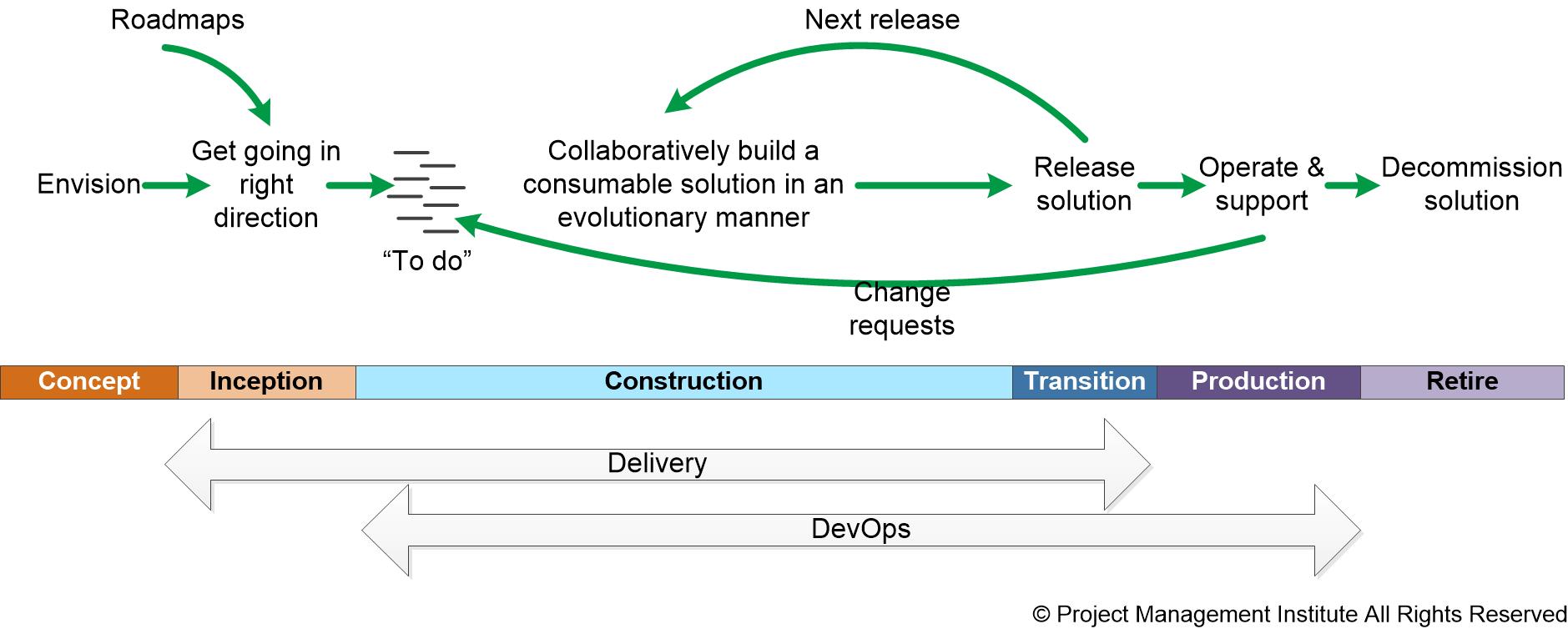
If you don’t distinguish between defects and enhancement requests then there’s nothing to do, you simply treat the change request as a new requirement and size it like you normally would. But if you do distinguish between types then you need to think about it a bit. If the defect is found during a warranty period then it shouldn’t be charged for. Sometimes, particularly when work is being outsourced, there is a warranty period of several weeks or even months after something is released where the development team is expected to fix defects for free. In this case you likely wouldn’t size the work in line with the principle described earlier. Once you’re out of the warranty period then it’s likely you want to assign points to it: The functionality in question passed testing and was accepted by your stakeholders, so they in effect have taken responsibility for it.
To summarize, the answer to the question “Should we assign points to a defect?” is “it depends.” In this blog we explored in detail why this is the case and described when and when you wouldn’t want to assign points.
I’d like to thank Kristen Morton, Rod Bray, and Glen Little for their insights which they contributed to this blog.
|
Posted
by
Scott Ambler
on: October 30, 2016 10:40 AM
|
Permalink |
Comments (0)
|
Maybe the dingo ate your baby.
- Elaine Benes
|







