Airbus A380. The downfall of a doomed product
From the Random Thoughts Blog
by Eduard Hernandez

Uniting the passion for writing and project management
Recent Posts
Autonomous vehicles: when 90% done means nowhere near ready
The accidental path to Project Management
What history reveals about AI and the Project Manager profession
When results aren’t enough: Rethinking Leadership
The Sagrada Família: A living Project Management case study
Categories
74-343,
Agile,
Agile,
Artificial Intelligence,
basadur,
Budget Management,
Career Development,
Certification,
Change Management,
Change; Change management; Team management,
Chapter,
Communications Management,
Complexity,
conceptualizer,
Cost Management,
data management,
Decision Making,
Estimating,
Ethics,
generator,
Giga Projects,
Goal Setting,
Governance,
Human touch,
implementer,
Leadership,
Lessons Learned,
machine learning,
MS Project 2013,
Negotation,
New Practitioners,
optimizer,
Organizational behavior,
Organizational Culture,
personal growth,
pharmaceutical; lifecyle management; agile; waterfall,
PMI,
Problem solving,
Product Owner,
Project Communication,
Project Management,
PSM I,
PSPO,
Resource Management,
Risk Management,
Scheduling,
Scope Management,
Scrum,
self-development,
Stakeholder management,
Strategy,
Teams,
test,
training,
Volunteering
Date
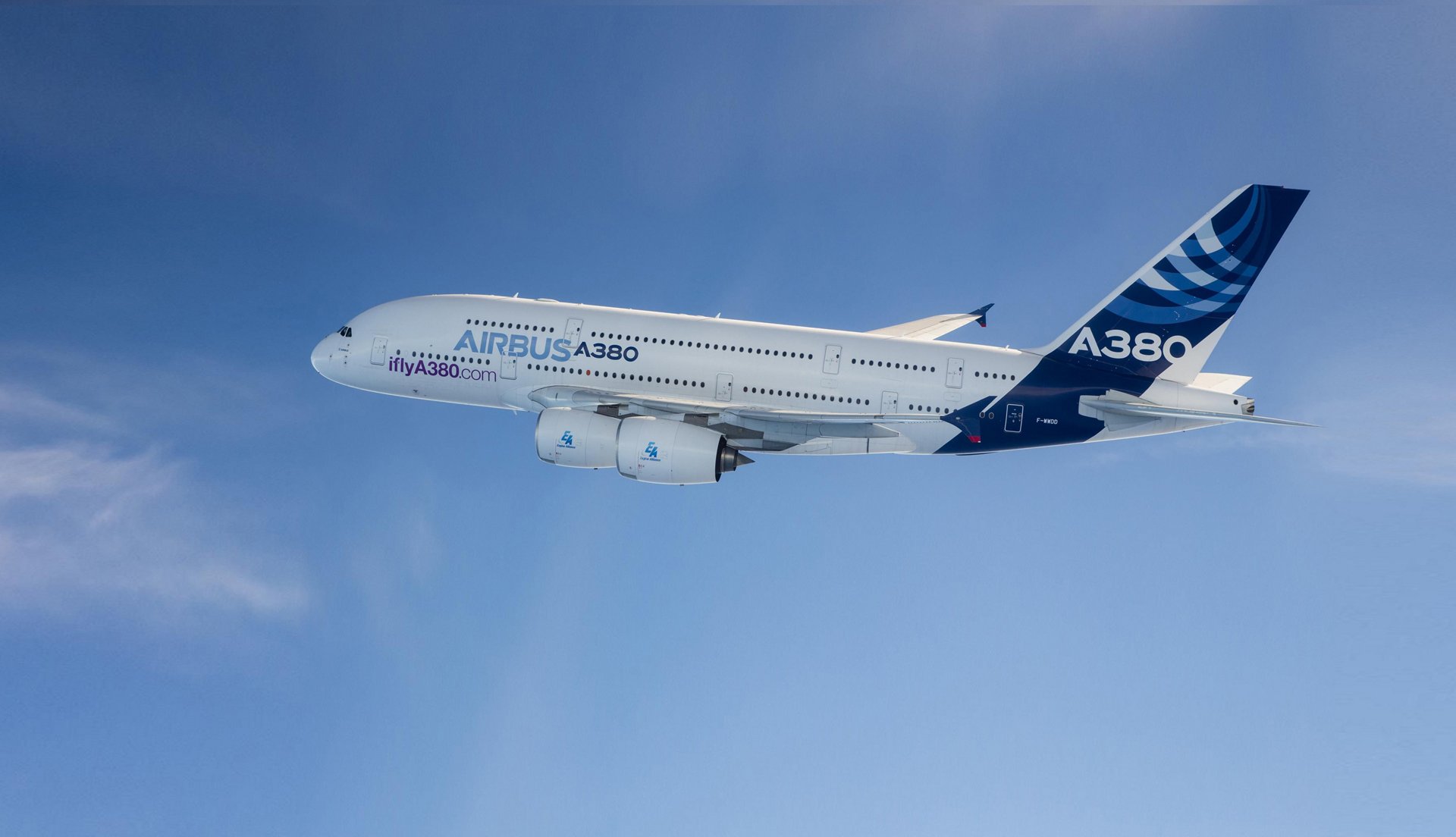
Six months ago Air France announced it will phase out its ten Airbus A380s by 2022. Rarely has an airline been as unhappy with the Airbus giant as the French, who are in general taking every Airbus aircraft. Other carriers like Singapore airlines - which received the first A380 back in October 2007 - has also started to replace these aircrafts with A350s. Lufthansa and British Airways will likely follow soon. As a consequence, Airbus will stop producing the world's largest passenger airliner as of 2021.
Why is the Airbus A380 being phased out earlier than anticipated?
Start with the why
Just like famous author and motivational speaker Simon Sinek writes in his book, start with the why. Why was the development and production of an Ultra High Capacity Airliner (UHCA) needed? Was Airbus A380 an innovative product that could challenge the air travel industry? The first studies date back from the late 1980s and were joined by both Boeing and Airbus. The former dropped out after a few preliminary meetings due to sound differences in their vision of aviation industry. On one hand, Airbus was betting on the spoke-hub model in which traffic planners organize routes as series of "spokes" that connect outlying points to a central "hub". On the other, Boeing believed that the future would follow the point to point model which emphasizes flying between two cities directly regardless of their size. The fewer routes required in the hub and spoke requires also bigger planes. Even though both models are used by airliners for transporting passengers from one point to another, the growth in the spoke hub model that Airbus was expecting did not occur. Every assumption is a risk, and this is no different.
Back to the drawing board
The Airbus A380 project launched in 2000 with a budget of 9,5 billion euros. The first prototype was released in 2005. However, serious issues with the electrical wiring were found. By then the project cost had skyrocketed to 18 billion euros. The delivery of the first commercial unit was delayed up to three times. In June 2005 a delay of 6 months was announced and then again in June 2006. Finally, the first A380 was dispatched in October 2007. The Program Manager and Airbus CEO made a good scapegoat and got fired. Tom Enders, the incoming Airbus CEO, said in 2019: "If you have a product that nobody wants anymore, or you can sell only below production cost, you have to stop it". A thorough and continuous analysis of the market trends along with other environmental factors (in this case, mostly politics) could have provided a landscape in which threats could have been turned into opportunities, and weaknesses intro strengths...but during an earlier phase, in the drawing board.
Future is uncertain
Just like the Concorde stopped flying in 2003 despite being a profitable business, Airbus A380 could perhaps be retrofitted and get a second life in the future. If this is the case, it will be best to take a good look at the assumptions and ask WHY.
Posted on: April 11, 2020 01:56 PM |
Permalink
Comments (7)
Please login or join to subscribe to this item

Alexandre Costa
Scrum Master| Integer Consulting - Pictet technologies
Loures, Portugal
Eduard,
Thank you for presenting this story it's very educational, and yes I agree you you, so many times the PM's and PgPM's forget to ask why in first place, a repeat this question every time is needed.
Alexandre
Alexandre
This is what happens when you build an extraordinary product that the market does not need.
While it is not as visible as the Airbus A380 the same story happened in the case of the Intel Itanium CPU. Intel developed a very advanced processor for future computing but the market didn't need it.
In my opinion both the Airbus A380 and the Intel Itanium have been successful products from a purely technical point of view but from a commercial point of view they have been epic fails.
Honestly the blame for these failures should not go to the technical experts that built the products nor to the program management specialists who helped with their development. The "guilty" ones are the CEO and the board of directors who approved the development of such products.
The Engineers and the Program Management Specialists might have done a very good job on developing the products but a technically advanced product is NOT automatically a commercial success.
I recognize the economic challenges that the A380 created, but having flown one in business class a few times, I'd take it any day over any other aircraft for passenger comfort in economy and business class, especially on Emirates. I will shed a few tears when they put it out to pasture...

Rami Kaibni
 Community Champion
Senior Projects Manager | Field & Marten Associates
New Westminster, British Columbia, Canada
Eduard
Economically it might not be feasible but just like Kiron, I flew the A380 multiple times in Business and First Class when I used to work in Shanghai as it was the only aircraft that operates between Shanghai and Dubai. It’s top notch but super expensive.
My second favorite aircraft for Business Class travel is the Air Canada Boeing 787 Dreamliner.
Going back to your point, I am not sure why they would retire such aircraft because as someone who used to travel extensively in the past, I see lots of merit from aircrafts of this size.
RK

Eduard Hernandez
Community Champion
Corporate Project Manager - Tech Transfer| Neuraxpharm
Barcelona, Cataluña, Spain
Thank you all for your feedback. We could all agree that Airbus A380 is indeed a good product; however, it does not make sense in the current market (similarly to the Concorde or even Jumbo Jets, also in phasing out process). The blog wanted to reflect on the conflict of interest between these two aspects. Have a good week everyone.

Michel Bäcker
Head of Project Management| Corden Pharma
Frankfurt Am Main, Germany
Always a great event to flew the A380! Makes me sad, but just the logicial consequence as for every product at the end of the life cylce.
Sad fate for a hi-tech project that no longer corresponds to the needs of the market.
Please Login/Register to leave a comment.
|
"You can't have everything. Where would you put it?"
- Steven Wright
|




