Value generation and project management: two sides of the same coin


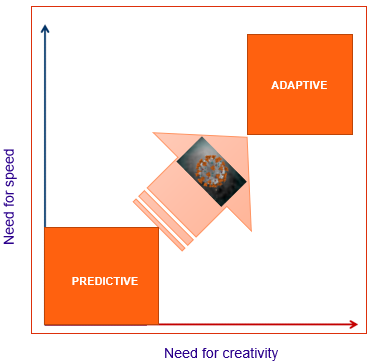
| The objective of this article is to provide a high-level analysis of the relationship between project management and the contribution of value in the achievement of strategic objectives. Concepts such as agile transformation or project economy have become part of the business lexicon in a rapidly changing environment. The covid-19 vaccine development and commercialization project is a representative example of a new paradigm in the creation and management of value. From the Great Pyramids to the project economy Moving to more recent times, it was not until the 20th century that the popularity and professionalization of project management increased and different associations began to emerge to proselytize various project management frameworks, tools and techniques. A transition process is currently underway towards the so-called project economy, in which people acquire the skills and abilities necessary to turn ideas into reality. Value is created through successful project completion, product delivery, and alignment with the organization's strategic goals. In the project economy, project managers abandon operational tasks and begin to bear higher levels of responsibility in converting ideas into value. The project manager of the 21st century Broadly speaking, there are two factors to consider when evaluating the suitability of a predictive or adaptive model to achieve the objectives of a project: the need for creativity and the speed of commercialization.
A manufacturing line validation project or one for the development of new drugs requires different levels of creativity and speed to market. The former fits well into more traditional or predictive management while the latter requires an approach that facilitates greater adaptability. There is no one model superior to the other, the two models or their mixture are perfectly viable and must be molded according to the specific needs that each situation and moment demands. Something similar to what happens with the so-called scrumban, an unregulated mixture of scrum and Kanban that creates misgivings in some purists but can be highly effective. There is no doubt, the world today is changing at a great speed. The acronym VUCA has been added to the dictionary of professionals in all fields. The paradigm shift affects aspects such as corporate culture, promoting collaboration and entrepreneurship, or structural ones, moving from a hierarchical or silos arrangement to others with a higher level of self-management. Projects and their managers are not impervious to these changes, continuously adapting without losing sight of the main objective: to promote change and add value. A 2019 Gartner study ensures that 80% of the tasks carried out by a project manager will have been eliminated by 2030 as a result of the rise of artificial intelligence. Report writing, monitoring or data collection will add to the list of machine payroll activities. Even the selection of projects that make up the portfolio can be delegated to computers. However, the project manager is still in the top 20 of the most in-demand roles across all industries. To stay in this privileged position, the project management professional must expand their field of action and incorporate a series of elements such as agile, lean, design thinking or product management, among others, thus becoming an implementing agent of business strategy. Vaccines in record time
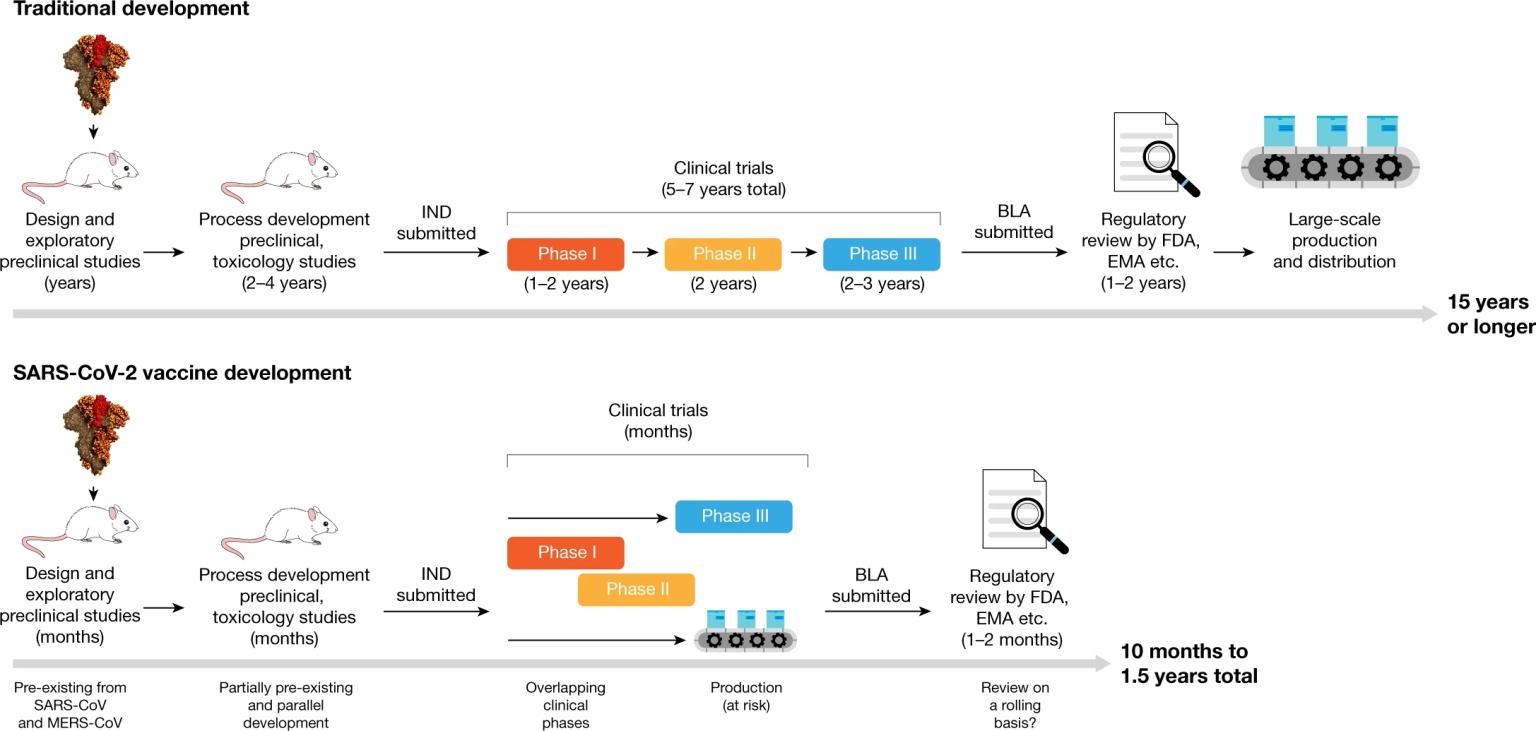
Although the stages are the same for both cases, there is a factor of 10 to 18 between the duration of the projects, thus making it possible to obtain value early. The accelerated development of vaccines against covid-19 is due to a multitude of circumstances: a very short research phase due to the prior knowledge of vaccines for SARS-CoV and MERS-CoV, the parallel execution of phases I and II of the clinical study (fast-tracking, in traditional project management jargon) and large-scale vaccine production before obtaining a marketing permit from regulatory authorities (another traditional project schedule management technique called lead). From a management point of view, the development of the new vaccines has used a hybrid model that adds traditional elements such as lead or fast-tracking to a highly agile environment. In addition, it is an example of generating value throughout the life cycle of the project. For example, mRNA technology was developed before the pandemic, thus generating value that was later realized in the creation of the vaccine. Gone are the times in which it was common to spend long periods without harvesting any fruit to end up delivering the value generated shortly before closing the project. The hybrid model used to commercialize coronavirus vaccines in record time has created a precedent for future developments in the biotechnology field. Driving change To quote the famous saying, the best way to deal with change is to help create it. Are you in? |


Owning by learning
| One of the frequently asked questions is whether a project manager should be knowledgeable (or an expert) in the field of the project. For example, can someone with a background in chemistry and little knowledge in IT systems architecture effectively manage a project to deploy a new ERP system? Most respondents indicated that although having a deep knowledge on the specific domain(s) is not mandatory to successfully lead a project, a certain degree of familiarity does certainly add value. My experience leading projects in the pharmaceutical sector, and within the manufacturing area in particular, concurs with the survey outcome. In fact, I have witnessed heavy struggles from seasoned IT project managers in the management of projects related to the manufacturing of pharmaceutical products.
One reason that could explain this is that the pharmaceutical industry is very highly regulated. Before one moves his right hand needs to ask permission to his left. Hyperbole aside, failing to understand and adhere to Good Manufacturing Practices (or GxP in general) will raise eyebrows from team members and other relevant stakeholders. How can this person manage these type of projects when he is lacking the very basic foundation upon which the rest is built? In addition, the manufacturing of medicines or APIs (active pharmaceutical ingredients) involve several disciplines such as chemistry, biology and engineering. A project to validate a new production process or to qualify a new equipment requires the completion of a set of deliverables such as IQs (Installation Qualification), OQs (Operational Qualification), PQs (Production Qualification) amongst many others. These documents are highly technical and even though they are authored, reviewed and approved by diffferent team members, the PM must be able understand their significance. By failing to do so, he risks becoming a mere project administrator whose main task is to follow up on the status of documents which importance can't explain. By using the suitable professional jargon, the PM increases his credibility and boosts his engagement towards the team and the project. Some theories indicate that organizations across all industries are transitioning towards a project economy. In this setting, the project manager must step up and expand his duties beyond the usual planning and controlling. In this paradigm shift, the PM will own the project in a broader sense of the term. The project economy requires well rounded professionals that can lead the whole process from idea to reality, from a drawing on a white board to a tangible item. If the project economy crystallizes, it is yet another reason to take all the necessary steps to become a knowledgeable individual and own the challenges that await us. |

Predict or Adapt. Why should we choose?
| One of the most popular thread in a project management forum is about predictive and adaptive project management methodologies, and whether only of the two will prevail. Black or white. Sweet or salty. Hot or cold. Like in most things in life, the sweet spot is somewhere in the middle. In this blog, I’d like to scratch the surface of this “dilemma” in the pharmaceutical industry. There are two factors to consider to assess the suitability of a predictive or an adaptive model in order to achieve the project goals: the need for creativity and the speed to market. If these two score low, a predictive model will likely be the best fit. Think of projects like the commissioning and qualification of a new manufacturing line or the implementation of a laboratory information management system. However, projects that require high doses of creativity or are time-to-market constrained fit better in an adaptive model. Think of projects related to the development of new drugs or investigation of new indications for existing products. At the end of the day, most projects are managed following a mix of these models, leaning more towards adaptive or predictive depending on the particularities of the project. The development of a vaccine against covid-19, the disease caused by SARS-CoV-2, is an example of this. On one hand, it was (still is) a project subjected to an enormous pressure. Speed to market scores very high. On the other hand, the steps to conceive, develop, register and mass produce a vaccine do not require creativity and are subjected to a stringent regulation from several regulatory bodies across the globe. The prestigious scientific journal Nature published a very informative infographic that depicts the roadmap for the development and commercialization of SARS-CoV-2 vaccine versus a traditional vaccine (Nature 586, 516–527, 2020). In short, both differ by a factor of 10! Compared to the traditional development, the schedule of SARS-CoV-2 vaccine makes use of two techniques that typically fall under the predictive model: fast tracking – by running clinical phases in parallel instead of sequentially – and crashing – throughout the whole project but more obvious in the assessment phase by the regulatory authorities (from 1 to 2 years to 1 to 2 months!). To summarize: “the best” model or a model that fits all does not exist. In a fast changing world it is crucial to avoid dogmatism and embrace the challenges that present themselves with an open mind. |
Paradigm change in the horizon
| Gallons of virtual ink have been poured in debating whether predictive lifecycle project management is outdated or not. It is also frequent to be confused about terms that are used interchangeably. In the projectmanagement.com forum is recurrent to find questions like "Is agile booming in detriment of waterfall?" without realizing that waterfall is a lifecycle management and agile is a mindset, an approach, and not a methodology. Both can live together – and they do – in complete harmony. Simplifying, there are two parameters that must be taken into consideration prior to assessing the lifecycle management that best fits the project needs.
The Pharmaceutical industry: a changing paradigm? When someone thinks of projects in the pharmaceutical industry tends to consider projects in R&D and in the development of new molecules in particular. In short, about 5 to 10 thousand molecules are kicked off in the drug discovery phase. Around 250 will make it to the preclinical phase and clinical trials will start with only 5 of those. Finally, 1 out of these 5 molecules will obtain approval for commercialization from the regulatory agencies. The whole process takes a minimum of 10 years, and can easily go up to 15. One can conclude that these projects are long, complex and extremely expensive. The search for a vaccine against SARS-CoV2, the virus that causes Covid-19, has shaken up the playing board. Timelines are being very significantly shortened and certain constraints have been loosen up in order to allow creative approaches. For example, drugs against malaria have been tested against the virus. Or timelines to start clinical trials have been very notoriously slimmed down. The need for speed is paramount given the death toll that this pandemic is causing. The commitment at a global scale to resolve this situation as quick as possible has caused fundamental changes not only in our personal life but also in the approach to manage R&D projects in the pharmaceutical industry. Time will tell if these changes have come to stay. |