
The Sagrada Família: A living Project Management case study


In project management we obsess about three constraints: scope, schedule and budget. Rarely does a single project illustrate the tension between them more dramatically than Barcelona’s Sagrada Família.1) A Schedule Without a Deadline (…for a Very Long Time)Construction of the Sagrada Família began in 1882 under architect Francisco de Paula del Villar; Antoni Gaudí took over in 1883 and transformed it into his life’s work. When Gaudí died in 1926, less than a quarter of the basilica was complete. For decades there was no realistic finish date. Interruptions - most notably the Spanish Civil War - and the loss of Gaudí’s plans only compounded uncertainty. In the early 21st century, project planners set 2026 (the 100th anniversary of Gaudí’s death) as a symbolic completion date for the main structures, especially the tallest central tower. However, decorative elements, interior work and ancillary features (like the controversial grand entrance stairway) are now expected to extend into the mid-2030s. 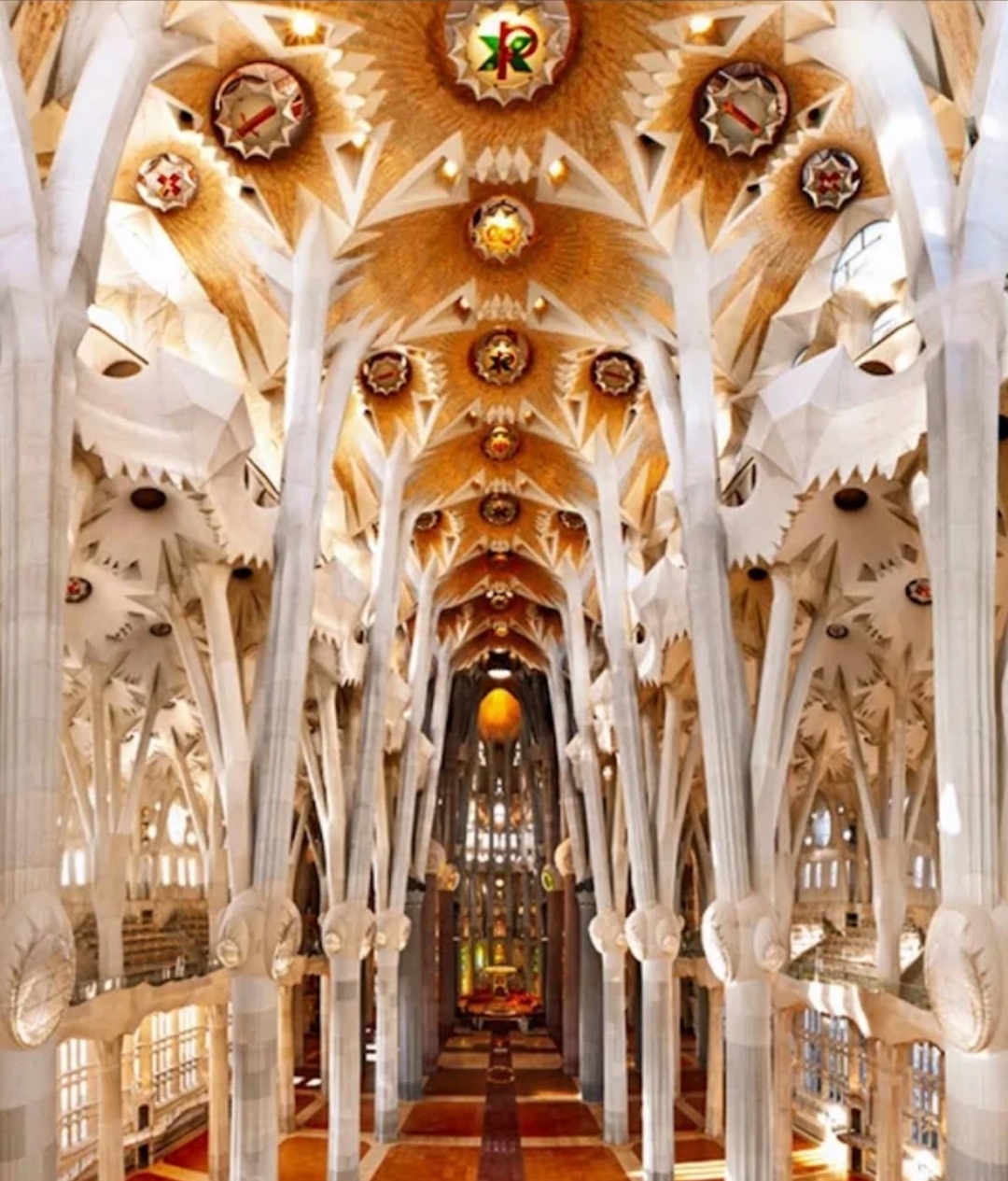 This makes the Sagrada Família one of the longest-running construction projects in history, approaching 150 years and counting, yet still deeply relevant and alive. A useful comparison is the Sydney Opera House, which began construction in 1959 with an expected delivery of 1963 and ultimately opened in 1973, 10 years behind schedule and dramatically over budget, yet today is celebrated not as a failure but as a monumental success. 2) Scope: From Cross to Cathedral to Cultural IconThe project’s scope has not been static. Early plans envisaged a monumental Christian cross configuration that would have required demolishing entire city blocks in Barcelona’s Eixample district, a plan that would be socially and politically untenable today. Over time, the focus shifted to building the basilica itself, and the symbolic cross of the Christian faith is now expressed primarily through the central tower dedicated to Jesus Christ, not as an urban-scale structure. This evolution reflects a unique interpretation of scope, less as “scope creep” and more as scope negotiation across generations, adjusting to cultural values, urban constraints and stakeholder expectations. 3) Budget: Finance Through Visitors, Not GovernmentsUnlike most large-scale heritage or civic projects, the Sagrada Família is not financed by state or church funds. From the beginning, it has relied on private donations, and in the modern era its primary funding source is ticket sales, which bring in millions of euros annually. Tourism revenue now directly supports ongoing construction, turning the budget constraint into a living mechanism rather than a fixed baseline. In 2024 the basilica attracted around 4.9 million visitors, making it one of Europe’s most visited monuments... despite being unfinished! 4) A Project That Breaks the Rules — and Still SucceedsBy traditional PMI standards, the Sagrada Família would seem to fail: - Schedule: No fixed deadline for most of its existence, regularly revised and extended. - Scope: Evolved radically from its original concept. - Budget: Dependent on market-driven revenue, not fixed capital allocations. And yet the project has become a global icon, a UNESCO World Heritage Site, and a thriving cultural and religious destination that draws millions of visitors each year. Projects such as the Sydney Opera House remind us that late and over budget does not inherently mean failure. What matters more is impact, enduring value, adaptability, and stakeholder engagement over time. The Sagrada Família challenges many of the assumptions we make about what defines project success. - Can a project still be considered successful if scope, schedule, and budget are never fully stabilized? - At what point does long-term value outweigh delivery efficiency? - Are there projects today (e.g. digital, infrastructure, or product-based) that should be managed more like living systems than finite initiatives? And perhaps the most uncomfortable question of all: how many potentially great projects do we cancel too early because they don’t fit our traditional success criteria? |
Amsterdam Metro Line Project
| The first blog I posted (https://www.projectmanagement.com/blog-post/29357/Successful-projects----predicted-) dealt about whether a reliable model could be developed in order to predict project success. The motivation of this second blog is to share a few thoughts about a project that will be soon completed in Amsterdam, where I relocated almost two years ago. I take this opportunity to encourage everyone to discover this wonderful gem in Western Europe. Also known as the Venice of the north, Amsterdam has a lot more to offer aside from the well-known coffeeshops and windows populated with women in skimp lingerie. Every since I moved here I heard the story of a new metro line, Noord-Zuid lijn, which completion was planned for 2011 and that will be finally opened in July 2018. Not only that; the original budget exploded from €1.46 bn to €3.1 bn! I had to read more about the reasons that caused the massive delay. The list below summarizes the main findings:
A poor management of project procurement, risks and requirements, just to name a few, seem to be the most obvious causes that led to the massive delay and budget overrun. This is a good example of how important is to follow what Abraham Lincoln stated already on the XIX century “Give me six hours to chop down a tree and I will spend the first four sharpening the axe”. In 2009, Alex Sheerazi was hired as Head of Communication Officer. His first mission was to fix project’s reputation. He stated “A very strong reputation is like a mattress, a cushion that can soften a blow. Small incidents then have a negligible impact. But in 2009 the reputation was down the drain. Every small incident was blown out of proportion. We needed to get some air into our reputation mattress again”. Sheerazi saw transparency as key. First off, he admitted that the project had turned out badly on several levels. However, also some positive and interesting aspects were worth sharing with the media. By placing positive images next to the negative ones, balance was created. In addition, by involving the media in every event, the project gained a better reputation. Next to it, Sheerazi connected the project to the city by engaging the Amsterdammers. For instance, excavation boxes were opened regularly for public tours and an underground lookout point was set up, with a great success (over 200k visitors in two years). Project managers and engineers changed their ways of communicating by creating project co-ownership with the citizens, or, as Dale Carnegie would put it, by providing them a feeling of importance. Several questions may arise, now that the project is about to be closed off. May the project be considered a success despite of the colossal deviations in budget and schedule? Did the communications strategy make up for the project shortcomings? What could have been done differently? I look forward to your comments in the section below. |


