Life Goes On: making the best out of Self-Isolation


| One third of world's population is confined. The impact of this pandemic on the economy is yet to be seen, but most economists picture a more than likely recession looming our way. On the positive side, everyone agrees that - it may take more or less time - but we will come out of this situat Contact old friends and expand professional network That cousin you were planning to call but it was never a good time, that old friend from university you promised to WhatsApp but never found a good reason to do so, that colleague from your previous employer with whom you got along so well but that you have not seen again after switching companies... Now it is a fantastic opportunity to reach out to them. In terms of professional network, it is a good practice to build it when it is not needed, so for when it is needed is then already too late. Explore LinkedIn and reach out to individuals or companies that might play a role in your present and future. Pick up hobbies or procrastinated activities Reading books (educational, novels, essays, etc.), watching TV shows or series that were sitting on the on the to-watch list for months, picking up hobbies to which not much attention could be paid due to the lack of time (painting, reading, playing an instrument, etc.)... All of these, and many more depending on the personal circumstances, will favor an efficient use of time - plus something will be learned. Like essayist Ralph Waldo Emerson once said "Unless you try to do something beyond what you have already mastered, you will never grow". Take in introspective look at yourself... and plan ahead This is by far the most difficult exercise since it requires diving in the inner soul of each individual. Similarly to a scrum retrospective at the end of each sprint, the same principle could apply to life. At certain time intervals, it is a good practice to look back and assess whether we have managed to fulfill the goals that we have set for ourselves. Are we where we wanted to be? And more importantly, to reflect on the direction forward. Someone once said "If you do not know where you are going, any road will get you there”. Reflecting on an apparently simple question such as "What do I want out of life?" allows the introspective process to begin. This pandemic is causing mankind to put the way we live under the magnifying glass. The positive impact on the pollution levels, for example, is making mankind reflect on whether we could live in a more sustainable manner and what we would sacrifice in our life style to accomplish this. If mankind is doing this exercise, why not also us individually? Stay safe everyone. |
 ion. As long as it is possible, most people are doing remote working which allows saving time on a daily basis (in the U.S., the average, one-way commute time is 26 minutes, according to the U.S. Census Bureau). How can this time be used to create additional value? The following list presents a few options. I look forward to hearing more from you in the comments section below.
Principled Negotation - So old, so relevant
| The skill set of a Project Manager must include the ability to negotiate. Negotiations are the means by which parties can resolve conflicts and thereby arrive at a mutual satisfactory solution. The problem is that often project stakeholders engage in positional bargaining, a negotiation strategy that involves holding onto a fixed idea or position regardless of any underlying interests. In fact, arguing over positions turns out to be inefficient, relationship endangering and might lead to unwise agreements. An alternative to this is called Principled negotiation. This name was given to the interest-based approach to negotiation set out in the best-known conflict resolution book, Getting to Yes, first published in 1981 by Roger Fisher and William Ury and advocates four fundamental principles of negotiation.
Every negotiator has interest in both the substance and the relationship. Often the relationship becomes entangled with the problem. Thus, it is imperative to separate the relationship from the substance in order to kick off an effective negotiation.
Quite self-explaining. The identification and discussion of interests is a wise manner to route the negotiation towards a conciliation of interests and not positions.
Instead of forming a premature judgement of the ideas thrown during a negotiation it is best to ensure an understanding between inventing and deciding. Also, instead of searching for a single answer try to broaden the options (a circle chart can be useful for this purpose). And instead of thinking that “solving their problem is their problem” create an environment that enables making decisions relaxed.
In negotiating to purchase a particular car, we would want to look at what that car sells for at other dealerships. The objective criteria are nothing less and nothing more than factual pieces of information, independent of the parties in the negotiation, that are relevant to what should or should not be agreed to in that negotiation. Principled negotiation produces wise agreements amicably and efficiently. Principled Negotiation is further enhanced by applying the eight following pillars of negotiable wisdom:
|

Project Rescue
Categories:
Project Communication
Categories: Project Communication
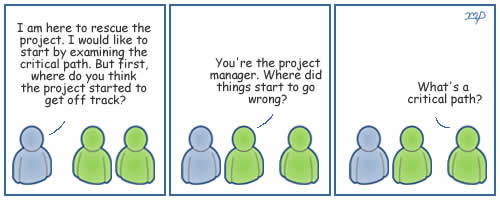
| It is not uncommon that a Project Manager leaves a company or gets reassigned to another duty or department within the organization. His project(s) are then typically reassigned to another willful PM... and handover begins. Not sure about what statistics say, but I might not be too far from the truth when claiming that more than 50% of handed over projects suffer from some sort of disfunctionalities. The incoming PM is then on a mission: project rescue.
1. Cross-check Do not assume that the leaving PM will have a full insight on the real project status at the moment of handover. Double check all assumptions and factual information with suitable stakeholders. It is a sort of scope validation, extended version. Rebaseline - following change management processes in place - as needed.
2. Shine Let's face it. In some occasions the leaving PM has not done such a good job. Could be due to a poor communication with team members, failed to deliver or just because (s)he did an overall sloppy job. Similarly to when a soccer coach is dismissed and the incoming coach has to deal with the exact same players, the newly appointed PM has a good opportunity to set the bar higher and shine. Raising the stamina level in the project, providing assertive guidance to the team and fueling communication are three actions that typically lead to a postive outcome. 3. Reward Like retired United States Marine Corps warrant officer Woody Williams said "Good leaders do not take on all the work themselves; neither do they take all the credit." Project has been rescued, but this is not a one (wo)man show. Make sure that everyone that has contributed to its success gets the well deserved recognition and feel proud of the work done. |
.jfif)
Management without tears
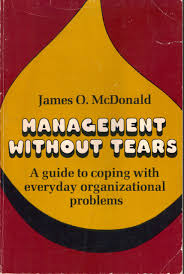
| I have recently completed the lecture of a book entitled "Management without tears. A guide to coping with everyday organizational problems". It was written by James O. McDonald almost 40 years ago, in 1981 to be precise. The book sets forth some managerial problems likely to be encountered during the career of a manager. For each problem, the author provides a solution based on his expertise. Although it is intended for managers - line managers, production managers, operations manager and functions alike - as a project manager I could relate to a few of the problems listed in the book. It is worth noting that most of the issues we face in our everyday work are nothing new, they have been there for a long time and will probably still be there when we retire.
Get things off your chest The author refers to the manager's secretary and her frequent tardiness. The manager decides to not bring this up to her to avoid losing his "nice guy" reputation. As you can imagine, this approach did not work out and she kept arriving late to the office. The manager decided to confront her. She said that she was not aware that her tardiness was such an issue, and from that moment on she was on time. In projects the same approach works; when something gets off tracks, avoid sending a memorandum sitting behind the computer. Politely confront the team - or whichever stakeholder - and get it off your chest. Being a pleaser can easily end up backfiring. Know your job It is frequent that an engineer, a software developer or a researcher gets dragged into project management. Becoming a project manager presents then a challenge. The technical knowledge in these domains become less relevant; instead, planning, personnel, budgets, purchasing, negotiation and a wide array of administrative tasks make up the new life. Getting this mental fix is essential for a successful new career. Be yourself This topic is particularly interesting. It is quite common to find opinionated colleagues regarding how a project manager should behave. Some would say "Stand tough, or they'll walk all over you" whilst others would advise on the opposite direction. Leadership tone has to be decided by the practitioner, and the practitioner alone. It is up to the practitioner whether to be tough, soft or somewhere in between. In words of the author "effective management requires integrity, conviction, knowledge, courage, awareness, timing. These qualities determine how you react in any situation". |
 My blog followers know that I always like to break things down in three, or pick up the top 3, or make lists of 3 items. Number three puts a spell on me - I guess since the time I learned at school that the compositions had to contain an introduction, a "knot", and an ending. So this time around will not be any different. I have picked the top 3 issues, and summarized the author's view on a proposed solution.
The Nice Project Manager
Categories:
Teams
Categories: Teams
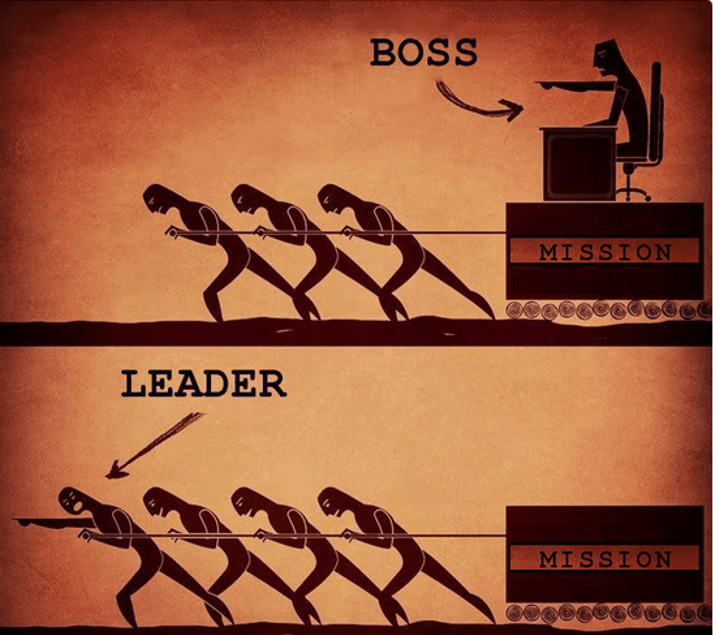
| A lot has been written about leadership, emotional intelligence, empathy and a long list of traits related to a successful project delivery. Most likely, you have seen the image below several times on your LinkedIn feed. The message is clear: a leader is someone that pulls together a team and walks alongside to reach project’s goals. A boss, however, “bosses” people around while sitting in his ivory tower.
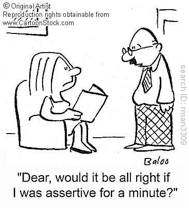
Project Managers have the challenging task of commanding a Team which members typically report to a Line or Department Manager – this is, within a matrix organization. What are the three traits that will allow finding the sweet balance between being a genuinely nice leader and yet get stuff done? A. Be assertive Being the face of the Project to the Team and to all other stakeholders, a PM needs to develop the right set of skills to show that is in control. For example, it is frequent that rumors arise at some point during project’s life cycle – e.g. “I’ve heard that the project will be cancelled!”. A PM must be able to send a clear and assertive message to stakeholders to terminate the rumor. The same principle can be applied to team meetings. The Team expects the PM to guide and drive the project forward. This message can be delivered efficiently only from the assertiveness.
B. Be in control Domain in Monitoring and Controlling process group is essential for a successful project delivery. A PM must make sure that he remains an effective leader throughout project’s lifecycle. Checking on status of work is an art on its own. Some people sends off e-mails containing a dry “Hi Jan, what’s the status?”, others elaborate further and add a greeting line. Whichever option chosen, show that you are in control. Avoiding micromanagement is a must for any PM and for any sort of leader. Actually, micromanagers are frequently poor and insecure “leaders”. C. Be Human This come without a saying and yet important to emphasize. Do you recall the typical saying attributed to Richard Branson “If you take care of your employees, they will take care of the clients”? Replace the term “employees” by “team members” and “clients” by “Project”. Proficient leaders are aware that they are leading a group of humans and their circumstances, not soul-less machines. |