


'Under Water'


| ‘Under Water’ Do you ever feel like you and/or your team are ‘under water’ and don’t know why? You may be experiencing change saturation. Change saturation occurs when the threshold between capacity for change and the demands of implementing change is crossed. When this happens, people can experience a range of symptoms from confusion and frustration to physical impact. It can also manifest as morale issues, scattered buy-in, wasted resources, or only superficial change. Want to know if you’re dealing with change saturation? Answer the following statements using a rating of low, medium, or high to get a high-level assessment of risk for change saturation.
After completing the survey questions, integrate your scores to determine the level of risk. If the initial findings show a high risk, a more in-depth survey can be used to further refine areas of concern. In closing, change saturation is a key people-related risk factor, should be included in the project plan, and action plans managed for risk mitigation. |
Demystifying Sponsorship
Categories:
Sponsorship
Categories: Sponsorship
|
Quite frequently I hear project managers or change agents on a project team express concern about a lack of sponsorship for their projects. When I ask them what they need, however, they don’t always know how to articulate their concerns into a tangible need that an executive can act upon. Sponsors play three important roles.
Participating directly in the project: Sponsors hold people accountable to adapt to the change. They work with their staff to ensure people are ready for the change. Sponsors allocate staff, training, or other resources as required. They also remove barriers to change by resolving issues and helping the organization adapt to risk. Engage other sponsors. Great sponsors engage other leaders to buy into and support the change. They build relationships across the organization to drive success. Sponsors equip other sponsors with communications, resources or other tools to help accomplish the purpose of the change. Communicate broadly throughout the organization. In my experience, this is the most overlooked yet often one of the easiest actions sponsors can take to affect change. They look for opportunities to talk about the change, the value of the change, and how the organization should engage to embrace the change. They also talk about the risk of not changing and the impact this might have on the organization’s long-term viability. Effective sponsors engage others in this dialog. It’s important that they not only share information, but that they listen to how the change is impacting their teams. This feedback can be a powerful influence, giving employees a method of adjusting how the change is implemented. If you are a project manager or play a role as a change agent on a project team, be sure your sponsor is fulfilling these responsibilities. Oftentimes, sponsors need help understanding their role in change. Most sponsors are smart leaders, but they have a full-time job running an organization and do not always know the details regarding how to support a change. You can help identify risks and issues. You provide insight to the sponsor about where greater engagement might be needed. You can also with communications, aligning leaders, and engaging the front-line in deploying the change. It takes a village, as they say, and between well-equipped, active sponsors, and change agents on the project team, you have a much greater chance to enjoy success.
|

Actually, we don’t like creativity
|
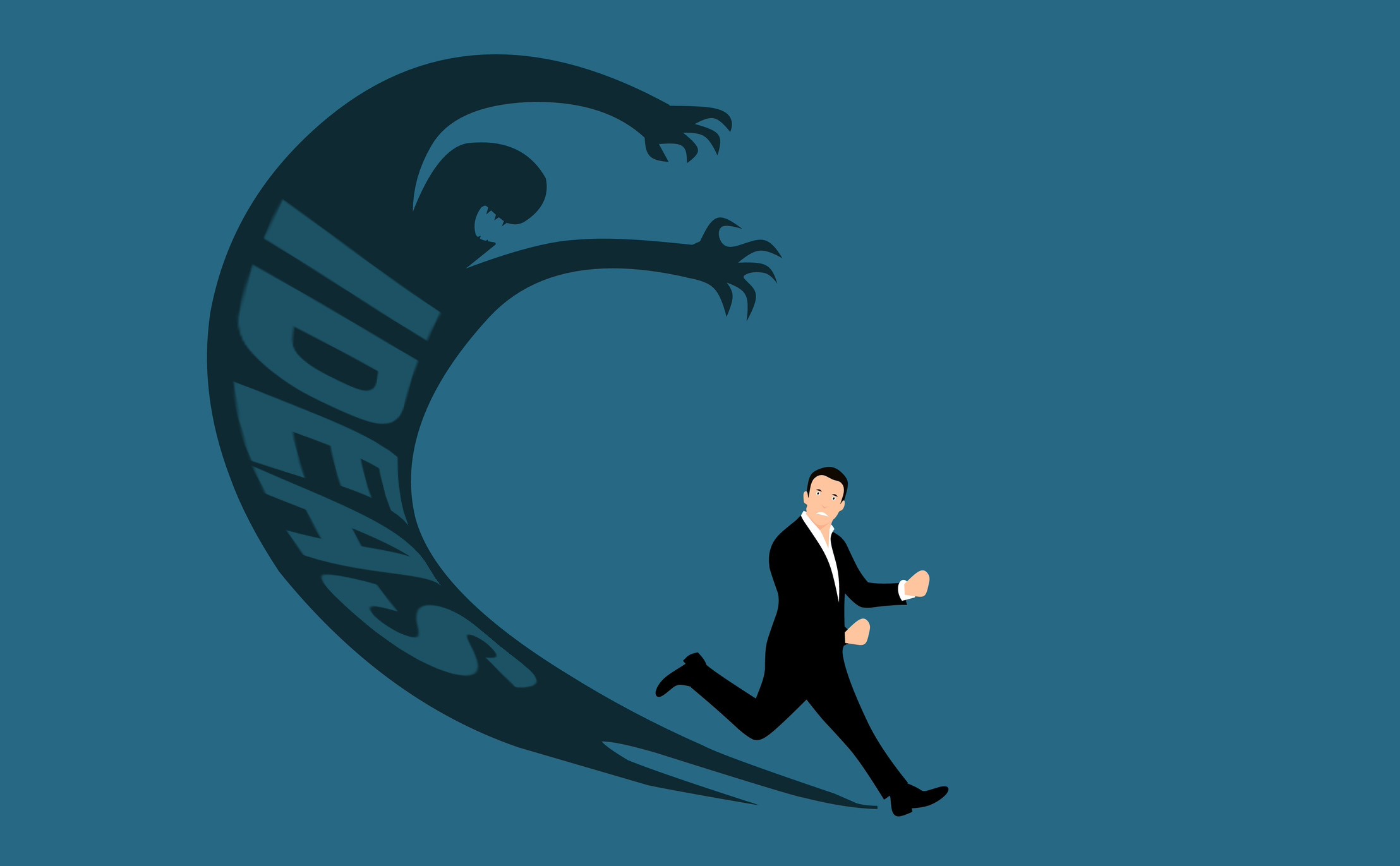
If there is one word that has been hot in the business world the last few years, then it is creativity. We like to state with alacrity how important we think it is. A life necessity even, in these times of exponential changes. In many vacancies they are looking diligently for ‘daredevils with ideas’, born ‘out-of-the-box thinkers’ or even ‘rebels and troublemakers’. We nod yes fervently when we listen to lecture number umpteenth by some creative evangelist. And even the chairman of the country’s most archaic union announces with gleeful eyes he wants to play for stakes on ‘fresh new ideas’. Well intentioned. But that façade obscures a bitter truth: we don’t like creativity. And actually this concealed aversion for creativity is not all that surprising. The place where our tender creative ideas should flourish, is the very place where she gets restrained and shoved to the side. Research shows that teachers discriminate creative students highly, to the benefit of students who follow agreements diligently. The cause of this can be found in our educational system itself, that – albeit often one of its objectives – in fact doesn’t know how to deal with creativity. Assessment in our educational system today is still based on exact measurable criteria. For the ‘most important’ subjects, anyway. Creativity, sadly, not being not one of them |
Do You Have What It Takes?
|
ScenarioYou have been invited to participate in an exciting new corporate initiative but are unable to attend the initial planning meeting where project roles will be discussed and assigned. The next day an email is delivered to your inbox with the meeting minutes. You eagerly scan the email looking for your name and role. To your horror you were assigned to the role of change manager. “Oh no”, you say to yourself, “I am a project manager. I am not a change manager. I don’t know anything about being a change manager.” You contact the project sponsor and she responds that, from her perspective, there is no difference between a project manager and a change manager and you just need to deal with it. What do you do now? Is it time to update your resume and change the status on your LinkedIn profile to “Open to New Job Opportunities”? Fear not, being a change manager is not that bad and in the end you may actually enjoy it. But, first you need to understand what it takes to be a change manager and how it differs from project management. The purpose of this article is to determine if you have what it takes to be a successful change manager. Difference between Project and Change ManagersThere is a significant difference between project and change managers. Project management is all about structure and delivering a solution. It focuses on following a methodology that includes phases, budgets, assignable tasks and deliverables. A project manager identifies risks/issues, tracks due dates, schedules meetings, generates reports and communicates with the stakeholders. Change management is about adoption. It focuses on the people impacted by the change initiative and their willingness to accept and execute the necessary behaviors for the change. A change manager focuses on creating a sustainable change in behavior and integrating the new business processes into the organization. Analytical Versus CreativeChange managers are primarily responsible for preparing and supporting individuals, teams, and organizations when they are impacted by a change. Change can be defined as anything that is introduced into an organization (realignment, emerging technologies, new processes, products or services) which affects the status quo or routine activities of the workforce. Change managers lead the change initiative. Like project managers, they guide the work effort, develop and execute the communication activities, schedule and lead meetings, document everything and execute strategies to manage the change. Two of the more important skills required to be an effective change manager is the ability to analyze information and be creative in the execution of a solution. Change managers need to combine the change process (analysis) with design (creativity) to ensure that the initiative is driven forward in a structured manner. This is also necessary to ensure that the perspective and concerns of the impacted parties (stakeholders) are incorporated into the solution that accomplishes the ultimate organizational goals. The following table highlights the analytical and creative skills of a change manager.
Change Management Skills ProfileTo be a successful change manager, a person needs to be both analytical and creative. Normally, these are two diametrically opposed skills. People are either detailed-oriented (ex: Accountants) or artistic (ex: Marketers). Change managers are required to have both skill-sets because they need to ensure that the initiative is driven forward in a structured manner (using a change management methodology), but they also need to understand that the solution has to be accepted and supported by the organization, especially by the impacted employees. Use the following chart to see if you have what it takes to be a change manager. Give yourself one (1) point for every “yes” answer.
Scoring:
Success as a Change ManagerSo relax, you do not need to look for a new job because you were assigned the role of change manager. If you understand your skill profile, as well as your strengths and weaknesses, you can be a successful change manager. |

Managing Change the Systemic Way
| We live in an age not just of accelerated change but of complexity: we can never underestimate the importance of understanding the interconnections and interdependencies that underpin everything we do. That is why at Intelligent Management we look at everything through a systemic lens. This includes managing the process of change. How do we do it? The Deming cycle of Plan, Do, Study, Act is an ongoing process of improvement and innovation that any organization needs to embrace to face complexity and remain competitive. The Thinking Processes from the Theory of Constraints provide a solid, systemic analysis and roadmap of what to change, what to change to, and how to make the change happen. Why Change? Because our reality hurts and we need to something about it When our reality is biting us, it’s a signal that we need to do something. The cycle of Thinking Processes we use with the Decalogue approach to managing change starts by listing the things that are hurting. In the Theory of Constraints these ‘symptoms’ are called Undesirable Effects (UDEs). We may have no desire to change, but the UDEs are a prompt that make us aware of a need to change. The Undesirable Effects we experience are the result of the network of relations we are part of and that naturally evolve, whether we like it or not. In network theory, these would be referred to as ’emergent properties.’ Thinking Cause and Effect Though some people may try, it is ineffective to adopt a ‘whack-a-mole’ attitude to cope with our Undesirable Effects one at a time. The reason for this is that each Undesirable Effect is interconnected as a symptom of an underlying cause. Whether we can do something about the cause or not, we need to change because that cause may in time severely limit our ability to achieve goals that are critical for us. That cause is what is blocking us from achieving more towards our goal. It becomes our constraint, and as Dr. Goldratt used to say, you can ignore the constraint, but it won’t ignore you. We need to learn to understand cause and effect, i.e. to recognize the effects we experience, and link them to their cause. The need for systemic intelligence to cope with change Goldratt created the Thinking Processes to fortify in people the ability to reason cause-and-effect. This is a daunting task because our mind simply does not work that way. In our daily lives, most of the time we “re-act” instead of acting and we very rarely understand the full spectrum of the consequences of our “re-actions”. But change is something that can be achieved. We just need to understand that it is a process, and that process goes through various phases, or levels of resistance. Level 1: Disagreement about the problem To tackle this level we must identify the cause of the majority of negative or undesirable effects that are being experienced. This can be done very effectively and quite swiftly through the ‘Core Conflict Cloud’. Level 2: Disagreement about the direction of the solution The direction of the solution is found by identifying solutions (called “injections” in TOC) to the core conflict. Level 3: Lack of faith in the completeness of the solution A fully fleshed out solution needs to be mapped out. For this reason we build a ‘Future Reality Tree’. This process gathers together all the “injections” with a supporting logic to prove that the proposed changes will bring results. Level 4: Fear of negative consequences generated by the solution People will be sensitive to possible negative implications they perceive for themselves through the implementation of the solution. The Thinking Process for this is called Negative Branch Reservation. Level 5: Too many obstacles along the path that leads to the change At this level, it is vital to be able to address and overcome the obstacles people see and the process for this is called an Intermediate Objective. All the necessary Intermediate Objectives (IO) can be mapped out on a ‘Prerequisite Tree’ in a logical order of what needs to be done first before another IO can be achieved. Level 6: Reservations about our ability/willingness to implement the solution (and about the ability/willingness of others) To be able to carry out the projects that bring the new reality, there must be complete clarity on tasks. This is a critical phase in terms of leadership and can be greatly facilitated by giving and sharing clear instructions through the use of the ‘Transition Tree’. The Human Constraint Change is not just about doing things differently. It’s about thinking differently in order to make change possible. Many efforts to bring change fail because they do not address the cognitive challenge. This is what we have come to call the Human Constraint. When we educate ourselves to think and act systemically, we become capable of so much more than we imagine. As Einstein put it, “Those who think it’s not possible shouldn’t disturb those who are doing it.” Angela Montgomery, PhD Intelligent Management Inc. Canada
|


