Secrets of a Change Resistor


| |

The Five Criteria of a Good Idea
| Bam! There he is again. The fourth time already in three weeks time, because that’s exactly how long John works in your team. You started calling him ‘Jolly John’, but only in your head of course. You can hardly blame him for a lack of commitment. And always with the same enthusiasm, the same childish and disarming smile on his face he walks into your office, “Boss, I’ve been thinking a while and suddenly I had this brilliant idea”… Not again, you think. But you keep quiet. Defer your judgment, listen and ask questions, lift on the idea. That’s the right way to give it a fair chance to grow. Sure, it is the first and perhaps most important basic skill of creative thinking. No more “yes but”, we now go for ‘yes and’! That’s what you’ve learned. And that’s how it should be. But then again, not all ideas are gems. At least not right away, we should indeed cherish them a little, or ‘greenhouse’ as it is called. When you pour ideas into a creative process, you can afford the luxury to defer your judgment to the selection phase. Good for Jolly John, because that way his ideas will have a much better chance to evolve. Unfortunately, that’s not a daily reality in most organizations. But how can you, as a superior, manage to evaluate ideas on the spot? What criteria are you going to maintain in order to make a correct judgment? Those criteria are often specific to the problem. Discovering the accurate ‘why’ question is an essential part of the creative process. Should we then assume that the quality of ideas are relative, merely depending on the criteria of the problem? Yes and no. Because there are some basic conditions that every good idea must meet.
1. DIFFERENT AND BETTER At least a good idea must bring a certain change. Change that, at the same time, contains a certain level of improvement. The idea itself should not necessarily be completely new and unique. In most cases, it even comes to small alterations, tiny improvements to a product, a service, a structure, a process. And that’s OK. Big disruptive ideas don’t pop up every day.
2. DELIVERING VALUE The improvement mentioned above should also deliver value. Someone — or a certain target group — should benefit from it and also allow and accept the improvement that goes with the idea. The latter might sound a little strange, but accepting the change and improvement is crucial in the success or breakdown of an idea. Many commercial launches of innovative products or services have therefore failed.
3. REALISTIC Permanently ridding the world of war and starvation, building a teleportation machine or developing a pill that makes us immortal … Brilliant ideas where smart people somewhere on this globe are certainly working on right now. But do they fit within your structure, your context and your possibilities? Not a big chance. And therefore, such ideas — at least for you — are of little value, so we can hardly classify them as good ideas. Dreams are made to cherish, but good ideas are made to implement. Dreams are made to cherish, but good ideas are made to implement.
4. COST-BENEFIT BALANCE When an idea takes more time, energy and money to develop it than the benefit or profit it will ever generate, we should better get rid of it. Unless it is just an experiment, or an indispensable part of a bigger concept. Cost and benefit should always be in balance. And also on the market side, no sensible consumer is willing to pay a ridiculous amount of money, not even for a world-shaking innovation. It sounds logic, but again this is one of the reasons of many product failures.
5. SIMPLICITY In today’s world, we are bombarded with stimuli. Our attention span is getting shorter and shorter every day. Intuitively, we therefore look for simplicity. A good idea is uncomplicated, straightforward and comprehensible. At least that’s how the user should experience it. Words like usability and design thinking have become quite popular with the development of each new product or service. Simplicity will always win over complexity.
These five basic criteria will offer you the right handles in the appraisal of ideas. Obviously, every challenge has its own unique aspects and requirements. It is convenient to determine these requirements in advance with your team. That way you will avoid huge disappointments afterwards and it will help you to coach your own Jolly John in coming up with good and valuable ideas. |
How transformational leadership and organizational change management work together to drive phenomenal results
|
Leaders use OCM to provide a structured approach to leading the organization through a transformation or a large-scale change. There are, however, several prerequisites necessary for OCM to be successful. These are elements of transformational leadership.
With these elements in place, a strong OCM plan can be established and executed. OCM leverages these elements by providing and executing:
All of this combines to create a winning formula to drive phenomenal success, often exceeding targets. Call to action: As you consider your next transformation, think about these points. Have you done the work necessary to prepare your organization – starting with your leadership team – to drive success? Have you activated the team and set the stage to accelerate the work?
|
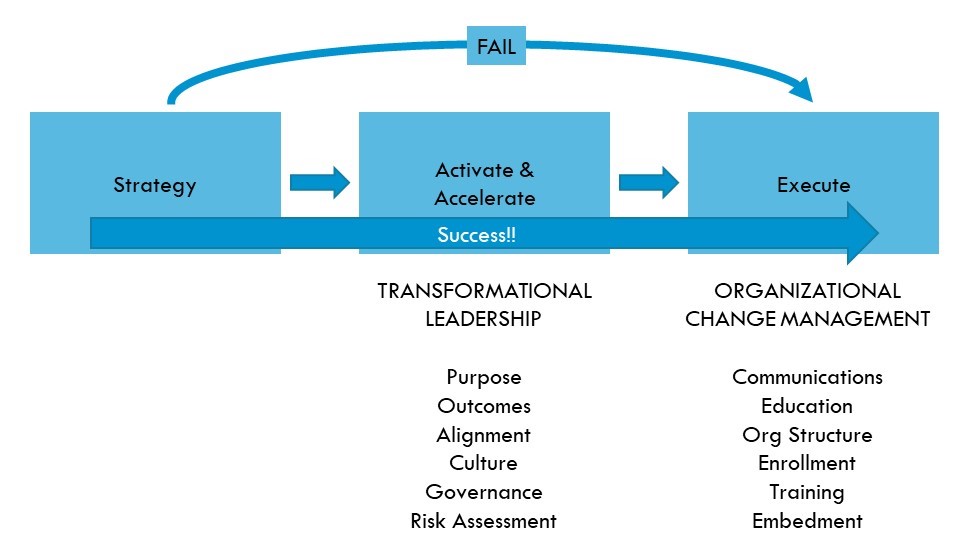 Working for years with senior executives driving transformational change, I’ve observed that sometimes leaders jump directly from strategy to execution without doing necessary preparation to activate and accelerate implementation within their organization. This preparation requires transformational leadership skills to transition from strategy to execution. I have also observed that organizational change management (OCM) cannot take the place of or make up for a lack of transformational leadership.
Building A Culture of Appreciation - Part 1
| Research shows that appreciation – as measured by the VIA character strength[1] of appreciation of beauty and excellence – is not used a great deal at work.[2] It is often associated with appreciating nature, art, or skillful performances. And it is that last definition that is useful in teams in the workplace. Subtly different than gratitude[3] which is about being thankful, appreciation is the strength that allows us to see and name the skills, values, and contributions of people around us. It is a strength that makes calling out the contribution of a colleague more comfortable. And yet we don’t use it much at work. The strange thing is that it is not an uncommon top strength – some research suggests that 4 out of 10 of us rank it as a top strength! Maybe we just don’t think to use it in the workplace. The same is often true of love – but that is another story! Checking in on your sense of appreciationWhen was the last time you took a stakeholder aside and thanked them for their contribution? Maybe you are good at thanking people – after all research shows that Gratitude is a top strength for about 25% of us[4]. When was the last time you told them why you are thanking them? Explaining what it is specifically that they bring to the table? Telling them in enough detail that they can repeat the behavior in the future and make it a permanent fixture in their project contributions. If it was recent that is great. But all too often, we go through the day on autopilot, taking in stride the contribution from colleagues. We are all too quick to notice when someone is not giving us what we want or need on a project, but when people do what we think they are supposed to, we tend to take it for granted. We may give a quick “thanks” to someone who has delivered on something It starts with youWe do the same thing with ourselves. I often speak with groups and train people about character strengths. They are one of the triumvirate of strengths that when working well together put us in what Dr Neal Mayerson of the VIA Institute on Character calls, “the Power Zone”[5]. The other two prongs are Talents and Skills. When we take our talents, build them with training and practice into skills and then add in our character strengths – those internal motivators that give us a sense of connection to what we are doing. This triangle of personal attributes – not unlike the talent triangle of leadership, strategic and technical skills in project management – creates our own capacity to excel.
The other topic we explore I talk about is strengths- blindness. Research shows that 66% of us are strengths blind we don’t actually know what we bring to the table[6]. Often, the attributes that others find most remarkable – and most beneficial – about us we don’t even recognize as special, unusual or note-worthy. One of my coaching clients described her strengths of self-regulation (unusual as a high strength), prudence – the planning strength – and teamwork as boring! And yet her team described her as present, even- tempered and easy to work with. Are they talking about the same strengths? Yes, they are!
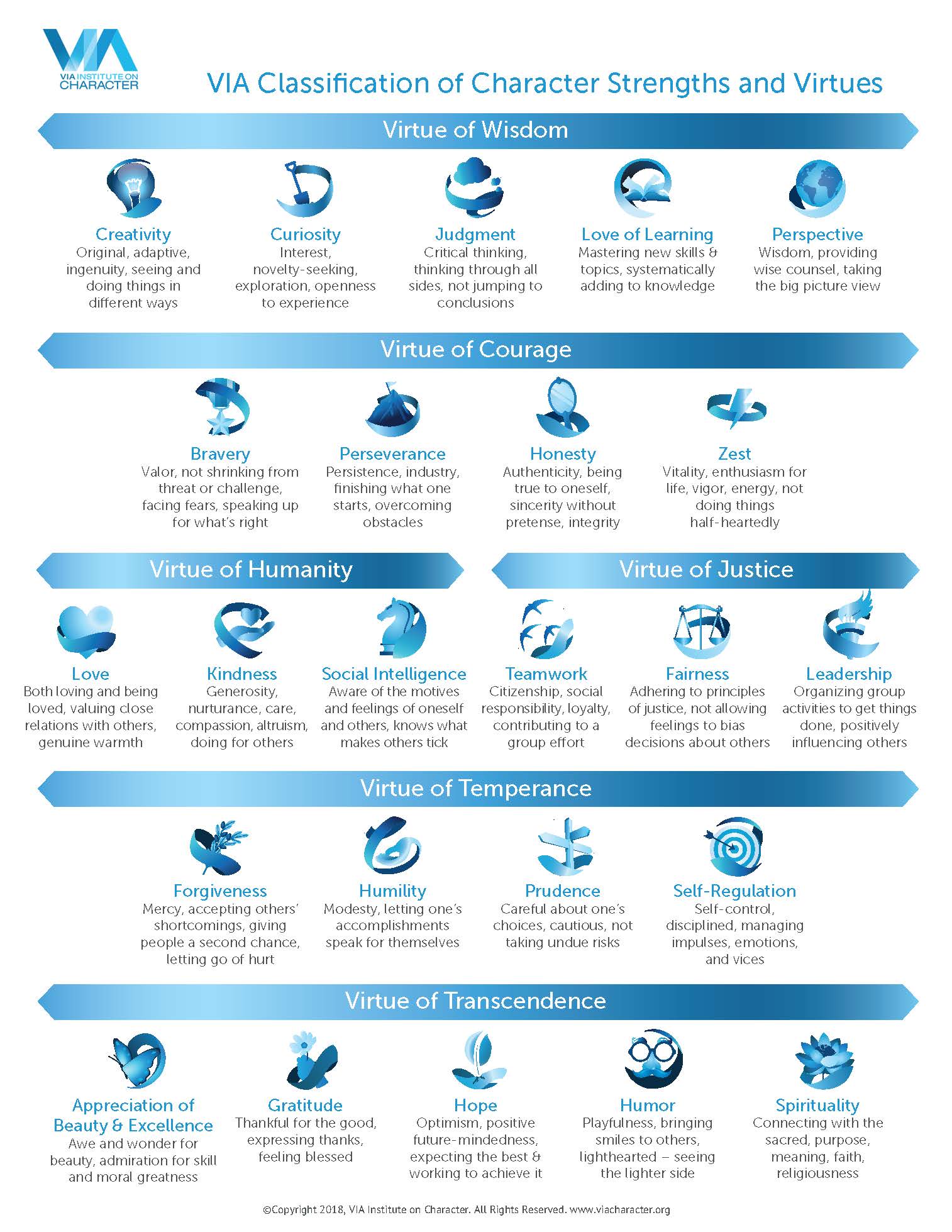
Two steps to full appreciation:Step 1 is to appreciate the contribution YOU make. You can take the free VIA strengths assessment here: http://PMcom.pro.viasurvey.org Or you can take a look at the strengths sheetbelow and just circle the top 5 that strike a chord with you. Now watch out for them each day. For example, my top strengths are Appreciation, Bravery, Curiosity, Fairness & Gratitude. Appreciation – I take a walk in the morning and take in the nature around me and appreciate the silliness of my dog. I look out for people going the extra mile and express my appreciation whenever I can (I also express my dismay when people don’t seem be doing what they are meant to be doing!) Bravery – I try to push myself to do something outside my comfort zone on a regular basis. I write a post about a new topic or make a call to a new person. Curiosity – I allow myself to read about new topics, explore new ideas, and get perspective from new people. I also have to manage my curiosity so that I don’t go down rabbit holes! What are your top strengths? Make a note for the next 7 days of how each of your strengths show up now that you know about them. Which ones are a surprise? Which ones take a back seat at work? Where do they show up strong and present? Next time in Building a Culture of Appreciation, we will explore expressing appreciation of others! Strengths list with descriptions – reproduced with kind permission:
[1] Peterson, C., & Seligman, M. E. (2004). Character strengths and virtues: A handbook and classification. Oxford: Oxford University Press. 537-551 [2] Money, K., Hillenbrand, C., & Camara, N. D. (2008). Putting positive psychology to work in rganizations. Journal of General Management, 34 (2), 21-26. [3] Character Strengths & Virtues 553-568 [4] TECHNICAL REPORT The VIA Assessment Suite for Adults ... (n.d.). Retrieved from https://www.viacharacter.org/www/Portals/0/2017 VIA Assessment Suite Technical Report.pdf [5] http://www.viacharacter.org/blog/characterizing-workplace-using-character-strengths-create-sustained-success/ [6] Linley, A. (2008), Average to A+: Realising strengths in yourself and others. Coventry, UK: CAPP Press |
Lessons in Sponsoring Change
Categories:
Sponsorship
Categories: Sponsorship
|
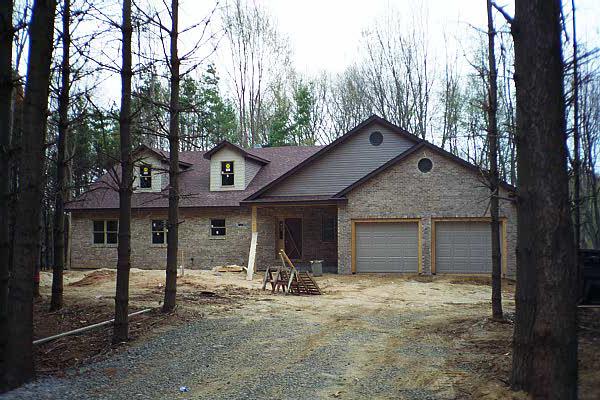
A few years ago, I decided to hire a general contractor to build a house for me. The contractor, Ron, told me that the typical house takes 160 days to complete - from groundbreaking to occupancy. He then warned me that because the house was 700 feet off the main road in a heavily wooded area, construction would take longer. Just how much longer, he would not commit. I determined to reduce construction time. My plan was to stay engaged with the Ron and treat the subcontractors like royalty. During construction, I went out to the house nearly every day. Often it was after work to evaluate progress and report findings to Ron. Normally the reports were positive. Occasionally there were small issues for him to address. One time there were electrical outlets in the wrong place; he fixed it. Once I found a wall six feet from where it was planned. Ron made it right and thanked me for identifying the issue so quickly. At times, I would go to the site early in the morning before work, or during my lunch break. During these times, I took coffee, water, donuts, cookies or pizza for the subcontractors. Later, I learned that these gestures created a sense of purpose and appreciation among the subcontractors. They wanted to help people build their dreams. They wanted to do good work and they wanted to feel like they were a part of something bigger than eight hours of labor a day. I also discovered later that this worked to my advantage as many extras were added - at no cost. There are two major lessons here. First, the sponsor of a project must be actively engaged in monitoring and guiding progress. Can you imagine the costs and delays if I hadn't found the misplaced wall as early as I did? The second lesson is to engage and inspire your employees during change. I used donuts and coffee to share my passion for building the house in the woods, and in turn, the subcontractors felt like they were part of something bigger. You might say, "Well, Steve, this is a nice story, but so what? You expended a lot of time and energy to supervise the construction, a job you delegated to the general contractor, Ron. But what were the real benefits?" We moved into the house in 140 days, the house met specifications, and the project came in under budget. How many of your projects achieve these kinds of results? Call to Action: When you consider your next change initiative, as a sponsor, plan time in your calendar to stay engaged with the project. Think about more than just attending the regular status meetings to stay informed. Instead, make a difference. Talk to the employees doing the work. Ask the project manager informally about progress. Schedule lunches or other events during the project and not just to celebrate the end of the project. Dedicated to your profitable transformation, Steve
|