


The 5 Building Blocks of the Creative Organization


| That creativity is one of the most important prerequisites to keep the engine of your organization running, will not surprise you anymore. Many renowned studies underscore this adamantly. When you as a manager or entrepreneur think future-oriented, then you most likely have already undertaken at least some random initiatives to boost that creativity. Wonderful! But how do you take the next step? How do you make sure it’s not just incidental? How are you going to embed creativity in your organization, from top to bottom, so it becomes an attitude with which every employee is infused naturally? Unfortunately, there is no magic spell. On the contrary, the way to the creative nirvana is a long and challenging journey that requires vision, conviction and perseverance. In this article I will try to give you an overview of the five most important building blocks that make up the foundation of a creative organization. 1. Bestow trust and trust yourselfMost people don’t see themselves as very creative and will start acting accordingly. The feeling ‘my idea or solution will not be good enough anyway’ ends up in a lack of creative self-confidence altogether. Fed by the educational system that is based primarily on the reproduction of knowledge, this feeling takes root in early childhood. And sadly, in reality creativity – or any show thereof – is seldom part of the evaluation criteria for employees in a professional environment. So clearly, a blade that cuts both ways: on the one hand employees have to have the courage to show their creativity and on the other hand they have to be able to utilize it. So for the manager that means working on more than one front at the same time. On the level of the individual employee See to it that they find or regain their self-confidence. A simple creativity training can already work miracles, but do engage your employees in a creative challenge afterwards. It doesn’t immediately have to be a big innovation project, looking creatively for small improvements in the day to day operational activities won’t miss its effect either. Creativity is contagious and experience teaches us that employees who initially are most resistant to it often become its biggest ambassadors. At the team level Here it is primarily a matter of offering psychological safety. Team members must feel that taking risks – and therefor also failing – is okay and won’t be punished. As a manager you look for a balance between giving room, enhancing group cohesion, showing respect and dignity, and finally also being open and approachable for all team members. At organization/management level Here also it is of crucial importance to show that making mistakes is not being punished and that trying something new is encouraged. Learn to give constructive feedback and don’t fall into the trap of going to look for and blame the ‘guilty party’ every time something goes wrong. Reward your employees for their candor and honesty when they admit to a mistake and don’t be afraid to talk about your own failures. 2. Be open to all things newFear of new things and therefor sticking to traditions and nitty-gritty rules – even if they are hopelessly obsolete – is maybe one of the biggest enemies of creativity. For a lot of managers, it’s not easy to let go of the tight reins for a minute, ease up on the controls, and look at all things new with an open mind. And yet it is badly needed. It is a tremendous contradiction: we proclaim fervently how important we think creativity is, but when it comes down to it, we are actually scared of it. It makes us uneasy and insecure. That candor doesn’t only apply to management level, however. Also individual employees and teams should be able to leave their comfort zone easily when looking for solutions or by developing new products, services, procedures, etc. Daring to look across the divide to find inspiration in other sectors and cultures is a strong recommendation in that regard. In short, leave the beaten track, discard preconceptions, and especially never fear jumping into the cold water together. 3. Determine your goals and stay on trackThe first prerequisite to get people behind your change - and innovation project, is creating a solid mission and vision. Where do you want to take the organization? What are the goals and which core values don’t you want to lose sight of in the process? And definitely don’t let this be a top-down story. Involve your people in this, on the organizational - as well as on the team level. But also on the individual level you can have your employees think about their personal business model and what this means in the context of the organization or team they are a part of. Creating support is what it’s all about. Make those goals tangible and see to it that all employees are infused with it. And be sure to raise the bar high enough. Goals that are too vague and too low don’t inspire people to exploit their creative potential to the fullest. Demand quality and dare to ask for accountability when commitments aren’t honored. And lastly, be consistent, and be accountable yourself in explaining why you take certain decisions. See to it that they always fall in with the bigger picture of the goals. 4. Offer Support Throughout ProcessSometimes it is said: ‘Ideas enough, but nothing ever happens with them.’ Of course that is a pity. Creativity is a process that doesn’t end with generating ideas. Ideas should land and lead to real change or innovation. If not, the initial enthusiasm will turn into apathy and negativism quickly. Give employees a chance to realize their ideas as well. Give them an infrastructure that allows for it and see to professional support of the creative process. Support also means that you as an organization will have to create a climate that breathes creativity. Often it is underestimated that the space in which people work significantly influences the creative potential of employees. A smart office environment takes away barriers and enhances communication. But also mental and operational support are very important, of course. Teach people to work autonomously, offer budget and logistical support, reward initiative on the individual and team level, stimulate knowledge, allow time for creativity, and most of all, lead by example. In short, a considerable spectrum of points for action with which you can proceed concretely. 5. Communicate clearly and oftenGood internal communication is the oil that keeps the engine of an organization running smoothly. And also embodies a bit the mortar between the four building blocks mentioned before. Work on the communication with your employees on every level and in every phase of the creative process. And see to it that it also never ceases between employees. Sharply communicating the goals, and what they mean on the personal and team level, is maybe the first prerequisite. By way of story telling you create a series of stories that inspire and motivate people. And let those stories flourish within the organization. Give your employees the chance to come up with stories themselves as well, train them to pitch ideas, and stimulate the sharing of knowledge in both formal and informal ways. Within teams that work on change – and innovation processes, communication often is the determining factor for success. Interpersonal conflicts, for example, are deadly, but task oriented conflicts on the other hand enhance creativity. A fragile balancing act that you as a group leader will have to master. Communication is also very important when giving feedback. Why is an idea good or not so good, and how to communicate this in such a way your employees stay motivated? On the other hand, also the interpretation and relaying of that feedback is important. In short, a transparent, respectful but clear way of communicating is crucial. Lots of organizations nowadays are talking incessantly about creativity. But it still takes a lot to put your money where your mouth is and that appears not always to be an easy job for many organizations. With these five building blocks we want to give you an insight into the work that needs to be done. It is a fascinating journey with a lot of ups and downs along the way, but one that will have a more than rewarding destination. |
Finding Strengths - In Others!
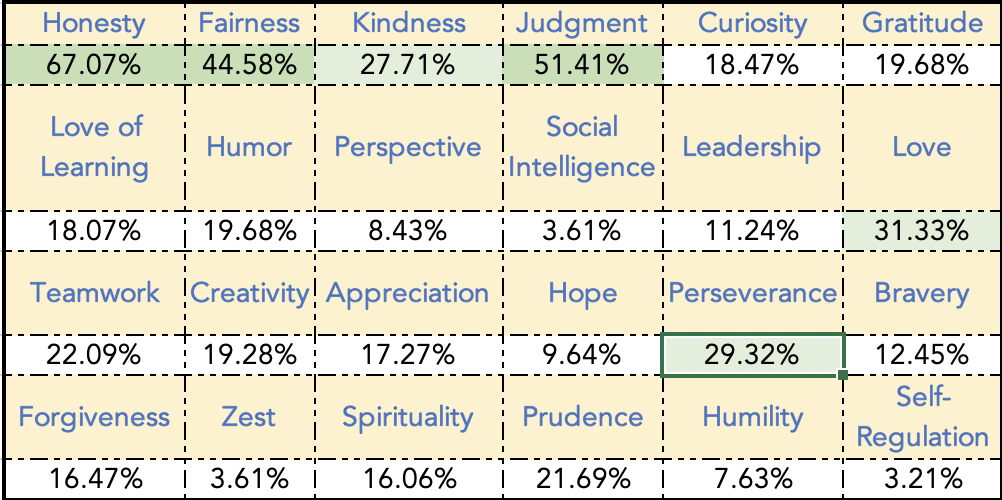
| Over the last couple of months, I have had the pleasure of offering two webinars exploring the use of character strengths as project managers. In the second webinar we moved onto the topic of seeing strengths in others - the second three phases in the SBPM model – See, Acknowledge, Leverage. We used a sample profile created from attendees’ responses to the VIA Assessment. This is the kind of thing I do with project managers and teams when I work with them. The strengths profile of a team is an indication of team culture. Some questions to consider are:
(c) ALLE LLC 2019 When talking about strengths spotting, a common question is: How do I start? The simple answer is “just start”. Attendees had a chance to spot strengths based on a real-life story of a woman’s experience as her husband has a heart attack. (Don’t worry! He recovered!) First, we practiced strengths-spotting and then reflected on a key point, which is that we are often the last people to be aware of our own strengths. During the exercise, attendees saw 15 or more strengths in the story, yet the story-teller only identified about five. This phenomenon, known as “strengths-blindness”, afflicts about 2/3 of us. What we learn from this practice is:
When I told the storyteller our list, she did not say “no, you are all wrong, there are only five!” she was happy that all these strengths were present. This is why I always say to people wondering how to start strengths-spotting – just do it! Get a list of the character strengths (Available from the handouts for the webinars here https://www.projectmanagement.com/deliverables/539329/Introduction-to-Strengths-Based-Project-Management---Seeing-the-Strengths-of-Others--Part-2---Supporting-Materials-Package) and when you are watching a movie, attending a meeting, watching your favorite sports person, visiting family – spot strengths. Circle the ones you notice. And as you get better at it, you will notice more and more.
But then what? Tell people what you see. Start with people you feel comfortable experimenting with and share what you saw – both the strength and the behavior so that your listener can do it again! Tell them why you value that. For example, “I really saw your judgment when you were asking questions and weighing all the information before making a decision. It really helped us to think through the problem and get to a good solution.” Or, “I really saw your teamwork when you stepped in to help the others get the work done this weekend. It shared the workload and made sure everyone gets at least a little time off.” There are so many things we can with a framework of character strengths. Sometimes it can seem as though we are ignoring problems or people it is difficult to work with. When we are uncomfortable it often feels unnatural to start strengths-spotting. And yet, if you take a step back and look for the strengths in a person you find difficult, it opens up opportunities such as:
There are two things I tell people about character strengths:
Start strengths spotting today! Have questions? Message me! |
Finding Strengths - In You!
| Over the last couple of months, I have had the pleasure of offering two webinars exploring the use of character strengths as project managers. In the first webinar, we focused on and developing your own strengths as a project manager. We were looking at the first three phases in the SBPM model – Understand, Cultivate, Model. There is lots of great research on the benefits of starting from what is strong rather than what is wrong. For example, we know that positive emotions make us more open to ideas – including ideas about how we might learn and grow[1][2]. Adopting a learning mentality – also known as “growth mindset” has been shown to lead to great feats[3]. Of course, talents – innate abilities – help, but they don’t go anywhere if we don’t hone them and learn to apply them effectively[4].
It is important to differentiate between types of strengths –
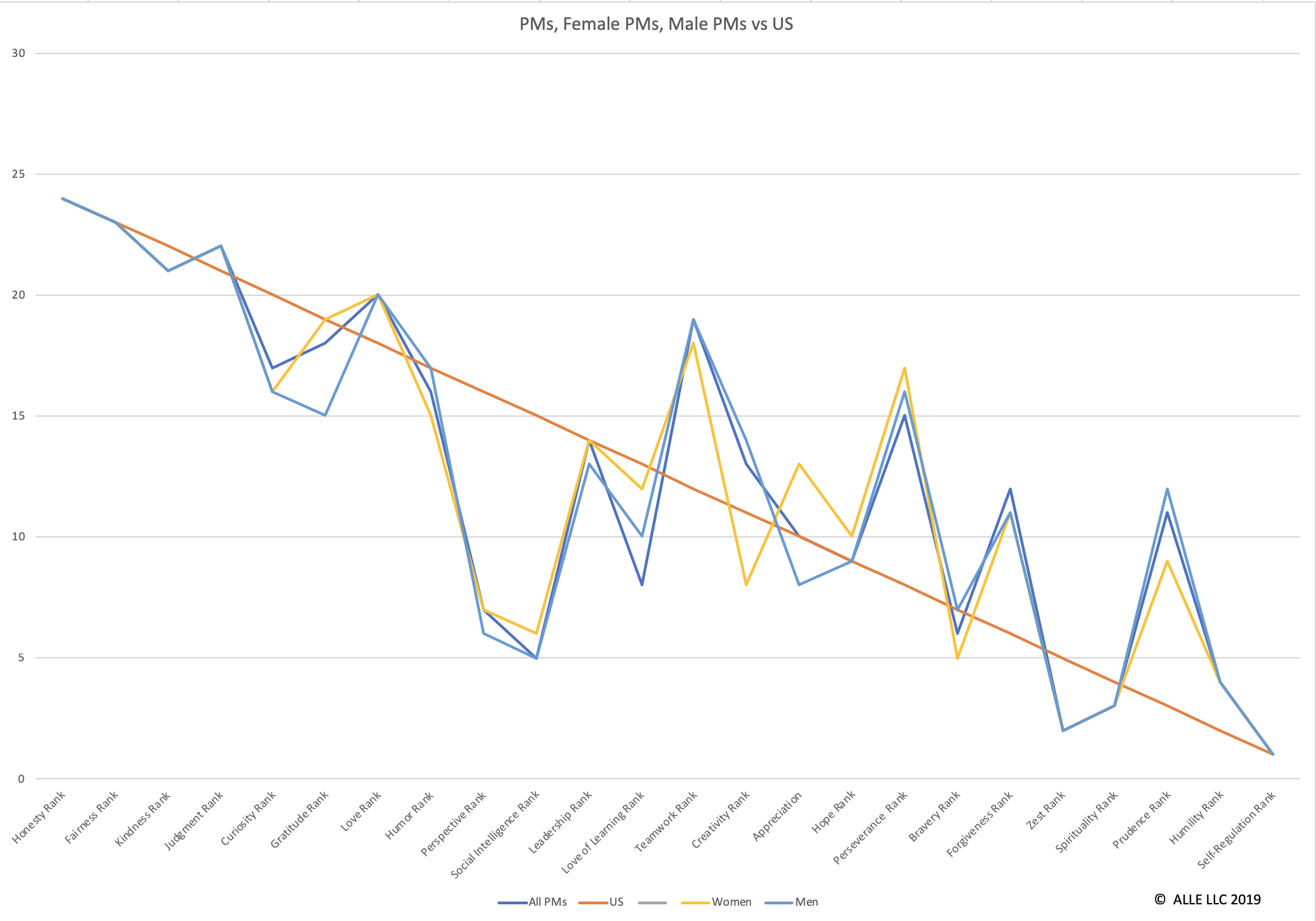
A surprise to many people is that this last category of personality is one where we can change. For a long time, we believed personality is fixed once we get past a certain age. Recent research shows that through deliberate practice, we can change our personalities – character strengths work helps.[5] What do our strengths tell us and what do we want to do with that knowledge? The first step is to understand what your strengths profile looks like. 365 attendees from 29 countries have taken the VIA Character Strengths Assessment to find out. For the purpose of the discussion, we looked at the results of an analysis of over 250 project manager assessments.
I explore two questions from attendees here:
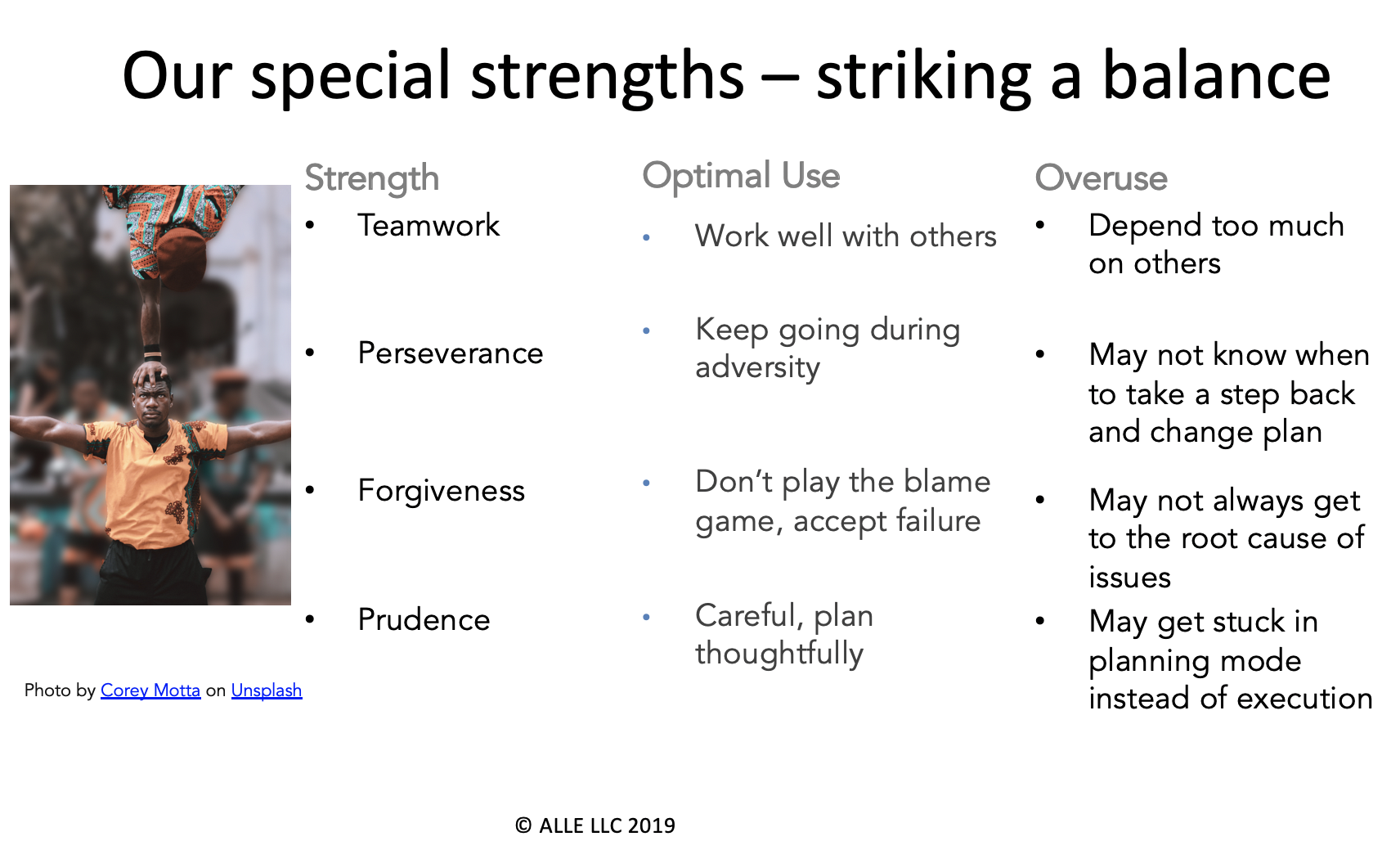
It is tempting to think we need to build those strengths directly, and that is certainly an option. You can grow any strength through deliberate practice. Generally, more important though is to focus on mindful use of your own strengths. Think carefully about which strengths are helpful in a particular situation. Watch out for overuse of top strengths (see above) and underuse of your middle and lesser strengths. And don’t forget to partner up with people who are higher in strengths that compliment yours!
Actually, wrong! This question from attendee sent me back to my data for a closer look. Anecdotal evidence suggests that women tend to be higher in social and emotional intelligence and empathy. But the data we have on project managers says that women and men in this field rank about the same. There may be some individuals who rank social intelligence high, but for the most part, we are people who rank other strengths – such as prudence, forgiveness, and perseverance – higher.
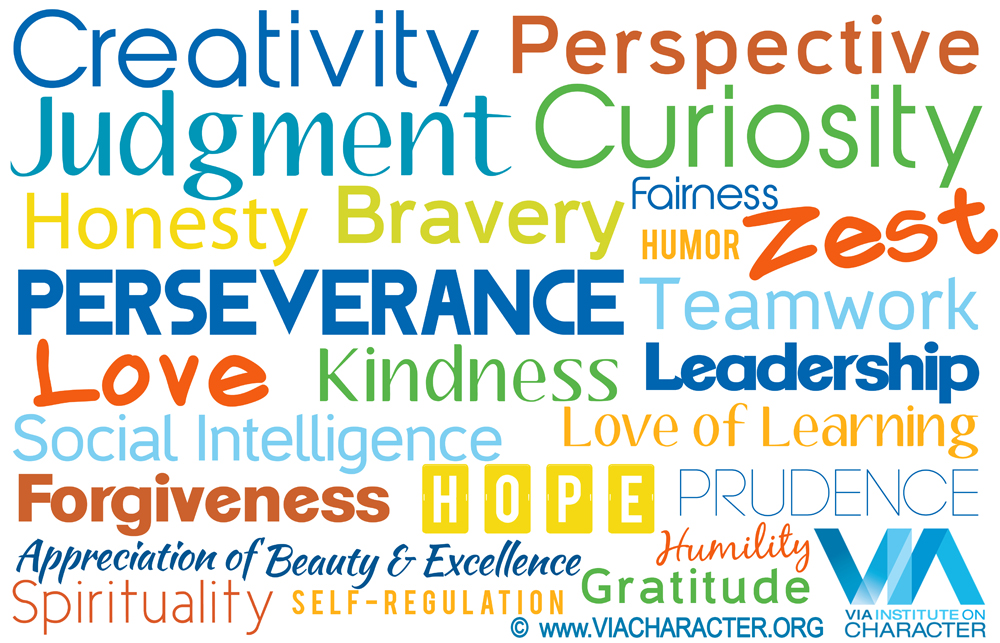
Project managers tend to agree, Social Intelligence – the ability to read and adjust to others - is a strength that does not come easily. We can build it when we pay attention to our own strengths and behaviors and when we start to pay attention to the same in others. This is what strengths spotting is all about – a topic we cover in the second webinar. Building a strength: I am working on the strength of self-regulation through developing a mindfulness practice among other things… what strength will you cultivate? Here is a list for you to consider: Appreciation of Beauty and Excellence, Bravery, Creativity, Curiosity, Fairness, Forgiveness, Gratitude, Honesty, Hope, Humility, Humor, Judgment, Kindness, Leadership, Love, Love of Learning, Perspective, Perseverance, Prudence, Self-Regulation, Social Intelligence, Spirituality, Teamwork, Zest. Watch the first video here: https://www.projectmanagement.com/videos/533121/Introduction-to-Strengths-Based-Project-Management---Finding-Your-Strengths--Part-1- [1] Fredrickson, Barbara. Positivity: Embrace the Hidden Strength of Positive Emotions, Overcome Negativity, and Thrive. Crown Publishers, 2009. [2] Lyubomirsky, Sonja. The How of Happiness: a Practical Guide to Getting the Life You Want. Piatkus, 2013. [3] Dweck, Carol S. Mindset: the New Psychology of Success. Ballantine, 2016. [4] Syed, Matthew. Bounce: the Myth of Talent and the Power of Practice. HarperCollins, 2011. [5] “Do Genes Influence Personality?” Psychology Today, Sussex Publishers, www.psychologytoday.com/us/blog/under-the-influence/201307/do-genes-influence-personality.
|
The Power of The Living Organization®
| All organizations as we know them today are living organizations as they are run by living beings. Unfortunately, some organizations are much more alive than others. The ones that are more alive tend to be much more aware of their living nature. Organizations like human beings follow an evolutionary process. Those who are less aware of their living nature, stand a much higher risk of stagnation and even extinction. As leaders, change agents it is our prime responsibility to keep our organizations vibrant and alive. To create the right environment and remove the obstacles so that the full power of human potential can emerge. In today’s volatile, unpredictable, complex and ambiguous (VUCA) world our very survival as a company depends on it. Ultimately, no amount of technology can help if people are not passionately alive and self-directed. If it is to succeed in the leadership of the Living Organization cannot be abdicated solely to the HR department or Culture Manager. It must be taken on by all senior leaders of the organization including the CEO and the board of directors. Once that is established, the big question is how to release this passion and aliveness in a systematic and strategic manner? The Living Organization® framework builds upon the studies of living systems, organizational dynamics and decades of hands-on leadership experience. Its uniqueness is the discovery that besides the daily activities of the organization there are two other components that are critical to harnessing the full power of human potential. One is the quality of relationships between people and the other is the Context within which they operate. Putting it simply adversarial relationships throttle organizational aliveness and reduce productivity, trusting, open relationships multiplies it and speeds execution. The second component is the Context within which the Relationships and Activities operate. While addressing the quality of relationships has the power to multiply productivity, unleashing the power of Context can exponentially increase the energy level and thus productivity within organizations. In simple terms, we define Context as the deep “why” behind what we do. It consists of the meaning, purpose, and stories that people in organizations identify with. Context informs the choices we make and the behaviors we display. “Ultimately Context shapes the culture of an organization. Each company is unique and has its own unique Context. Sometimes you can literally sense its energy as you walk into an organization. For example, you may feel the heaviness, fear and oppressive environment of some organizations and vibrancy, openness, positivity, and passion within others. Energetically Context is very much alive, constantly changing and evolving. It is incredibly sensitive, which means a slight adjustment can produce an enormous amount of change. Context applies to every level and function of the organization: strategy, R&D, operations, marketing, sales, and customers service. Often much of it is implicit, hidden and needs to be brought out into the open, made explicit. “In fact, this transformation from implicit to explicit Context is where most of the work is for leaders of the living organization. It is also the highest return on the effort they can make. Once exposed, leaders can work on aligning the context across departments so that they are all working towards a common vision and desired outcomes. This alignment releases a tremendous amount of energy within the organization. To provide a brief example take a company like Amazon. While we can argue about its style of management and aggressive behavior, Jeff Bezos obsession with customer service has aligned Amazon employees across the organization towards one unified vision. The result is self-evident. There is a limitless number of other less known companies leveraging the power of Context in their unique way. Another aspect of The Living Organization ® approach is that it is inherently decentralized and self-organizing. That does not mean the organization becomes chaotic on the contrary they have clear boundaries and rules, which like all living systems are fluid and respond to the environment. As leaders remove the obstacles that prevent their organizations to function as a Living Organization and engage with Context, they naturally support the emergence of self-directed teams. They have to trust that the people at the front line are much closer to the action, and thus can make more informed decisions. Self-organization leads to a high level of agility and adaptability, supporting the evolution of the company towards vibrantly alive future. |
The Fertile Liaison between Creativity, Change and Innovation
Categories:
Walter Vandervelde
Categories: Walter Vandervelde
| By Walter Vandervelde Not that long ago, a somewhat mysterious cloud shrouded creativity on the work floor. Everybody seemed to have their own definition and understanding of the word. The connotation with more artistic professions or (applied) art forms was never far away. Designers, copywriters, architects, film makers, musicians, … yes, those by definition are creative professions and creativity belongs there. Of course. We live in a world that changes exponentially day after day. And one change brings about another (or a range of others) automatically. Change, taken literally, is nothing more than a kind of migration of status A to status B. In order to talk about change you have to be able to discern the two statuses. There is change that we can only experience, but some changes we can control very precisely. And all shades in between of course. So far, our premise has been the inevitability of change. In our example of the barbeque party, we couldn’t do anything else but accept the change in weather conditions and try using creativity to come up with the best solution. We didn’t choose this example by accident, because weather conditions are by their very nature something beyond an ordinary person’s control. But we can prepare for it. If we had listened to the weather report and checked the online weather forecast regularly, we would at least have had more time to maybe find even better solutions. In a professional context that is no different: by placing ‘barometers’, using analytics, staying alert and open for internal as well as external signals, we can buy ourselves time. Time needed to think up many creative ideas, pick the best one, let it mature, test it, alter it, and prepare for its implementation. Actually, we are already laying the foundation of what we call innovation here. Innovation, when it is carried out the way it should be, brings along an automatic positive change. It is a conscious process that is geared towards changing things to improve them. When we talk about innovation management, we are talking about directing a sequence of actions that result in an improvement. At the beginning of the chain there is the question. And that usually starts with the words “How can we make sure that …”. To answer that question, we have to come up with creative ideas. That means calling on creativity. That’s why creativity sometimes is called the ‘the front-end of innovation’. But also throughout further steps in the innovation process creativity remains important. |


