


Women’s MOM project: Happy Mothers Day!


|
With the whole world celebrating women’s day, I wondered how celebrating a day can give some more light to different women in society. We celebrate so many different kinds of days, but when we celebrate who we are it’s not only because of what we do with our life but also because of what we are gifted with! And definitely, a woman’s capability when it comes to giving birth and embracing new life & nurturing it is incomparable to any other roles one can take. When I was in my 20's, I was once told by my senior while handing over a responsibility that "you should take care of this like its your own baby", That time I didn't have the idea of how tedious and important the task is. Like motherhood, a project can have a complete transformation for us. More responsibility, juggling with multiple tasks, acquiring new skills and most importantly a feeling of altruism. Being a MOM is a role far more powerful than a project manager. You take control of a new life, plan things for him, do risk assessments for his daily activities, plan a budget too and all without any pay. It's such a natural flow of emotions. Not to forget that many women also take a career break and devote them fully to their being MOM Project. Miss India (Miss World 2017) Ms. Manusi Chillar, had rightly answered the question asked to her during the contest. When the judges asked her what should be the highest paying job in this world, her answer was a mothers job should be the highest paying in terms of love and respect. Let's respect all mothers in this world for all they do in raising a child with the countless sacrifices. Happy Mother's Day! |


How Powerful Purpose Transforms
|
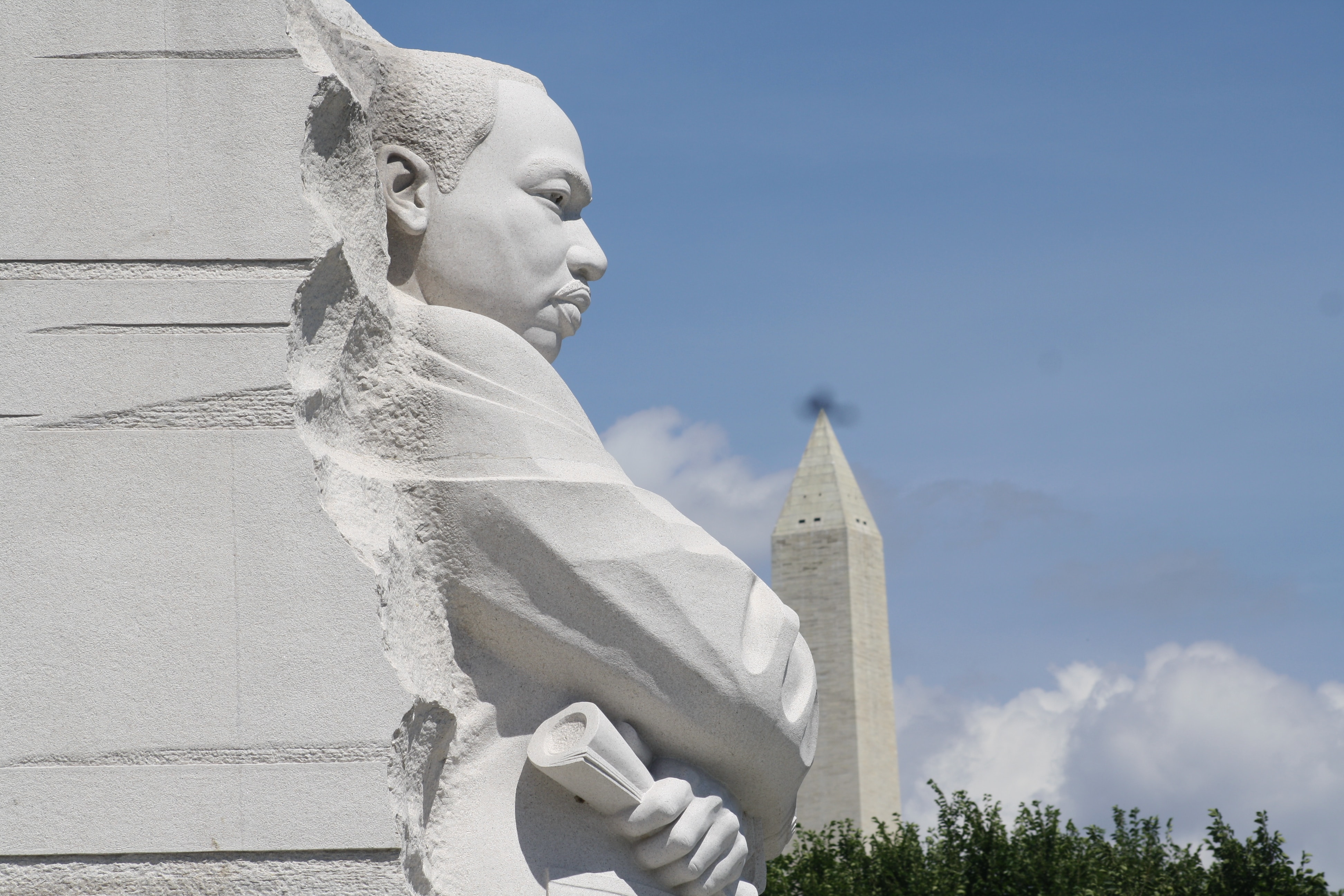
“I have a dream.”
Growing up in and around Chicago in the 1960s, I was exposed to the significant racial tensions and issues common in America at the time, and especially relevant to Chicago.
Anyone alive today should know the legacy of Martin Luther King, Jr. One man who did more to advocate for racial equality than anyone since perhaps Abraham Lincoln.
In 1966, King and the Southern Christian Leadership Conference (SCLC) announced plans for the Chicago Freedom Movement. This was a campaign to expand civil rights activities from the South to northern cities. King believed that “the moral force of SCLC’s nonviolent movement philosophy was needed to help eradicate a vicious system which seeks to further colonize thousands of Negroes within a slum environment” (King, 18 March 1966).
Of course, King is probably best and most widely know for his energizing and transforming speech, “I Have a Dream,” delivered on August 28, 1963, during the March on Washington for Jobs and Freedom. The speech was considered a defining moment in the civil rights movement and considered one of the most iconic speeches in American history.
Taken alone and without any context, the statement, “I have a dream,” means nothing. Most people have dreams. This statement is set apart, however, because it was part of a speech that was so powerful and so memorable, the phrase itself needs little contextualization today. King’s speech was clearly transformative, leading to civil rights legislation that ultimately changed the course of American history.
Martin Luther King Jr. was a man of clear purpose. He dedicated his live to his vision that America would truly be a land where “all men are created equal,” and securing progress on civil rights in the United States. Today we remember him for his commitment to his purpose, and we recognize the meaning of the title of his most famous speech, “I Have a Dream,” with little explanation.
Call to action: No matter your role – project manager, PMO leader, change manager and especially project executive or sponsor, be sure your purpose is clear. You don’t necessarily need a four-word slogan to sum it up, but your ability to clearly articulate your vision and purpose is vital to the success of your change.
Sources: https://en.wikipedia.org/wiki/I_Have_a_Dream https://en.wikipedia.org/wiki/Chicago_Freedom_Movement Photo credit: Woubishet Z. Taffese on Unsplash
|
Better Coping with External Changes
Categories:
Change Management
Categories: Change Management
| If there’s one thing that 2020 taught us, it is that we’ll be forced to respond to external changes – and at a pace we may not appreciate. The increased incidence of mental health issues, including the rise in suicide, has proven that we don’t always cope well with external changes. However, there are things that you can do to cope better yourself and to help those around you cope more effectively with externally-induced change. Stages of GriefElizabeth Kubler-Ross worked with patients who were dying and their families. She identified seven stages of grieving that she believed everyone went through when confronted with a loss: shock, denial, anger, bargaining, depression, acceptance, and completion. Her assertion is that while everyone goes through these stages, they do not go through them at the same rate, nor do they feel them at the same degree of severity. It is with this insight that we can seek to help individuals move through the stages of grief at a rate that is appropriate to them. While dealing with the loss of a loved one or facing your own mortality is obviously a very large, life-altering event, the changes that we’re forced to cope with are frequently less intense. As a result, while it may take someone years of grieving the loss of a loved one, we should expect that we can move through the stages of grief much quicker if the changes are less dramatic. Change ResistanceWilliam Bridges surmised that what was being seen as change resistance wasn’t change resistance at all. It was loss aversion. It’s the same loss aversion that Daniel Kahneman studied. Loss is at the heart of Kubler-Ross’ work on grief. People were grieving their extreme loss. In Kubler-Ross’ case, the path was towards acceptance of the loss. This is the path that we need to travel when we’re facing externally-induced changes. Bridges believed that the current state (or previous state in the case of an externally-induced change) was, to some degree, comfortable, because it was known. Even when presented with a vision of a new reality that is positive, there is a messy neutral zone of unknowns that must be navigated. Kubler-Ross’ patients found themselves navigating these same spaces. They had to learn how to live without their loved one. This neutral zone creates frustration, anger, and anxiety as people naturally wonder how things will be and whether they have what it takes to cope with the change. This question of capability is an assessment of the change as a stressor and the individual’s capabilities to overcome the potential impacts of the change. Stress and StressorsRichard Lazarus’ work surrounded emotions and how they came to be. In his research, he realized that stress wasn’t externally caused. Instead, stress is the result of a person’s assessment of both a stressor and the capabilities they have to mitigate, prevent, or overcome the result of that stressor. As the perceived probability and impact of a stressor was reduced, so was stress. As the assessment of both internal capabilities and the capabilities of those in their community who would be willing to help them increased, stress was again reduced. Stress in the short term is a useful evolutionary trick designed to save us from the surprise attack. However, as Robert Sapolsky’s research has indicated, sustained stress has many negative psychological and physiological effects. Humans have subsumed a mechanism for quick avoidance of threats and, with our capacity for mental rehearsal, turned it into a long-term health problem. Complicating matters is the work of Sam Glucksberg, who discovered in the early 1960s that even a small amount of stress in the form of a competition for monetary reward was enough to substantially reduce performance in a test that required that the participants escape a trap of functional fixedness. In short, the participants were asked to solve a problem where they received a container full of items and had to transform the container itself into a part of the solution. Under the competitive time pressure, the participants took three and a half minutes longer to solve the problem. This means the impact of even a mild amount of stress may prevent people from thinking in ways that allow for innovative solutions to the problems they face. Reducing Stress, Increasing HopeLazarus’ work provides clues to how to mitigate stress and get better results. Techniques that minimize the probability or impact of a stressor will decrease stress, as will increasing the perception of capabilities. One way to do this is to play the “worst-case scenario game” – but to play it fairly. Reducing Stress via the Worst-Case ScenarioWe all naturally gravitate to negative assessments, but by pushing these to the outer limits, we can sometimes reign in unrealistic perceptions and reduce stress. The worst-case scenario game assumes that the stressor becomes a fact and that it has the maximum impact. From there, the next move is to imagine how you’d respond and what the probable outcome will be. It’s possible to play the game in an unfair way, where an asteroid crashes into the Earth or there is a zombie apocalypse from which there is no recovery. However, when reasonable limits are applied, people often find that they have many more resources for coping than they had realized. While they may not like the outcomes associated with the stressor becoming real, they realize that the outcomes are neither fatal nor permanent. Instilling Hope through Waypower and WillpowerAn equally powerful way to reduce stress is to instill hope. Instilling hope cannot be done directly, but the work of C. J. Snyder breaks down hope into two components that can be developed. The first component of hope is waypower. That is, an understanding of how the hoped-for outcome will be achieved. In this respect, the more that we can communicate plans or even ideas regarding the organization’s response to the change, the more we instill a sense of organizational waypower and encourage individuals to develop their own plans. The second component that Snyder identifies is willpower. Here, the work of Roy Baumeister and John Tierney is helpful in understanding what willpower is and how it can be increased. Like muscles, willpower is an exhaustible resource, as many experiments have proven. We can wear out our willpower by exercising it for a long period of time. Like our muscles, our willpower, when properly exercised, tends to increase in strength over time. In the context of increasing hope, we can point to previous successes where the organization and individuals have overcome adverse circumstances and how this strengthened our willpower. AcceptanceBy reducing stress and increasing hope, we increase our capacity to accept the situation and adapt to the challenges that we’re facing through externally-inflicted change. If we want people to go through the grief process and move on quickly, we should look for ways to encourage their acceptance of the known losses and reduce the stress associated with the change. |
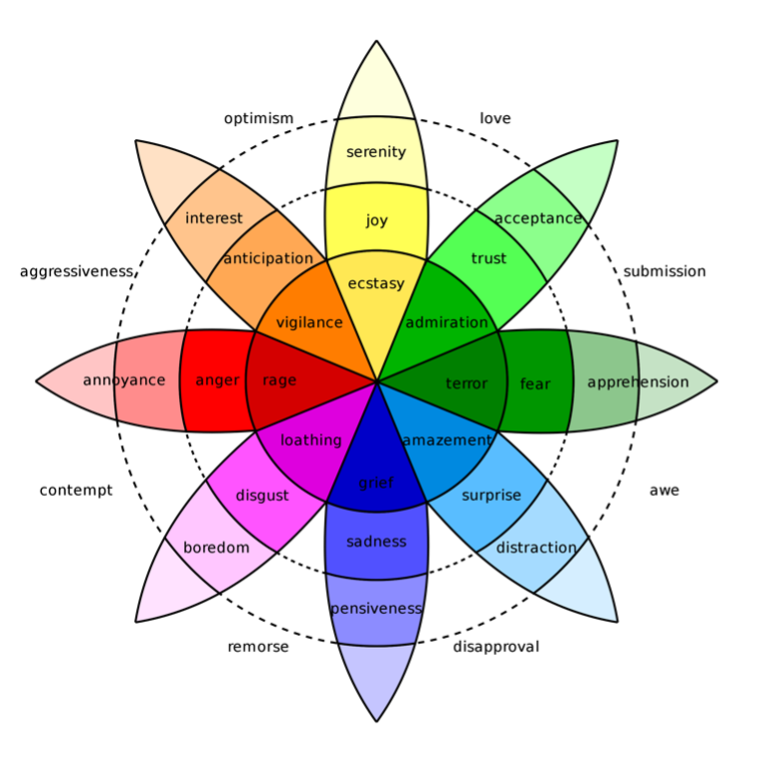
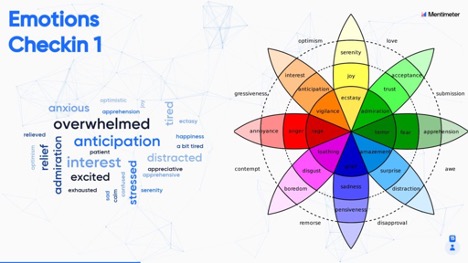
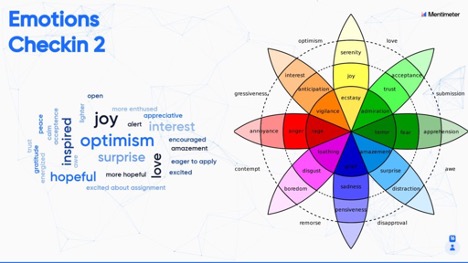
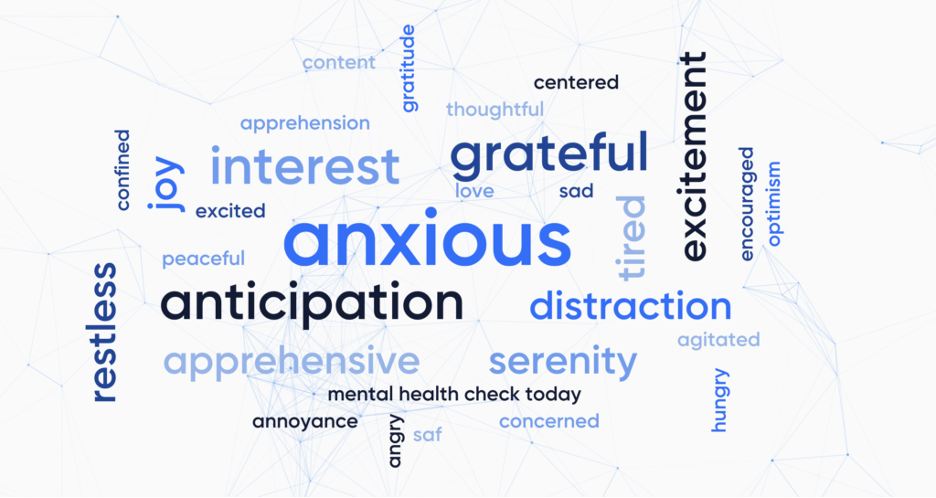
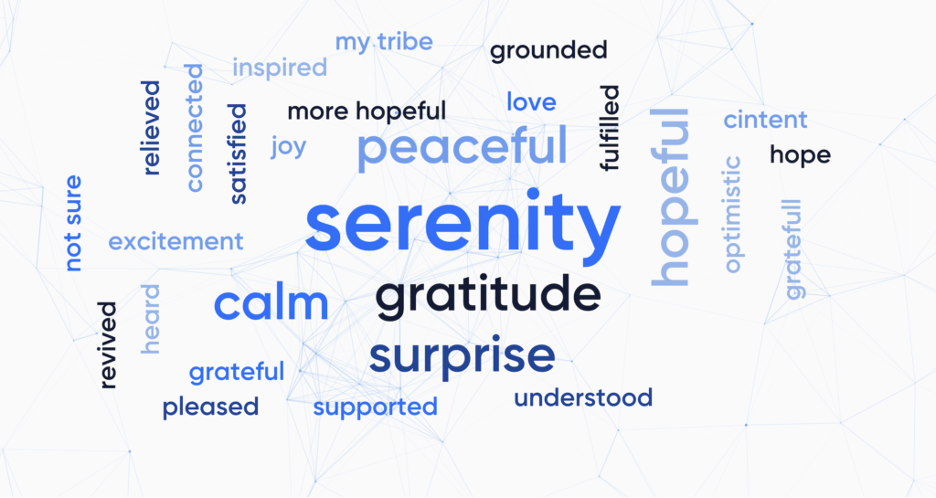
Labeling Emotions – Changing the Mood for Project Managers
| |

Two Attributes Change, but Not Project Stakeholders, Need
Categories:
Change Management
Categories: Change Management
| Stakeholder identification for projects isn’t necessarily easy, but it’s well understood. The PMBoK provides a framework for stakeholder analysis based on interest, rights, ownership, knowledge, and contribution. However, the needs of change projects are different. Change projects, particularly transformational change projects, require a different way of evaluating stakeholders that includes three attributes: power, urgency, and legitimacy. LegitimacyIn their 1997 article, “Toward a Theory of Stakeholder Identification and Salience: Defining the Principle of Who and What Really Counts,” Ronald Mitchell, Bradley Agle, and Donna Wood identify three key attributes of stakeholders. The first of these attributes is legitimacy. The legitimacy of stakeholders is defined by the kinds of evaluations that the PMBoK recommends. A person’s legitimacy in a change project is based on the kind of impact that the change will make on their role. Legitimacy is sometimes conveyed through historical experience rather than current activity. A manager who has “grown up” or worked their way up through the ranks of a department are still legitimate stakeholders based on their experience even if they no longer directly perform the work that the change relates to. In the context of a RACI chart, those who have high legitimacy are those who have the knowledge and experience to be consulted. While they may not be directly responsible or accountable for a task or for the change, they’re those people whose input you need to ensure the change makes sense and whose support you need to provide evidence that the change is reasonable. While this is a great start in the identification of stakeholders, it clearly doesn’t address everyone. It doesn’t always engage those who are responsible or accountable for the project’s completion. PowerThe attribute power addresses the ability for the stakeholder to influence others towards action. In the context of a RACI chart, these people are those who are accountable to the project or the task. It’s perceived that their position in the organization allows them to control or influence the resources sufficiently that they’ll complete the work. A different kind of power exists in additional to the kind of structural power conveyed upon stakeholders by the nature of their position. The other kind of power exists in the network of relationships that the individual or group has and their ability to leverage this network to encourage or block behavior changes in others. Consider the executive assistant with no direct reports but who largely controls the executive’s calendar. They can be a powerful ally for a project to ensure that the issues that the change project are addressing are given ample time in the appropriate meetings and forums. Power, therefore, isn’t simply getting executive support. Power lies in the ability to influence others – which is partially impacted by position but can be more powerfully influenced by the person’s connections. The challenge with many people with deep personal connections and non-positional power is that they often don’t see a sense of urgency for change, because their relationships are built on the status quo, and that’s why the third attribute of an ideal stakeholder is urgency. UrgencyChange efforts are frequently – but not always – forward-looking activities. There’s a looming impact to the business that’s being addressed or an opportunity that is being chased. Changes bring uncertainty and loss, and therefore organizations naturally resist them. For a change to succeed, the stakeholders and the organization need a sense of urgency to drive the change through the resistance. While legitimacy and power are relatively easy to detect by reviewing positions and communications patterns, a sense of urgency is more context sensitive to the change being made. Identifying those stakeholders who believe the change needs to be made now can sometimes be discovered by the pressure being placed on the team to start and then execute on the project. However, they often must be solicited to find those people who are the most engaged with the necessity of the change and most excited about the new possibilities that the change will bring. Mapping StakeholdersThese three attributes are not binary in that they either exist or don’t exist in a potential stakeholder. Instead, all potential stakeholders will express some degree of these three attributes. When developing a comprehensive set of stakeholders that will drive a change project, it’s important to identify the right mixture of stakeholders such that all three attributes are addressed; power, legitimacy, and urgency are all required collectively. Mitchell, Agle, and Wood recommend names for the kind of stakeholder that someone is based on their degree of the attributes and their overlapping regions. They are: Dormant (Power), Dominant (Power, Legitimacy), Dangerous (Power, Urgency), Discretionary (Legitimacy), Dependent (Legitimacy, Urgency), Demanding (Urgency), and Definitive (Power, Legitimacy, Urgency). See Figure 1 for a graphical representation of these stakeholder identifiers.
Figure 1: Stakeholder Attributes and Labels Divining DefinitiveWhile it’s convenient to attempt to find high degrees of power, urgency, and legitimacy in a single stakeholder or a stakeholder group, most successful project managers recognize that it’s rare to find these attributes in a single individual or group. Instead, the objective of stakeholder identification should not be attempting to find all these attributes in a single person but rather to find a way to get a collection of stakeholders for the project that can collectively express these attributes. ReferencesMitchell, R. K., Agle, B. R., & Wood, D. J. (1997). Toward a Theory of Stakeholder Identification and Salience: Defining the Principle of Who and What Really Counts. The Academy of Management Review, 22(4), 853-886. |



