


Next Level Transformation Management: How to avoid hitting the target but missing the point


|
Next Level Transformation Management: How to avoid hitting the target but missing the point If there’s one execution-related principle that has been drilled into us by management theory, it’s that ‘you get what you measure’. We’re exhorted to just get going when it comes to metrics – i.e. ‘Measurement is like laundry. It piles up the longer you wait to do it’. That’s all fine, but every seasoned project manager knows that there are limits to which business sponsors can fully and precisely envision what success looks like ahead of time. Don’t get me wrong, they may have a general idea of which direction success lies. But often, it’s difficult to see what’s possible unless you iterate. Which is why Steve Jobs said, ' People don't know what they want until you show it to them. That's why I never rely on market research’. The issue of unclear end-state articulation becomes more difficult as you move up from managing projects to managing portfolios to managing digital transformations. When it comes to imagining an end-state of large-scale digital transformation of an enterprises business model itself, you then get into the realm of fuzzy meanings per United States Justice Potter Stewart who famously said of the definition of obscenity that ‘I could never succeed in intelligibly [defining it], but I know it when I see it’.
The “north pole” of metrics in digital transformation That leaves most transformation leaders thinking ‘Great! If managing a complex digital transformation portfolio wasn’t hard enough, I now need to work with the handicap of the goal posts being moved as we execute…’. Well, it’s not that bad. There is clearly confusion on what the term ‘digital transformation’ implies, but there are some “north pole” business outcomes that will never change. Navigating by those “north pole” metrics are likely to keep the program safe on track. For enterprises, the eventual “Wall Street” grade business metrics of sustained “Total Shareholder Return”, which puts together all financial metrics of cost, revenue, cash, controls, and sustained performance factors like brand equity and organizational strength are usually a great guiding star. Once we factor that in, the question becomes how to define usable and relevant metrics that can be cascaded down the organization. And, often this is where the issue lies.
The dilemma of measuring success in digital transformation The root of the ambiguity in definitions is driven by the confusion on what digital transformation is. Most executives tend to relate it to technology i.e. using technology for more effective or efficient operations. That’s only the first stage of digital transformation. True digital transformation is the rewiring of entire business models, work processes and people skills, so that enterprises which are successful in the third industrial revolution are made ready to be successful in the fourth. Or said another way, it is to rewire people, processes and business models to understand the needs of the customer and meet it exponentially better, as in say, the successful transition from printed classified ads to Craigslist. To better appreciate how digital transformation leaders can seize this historic opportunity, we need to understand the context of the fourth industrial revolution, the stages of digital transformation, and how a full-fledged digital transformation is all about meeting customer needs exponentially better.
The context of industrial revolutions is foundational. The World Economic Forum has declared that we’re in the midst of the Fourth Industrial Revolution where digital technology is transforming and fusing together the physical, biological, chemical, and information worlds. It’s affecting every area valued by society—from convenience (e.g., online shopping) and improved health (e.g., biotech) to personal security (e.g., digital homes), food security (e.g., agrotech), and so on. Only one thing is guaranteed: it will bring about dramatic change, just as the previous three industrial revolutions did. The first three were caused by different technologies i.e. steam, electricity and the internet respectively, whereas the fourth is caused by digital. However, all four have one thing in common. Individuals and societies will be affected significantly, and companies will either transform or die. And the process of transforming from being a viable entity in the third to the fourth industrial revolution is digital transformation.
The stages of digital transformation
Stage 1 is the Foundation. This is where enterprises are actively automating internal processes, such as marketing, selling, manufacturing, or finance. This is more automation (also called digitalization) than transformation, but it provides the digitalized foundation necessary for future transformation. The next stage is called Siloed, where you might see individual functions or businesses start to use disruptive technologies to create new business models. So, for instance, this is what using digital channels for selling is. Additionally, this is what the transition to using digital media, and more precise targeting of customers using data is. Stage 3 is Partially Synchronized transformation. The enterprise leader, owner, or CEO has recognized the disruptive power of digital technologies and defined a digital future state. At Stage 3, the organization has started rowing in the same direction. Stage 4, or Fully Synchronized, marks the point where an enterprise-wide digital platform or new business model has fully taken root. However, it is a one-time transformation. It is still just one technology (or business model) change away from being disrupted. Stage 5, or Living DNA, is the step where the transformation becomes perpetual. You maintain ongoing industry trend leadership because you are disciplined in constantly innovating and setting industry trends. You’re not just a market leader; you’re a disciplined innovator.
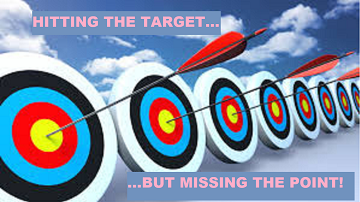
The context of the five-stage model helps define the gap between the eventual “north pole” success of sustainable digital transformation and what incremental stages of transformation is being targeted by your current program. Articulate that correctly, and you mitigate the risk of hitting the target but missing the point.
|
 What is digital transformation?
 Although full-fledged digital transformation is about fully rewiring the business models, processes and organization capability, there’s no getting away from the fact that still mass confusion on the definition. Most executives mix it up with the run-of-the-mill digital technology project. The best way to frame the definition is to put it in the context of the five-stage digital transformation model.
Lessons Learned
| Lessons Learned
Did you learn the lesson? The project is over and it’s time to celebrate. As the dust settles, it is a good time to capture what you have learned along the way. Taking the time to complete lessons learned will ensure that you and the organization are better prepared for the next project. Below are recommendations for learning the lessons.
Note: Start with what worked well. It is difficult for people to think about the positive after focusing on the negative.
And, now a most important question, what will you do to ensure that you apply the lesson(s)?
|

Periodic Change: Planned and Unplanned
Categories:
Change Management
Categories: Change Management
|
When I see, so many changes around us, like the seasons, weather, government, policies and so on. One thing that comes to my mind, these are the changes that happen on a defined period. These are known changes, can say in better words, sometimes planned too. But do they definitely bring a positive effect? Recently some of the very unplanned changes were implemented in the society and it was for good. We see adaptability playing a vital role in the businesses and even in the society. When I ponder upon some of the works of the great biologist, like Charles Darwin's theory of evolution, which explains that individuals best suited to their environment are most likely to survive, I see the significance of adaptability. Another biologist Richard Dawkins in his book called "The Selfish Gene" writes about the idea of the replication genes as the central force behind evolution. So, in a way replication and adaptation gives us the roots of changes in the nature. What we learn here as the nature has its great ways to adapt and replicate, so can the project in the modern day world. What's the best way to plan for the changes which are periodic and anticipatory? The best plan is the one that gives us the best results in the project. And once a plan is proved to be good, the same can be replicated for the periodic changes with minor tweaking to it. Then we can call these changes as periodic and planned. A question comes to mind, how we account for storms and earth quacks? There we can develop a probability and impact matrix to asses the risks. Like the meteorologist and seismologist warn and forecast risk and impact, the same way the Project managers do it for projects. The evolution of processes and management has happened with time and efforts. The processes which got popular and were replicated fast became prominent. But again the planned changes to them gave new and better fit for the organisation and people. For periodic changes too, we need to refer the lesson learned repository, as the time may bring some better results if we look at the history of it. So, dear readers, what you change periodically in your projects and how you plan for it?
|

Dealing with Scary Project Gremlins
|
As we get ready to celebrate Halloween I am reminded about the scary moments on projects and starting my project management career. Thinking back to my younger days I enjoyed dressing up in my Halloween costumes and “trick or treating” through the neighborhood to collect candy. I wasn’t so fond of scary movies and haunted houses! I recall the anxiety before entering the haunted house, the uneasy feeling in my stomach and fear about being scared. I also remember the feeling of calm after exiting the haunted house and thinking, “well that wasn’t too bad.” Then after a few visits it actually became fun to be scared and the anxiety waned as I knew that all would be ok. I didn’t have anything to fear from the scary gremlins and monsters in the haunted house.
I remember being a new project manager and feeling the same fears of the unknown on my first few projects. I wasn’t sure what gremlins were going to trip me up and derail our projects. It seemed like around every corner someone or something was waiting to shout Boo at me! I wasn’t sure who was a good guy to help out the project team or who was a monster lurking in the shadows looking to scare us or do us harm. Do you remember those days when you were afraid of the project gremlins?
Just as with my early haunted house experiences, managing projects soon became less scary. I learned that the gremlins and monsters weren’t real. I eventually found that projects were actually fun and not scary at all. But it took time to learn where to look for the project gremlins and to be at ease when they jumped out at me. I think I even learned how to scare some of the project gremlins so they didn’t try to scare me or the project team again. Even so, they still try to jump out at us and put a scream into us today after years of leading scary projects.
What are some of these project gremlins and how can we learn to not let them scare us off our projects? The project gremlin I find the scariest is the project sponsor! They can be like a werewolf. During the day they walk amongst us as normal humans, but at night they transform into monsters threatening our projects and scaring our team members. Most project sponsors are within leadership positions and certainly outrank us in the organization. They are Managers, Directors, VPs and sometimes C-suite Executives. The higher up in the organization the scarier they can be for new Project Managers. As a junior employee and new project manager I was always anxious when meeting with these project sponsors. I had that same anxiety in my stomach as the haunted house visits, nervousness, stumbling over my words, and not able to think clearly.
The project sponsors seemed friendly enough and some even recognized my anxiety and helped to put me at ease. But when we’d miss a deadline or exceed spending the werewolf would come out! I remember one werewolf who actually threw a shoe at us during a project meeting! The best trick for these werewolves is to remember they don’t like to hear bad news without some kind of warning. When they are alerted bad news might be headed their way they are able to control the beast within and not attack our project team. To keep project stakeholders in their human form it is best to communicate with them frequently and be honest with both good and bad news.
Another scary project gremlin is often referred to as Project Risks and Issues. These gremlins are harder to see and sometimes sneak up on us without any warning. They may not be as scary as the project sponsors, but every project seems to have so many of them. They have a way of popping out from behind every corner and scaring the project team when we feel like everything is going well. The best way to keep safe from these monsters is to shine a bright light on them. They don’t like being exposed to the team and try very hard to stay secret right up to the moment when they jump out at us!
I find it best to keep a record of these Project Risks and Issues. When you write them down and assign one of the team members to fight them off they seem to be less scary. It is also a good idea to look back at past projects and see if you can learn when they pop up and how to keep them hidden. Since they are all different, I suggest developing a strategy of how to mitigate the chances they scare us. I’ve also learned they like to come in bunches and scare us by overwhelming us in volume. Usually, if we can limit how many of these project gremlins jump out at us, we can minimize how scary they can be and our team can keep us safe from them.
The final project gremlin I want to share with you is the very frightening monster I call the Project Schedule. This gremlin is so scary because it has mind control powers. The project schedule seems harmless. We work with our team and build the schedule not knowing that soon our every thought will be consumed by this beast! The schedule can be a complex monster with so many connections and paths like a giant spider web trapping innocent team members in it’s clutches.
Once you know the project schedule has mind control over you it is extremely difficult to take back control. The best way to do this is to remember that you created the schedule so if you reach deep within your subconscious know it is ok to change it. The schedule will fight back and hide critical path and resource constraints. Know that you control the schedule when you stop fearing it. The project schedule, like most project gremlins really wants to be your friend. When you stop fearing it you will learn how to become friends and help one another.
There are other project gremlins, some more scary than others, and we can discuss them next Halloween. For now, my best advice is to know that all these monsters are only scary when we let them control us. The more we work with them the less scary they will be to the project team. You need to know it is safe to share stories with your team members and trick the project gremlins or perhaps even give them a treat to keep them happy. Either way, know that project gremlins, like the haunted house, aren’t so scary when you realize it is our own thoughts which are causing us to be afraid. We have the power to stay safe and keep the gremlins from scaring us! |




Worth a Try!
|
My best friend gave me a review of a product and suggested to give it a try. Since, I know that her reviews are always good, I gave it a try. Suggestions play a vital role in one's decision, importantly if it has been given from an influential and powerful stakeholder in a project or in our life. In organisations as well, the scheme of suggestions and improvements are prevalent. Some keep it as an idea generation ballot box, others keep as continuous improvement projects and rest just implement it weighing the pros and cons. When I was working for a public sector firm, I found that the way of working was like following a set of rules. Follow the same process, refer the lesson learned repository and execute accordingly. There was little space to include new ideas, new processes and what I meant here is give a thought to new suggestions. How can we better adapt to including a mechanism of trying to let Innovative worthy suggestions included? Here are some ways we can: 1) Introducing an employee suggestion scheme: One of the oraganisation I have worked for has a suggestion box and a portal where employees could freely submit their new ideas, improvement steps or some benchmarked initiatives. Even, the top three suggestions/ideas were awarded every quarterly which gave recognition and connectivity to the employee. 2) Including as a training project: With the upliftment and development of current employees, organisation can get them more involved by encouraging them into taking short term training projects and bring new ideas and suggestions to the team. 3) As a part of the performance appraisal process: I am sure each and every employee waits for this process and puts his/her best efforts to get the best rating for their previous years' contributions. But, if he/she also gets a chance to think/plan/write one or two development projects they want to take the coming year, they would feel delighted. Isn't this sounds interesting to both of them? 4) Open suggestions during the exit interviews: It is sad when an employee leaves an organisation, but its an inevitable process. Many of these can still do a great help to the departing organisation by putting their unadulterated views in the interview or paper that may help the organisation improve. I want to add a quote from Mr. Harvey Mackay here: "The employees who share innovative ideas may also be the folks who have some hidden talents that would help incorporate their suggestions"
|



