Running a blog at projectmanagement.com - what it takes behind the scenes?


| Video and content created by Luisa Cristini, Amrapali Amrapali, Nic Jain Objective of this post is to explain to all stakeholders [e.g., Community Members, Volunteers, Bloggers, New potential bloggers, inquisitive readers too ] how the blogging process works for Change Management / Transformation Community. Thanks to great efforts from our community, contributors, PMI staff & volunteers we have this blog up and running on top of mostly viewed pages on ProjectManagement.com. We are here with a model blogging procedure, neatly explained with the help of an interactive video and a document for records. Video here was a live training done for Knowledge transfer amongst volunteers [We didn’t ‘polish’ it up and left it ‘raw’ :-) . So you know the inside story] We encourage our readers to get in touch with us if they have some interesting stories to contribute. Feel free to comment and we will respond back or edit the post to clarify. Thanks for stopping by.
|
Being your authentic self has never been so important – Thriving in the ‘NEW normal’
| Today the most widely seen and heard term is ‘the NEW normal’ that is believed to be a very disruptive change, emerging from the Covid-19 crisis. What is this ‘NEW normal’? What relevance has it got to our way of being in general, at the workplace, home-front or at the societal level? This article is aimed at helping us address key issues that arise in a crisis, including facing the new reality, being our true authentic selves at work and home, leading from our true north (holding important things that really matter), digging deep for the root causes and adapting to the new normal. A crisis comes when we least expect it. So it helps if we are proactive and start predicting the probable risk scenarios, however far-fetched they maybe. The current situation has undoubtedly taught us important lessons in Risk and Crisis management:
The world today is beginning to embrace the Ubuntu philosophy. It is often translated as "I am because we are," or "humanity towards others," in a more philosophical sense to mean "the belief in a universal bond of sharing that connects all humanity." According to Michael Onyebuchi Eze, the core of ubuntu can best be summarised as follows: 'A person is a person through other people' strikes an affirmation of one’s humanity through recognition of an ‘other’ in his or her uniqueness and difference. Humanity is a quality we owe to each other. We create each other and need to sustain this otherness creation. And if we belong to each other, we participate in our creations: we are because you are, and since you are, definitely I am. Major learnings in overcoming the anxiety barrier and ensuring our emotional well-being when we carry on with our daily activities, stepping out of homes - with masks & with social distancing include: 1. Facing the reality of the 'new' normal and acceptance of the same seems to be the first step. 2. Boosting the morale of all stakeholders in our life, be it personal or professional, is a challenge, however connecting to each one of them on a personal level through genuine enquiries about their well-being and about their near & dear, their families seems to break that anxiety barrier in others. 3. Expressing one's own vulnerability in this scenario seems relatable to everyone 4. Sharing own experiences wherein one had been able to successfully take the mind-off the situation by immersing in absorbing activities be it learning, hobbies etc which resulted in a boost to one's emotional well being 5. Being grateful for the most important things in life - health and relationships 6. Choosing more transformational and/or relational social interactions over transactional ones. The above could serve as an inspiration for self and our efforts in enabling all our stakeholders to overcome anxiety and face the world in a new light. In short, predicting the NEW normal by co-creating it seems to be the mantra of surviving this crisis. And finally, let’s remember to live by ‘Ubuntu’ – I am because we are! |
Neuroscience: The Next Frontier in Agility Development
The Key to AgilityIndividuals who are agile share similar characteristics. They include:
Individuals who are not as agile, generally share the opposite characteristics:
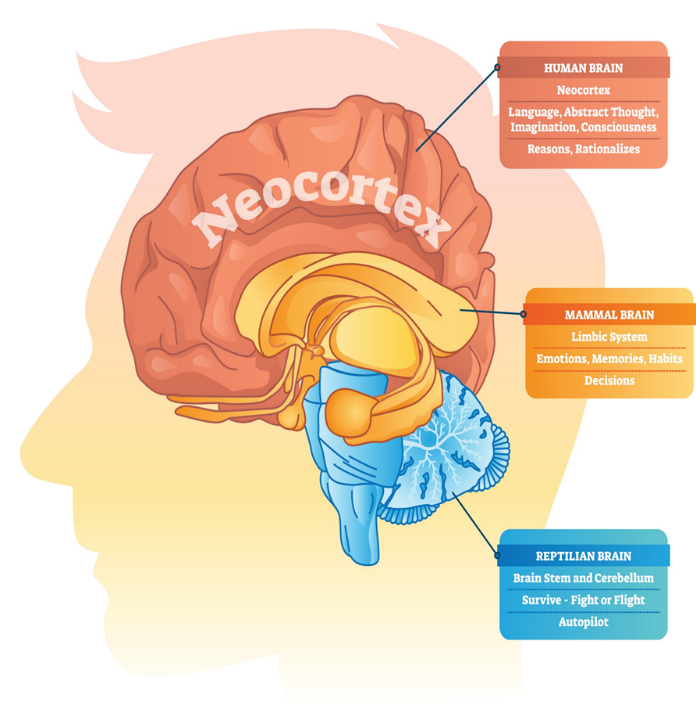
As you consider these lists and the basic idea that we want to help people shift from being less-agile to being more-agile, which part of an individual controls whether or not they are innovative versus traditional or change-willing versus change-resistant? The answer: Their mind. How individuals’ minds digest and process information shapes how agile they are. Thus, it stands to reason that if we want to become more agile or if we want to help others to become more agile, we must focus on the mind. Harnessing the Power of the Mind in Agility DevelopmentHow often is the mind focused on when discussing the development of agility? In my experience, rarely. To harness the power of the mind in agility development, we need to focus on an aspect of our brain that drives our brain’s processing: our mindsets. Our mindsets are often described as our mental lenses that shape how we see and process our world, and therefore are foundational to how we operate in our world. But, in reality, our mindsets are long-range neural connections in our brain that connects three different regions of the brain:
Since our mindsets are the neural highway connecting these three brain regions, they effectively serve as the circuit board for our brain that performs three primary jobs:
What Mindsets Do Employees Need to Develop?If employees’ mindsets are central to how employees process and operate, they need to become a primary focus when developing agility. This is perhaps the best way we know how to focus on the mind as part of agility development. But, something that often holds organizations up from focusing on mindsets is that they don’t know what mindsets to focus on. I have scoured the academic literature to identify mindsets that have been researched and have been continually demonstrated to impact how people think, learn, and behave. From this research, I have identified four mindsets that have been repeatedly found to lead to agile processing and operation. They are:
ConclusionI hope this article has done three things for you:
Ryan Gottfredson, Ph.D. is the Wall Street Journal and USA Today best-selling author of “Success Mindsets: The Key to Unlocking Greater Success in Your Life, Work, & Leadership.” He is also a leadership professor at the Mihaylo College of Business and Economics at California State University-Fullerton. You can connect with him and take a FREE Personal Mindset Assessment at https://ryangottfredson.com/.
|
Neuroscience: The Next Frontier in Agility Development
The Key to AgilityIndividuals who are agile share similar characteristics. They include:
Individuals who are not as agile, generally share the opposite characteristics:
As you consider these lists and the basic idea that we want to help people shift from being less-agile to being more-agile, which part of an individual controls whether or not they are innovative versus traditional or change-willing versus change-resistant? The answer: Their mind. How individuals’ minds digest and process information shapes how agile they are. Thus, it stands to reason that if we want to become more agile or if we want to help others to become more agile, we must focus on the mind. Harnessing the Power of the Mind in Agility DevelopmentHow often is the mind focused on when discussing the development of agility? In my experience, rarely. To harness the power of the mind in agility development, we need to focus on an aspect of our brain that drives our brain’s processing: our mindsets. Our mindsets are often described as our mental lenses that shape how we see and process our world, and therefore are foundational to how we operate in our world. But, in reality, our mindsets are long-range neural connections in our brain that connects three different regions of the brain:
Since our mindsets are the neural highway connecting these three brain regions, they effectively serve as the circuit board for our brain that performs three primary jobs:
What Mindsets Do Employees Need to Develop?If employees’ mindsets are central to how employees process and operate, they need to become a primary focus when developing agility. This is perhaps the best way we know how to focus on the mind as part of agility development. But, something that often holds organizations up from focusing on mindsets is that they don’t know what mindsets to focus on. I have scoured the academic literature to identify mindsets that have been researched and have been continually demonstrated to impact how people think, learn, and behave. From this research, I have identified four mindsets that have been repeatedly found to lead to agile processing and operation. They are:
ConclusionI hope this article has done three things for you:
Ryan Gottfredson, Ph.D. is the Wall Street Journal and USA Today best-selling author of “Success Mindsets: The Key to Unlocking Greater Success in Your Life, Work, & Leadership.” He is also a leadership professor at the Mihaylo College of Business and Economics at California State University-Fullerton. You can connect with him and take a FREE Personal Mindset Assessment at https://ryangottfredson.com/.
|
How Big Is It?
| How Big Is It? Imagine this….as a project team member you know a change is coming, but you have no idea how big the change really is [scale and/or significance], and who will be impacted the most. The team begins to feel uneasy, and you think, there has got to be a way to measure the impact of the change. And, you are right, a change impact assessment can help you answer the question: how big is it? How does it answer that question? It identifies:
The insights provided by the assessment help you and the team prioritize the upcoming changes. This allows the team to devote time and resources to the areas that will experience the highest levels of change. Focusing resources on the highest priorities will help to accelerate the change and generate the largest return on investment. While the change impact assessment is a useful tool, it is most successful when used properly. Let’s take a look at when and how the assessment should be used.
Change can be unsettling. Using a change impact assessment shines light on the upcoming change and gives the project team tangible ways to minimize the impact.
|