What Surprise Awaits?


| What Surprise Awaits? In today’s world we do not need another surprise. It seems like we have surprise upon surprise occurring on a regular basis. So, let’s make sure we control what we can and secure solid footing for successfully managing projects in these turbulent times. Consider this….changes don’t occur in a vacuum. To be successful, you must involve the right people at the right time. Follow these steps to identify and engage the right stakeholders.
Unsure about how you’ve segmented the stakeholders, or want some suggestions on how to influence important stakeholders? Reach out to trusted partners, fellow program/project managers, or discuss with project team members. Be well and stay safe!
|
The present, the past and the future - being an adaptable project manager!
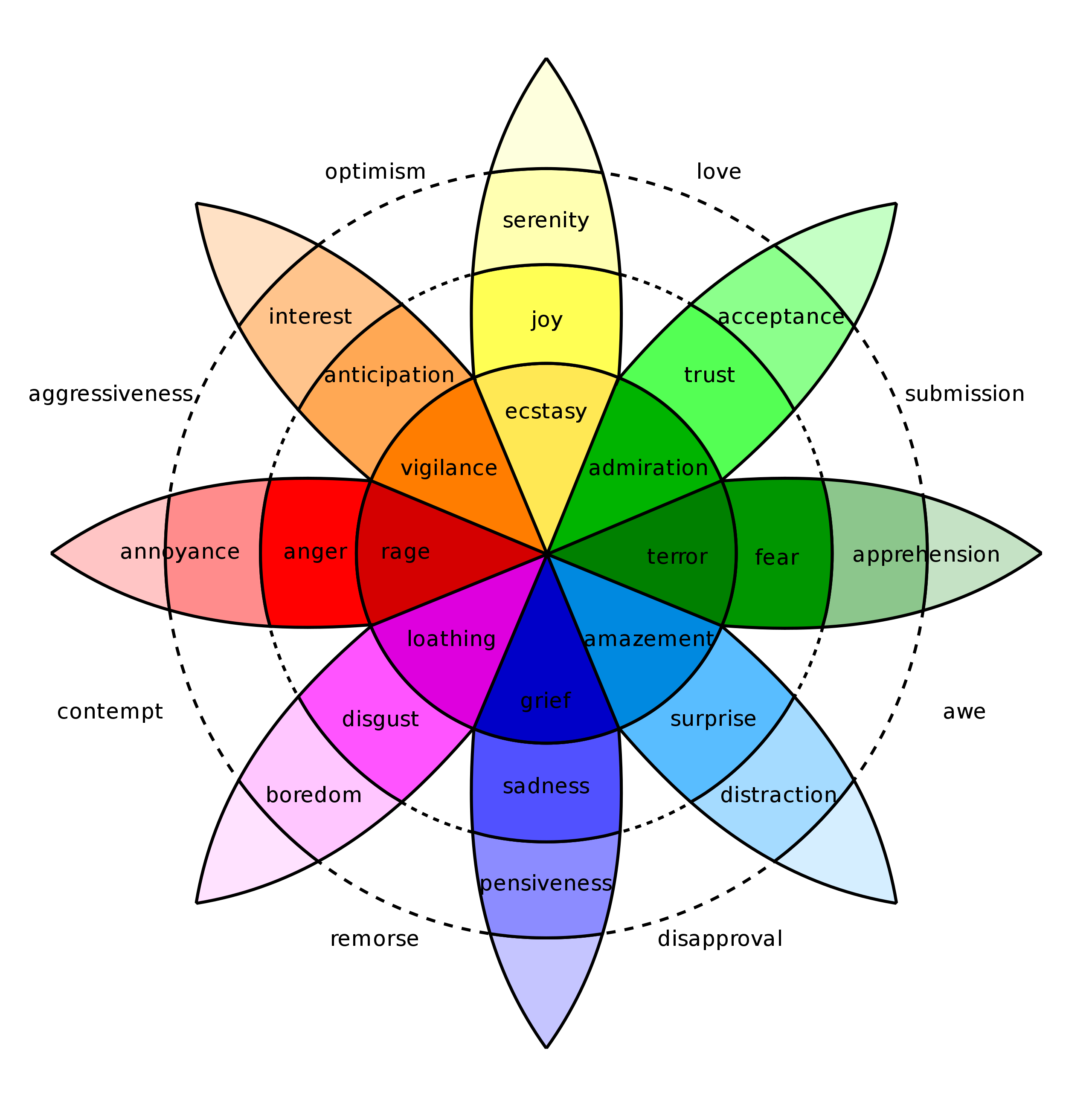
| Little did we know when we were choosing the dates and topics for the ProjectManagement.com blog that we were on the cusp of a major shift in the world! The present, the past and the future – being an adaptable PM. That was the topic already slated for this week… What a timely topic! And I have broadened it to the topic of being an adaptable project manager now and where we expect it to go in the future. It is not just how we will project manage it is how we will live, choose, prioritize and stay sane! And all these are important components of project management too. The past We have been down this hole before – or one like it! As we look back on a time that was just a few weeks ago, we may be surprised at the number of things that we took for granted and just assumed would continue forever. Every day much like another, the same struggles, the same connections, the same processes. How do you feel as you look back at that time? What emotions do you feel about it? To help you, take a look at the Plutchik Wheel of Emotions. Ask yourselves the questions that follow:
What is one thing you will keep doing from “before”?__________________________________
The present We are always navigating holes… Change is something that many people don’t appreciate. A few weeks ago, there was a sudden change. For many we were told to “stay home starting tomorrow”. For some, that means working from home, for others it means losing a job and struggling with day to day expenses and for some it means juggling work from home, schooling the kids, making additional meals, buying groceries with less access to stores. And then of course there are many people who despite the stay at home orders, are still having to go out to work. Maybe to work on the food supply chain, or as a frontline worker in the healthcare field. The change has been dramatic, and we have had no choice but to adjust the best we can. In group coaching sessions we often hear that people are “not experiencing anything different than usual”. They regularly or habitually work from home. It is “just the same”. When we pause and think about the truth of that statement, we are often surprised, and it turns out that the only thing that seems the same is the idea of working from home. For example, one person said “nothing has changed for me, I always work from home. We asked, how is it different? She paused, reflected and answered:
She suddenly looked sad and relieved. She was sad that there were so many things that had changed and relieved because she admitted she had been feeling tired and a little down and had been criticizing herself when things were so “normal” for her. Maria Sirois (Author of “A short course in happiness after loss”) says “pain, is pain, is pain”. Humans don’t experience pain in comparison to others. They experience their own pain and it is not less – or more – because of how it compares to others. It just is. Having just been in a four- hour mindfulness retreat and I am reminded to think about this present and ask these questions:
What is one thing you are doing now that you will continue to do? _______________________ The Future Like holes before this one, we will find our way out One significant job of a project manager is to collect, challenge and collate project predictions. Our experts predict how long each part of a project will take and what the optimal sequence is, and we put it together to form the plan. So often the plan is not what is ultimately executed and to some degree serves more as a benchmark (baseline) against which to measure the deviation from what we expected. This has never been truer than now. As the world tentatively reopens, there is even more uncertainty than when it shut down. A few weeks ago, others made the decisions and we lived with – and adjusted to – those decisions as best we could. Our choice was not “what to do” it was “how to do it”. Some of us adjusted more easily than others. Some did not really adjust at all and now suddenly we will be asked to adjust again.
In the future though we will be making the decisions. We may be told it is OK to go back to work, but we will decide if that is safe – for us, for our children who may not be in school – for vulnerable loved ones. We will decide whether going to a restaurant, store, gym or sports venue is “safe enough”. Our days will be a maze of decisions, and we will be called upon to use our strengths in new ways and to use strengths that come less easily to us in order to get through the next few months. We are already seeing that everyone is being called upon to use more Prudence than normal. This character strength – the planning strength – is one that we are more likely to be adept with. We may have to lean more on Perspective – yes a choice may feel unsafe, but it may be less dangerous than the alternative (not going back to work and not being able to pay the rent for example). We will need Hope – that is the strength of positive forward thinking AND taking action. Forgiveness may be needed more now as people make decisions that turn out to be less than optimal, or tempers fray, or energy is lower. In fact, when we look at the twenty-four research- based character strengths (see below), EVERY one of them has a place in what is coming in this future. Look at the list and think about which of the strengths come most easily and naturally to you and then make a plan for how to engage those strengths purposefully in the future. These questions may help:
What is one practice you want to adopt going forward to help make each day 2% better? _______________________________________________________________________ Take what you learned in the past, are learning in the present and launch into the future with a curious mind. In mindfulness we call this “beginner’s mind”. In the next few months we will all be beginners. Embrace it, take care of yourself, and see what you learn! And, remember to put on your own oxygen mask first! For a great little book to read during these times of uncertainty – to understand how we process change – read Carole Osterweil’s book Project Delivery, Uncertainty and Neuroscience: A Leader's Guide to Walking in Fog. |
Call for Volunteer - Change Management
| Within PMI’s online community, ProjectManagement.com, a group of volunteers organizes monthly webinars on the topic of Change Management. To complement this webinar series, they also maintain a blog, Shifting Change: Insider Tips from Project Leaders, featuring lessons learned and diverse perspectives from experienced professionals. This team is currently looking for someone to assist with their endeavors to advance conversations around change management and provide tips and tools to the online community (in a volunteer capacity). The volunteer blog & webinar coordinator is responsible for sourcing, working with, and facilitating presenters through: 1) the webinar development process and 2) the blogging process for the Shifting Change blog He/she will host practice sessions for presenters and help facilitate live webinars for the team in the area of Change Management. The volunteer will also work with presenters to contribute change management content to the blog. The volunteer should be an active team member who is enthusiastic about providing great webinars and blog posts to the community on ProjectManagement.com This volunteer will: • Coordinate scheduling of blog posts for the Shifting Change blog, and review blog content to ensure compliance with User Guidelines The estimated time commitment is 4-5 hours per month with weekly team meetings - all virtual. The volunteer should have strong project, program, and/or portfolio management skills and understand and commit to PMI’s objectives and goals around increasing member value and knowledge delivery. PMI membership is required for this role. This is a team of volunteers, so flexibility is needed, and experience with Webex is strongly encouraged. PDUs for Giving Back can be claimed in accordance with the policies outlined in your credential's handbook. If you are interesting in volunteering, please contact Laura Schofield via the Inbox on ProjectManagement.com with: -your statement of interest -an explanation of any experience that you have facilitating webinars by 30 June 2020. An interview with shortlisted candidates and the volunteer team will be conducted. |
Interview with KK Diaz : Digital Transformation – The Leadership ‘Make It or Break It’ Project
| Text Content from KK Diaz; Interview conducted by Nic Jain The late Alvin Toffler is famously quoted as having said: “The illiterate of the 21st century will not be those who cannot read and write, but those who cannot learn, unlearn and relearn.” And today, as we entered a new and mostly unknown business environment, these words couldn’t be more relevant. Many business leaders were caught off-guard and unprepared by the sheer devastation of the Covid-19 pandemic. And it will not be the leaders who know it all but those that want to learn it all who will seemingly have a better chance of surviving what is seemingly going to be a new normal for business. Even before the pandemic hit, the average lifespan of a company listed on the S&P 500 Index had already decreased by more than 50 years in the last century, from 67 years in the 1920s to just 15 years today. In the last few years, we’ve seen “too big to fail” industry behemoths unexpectedly replaced by smaller, leaner and smarter businesses. This is as a result of, and supported by, the forces of globalisation, intense competition, evolving customer preferences, the power of the internet and the speed at which technology had been and is always changing. Today, companies have to better position themselves to avoid failure. And one way to do so is through digital transformation. What is digital transformation?Digital transformation is the integration of digital technology into all areas of a business, fundamentally changing, and improving, the way the business operates and delivers value to its stakeholders, customers and communities. Moreover, it represents a cultural change that requires organizations to continually challenge the status quo, experiment, and get comfortable with failure.[i] Research from Accenture supports the need for businesses to intensify their digital transformation efforts. The research states that:
This clearly means that it is more important than ever to prioritize the relevance of your value proposition and the sustainability of your business. To achieve this, you must look at two fundamental dynamics:
Evolving customer preferencesThe way in which customers find, buy and use products and services has evolved significantly over the last decade. Their expectations are driven by:
Businesses which wish to continue growing their customer base must align to these trends and changes. In order to cater to evolving customer expectations and remain relevant, businesses must adapt to, meet and deliver on these expectations. Because these expectations are driven primarily by the internet and technology, businesses also need to adapt their technology accordingly. And since the Covid-19 pandemic, this need has been forced become a critical necessity. When it comes to digital transformation, technology is more of an enabler than a destination. In other words, technology is merely the vehicle that’ll take your business to the ‘digital transformation’ destination. You still need a leadership-driven purpose and vision of where the company is heading; an inspiring vision that galvanizes an entire organization to work together to reinvent itself and to deliver new and even greater value for its shareholders, staff, customers and community. This vision will ensure that all these stakeholders embody the values and culture needed for the business to arrive at its new destination. Digital transformation is not an easy project to undertake and will either make a or break a company and its leadership. It is a challenging, never-ending process that necessitates much from the brave business leaders who choose to take their companies on this journey. These leaders need to help their organizations develop the ability to innovate and to reinvent themselves as needed. Most importantly, they need to imbue organizational agility within their businesses by ensuring that they have the ability to:
Sometimes, for this to happen, leadership needs to reimagine everything from the ground up. [i] https://enterprisersproject.com/what-is-digital-transformation#q1 |
How to Drive a New Culture to Embrace the Digital Age
|
"Things are moving so fast we can’t keep up!”
In the last two weeks, both Pier 1 and JC Penney announced bankruptcies, no doubt partially brought on by the Covid-19 pandemic, but both organizations have been hurting for a long time. Macy’s and Sears are closing more stores; the latter barely holding on by a thread. Even Walmart and Walgreen’s have announced they will close stores. Brick and mortar are giving way to the digital age. Amazon continues to grow at breakneck speed. Over ten years, Amazon’s revenue has increased about 12 times, whereas Target Stores’ revenue has increased about 1.2 times.
When we look at the retail industry specifically, and others more generally, it’s clear that traditional organizational structures are falling short. They are unable to keep pace with the demands of the digital economy.
The advancement of the Internet over the past two decades has taught us that we must run our organizations differently for our businesses to thrive, and perhaps even survive. This digital transformation is inevitable. To successfully move into the future, leaders need to strike a balance between organizational hierarchy and cross-functional coordination. While there still needs to be accountability for results, organizations need to be able to move faster to achieve these results.
In the late 1800s, Fredrick Taylor pioneered the idea of specialization to speed production. This specialization drove greater efficiency and productivity as organizations invested heavily in projects to streamline operations. Yet this specialization also drove hierarchical adherence which in turn promoted cross-functional dysfunction – especially during times of change. If leaders wanted to deploy a new product design or improve business processes across the organization, they ran into huge amounts of resistance. This led to lots of failure of organizations to achieve results in desired time frames, if at all.
This means that organizations must reduce their dependence on hierarchical adherence and drive more toward teams that work more effectively cross-functionally. People in these organizations must operate at higher levels of cross-functional collaboration, requiring greater trust, healthy dissent, and greater ability to engage in informal accountability.
This starts at the top. The leader of the organization must be willing to give up traditional command and control in favor of a more facilitative approach. She must be passionate about her organization’s mission, must be humble, and must demonstrate greater trust and willingness to engage in healthy dissent. Further, she holds her leadership team accountable to collaborate cross-functionally and promotes and models the idea that employees across the organization work together to drive these outcomes and are willing to challenge each other to do so.
This article is the subject of my upcoming online seminar, How to Drive a New Culture to Embrace the Digital Age, sponsored by the Project Management Institute. Click here for more info.
|