








Guessing is not a strategy: How to build decision velocity with AI and real-time data
June 10, 2026 | Live Webinar

Disciplined Agile 5.5 Released
Choose Your WoW! Second Edition Is Now Available
Requisite Agility applied in Project Management
Disciplined Agile and PMBoK Guide 7th Edition
#ChoiceIsGood, #ChooseYourWoW, #ConsumableSolution, #ContinuousImprovement, #CoreAgilePractices, #experiment, #Experimentation, #GuidedContinuousImprovement, #Kaizen, #LifeCycles, #ProcessImprovement, #TealOrganizations, Adoption, agile, agile adoption, Agile Alliance, Agile Business Analyst, Agile certification, agile data, agile governance, agile lifecycle, agile metrics, agile principles, agile transformation, Agile2018, Agile2019, Agile20Reflect, AgileData, Analogy, announcement, Architecture, architecture, architecture owner, Articles and publications, Asset Management, Atari, Backlog, Barclays, being agile, benefits, bi, blades, book, Branching strategies, Browser, Business Agility, business intelligence, business operations, capex, Case Study, Certification, certification, charity, Choose your WoW, CMMI, cmmi, Coaching, Collaboration, Communications Management, Compliance, Compliancy, Conference, Construction, Construction phase, Context, Continuous Improvement, coordination, COVID-19, Culture, culture, Cutter, DA, DAD, DAD Book, DAD discussions, DAD press, DAD roles, DAD supporters, DAD webcast, DADay2019, Data Management, database, dependencies, Deployment, Development Strategies, DevOps, disaster, Discipline, discipline, Disciplined Agile, disciplined agile delivery, disciplined agile delivery blog, Disciplined Agile Enterprise, disciplined devops, Documentation, Domain complexity, dw, DW/BI, Energy Healing, Enterprise Agile, Enterprise Architecture, Enterprise Awareness, enterprise awareness, Essence, estimation, Evolving DA, Executive, Experiment, facilitation, FailureBow, feedback-cycle, finance, Financial, FLEX, Flow, foundation layer, Funding, GCI, GDD, Geographic Distribution, gladwell, global development, Goal-Driven, goal-driven, goals, Governance, GQM, Guideline, Hybrid, Improvement, inception, Inception phase, India, information technology, infosec, Introduction, iterations, Kanban, large teams, layer, lean, Lean Startup, learning, Legal Project Management, LeSS, Lifecycle, lifecycle, Manifesto, mark lines, marketing, MBI, Metaphor, Metrics, metrics, mindset, Miscellaneous, MVP, News, News and events, Non-Functional Requirements, non-functional requirements, Non-solo development, offshoring, Operations, opex, Organization, Outsourcing, outsourcing, paired programming, pairing, paper, People, People Management, phases, Philosophies, Planning, PMBoK, PMI, PMI and DA, PMI Chapter, Portfolio Management, post-format-quote, Practices, practices, Principle, Process, process improvement, process tailoring, Product Management, product owner, Product Owners, productivity, Program Management, Project Management, project-initiation, Promise, Quality, quality, rational unified process, Refactoring, Reiki, Release Management, release management, Remote Training, Remote Work, repeatability, requirements, Requirements Management, research&development, responsibilities, retrospectives, Reuse, Reuse Engineering, ride for heart, rights, Risk Management, Risk Management, Risk management, Roles, RUP, SAFe, sales, Scaling, scaling, scaling agile, Scheduled Workshops, SCM, scorecard, Scrum, ScrumMaster, SDLC, Security, security, self-organization, SEMAT, serial, skill, solutions software consumable shippable, Stakeholder Management, strategy, Support, Surveys, Teal organizations, team development, Team Lead, team lead, Teams, Technical Debt, Teleconferencing, Terminology, terraforming, test strategy, testing, time tracking, Tool kit, Toolkit, tools, traditional, Transformation, Transition iteration, transition phase, Uncategorized, Upmentors, Using PMI Standards, value stream, velocity, vendor management, Virtual Training, Workflow, workflow, workspaces


| One of the interesting trends that we’re seeing within organizations taking a disciplined agile approach to solution delivery is the preference for stable teams. Stable teams, also called stable product teams or simply long-term teams, are exactly as they sound – they remain (reasonably) stable over time, lasting longer than the life of a single project. This blog explores the differences between project teams and stable teams and then overviews the advantages and disadvantages of the stable team approach. We also explore the issue of how stable teams evolve over time. Stable TeamsAs you can see in the following diagram, with a project team approach we say that we bring the team to the work. What we mean by that is that we first identify the need to run a project, perhaps to build the new release of an existing solution or to build the initial release of a new solution, we build a team to do the work. Once the work is done, in this case the solution is successfully released into production, the team is disbanded and its team members move on to other things.
The stable team approach is a bit different. In this case we first build an effective team then we continuously bring valuable work to the team to accomplish. In this situation the work never really ends, but instead we replenish the team’s work item list (or work item pool depending on the lifecycle being followed) regularly. The team stays together and continues to produce value for your organization over time. Of course the term “stable team” is a bit of a misnomer as they do evolve over time. For example, many people like to stay on a team for a couple of years and then move on to another team to gain new skills and perspectives. This is good for them and good for your organization as it helps to keep your teams fresh. Sometimes you will want to grow or shrink a team. Sometimes you will discover that two people aren’t working well together and you need to split them up. The point is that there are very good reasons for your stable teams to evolve over time. We wouldn’t be disciplined if we didn’t explore the trade-offs involved with stable teams. The Advantages of Stable TeamsThere are several advantages to stable teams:
The Disadvantages of Stable TeamsThere are several disadvantages to stable teams:
Evolving Stable Teams Over TimeStable doesn’t mean stagnant. Of course you still have basic people management issues such as people wanting to expand their skill set by working on something new by rotating to another team, people leaving the organization, and new people joining the organization. So the team itself may go on for many years even though the membership of the team evolves over time. Ideally these membership changes are not too disruptive: It’s not too bad adding a new person every month or so, or losing people at a similar rate, but gaining or losing several people in a short period of time can be painful.
Our RecommendationStart experimenting with stable teams if you’re not already doing so. For most organizations the advantages clearly outweigh the disadvantages. In fact, you can see this in the Longevity decision point of the Form Initial Team goal diagram below.
|
| A common question that we get from teams who are new to agile is whether you should assign points (sizes) to defects. From a Disciplined Agile point of view we know that the answer will vary depending on the context of the situation, or in other words “it depends.” The really disciplined answer though is to say on what it depends, which is what we explore in this blog. Rod Bray, a senior agile coach and Disciplined Agile instructor, suggests this principle: Don’t reward people for shoddy work An implication of this is that if a team is injecting defects, they’re producing shoddy work, then it makes sense that their velocity suffers when they have to spend time fixing those defects. The decrease in velocity is a visible trigger to investigate, and address, the cause of the productivity loss. But what if the “shoddy work” wasn’t caused by your team? What if the “shoddy work” was previously acceptable to your stakeholders? Hmmm… sounds like the context of the situation counts in this case. The following flowchart works through common thinking around when to size a defect. Note that this is just our suggestion, your team could choose to do something different. Let’s work through common scenarios to understand whether defects should be sized or not. These scenarios are:
Do you size the repair of existing technical debt?The quick answer is sometimes. For the sake of discussion we’ll assume that this technical debt has existed for a long time, potentially years. From a purist point of view technical debt may be injected at any time (this is obviously true) and as a result may only be seconds old. In the case of technical debt that is very new, refer to the logic below. The key issue is whether fixing the defect is going to be a substantial effort. This of course is subjective. Is the work substantial if it’s less than an hour of effort? Several hours? Several days? Several weeks? This is a bar that your team will need to set. Something that will impact your schedule is likely to be substantial (and something your Product Owner is likely going to want to prioritize so that it can be planned for appropriately). Clearly a defect that takes several days or more to fix is substantial and one that takes less than an hour is likely not. Something that takes several hours or a day or so is likely something you need to think about.
Do you size defects injected and by found by the team?No, the exception being technical debt (see above). This falls under the principle of not rewarding the team for shoddy work.
Do you size defects found by independent testing?Some teams, particularly those working in regulatory environments or working in complex environments, may be supported by an independent test team. An overview of the independent testing strategy is presented below. With the exception of the defect being found in existing technical debt (see above), the defect should not be sized. Once again, the principle described earlier holds. Of course if you don’t have an independent test team supporting your team then obviously you can ignore this question.
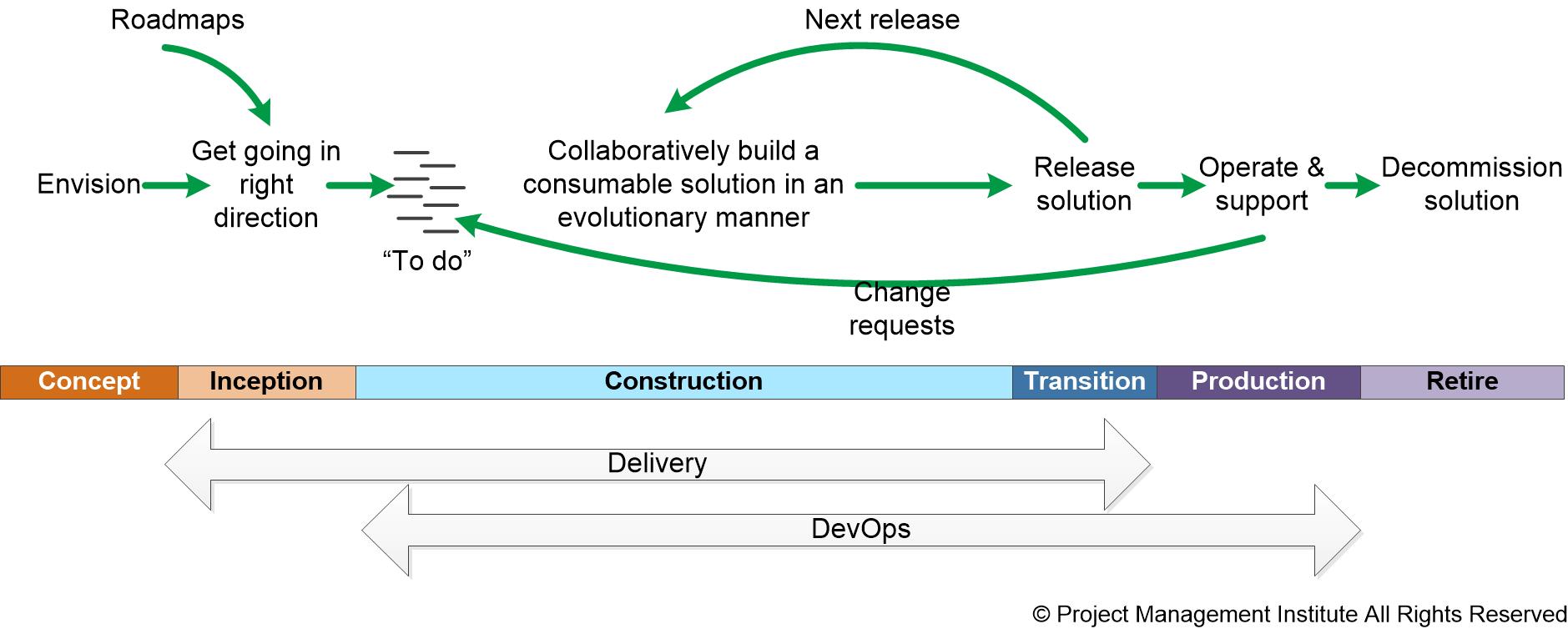
Do you size defects found in production?The answer is sometimes. As you can see in the high-level lifecycle diagram below, the DA toolkit explicitly recognizes that change requests are often identified by end users of an existing solution. These change requests are effectively new requirements that should be prioritized and worked on appropriately. Many organizations will choose to distinguish between two types of change requests, defects and enhancements, so that they may be treated differently. The issue is that defects are often tracked and, if the team is smart, they are analyzed to determine how they got past the team in the first place. Additionally you may find that defects and enhancement requests are charged for differently (a topic for a future blog).
If you don’t distinguish between defects and enhancement requests then there’s nothing to do, you simply treat the change request as a new requirement and size it like you normally would. But if you do distinguish between types then you need to think about it a bit. If the defect is found during a warranty period then it shouldn’t be charged for. Sometimes, particularly when work is being outsourced, there is a warranty period of several weeks or even months after something is released where the development team is expected to fix defects for free. In this case you likely wouldn’t size the work in line with the principle described earlier. Once you’re out of the warranty period then it’s likely you want to assign points to it: The functionality in question passed testing and was accepted by your stakeholders, so they in effect have taken responsibility for it. To summarize, the answer to the question “Should we assign points to a defect?” is “it depends.” In this blog we explored in detail why this is the case and described when and when you wouldn’t want to assign points. I’d like to thank Kristen Morton, Rod Bray, and Glen Little for their insights which they contributed to this blog. |
|
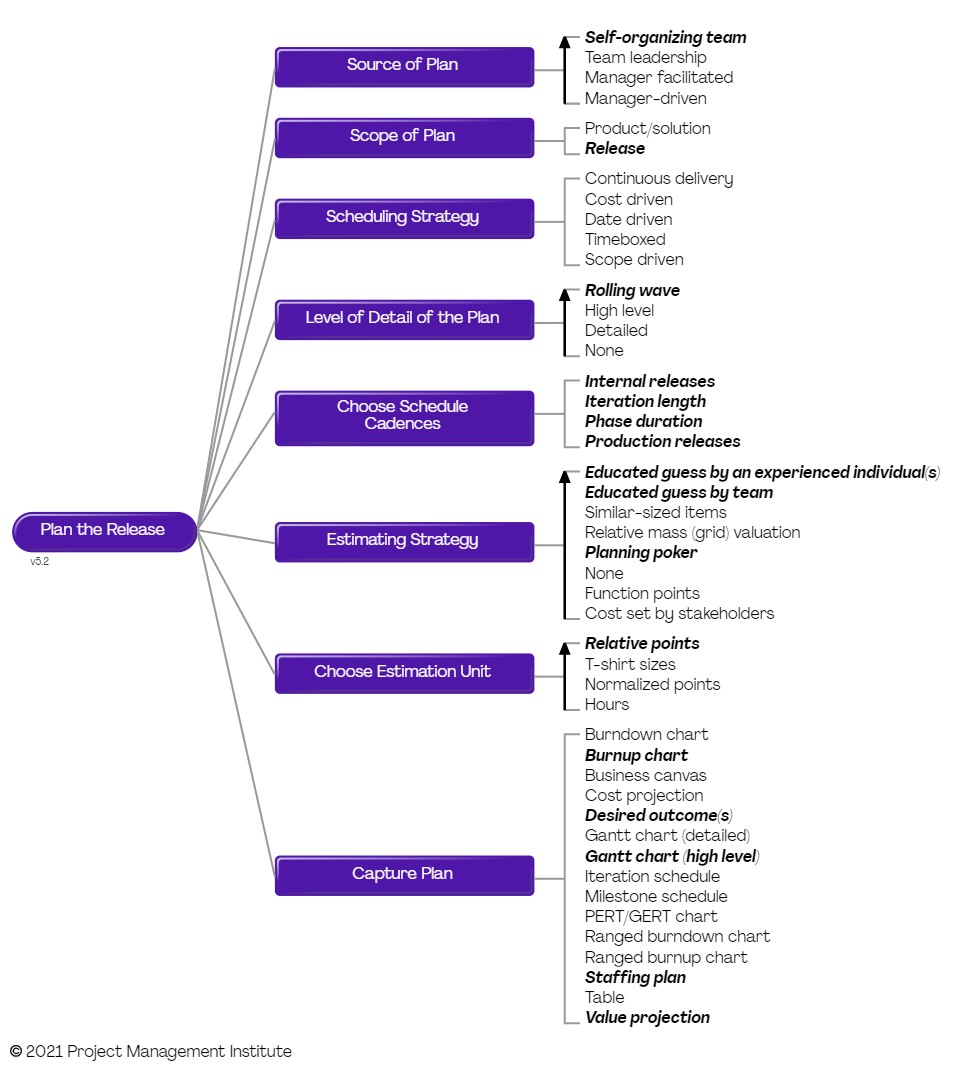
The basic idea with rolling wave planning is that you plan things that are near in time to you in detail and things that are distant in time at a higher level. The thinking is that the longer away in time that something is the greater the chance that it will change during that time, therefore any investment in thinking through the details is likely wasted. You still want to plan at a high level to both guide your current decisions and to set people’s expectations as to what is likely to come. Rolling wave planning is implemented in several places of the DA toolkit. First, as you can see in Figure 1 below, it is an option of the Level of Detail decision point of the Develop Initial Release Plan process goal. A rolling wave approach to release planning has the advantages of more accurate and flexible planning although can be a bit disconcerting to traditional managers who are used to annual planning strategies. Figure 1. The Develop Initial Release Plan goal diagram.
The Portfolio Management process blade supports rolling wave budgeting as an option for its Manage the Budget decision point. This is depicted in Figure 2. The advantages are greater flexibility and greater likelihood of investing your IT funding more effectively, albeit at the loss of the false predictability provided by an annual budgeting strategy. Figure 2. The goal diagram for the Portfolio Management process blade.
The Program Management process blade supports rolling wave planning of a program itself, as you seen in Figure 3. Planning and coordination are critical on a large program, and rolling wave planning offers the advantages greater flexibility, the ability to think important cross-team issues through, and the ability to react to changing stakeholder needs. The primary disadvantage is that it can be disconcerting for traditionalists who are used to thinking every thing through from the beginning. Figure 3. The goal diagram for the Program Management process blade.
As you can see in Figure 4, rolling wave strategies can be applied in Product Management to evolve the business vision/roadmap. A continuous, rolling wave approach is critical to your success because the market place changes so quickly – these days, few organizations can tolerate an annual approach to business planning and in the case of companies with external customers an ad-hoc approach can prove to be too unpredictable for them. Figure 4. The goal diagram for the Product Management process blade.
Previously we saw that rolling wave strategies can be applied to evolve your technology roadmap, as indicated in the goal diagram for Enterprise Architecture in Figure 5. The advantages of this approach are that your roadmap evolved in sync with both changes in technology and with your organization’s rate of experimentation and learning. The main disadvantage is that your technology roadmap is effectively a moving target. Figure 5. The goal diagram for the Enterprise Architecture process blade.
As you can see, rolling wave strategies are an integral part of the Disciplined Agile (DA) toolkit. In fact, in most situations they prove to be the most effective and flexible strategies available to you. The advantages of rolling wave planning tend to greatly outweigh the disadvantages. More on this next time. |
|
For a long time now we’ve been applying what’s often called rolling wave planning with our clients. Rolling wave planning is applied in several areas of the Disciplined Agile (DA) toolkit, including release planning by a delivery team, technology roadmapping, and product roadmapping to name a few. This article explores how to apply rolling wave planning in a pragmatic manner to technology roadmaps. An important aspect of your enterprise architecture efforts is to provide architectural guidance, both business and technical guidance, to your organization. One of the key artifacts that enterprise architects will create is a technology roadmap that, as the name suggests, provides guidance as to the proper application of technologies within your organization. This roadmap will often supplement any “as is” and “to be” models that the enterprise architects create. Technology roadmaps are often evolved following a rolling wave planning approach. Figure 1 depicts an example of a technology roadmap, the goal of which is to give technical direction to solution delivery teams so as to provide safety rails around technical experimentation. Figure 1. A technology roadmap in September 2016.
Notice how this roadmap addresses several categories of technical issues:
What Should the Planning Horizon Be?Technology roadmapping tends to have between a six month and three year planning horizon depending on what is being planned for. For example, experiments are typically planned out a few months in advance as they are often driven by the needs of development teams. Major upgrades are typically planned on a horizon of six months to a year as this reflects the rate of change of many technologies. Retirements might typically planned for years in advance, particularly when the retirement could impact multiple systems.
How to Capture Technology RoadmapsTechnology roadmaps are typically captured in text format as you see in Figure 1 above, although a timeline format (as we say with product roadmaps) are often used for executive presentations. This sort of planning is only one of several things that your enterprise architecture team will do of course. In addition to actively guiding development teams and working with senior stakeholders, the enterprise architects are also maintaining current and to-be models and are hopefully producing code examples for how to work with new architectural components. |
|
For a long time now we’ve been applying what’s often called rolling wave planning with our clients. Rolling wave planning is applied in several areas of the Disciplined Agile (DA) toolkit, including release planning by a delivery team, technology roadmapping, and product roadmapping to name a few. This article explores how to apply rolling wave planning in a pragmatic manner to product roadmaps. An important aspect of product management is to develop and evolve an overall business vision, an important part of which is your organization’s product roadmap. This is sometimes called a “multiple product roadmap” or “product offerings roadmap” although more commonly just a “product roadmap.” This roadmap indicates upcoming product releases (or application releases for non-product companies), potential product ideas, and the retirement of any products. The goal is to manage customer expectations regarding your product portfolio. An example of a product roadmap for a fictitious company is depicted in Figure 1 below. For product planning this company’s very near term (green) is a three month, rolling period. In this case we’re seeing the roadmap as of September 2016. For the very near-term the expected release dates of each product are indicated. This company has chosen to also do this for some, but not all, of the products being release din the near term (yellow) – In some cases it isn’t yet clear exactly when a release will occur so the company doesn’t want to set unrealistic expectations by giving an exact date yet. In the case of Katana 12.1 they are committing to a date whereas with Webshooter 1 they are committing to sometime during quarter 2 (April through June). The other product releases do not have published dates yet. Figure 1. A product roadmap (text approach) from September 2016.
It’s interesting to note that for upcoming (red) they are choosing to just indicate new products they hope to release during that period but not releases of existing products. This is because this period is nine months or more into the future so promising exact dates to people becomes a questionable proposition, far better to indicate ranges for now. For the distant future (gray) the product roadmap shows potential ideas for new products but these are only vague “wish list” items at best right now, not all of which will be invested in. Figure 2 depicts a timeline version of a product roadmap. It focuses on currently planned product releases and so it does not depict the future product ideas that we saw in Figure 5. These product ideas would be captured elsewhere, perhaps as a list on a whiteboard some where. Figure 2. A timeline version of a product roadmap.
What Should the Planning Horizon Be?Product roadmaps tend to have a multi-year planning horizon. Figure 1 showed about two years of planning whereas Figure 2 a bit more than a year. There are several key considerations to take into account when determining your planning horizon. First is how often can your teams release? You typically want to be able to indicate several releases of your major products/solutions on your roadmap, which you can see in both examples. Second, how often do your customers want releases? Third, how far in advance do your customers need to plan? This is a reflection of the sales cycle for your products, the longer the sales cycle the longer between releases of your product (usually) and the longer the timeframe covered by your roadmap.
How to Capture Product RoadmapsThere are two basic strategies for depicting product roadmaps:
Your product roadmap is an important part of your organization’s overall business vision. Another part of that vision is your business roadmap, the topic of a future blog. |
|
"To stimulate creativity, one must develop the childlike inclination for play and the childlike desire for recognition." - Albert Einstein |