


Contextualization of Software Development Workshop


|
On Saturday, February 9 a group of people got together in Whistler British Columbia to discuss the importance of context as it pertains to software development. The workshop was organized by the good folk at Software Development Experts (once again, thank you very much). We shared some very important insights and had some very informative discussions. The morning began with a kick-off from Carson Holmes. I gave a talk summarizing the work around context frameworks, including Philippe Kruchten’s Situational Agility and the work I did at IBM around the Agile Scaling Model. My talk summarized what we’re calling the Process Context Framework (PCF), something I will blog about soon. Philippe then summarized his recent work on cognitive biases which explains why people, including software professionals, make suboptimal decisions and more importantly how we can avoid doing so. Mark Kennaley overviewed the theory behind Software Development Practice Advisor and demoed some of its capabilities. This is a product that I’ve been very interested in for some time as it’s an expert system that supports better process-oriented decisions around software development that is based on true empiricism. Steve Adolph shared his work around how software development teams collaborate successfully, including empirical observations from is grounded-theory based work for his PHd. Julian Holmes led us through an exercise around the contextualization of 400 agile/lean practices. Mark and Carson ended the workshop by leading the group through a discussion of how we can work together effectively. We had very interesting discussions throughout the day. Disciplined Agile Delivery (DAD) was discussed at several points throughout the day. In my presentation I briefly overviewed DAD’s goal-driven approach as I believe it is a perfect example of how to instantiate contextualization of software development. Mark Kennaley discussed how DAD is supported as a first-class citizen in Advisor in his presentation. For the handful of people who didn’t yet have the DAD book we gave them copies signed by Mark Lines and myself. On Sunday many of us hit the slopes at Blackcombe/Whistler. Below is a picture of several of us at near the top of Whistler. More of the group went skiing than just the people appearing in the picture.
The Workshop AttendeesBack row:
Middle row:
Front row:
|


Disciplined Agilists are Enterprise Aware
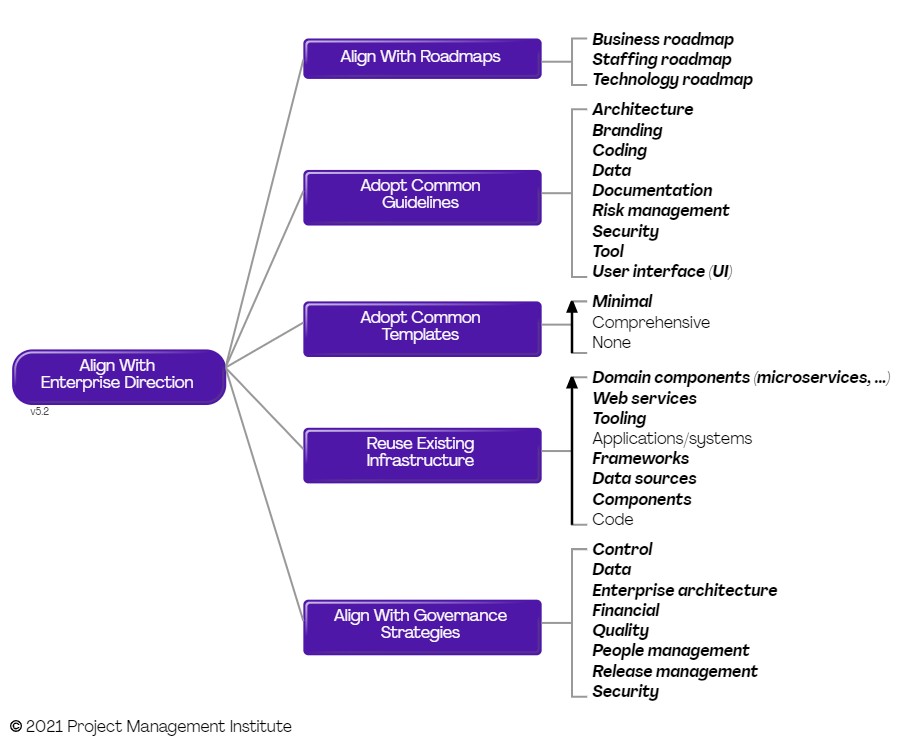
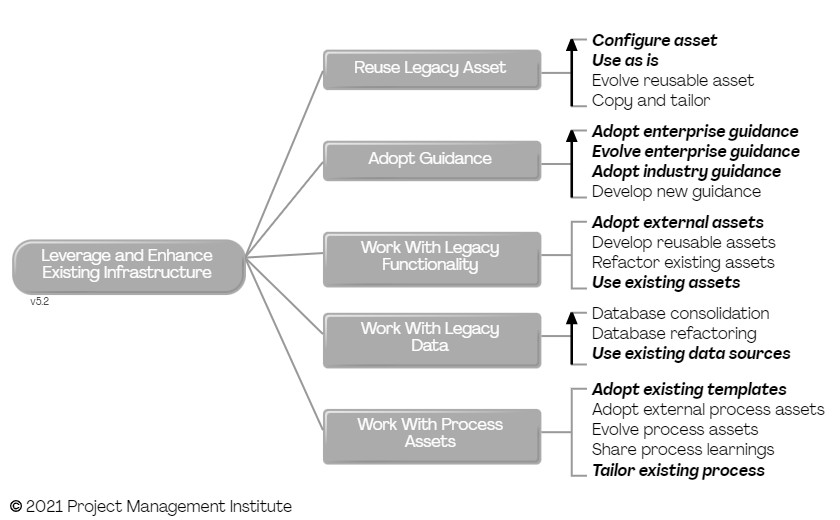
| Enterprise awareness is one of the key aspects of the Disciplined Agile (DA) toolkit. The observation is that DAD teams work within your organization’s enterprise ecosystem, as do all other teams. There are often existing systems currently in production and minimally your solution shouldn’t impact them. Better yet your solution will hopefully leverage existing functionality and data available in production. You will often have other teams working in parallel to your team, and you may wish to take advantage of a portion of what they’re doing and vice versa. Your organization may be working towards business or technical visions which your team should contribute to. A governance strategy exists which hopefully enhances what your team is doing. What it Means to be Enterprise AwareEnterprise awareness is an important aspect of self discipline because as a professional you should strive to do what’s right for your organization and not just what’s interesting for you. Teams developing in isolation may choose to build something from scratch, or use different development tools, or create different data sources, when perfectly good ones that have been successfully installed, tested, configured, and fine-tuned already exist within the organization. Disciplined agile professionals will:
Figure 1. Inception Goal: Align with Enterprise Direction.
Figure 2. General Goal: Leverage and Enhance Existing Infrastructure.
Why is Enterprise Awareness Important?Enterprise awareness is important for several reasons. First, you can reduce overall delivery time and cost by leveraging existing assets. In other words, DAD teams can spent less time reinventing the wheel and more time producing real value for their stakeholders. Second, by working closely with enterprise professionals DAD teams can get going in the right direction easily. Third, it increases the chance that your delivery team will help to optimize the organizational whole, and not just the “solution part” that it is tasked to work on. As the lean software development movement aptly shows this increases team effectiveness by reducing time to market. Challenges to Enterprise AwarenessUnfortunately there are two main challenges to supporting enterprise awareness on agile teams. First is the cultural challenge within the agile community that some “agile purists” perceive this as unecessary overhead. Reasons for this misunderstanding include a lack of understanding of the overall enterprise picture or some agilists who have previous experiences with enterprise professionals who struggle to work in an agile manner. This points to the second challenge that enterprise professionals often don’t understand how to work effectively with agile teams. Sometimes this is because the agile teams they’ve been working with until now haven’t been sufficiently disciplined to work with them effectively, but more often than not it’s because they still choose to follow older, more traditional approaches to their craft (they may find my articles about Agile Enterprise Architecture, Agile Enterprise Administration, and even The Enterprise Unified Process to be illuminating). These challenges are cultural in nature, and thus difficult to overcome. Agilists and enterprise professionals need to respect one another and strive to learn more about what the other group is trying to accomplish. They must strive to work with one another and thus learn from each other. Furthermore, they must build a culture of shared commitment and responsibility to the organization. Not only is this possible it is highly desirable. In summary, DAD teams and more importantly DAD practitioners are enterprise aware. They recognize that enterprise aware strategies improve their ability to provide value to their stakeholders both within the scope of a solution as well as at the organizational level. To coin an environmental cliché: Disciplined agilists act locally and think globally. Material for this blog posting was modified from Discplined Agile Delivery: A Practitioner’s Guide to Agile Software Delivery in the Enterprise by Scott W. Ambler and Mark Lines (IBM Press, 2012) |
Disciplined Agilists Take a Goal-Driven Approach
| In this posting we explore the goal-driven aspect of the Disciplined Agile (DA) toolkit. This goal-driven approach enables DAD to avoid being prescriptive and thereby be more flexible and easier to scale than other agile methods. For example, where Scrum prescribes a value-driven Product Backlog approach to managing requirements DAD instead says that during construction you have the goal of addressing changing stakeholder needs. DAD also indicates that there are several process factors/issues surrounding that goal that you need to consider, and there are several techniques/practices that you should consider adopting to do so. DAD goes further and describes the advantages and disadvantages of each technique and in what situations it is best suited for. Yes, Scrum’s Product Backlog approach is one way to address changing stakeholder needs but it isn’t the only option nor is it the best option in most situations. We start by describing how to visualize goals. We then summarize the goals called out by DAD, a topic we’ve written about in the past so we only cover this topic briefly here. We end with a summary of the advantages and disadvantages of a goal-driven approach over the more prescriptive approaches of older agile methods. Visualizing GoalsIn the original DAD book we described process goals in a non-visual manner using tables which explored the advantages and disadvantages of the techniques associated with a process factor. Since we wrote that book both Mark and I have spent a lot of time helping people to understand what a goals-driven approach entails and we’ve found that many people respond well to visual representations of a process goal. Yes, the process decision tables are very important but a visual overview helps to provide context for the detailed information. In the second half of 2012 we began developing a way to represent goals in a visual manner using what we call a goals diagram. A goals diagram, the notation for which is summarized in Figure 1, is in effect a form of decision tree. In Figure 1 you see that a process goal is indicated using a rounded rectangle and the decision points pertaining to a goal with normal rectangles. Process goals will have one or more decision points that you need to consider addressing, with most goals having four or five decision points although some have eight or nine. Each decision point is then addressed by two or more techniques/practices. Because there may be many techniques to choose from, we indicate “default” techniques in bolded italics. These defaults are good starting points for teams new to agile – they are almost always strategies from Scrum, XP, or Agile Modelling with a few Rational Unified Process (RUP) ideas thrown in to round things out. Some decision points you may choose not to address. Sometimes options are “ordered”, which is indicated by a upwards pointing arrow to the left of the list of techniques. What we mean by this is that the techniques appearing at the top of the list are more desirable from the point of view of agile and lean thinking and the less desirable techniques are at the bottom of the stack. Your team of course should strive to adopt the most effective techniques they are capable of performing given the context of the situation that they face. In Figure 1 the first decision point has an ordered set of options whereas the second one does not. Typically when the options are ordered you will only choose one of them whereas you MIGHT choose several options in unordered situations. Figure 1. The notation of goal diagrams.
Let’s work through some examples. Figure 2 depicts the goal diagram for Explore Initial Scope, a goal that you should address at the beginning of a project during the Inception phase (remember, DAD promotes a full delivery lifecycle, not just a construction lifecycle). Where some agile methods will simply advise you to populate your product backlog with some initial user stories the goal diagram of Figure 2 makes it clear that you might want to be a bit more sophisticated in your approach. What level of detail should you capture, if any (a light specification approach of writing up some index cards and a few whiteboard sketches is just one option you should consider)? What view types should you consider (user stories are one approach to usage modeling, but shouldn’t you consider other views to explore the data or the UI)? Notice how we suggest that you likely want to default to capturing usage in some way, basic domain concepts (e.g. via a high-level conceptual diagram) in some way, and non-functional requirements in some way. There are different strategies you may want to consider for going about modeling. You should also start thinking about your approach to managing your work. In DAD we make it clear that agile teams do more than just implement new requirements, hence our recommendation to default to a work item stack over Scrum’s simplistic Product Backlog strategy. Finally Figure 2 makes it clear that when you’re exploring the initial scope of your effort that you should capture non-functional requirements – such as reliability, availability, and security requirements (among many) – in some manner. Figure 2. Exploring the initial scope.
Figure 3 depicts one of the goals that you should address during the construction phase, in this case Address Changing Stakeholder Needs. This is an iteresting example for two reasons. First, it captures the key decisions surrounding the second of the 15 principles of the Disciplined Agile Manifesto, that of welcoming changing requirements. Second, it has a decision point that overlaps with that of another goal, in this case we indicate that your Work Item Management Strategy is important to consider for both this goal and Explore Initial Scope (see Figure 2). Figure 3 makes the process factors surrounding how to address changing stakeholder needs very explicit. How are you going to prioritize changes? A business value approach is one option, the approach popularized by Scrum, but we’ve found that the risk-value approach promoted by Unified Process (UP) to be a more robust strategy that leads to greater chance of agile project success. There’s advantages and disadvantages to each technique so you’ll want to choose the one best for you. When are you going to accept the change? During the current iteration as Extreme Programming (XP) suggests or a future iteration as Scrum suggests? Do changes come directly from stakeholders or via a proxy such as a product owner or business analyst? How will your team elicit changes (via modeling, demos, …)? Figure 3. Addressing changing stakeholder needs.
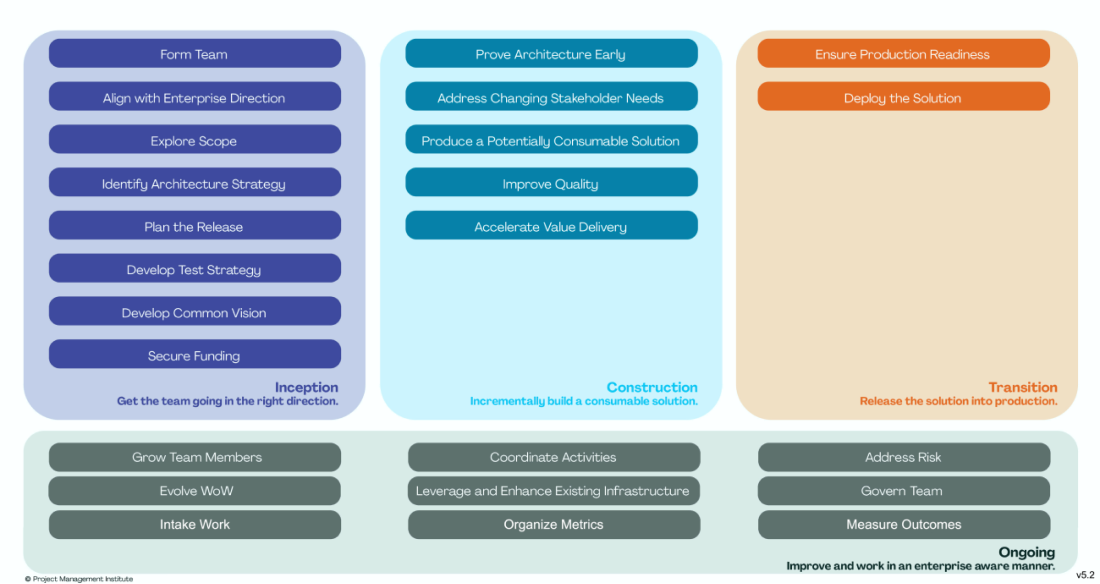
The advantage of visualizing goals as we’ve shown in Figures 2 and 3 is that it makes it very clear what process-related decisions you need to make and what options you have available to you. The disadvantage of this sort of diagram is that they get fairly big at times, as you can see. This effectively prevents us from taking the diagrams one step further to indicate the trade-offs associated with each technique and as a result you’ll still need the text tables we included in the DAD book for that. The Goals of DADIn the previous section we indicated that there are many goals called out by DAD, Figure 4 summarizes these goals, which have evolved slightly from what we published in the book (we refactored a few to make them more consumable). Notice how each of the three phases (Inception, Construction, and Transition) are described by specific goals. Also notice how some goals, such as Grow Team Members and Address Risk, are applicable throughout the entire lifecycle. Figure 4. Goals throughout the lifecycle.
Mark Lines’ post Being Goal-Driven Requires Discipline explores the history of the figure above if you’re interested in how the goals have evolved since the DAD book was published. The Advantage of Goals Over PrescriptionFirst and foremost, DAD is a process decision framework. One what that it achieves this through it’s goal-driven approach that guides people through the process-related decisions that they need to make to tailor and scale agile strategies to address the context of the situation that they face. Our experience is that there are several fundamental advantages to taking a goal driven approach to agile solution delivery. A goal-driven approach:
So far we’ve identified two disadvantages to DAD’s goal-driven approach when working with customer organizations. First, it makes the complexities of solution delivery explicit. Although some of us want to believe that the simplistic strategies of other agile methods will get the job done we inherently know that software development, or more accurately solution delivery, is in fact a complex endeavor in practice. Second, some people just want to be told what to do and actually prefer a prescriptive approach. DAD mitigates this problem a bit by suggesting default starting points (shown in italized bold text in the goal diagrams) but even this can be overwhelming for some people. Interestingly, when we were writing the book two of our 30+ reviewers were adamantly against giving people choices because they felt it was better to adopt a more prescriptive approach as we see in older agile methods. We hope that this blog posting has given you some food for thought that you can leverage on your next agile project. Got Discipline? |


.jpg)
Mark interviewed on DAD
|
http://www.youtube.com/watch?feature=player_embedded&v=lkDBs1Gf4TA |
 Mark was interviewed on DAD at the IBM Innovate conference:
A Full Agile Delivery Lifecycle
| This blog has been replaced with the page Full Agile Delivery Lifecycles. |


