


Everything is linked


|
Extreme hard work. A day has 24 hours. Do not expect to accomplish the extraordinary by doing the ordinary – 8 hour work, 8 hour sleep, 8 hours leisure. Having a vision. Without it, one just wanders without any set direction. For one of his earlier movies, he had to drop about 30 pounds. He had to change the vision he had for himself, from muscular Mr. Olympia to a ripped athlete. Although he had a limited time to do so, having a vision allowed him to timely achieve the goal. Setting clear goals. These goals will allow the realization of the vision stated above. By not having clear and defined goals, risk of wandering in the land of nowehere is very high. And time is scarce (and precious). This is where Project Management comes in. At the end, the three points above can also be applied, with some customization, to projects and their succes. Eveything is linked. |
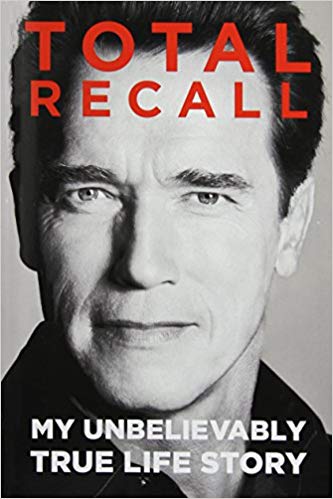 When Arnold was 15, he had set very clear plans for himself; he wanted to conquer Mister Olympia and move to the US. To gain motivation, he covered the walls of his small room – located in a remote tiny village outside Graz, Austria – with pictures of famous bodybuilders at that time. He trained several hours a day, always with a wonderful smile on his face. People would ask him why he looked always happy, especially after a five hour intensive training. He would then say “Every repetition I do takes me one step closer to my goal”. Fast forwarding a few years, he ended up moving to the United States and winning Mr. Olympia seven times. He then became a successful real estate entrepreneur, one of the highest paid Hollywood actors and a republican governor in otherwise usually democrat state of California. Not only did he become an invincible champion, but he also transformed bodybuilding from a sport practiced by a few people in knocked out gyms to a worldwide recognized discipline with milions of followers. The key to his accomplishments can be summarized in the following three points:
Passing PSM I
| Yesterday I cleared the PSM I (Professional Scrum Master I) exam, with a score of 96.3%; thus, I failed 3 out of the 80 questions. Passing the exam requires a minimum of 85%, or getting right at least 68 out of 80 questions. The list below randomly captures recommendations and observations about achieving PSM I.
Good luck to all future PSM I holders. Never stop learning. The important thing is not to stop questioning. Curiosity has its own reason for existing (Albert Einstein) |
Human Touch
| Last week it was my birthday. It was a fantastic day surrounded by family and friends (and maybe even some fools, to complete the three Fs). I received countless messages via various channels; Facebook, LinkedIn, WhatsApp, phone calls and emails. Birthday wishes that came from Facebook and LinkedIn contacts often opted for predefined messages. With this choice, the sender spends typically less than 5 seconds in expressing the good wishes. Although I did reply to all messages one by one, I used the effort principle; someone that clicked on a predefined option got a dry and short "thanks!" back. And those that spent a bit more time by customizing the message, also got a more elaborated text back. In regards to emails, they mostly came from companies that have my birth date information in their data bases and used it to send me good wishes, and – why not – take the opportunity to offer a new product at a discounted price. These emails went, unopened, straight to the trash bin. A couple days before my birthday I received a letter in my mailbox. An actual letter. With a stamp. With a beautiful hand scripted address, with my name perfectly spelled out. I thought it was from my wife, coming up with a new and original way to give a birthday card, like we always do. So I waited until the actual birthday came around and opened the letter. It was not from my wife. It was from a recruiting agency from whom I have never worked but with whom I interviewed a while ago. The letter was signed by hand by the agency's staff. I was taken aback, did not expect this. And really liked it.
Where do I want to get with this story? What does it have to do with project management? It actually does intersect. As project managers, we must provide support, empathy and care to our teams. We are dealing with humans, not numbers. Let’s assume that you already have a log with the birth dates of your team members. When the day comes around, don't just send an email with a succinct message. Don't send a predefined LinkedIn message. Instead, write something on a card, it doesn’t need to be a novel, rather something that gives the reader an overall good feeling. Put it in an envelope, stamp it, send it, or walk to the team's office and hand it over in person, depending on the case. This small gesture will have a tremendous impact on the mood of this team member and will surely be greatly appreciated by everyone else in the team. At the end, it is about adding a human touch to all facets of life, also to project (and team) management. Bring out the best version of yourself to get the best version of the people you manage. |

Project Managers are (mostly) implementers
| I recently completed a survey to analyze my problem solving profile. This is based on a research-based instrument named Basadur which has been developed from fundamental theory and empirical data from a large sample of people working in a broad cross-section of organizations. In short, four categories are identified, bearing in mind that everyone is a blend of of these:
Ideally, a heterogeneous mix of all four styles should be present in any organization in order to create balanced teams capable of tackling tasks from problem finding through implementation. The research shows that certain industries or roles have a higher component in one of these categories. For instance, an artist or school teacher rates high in Generating, a scientist or strategic planner in Conceptualizing and an engineer or IT analyst in Optimizing. Turns out that a Project Manager typically rates high in Implemeting, and this is precisely the result I obtained upon completing the survey. An implementer is caracterized by the following traits (extracted from Basadur files):
Thus, if you are a Project Manager, it is highly likely that Implementation is your most prominent problem solving trait. |

74-343. Journey to get certified in MS Project
| Almost two years ago I posted a thread in the Discussions community asking for advice towards achieving the Microsoft Certification in Managing Projects with Microsoft Project (https://www.projectmanagement.com/discussion-topic/46131/74-343-Test--Ms-Project---Tips-and-or-Recommendations-). Several good tips were given; I was ready to take a shot at it, but for various reasons I kept postponing the examination date. This held true until today, when I took (and passed!) the exam.
Below some advice, tips and fun facts that could be helpful for other individuals that are considering getting certified. 1. Prepare, prepare and prepare! In my case, I chose web-based Udemy´s Microsoft Project 13/16/19 - Like a Boss (exam 74-343 prep) and book Microsoft Project Office for Dummies. 2. Practice test questions. There are several websites that offer mock up tests. I was able to find a tutorial free of charge from Exam Labs (https://www.exam-labs.com/exam/74-343#tutorial). Make sure that you practice this test at least twice before taking the exam, you will not regret it... 3. I do not appraise this test as easy to pass. In other words, passing the exam requires specific training to learn not only about the planning tool, but also in getting familiar in the manner that questions are asked. 4. The time given to complete the test is sufficient, but might fall short in some cases, depending on thoroughness of test preparation. Fifty questions to be answered in 120 minutes gives 144 seconds per question. Bear in mind that some questions (not many) contain up to three sub-questions! 5. The level of difficulty of these 50 questions varies very significantly. Some questions are really easy (so easy that I needed to triple check that I was not getting tricked by the wording of the questions or answers) and some others take significant time to fully understand the context and the various answers, increasing the difficulty in choosing the right one. 6. As a rule of thumb, answers containing "copy and paste" can be 90% of times ruled out. 7. It is crucial to fully understand and get familiar with the following views in MSP: Gantt, Tracking Gantt, Resource Usage, Task Usage and Team Planner. 8. Attention! Make sure to study the basics of SharePoint. Some questions deal with MSP and SharePoint! 9. Make sure that you focus on the areas that you appraise the weakest. For instance, if you do not typically use MSP build-in reporting options in your daily duties, spend some time in learning more specifics about them (there are several tutorials on YouTube). 10. During the test, try to stay as calm as possible. Sometimes one can´t help feeling the heart racing. If so, take a deep breath, followed by a 20 seconds break, and carry on. If you get blocked in a question, just flag it and tackle it afterwards. Good luck to all future MSP Certificate candidates!
|



