Principled Negotation - So old, so relevant


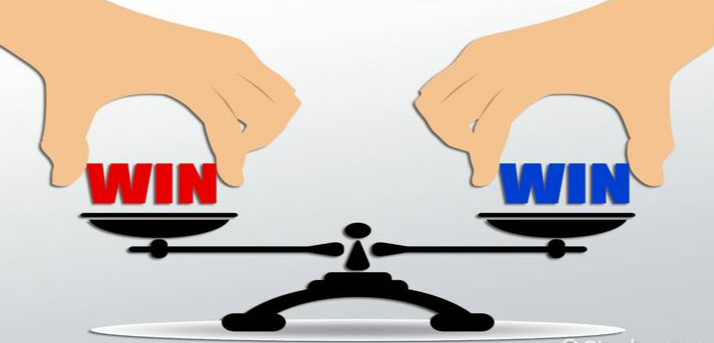
| The skill set of a Project Manager must include the ability to negotiate. Negotiations are the means by which parties can resolve conflicts and thereby arrive at a mutual satisfactory solution. The problem is that often project stakeholders engage in positional bargaining, a negotiation strategy that involves holding onto a fixed idea or position regardless of any underlying interests. In fact, arguing over positions turns out to be inefficient, relationship endangering and might lead to unwise agreements. An alternative to this is called Principled negotiation. This name was given to the interest-based approach to negotiation set out in the best-known conflict resolution book, Getting to Yes, first published in 1981 by Roger Fisher and William Ury and advocates four fundamental principles of negotiation.
Every negotiator has interest in both the substance and the relationship. Often the relationship becomes entangled with the problem. Thus, it is imperative to separate the relationship from the substance in order to kick off an effective negotiation.
Quite self-explaining. The identification and discussion of interests is a wise manner to route the negotiation towards a conciliation of interests and not positions.
Instead of forming a premature judgement of the ideas thrown during a negotiation it is best to ensure an understanding between inventing and deciding. Also, instead of searching for a single answer try to broaden the options (a circle chart can be useful for this purpose). And instead of thinking that “solving their problem is their problem” create an environment that enables making decisions relaxed.
In negotiating to purchase a particular car, we would want to look at what that car sells for at other dealerships. The objective criteria are nothing less and nothing more than factual pieces of information, independent of the parties in the negotiation, that are relevant to what should or should not be agreed to in that negotiation. Principled negotiation produces wise agreements amicably and efficiently. Principled Negotiation is further enhanced by applying the eight following pillars of negotiable wisdom:
|
Project Rescue
Categories:
Project Communication
Categories: Project Communication
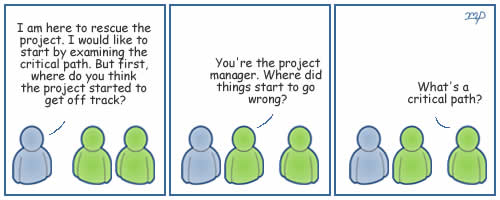
| It is not uncommon that a Project Manager leaves a company or gets reassigned to another duty or department within the organization. His project(s) are then typically reassigned to another willful PM... and handover begins. Not sure about what statistics say, but I might not be too far from the truth when claiming that more than 50% of handed over projects suffer from some sort of disfunctionalities. The incoming PM is then on a mission: project rescue.
1. Cross-check Do not assume that the leaving PM will have a full insight on the real project status at the moment of handover. Double check all assumptions and factual information with suitable stakeholders. It is a sort of scope validation, extended version. Rebaseline - following change management processes in place - as needed.
2. Shine Let's face it. In some occasions the leaving PM has not done such a good job. Could be due to a poor communication with team members, failed to deliver or just because (s)he did an overall sloppy job. Similarly to when a soccer coach is dismissed and the incoming coach has to deal with the exact same players, the newly appointed PM has a good opportunity to set the bar higher and shine. Raising the stamina level in the project, providing assertive guidance to the team and fueling communication are three actions that typically lead to a postive outcome. 3. Reward Like retired United States Marine Corps warrant officer Woody Williams said "Good leaders do not take on all the work themselves; neither do they take all the credit." Project has been rescued, but this is not a one (wo)man show. Make sure that everyone that has contributed to its success gets the well deserved recognition and feel proud of the work done. |
.jfif)
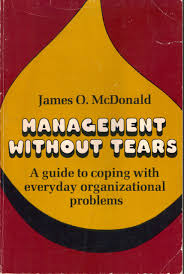
Management without tears
| I have recently completed the lecture of a book entitled "Management without tears. A guide to coping with everyday organizational problems". It was written by James O. McDonald almost 40 years ago, in 1981 to be precise. The book sets forth some managerial problems likely to be encountered during the career of a manager. For each problem, the author provides a solution based on his expertise. Although it is intended for managers - line managers, production managers, operations manager and functions alike - as a project manager I could relate to a few of the problems listed in the book. It is worth noting that most of the issues we face in our everyday work are nothing new, they have been there for a long time and will probably still be there when we retire.
Get things off your chest The author refers to the manager's secretary and her frequent tardiness. The manager decides to not bring this up to her to avoid losing his "nice guy" reputation. As you can imagine, this approach did not work out and she kept arriving late to the office. The manager decided to confront her. She said that she was not aware that her tardiness was such an issue, and from that moment on she was on time. In projects the same approach works; when something gets off tracks, avoid sending a memorandum sitting behind the computer. Politely confront the team - or whichever stakeholder - and get it off your chest. Being a pleaser can easily end up backfiring. Know your job It is frequent that an engineer, a software developer or a researcher gets dragged into project management. Becoming a project manager presents then a challenge. The technical knowledge in these domains become less relevant; instead, planning, personnel, budgets, purchasing, negotiation and a wide array of administrative tasks make up the new life. Getting this mental fix is essential for a successful new career. Be yourself This topic is particularly interesting. It is quite common to find opinionated colleagues regarding how a project manager should behave. Some would say "Stand tough, or they'll walk all over you" whilst others would advise on the opposite direction. Leadership tone has to be decided by the practitioner, and the practitioner alone. It is up to the practitioner whether to be tough, soft or somewhere in between. In words of the author "effective management requires integrity, conviction, knowledge, courage, awareness, timing. These qualities determine how you react in any situation". |
 My blog followers know that I always like to break things down in three, or pick up the top 3, or make lists of 3 items. Number three puts a spell on me - I guess since the time I learned at school that the compositions had to contain an introduction, a "knot", and an ending. So this time around will not be any different. I have picked the top 3 issues, and summarized the author's view on a proposed solution.
The Nice Project Manager
Categories:
Teams
Categories: Teams
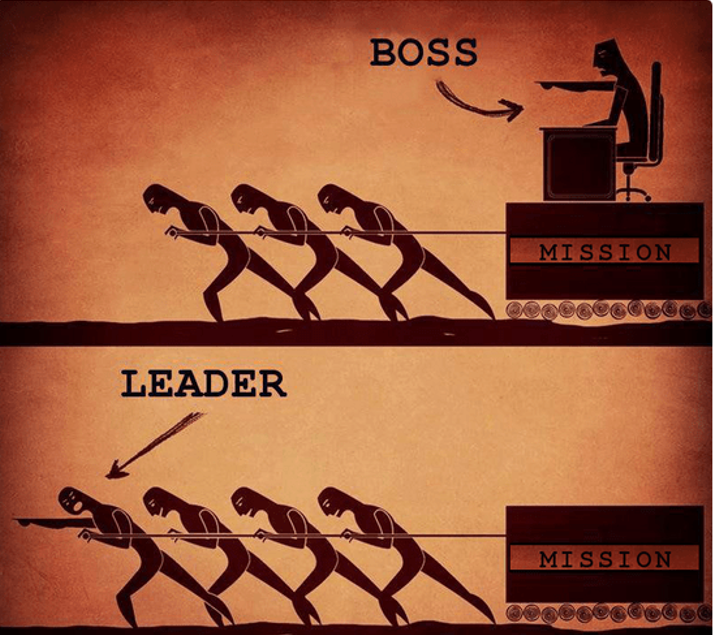
| A lot has been written about leadership, emotional intelligence, empathy and a long list of traits related to a successful project delivery. Most likely, you have seen the image below several times on your LinkedIn feed. The message is clear: a leader is someone that pulls together a team and walks alongside to reach project’s goals. A boss, however, “bosses” people around while sitting in his ivory tower.
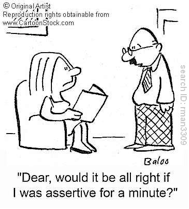
Project Managers have the challenging task of commanding a Team which members typically report to a Line or Department Manager – this is, within a matrix organization. What are the three traits that will allow finding the sweet balance between being a genuinely nice leader and yet get stuff done? A. Be assertive Being the face of the Project to the Team and to all other stakeholders, a PM needs to develop the right set of skills to show that is in control. For example, it is frequent that rumors arise at some point during project’s life cycle – e.g. “I’ve heard that the project will be cancelled!”. A PM must be able to send a clear and assertive message to stakeholders to terminate the rumor. The same principle can be applied to team meetings. The Team expects the PM to guide and drive the project forward. This message can be delivered efficiently only from the assertiveness.
B. Be in control Domain in Monitoring and Controlling process group is essential for a successful project delivery. A PM must make sure that he remains an effective leader throughout project’s lifecycle. Checking on status of work is an art on its own. Some people sends off e-mails containing a dry “Hi Jan, what’s the status?”, others elaborate further and add a greeting line. Whichever option chosen, show that you are in control. Avoiding micromanagement is a must for any PM and for any sort of leader. Actually, micromanagers are frequently poor and insecure “leaders”. C. Be Human This come without a saying and yet important to emphasize. Do you recall the typical saying attributed to Richard Branson “If you take care of your employees, they will take care of the clients”? Replace the term “employees” by “team members” and “clients” by “Project”. Proficient leaders are aware that they are leading a group of humans and their circumstances, not soul-less machines. |
Celebrating 50 Years of PMI: Event for Volunteers and New Members
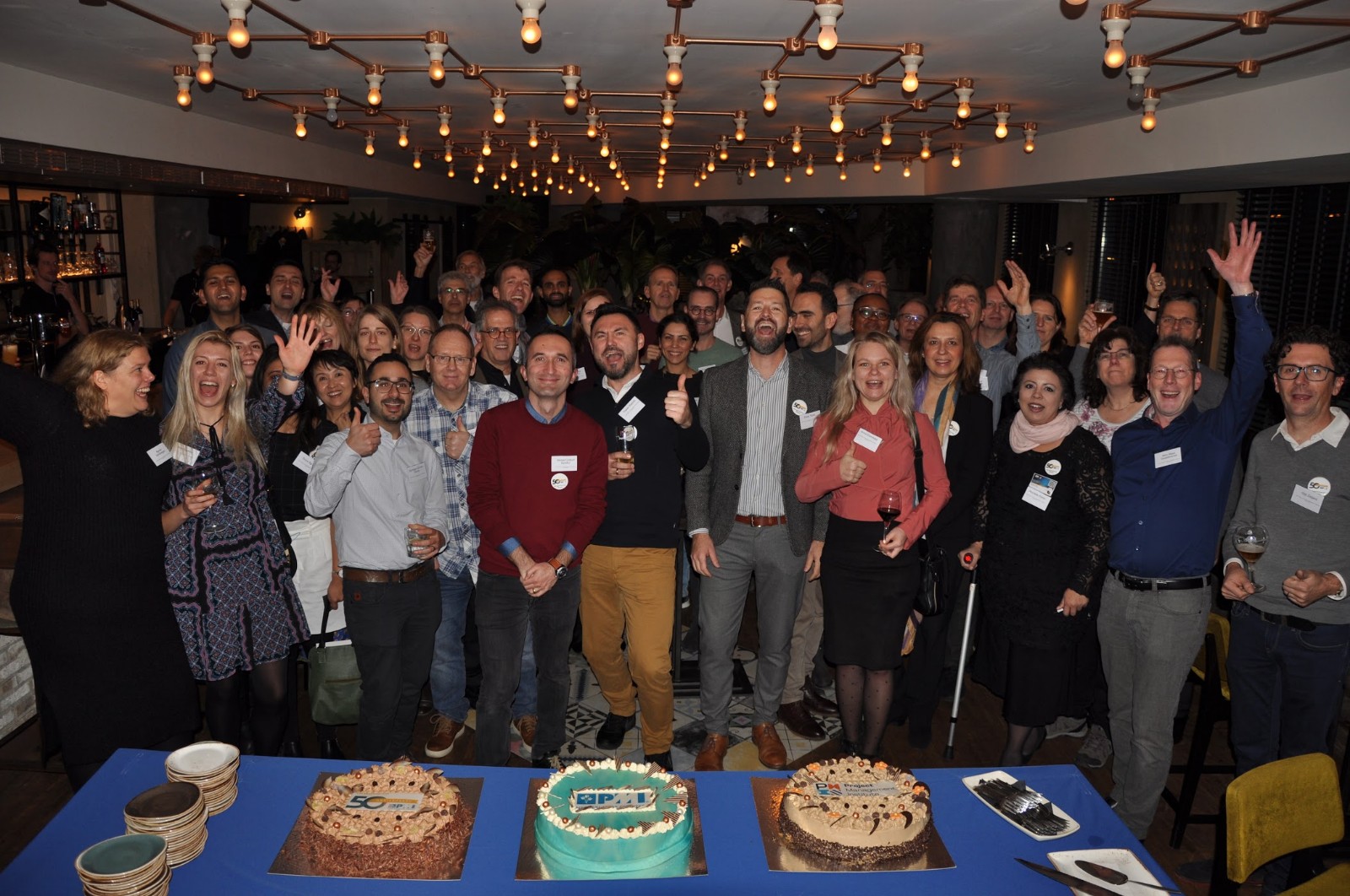
| See below the article I wrote for December PMI Netherlands Chapter Newsletter issue, to be published in the coming days Project Managers strive to meet and exceed expectations of all stakeholders. Coinciding with the 50th Anniversary of the PMI, the 2019 PMI NL Volunteers & New Members event held in The Hague on the 23rd of November definitely did that. With more than sixty enthusiastic participants, the pictures depict the wonderful enthusiasm and gezelligheid that imbued the event. Shortly after midday, attendants started flowing into Restaurant Milu, where a wonderful private room was dedicated to the PMI. After catching up with some familiar faces and getting acquainted with new folks, lunch time came around. Everyone agreed: the food was truly amazing! Following lunch the main event took place. The PMI NL Board held a ceremony to welcome New Members and recognise the 10+ Volunteer Teams including over 54 individual Volunteers that fuel the events, services, products, and support to all our membership.
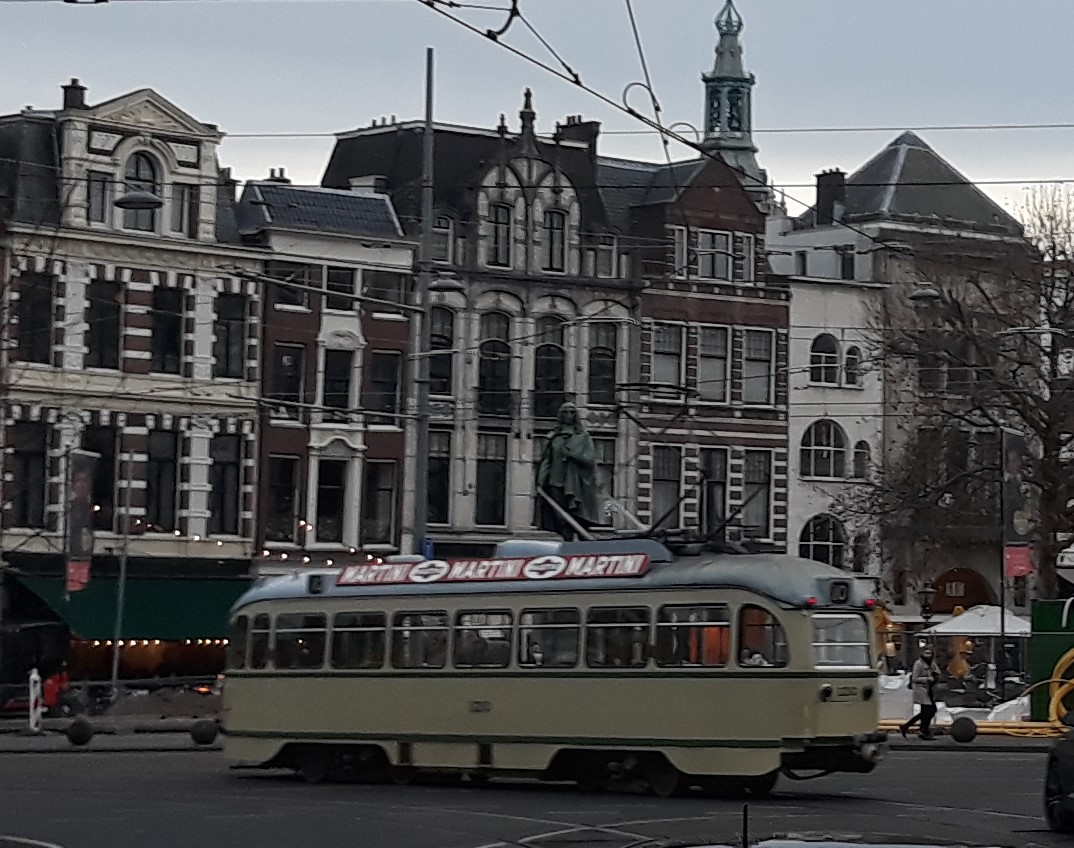
Brim full of excitement, the attendees were ushered out to the front of the Restaurant where two vintage trams awaited to take all on an exclusive private tram tour of The Hague. The Hague is the Netherlands seat of government & monarchy and also known as the global city of peace & justice. With this in mind there was a visit to the Binnenhof of course. It houses the meeting place of both houses of the Dutch parliament and the office of the Prime Minister of the Netherlands. In fact, the Binnenhof is amongst the oldest Parliament buildings in the world still in use! Before returning back to Restaurant Milu, a short visit to De Passage (a grand, glass-roofed shopping arcade dating from 1885) was in order. Drinks and canapes awaited the crowd at Milu, which provided yet another excellent opportunity to celebrate PMIs 50th year and the great 2019 had in the PMI NL Chapter.
Our President who opened the event, then closed the event by giving out PMI 50th themed cake to all and thanking everyone for making the chapter what it is today! His final words included kudos to the Team involved organising this amazing event. In summary, a wonderful event that sets the bar high for 2020’s event. Challenge is on! |