

The hidden cost of cutting corners; decisions that endanger lives


| In the past few weeks, I’ve watched several documentaries that left me shaken and reflective. These weren’t about natural disasters or distant conflicts—they were about human-made catastrophes that could have been avoided. What struck me was how often these tragedies were rooted in poor project decisions driven by cost-cutting. As a project manager, it’s deeply unsettling to see how choices made in a boardroom or on a spreadsheet can ripple out to impact—sometimes end—people’s lives. In this post, I want to reflect on a few cases where decisions to reduce costs ended up costing lives, and why we, as project professionals, must never forget our responsibility to safeguard the people affected by our work—directly and indirectly. 1. Grenfell Tower fire: Tragedy wrapped in flammable cladding In 2017, a devastating fire engulfed Grenfell Tower in London, killing 72 people. At the heart of the disaster was a refurbishment decision that prioritized cost over safety. A cheaper, flammable cladding material was used in the building’s facade renovation. Despite numerous warnings and concerns from residents, their voices were ignored.
2. Boeing 737 MAX: A race against time, at the cost of transparency The Boeing 737 MAX crashes in 2018 and 2019, which killed 346 people, are another sobering case. Boeing made design changes to the 737 to compete quickly with the Airbus A320neo. A key addition was the MCAS software, which pilots weren’t adequately trained on—or even made aware of. Internal pressures to deliver a cost-effective aircraft quickly, and without requiring expensive pilot retraining, led to a lack of transparency and critical safety oversights. Here, cost and time-to-market took precedence over thorough testing and pilot preparedness—with fatal results. 3. Ford Pinto: Cost-Benefit analysis over human life A classic (and chilling) example from the 1970s is the Ford Pinto. During development, it was discovered that the fuel tank design made the car highly susceptible to explosions in rear-end collisions. Engineers had solutions to make the vehicle safer, but they would add a cost of about $11 per vehicle. Internal memos revealed that Ford conducted a cost-benefit analysis, concluding that paying legal settlements for an estimated number of deaths would be cheaper than redesigning the car. The result? At least 27 people were killed in fiery accidents, and Ford’s reputation suffered irreparable damage. The Project Manager’s Ethical Compass These stories aren’t just about bad decisions. They’re about culture—where budget and timeline are prioritized over people’s lives. As project managers, we hold a pivotal role in shaping not just deliverables, but also how those deliverables affect the world. Simon Sinek, in his book Leaders Eat Last, introduces the idea of “abstraction.” He explains that when the people affected by our decisions are reduced to data points, targets, or “line items” in a spreadsheet, we lose our emotional connection to them. It becomes easier to justify risky shortcuts or to ignore concerns because we no longer see the human beings behind the numbers. In large, complex projects, this detachment can be dangerously seductive. We might be developing a product or managing a construction site, but at the other end of that project are people—real people, with names, families, and futures that can be profoundly impacted by our choices. This is why ethics must sit at the core of our profession. The PMI Code of Ethics and Professional Conduct reminds us that we have a duty to act responsibly, to protect the public, and to put safety before profit. The "Responsibility" principle explicitly calls for taking ownership of decisions and their consequences—especially when those decisions can affect the lives and welfare of others. Safety, ethics, and transparency aren’t optional checkboxes. They are non-negotiable responsibilities. We must champion a mindset where cutting costs is never done at the expense of human lives—whether it’s the people building the product or those using it. That means asking hard questions, pushing back when something doesn’t feel right, and keeping the bigger picture in focus—even when it’s uncomfortable. Because at the end of the day, success isn’t just delivering a project on time and under budget. It’s delivering something we can stand behind—knowing it didn’t put lives at risk or turn people into abstractions. |
 Investigations revealed that project decisions had been made under financial pressure—saving around £300,000 by switching to the cheaper cladding option. This tragic example shows how budget constraints, when not balanced with safety, can have horrific consequences.
The ABC Principle in Project Management
| The ABC principle is often linked to learning fundamentals, as famously sung by the Jackson 5 in ABC. But in project management, ABC stands for Assume nothing, Believe no one, Check everything. This take on ABC highlights the importance of risk mitigation by challenging information. It closely relates to PDCA (Plan, Do, Check, Act), but with a heavier emphasis on skepticism and validation.
Assume nothingEvery assumption is a potential risk. When unverified assumptions guide a project, it opens the door to disaster. A classic example is NASA’s 1999 Mars Climate Orbiter. The spacecraft was lost because of a simple yet catastrophic error: a failure to convert units. One engineering team used metric units (Newtons) for the spacecraft's thrust data, while another team used imperial units (pounds-force). This mismatch was never corrected, leading the spacecraft to come much closer to Mars than planned—so close that it disintegrated in the planet’s atmosphere. This $125 million failure was a direct result of an unchecked assumption. In project management, assumptions like this one often fly under the radar, making it crucial to question even the smallest details to avoid colossal mistakes. Many assumptions in project management are tied to communication, which makes it crucial to communicate often and clearly. In one of my early years as a project manager, I encountered this first-hand. I assumed that project sponsorship would transfer from a departing managing director to the incoming one without issues. I went ahead and updated the project documentation to reflect the new sponsor. However, I failed to communicate this change to the incoming managing director. Later, the new sponsor humorously remarked, “Oh, thanks for making me the new sponsor. It would have been nice if you had informed me.” This taught me that assumptions around roles and expectations should always be clearly communicated. Believe no one“Believe no one” should be taken with a grain of salt, but even reliable sources need to be cross-examined. Everyone tends to believe what they’re told—especially if it comes from trusted sources. But in project management, relying on verbal assurances without verification can lead to failure. Cross-examination and double-checking are essential to increase the odds of delivering a successful project. A perfect example is the 2017 Fyre Festival disaster. The organizers believed the assurances of suppliers who lacked the capability to deliver. Even reputable sources can be wrong, and failing to dig deeper can cause significant setbacks. In today's world, this principle has become increasingly interesting due to the sheer volume of information at our fingertips. The rise of AI is playing a pivotal role here as well. Even AI tools like ChatGPT, which can provide valuable insights, come with a disclaimer that they may make mistakes and suggest verifying the information provided. This reminds us of the importance of skepticism in any project. Check everythingBeing diligent is essential. Always validate that information is up to date and relevant. Boeing’s 737 Max crisis is a stark reminder—outdated assumptions about the aircraft’s MCAS software, and failure to thoroughly check system changes, led to two fatal crashes. Not verifying critical details led to widespread fallout. "Check everything" loops back to the first two rules. By assuming nothing and believing no one, you are effectively checking everything. But again, what is "everything"? This touches on the concept of WYSIATI—"What You See Is All There Is," a term coined by Daniel Kahneman. It humorously points out that no matter how thorough we think we are, we likely missed something. Funny, isn’t it? In project management, the ABC rule is as simple yet vital as the Jackson 5 tune. It’s about consistently challenging information, assumptions, and sources to avoid risks and ensure project success. |
 Before diving into the ABC Principle in project management, it's important to take this with a grain of salt. These ideas encourage a healthy level of skepticism, but like any approach, they should be balanced with trust, teamwork, and effective communication.
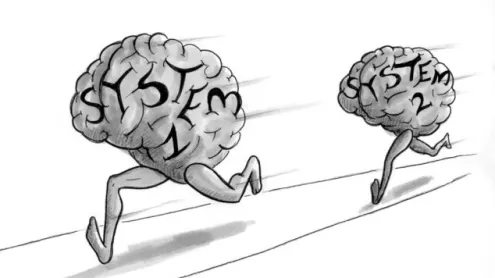
Harnessing System 1 and System 2 thinking in Project Management
| As a project manager, navigating the complexities of a project often feels like steering a ship through unpredictable waters. If you’ve read Daniel Kahneman’s Thinking, Fast and Slow, you’ll recognize this as the interplay of System 1 and System 2 thinking. These two systems—one fast and intuitive, the other slow and deliberate—shape our decision-making processes. Let's explore how understanding these systems can enhance project management. System 1: the speedy intuitive pilot System 1 is our brain's autopilot. It operates quickly and effortlessly, using gut reactions and heuristics—mental shortcuts—to make decisions. In project management, System 1 is invaluable for swift decision-making. For example, imagine you’re in a project meeting and a team member proposes a solution to a minor issue. Your immediate response, based on past experiences and intuition, might be to agree and implement the fix right away. This rapid response keeps the project moving forward without getting bogged down in analysis. However, System 1 can also lead to biases. Consider the “availability heuristic,” where decisions are influenced by what comes to mind most easily. If your last project was delayed due to a vendor issue, you might overestimate the likelihood of the same problem recurring, even if the context is different. Recognizing when you’re relying too much on System 1 can help you pause and reassess your assumptions. System 2: the thoughtful strategist System 2, on the other hand, is slow, analytical, and effortful. It kicks in when we need to think things through, such as planning a project timeline or analyzing risk factors. This system is crucial for complex problem-solving and making informed decisions that require thorough consideration. For instance, when drafting a project plan, System 2 ensures you consider all variables—resources, timelines, stakeholder expectations—and meticulously outline each step. This deliberate thinking helps prevent oversight and ensures a comprehensive approach. However, engaging System 2 can be mentally exhausting, so it’s important to balance it with the efficiency of System 1.
Balancing act: when to use each system The key to effective project management is knowing when to engage System 1 and when to switch to System 2. Use System 1 for routine decisions to keep the project moving smoothly. For instance, if a trusted team member suggests a minor tweak, your quick approval can maintain momentum. Reserve System 2 for critical decisions that require detailed analysis, such as risk assessments or major project milestones. Example: the factory automation upgrade Let’s say you’re overseeing a project to upgrade the automation system in a manufacturing plant. Your System 1 might quickly decide on the initial steps based on previous automation projects, such as choosing a vendor that has proven reliable in the past. But to ensure the new system integrates seamlessly with existing operations and meets all regulatory requirements, System 2 will help you conduct a thorough analysis, consult with stakeholders, and plan the implementation in detail. By understanding and balancing System 1 and System 2 thinking, project managers can navigate both the routine and the complex aspects of their projects more effectively. This dynamic approach leads to better decision-making, fewer biases, and ultimately, successful project outcomes. So, next time you’re in the project trenches, remember to toggle between your intuitive pilot and your thoughtful strategist. |
The unlikely success of Pretty Woman
Categories:
Project Management,
Problem solving,
Risk Management,
Agile,
Leadership,
Decision Making,
Governance
Categories: Project Management, Problem solving, Risk Management, Agile, Leadership, Decision Making, Governance
| I recently tuned into a fascinating podcast about the making of the classic film "Pretty Woman." What struck me most was how this project, seemingly doomed from the start, turned into a blockbuster hit. This got me thinking about how some projects, despite facing numerous obstacles, can still achieve remarkable success. Here’s a dive into the chaotic yet triumphant journey of "Pretty Woman." From the get-go, the production faced significant challenges. When shooting commenced, they had only secured 10 out of the +/- 100 actors and actresses they needed. Imagine starting a project with just 10% of your team! It’s akin to launching a new product with only a fraction of your resources in place. But the team forged ahead, showing resilience from the very start.
Interestingly, the original script of "Pretty Woman" wasn't the romantic comedy we all love today. It was a darker drama titled "$3000," referencing the amount of money Richard Gere's character would pay Julia Roberts' character. The script was filled with grim references to drug use and its consequences, far from the feel-good movie it eventually became. This drastic shift in tone reminds me of how initial project plans can undergo massive transformations, often leading to better outcomes, much like in agile project management where flexibility and iteration can yield surprising results. Another quirk in the production was the on-the-spot scripting. Many scenes were crafted during filming, a process that could easily derail a project. This improvisational approach is akin to building a plane while flying it. Director Garry Marshall wasn’t even sure of the film’s tone, so he shot each scene three times with different emotional undertones—funny, dark, and random. This gave them flexibility in post-production but also highlighted the uncertainty that permeated the project, similar to how agile methodologies allow for adjustments and pivots based on ongoing feedback. One of the most iconic scenes in the movie—where Richard Gere and Julia Roberts are at a fine dining restaurant and a snail flies out of her hand—wasn’t scripted. This spontaneous moment became one of the most memorable parts of the film. In project management, this is akin to creating value through unexpected features. Sometimes, the unplanned elements can deliver significant value and delight to the stakeholders, reinforcing the importance of being open to spontaneity and seizing unexpected opportunities. Despite these haphazard elements, the film's release was a roaring success. With a budget of just $14 million, "Pretty Woman" grossed an astonishing $463 million worldwide. This kind of success in the face of so many hurdles is both inspiring and perplexing. It serves as a reminder that sometimes, the most chaotic and seemingly doomed projects can achieve greatness. Adding to the list of bizarre anecdotes, Julia Roberts was a relatively unknown actress at the time, and Richard Gere almost didn't take the role. The chemistry they brought to the screen was more serendipitous than planned, yet it became a defining element of the film's success. In conclusion, "Pretty Woman" exemplifies how adaptability, resilience, and a bit of chaos can lead to unexpected success. It’s a testament to the idea that no matter how troubled a project might seem, there’s always a potential for it to turn out incredibly well. So next time you find yourself in a seemingly doomed project, remember the journey of "Pretty Woman" and take heart—you might just be on the brink of a blockbuster. |

Politics going agile (or not)!
| As the worldwide vaccination against covid-19 is slowly progressing, I had to reflect on a statement given by the Dutch Minister of Health, Hugo de Jong, back in early January 2021. Due to poor risk management and non-optimal decision-making, the Netherlands kicked off the vaccination campaign a few weeks later than his European neighbors. Mr. de Jong claimed that the country could have started vaccinating people earlier but was not agile enough to take decisions back in November 2020. Agile enough. I am quite positive that he used this term in the sense of someone being able to move quickly and easily rather than referring to the manifesto written 20 years ago. It got me thinking. Can politics be run in an agile manner? Politics differ largely from country to country and are influenced by a large amount of environmental and cultural factors. However, and for the sake of simplification, one can carry out a preliminary assessment by measuring the degree of adherence to the three laws of agile developed by Steve Denning (author of the reference book Age of Agile). Does it comply with the Law of the Customer? In other words, is adding value to their customers (citizens) the top priority of politicians? At the end of the day, politicians are responsible for proposing, supporting and creating laws or policies to govern the land and, by extension, its people. The degree of success they achieve may be measured against the actual value delivered to the citizens and the efficiency of resources used to achieve the set goals. Assuming that political programs are developed to serve the citizens in the best possible manner, then the adherence to the law of the customer may be directly linked to the fulfillment of these programs. Does it comply with the Law of the Small Teams? This is about descaling complex problems into small pieces, working in small cycles and getting direct feedback from the citizen. A political cycle is defined by the time between two elections, typically four years. Therefore, the most direct feedback can only be given every four years by casting a vote. This is anything but frequent feedback and leaves the customer with a feeling of despair. The pandemic has been an example of how the involvement of too many stakeholders played against a quick and unified response. After the initial discoordination, the Dutch government launched an initiative to create the Outbreak Management Team, a small group of knowledgeable SMEs who report directly to the Ministry of Health. Overall, and despite some baby steps in the good direction, the adherence to this law fares low. Does it comply with the Law of the Network? Organizations that fulfill this law function as a fluid network, with communication flowing up, down and sideways. Ideas can come from anywhere. On the contrary, political systems are rather hierarchical with inflexible communication channels and responsibilities, similarly to what occurs in some large corporations. Even though politics are making efforts to increase their accessibility (Twitter has been a game-changer in this aspect), it is still a long way until they become truthfully fluid. In short: politics are currently not run in a fully agile manner. On the positive side, there is plenty of room and opportunities for further development in this field; on the less positive side, some of the usual dogmas are going to be hard to change. |


