


What Can the Project World Learn from Neuroscience?


| Welcome to the first blog in a series of four, where I explore what neuroscience has to offer the project world. In a nutshell, understanding how the human brain works makes for higher productivity and better project outcomes with less complexity and less stress.
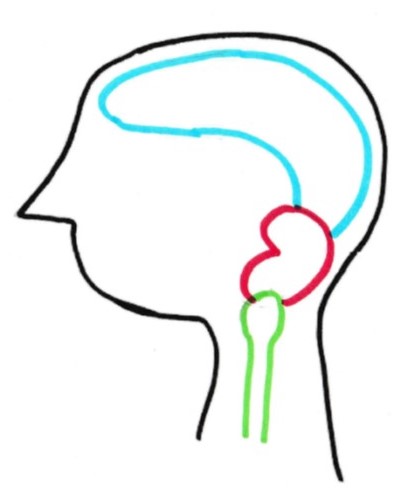
Source: Project Delivery, Uncertainty and Neuroscience - a Leader's Guide to Walking in Fog A bold claim I know, so let’s start by getting real. Projects don’t behave the way textbooks say they should Project Management is all about carving a clear and visible path to the future. The trouble is more and more projects are tricky in unconventional ways. The environment is shifting constantly around us, key stakeholders change their minds for reasons which are hard to comprehend. Politics flare and your project morphs into something quite different yet you are expected to deliver it anyway. The project managers I work with frequently find that their projects don’t behave the way the textbooks say they should. The profession is latching onto this. It now recognizes project managers need to develop their leadership and strategic business skills alongside their process skills.[i] We’re told the secret is to become adept at working in an increasingly VUCA (volatile, uncertain, complex, ambiguous) world. But what does this mean in practical terms? The blogs in this series set out to answer this question, so keep an eye out for the following titles:
The VUCA environment is causing profound disconnects between how organisations and projects are supposed to function and what happens in practice. Walking in Fog This disconnect often leaves highly talented and experienced project professionals feeling stuck, frustrated, and unable to put a finger on what is going wrong or why. At times it’s as if a thick fog has descended yet they must keep on walking - even though the way forward is far from clear.[ii]
©Visible Dynamics Traditional project management has paid scant attention to human experience dismissing it, and almost everything on the people-side as ‘soft and fluffy’. Look where it has got us! The stats on project success rates tell us we’ve plenty of room for improvement. Figures from PMI suggest that only 52% of projects are delivered on time and just 69% meet their goals and business intent[iii]. In the UK a report into major government projects observes that less than 50% have a green or green/amber rating.[iv] The case for paying attention to the people-side of projects becomes even stronger when we add in recent research into well-being and stress levels amongst project professionals[v] . One of my colleagues, Stephen Carver at Cranfield University, cites a survey of 250 project professionals. 70% of those asked said socio-political factors (i.e. things to do with relationships, personalities and behaviours under stress) cause them the most trouble on live projects. Yet this was the focus of only 10% of their training.[vi] Carver also speaks about being ‘constantly amazed at how much time, effort and money is thrown at structural issues (time, pace, scope etc) and how little at the messy socio-political where the vast majority of problems occur.’ I used to be just the same. However, since writing Project Delivery, Uncertainty and Neuroscience – a Leader’s Guide to Walking in Fog and hearing people’s reactions to it, I am less surprised by the lack of investment. I’ve come to a different understanding of why we’ve neglected the people stuff for so long and why so many find it so tricky. It seems touchy feely because historically we’ve lacked basic building blocks. We’ve Lacked Basic Building Blocks Scientists would be at sea without a grasp of molecular structure. Engineers would be in a bind without the laws of physics, and just imagine being a linguist without grammar. Yet we’re asking project managers to demonstrate great leadership and people management skills without a model that’s robust enough to make real sense of why people behave as they do. I’m not blaming PMI, APM or anyone else. The science was not there. But with recent advances in neuroscience things have changed. Neuroscience Changes Everything We now understand how the human brain works and how emotions drive behaviour. Yes, you read that right – emotions drive behaviour! We have compelling scientific evidence that clarifies what constitutes good leadership in a VUCA world. It demonstrates how emotional and social intelligence and mindfulness can help us contain complexity and manage stress levels[vii]. I know, I’m making it sound easy. But give me a chance - if you want to be adept at working in a VUCA world look out for my next three blogs and PM Point of View podcast. They’ll give you
Next Up
I’m looking forward to sparking rich conversations. What in this resonates with you? What is exciting and what do you find more challenging?
[i] PMI (2014) PMI’s Pulse of the Profession: In-depth Report: Navigating Complexity, Project Management Institute (PMI) [ii] Osterweil, C (2019) Project Delivery, Uncertainty and Neuroscience – a Leader’s Guide to Walking in Fog, London: Visible Dynamics, p13 [iii] Project Management Institute (2018) Research Highlights by Industry and Region, Project Management Institute (PMI) [iv] UK Infrastructure and Projects Authority (2018) Annual Report on Major Projects 2017-18 [v] Well Being of Project Professionals, APM https://www.apm.org.uk/media/38831/apm_wopp_19.pdf [vi] Project Management Paradise [accessed 3 December 2019] Episode 42: Interview with Stephen Carver, Project Management Paradise [Online] http://projectmanagementparadise.com/episode-42-3-major-types-project-complexity-manage-stephen-carver/ [vii] Belack,C (2019), Cognitive Readiness in Project Teams: reducing project complexity and increasing success in project management. C Belack , New York: Routledge
|

Personal Resilience - Capacity to Take on Next
| Life is busy. It constantly seems like there is more to do than hours in the day. In an always on world, it is easy to run right past the signals telling us to recharge, until we are running on nothing but fumes. Once we’ve reached the last of our energy reserves, we quickly understand that it will take quite a while to refill the tank. Consider these three things to maintain your energy reserves:
Building and maintaining personal resilience can be challenging. Meeting this challenge will allow you to have the capacity to take on whatever life throws your way. Life is busy. It constantly seems like there is more to do than hours in the day. This has a negative impact on your energy level. Doing these three things can help you maintain the energy you need to take on next.
|
How to secure Buy-in for Your Next Big Change
|
One of my clients attempted to drive a large transformation with no consideration for the impact on front-line employees. They did not even provide training for employees to know how to operate in the new culture. I came in afterward to help them reshape the project, sought to engage the front-line, and helped them drive greater success. Conversely, wise executives think about how employees will operate in the new environment. They find ways to engage the front-line to implement the change. These leaders consider three factors:
Cooperation: In 2019, you would think that organizational culture had progressed to a point where leaders treat front-line employees with basic respect. After all, it is the front line who operates the company every day. Command and control management styles are on the way out. True leaders seek to cooperate with the front-line employees to help drive the change. They recognize they need the front-line to be successful if the company is to be successful. Resistance: Resistors often provide some of the best input for a project. First, they provide reasons why the change won’t work. They reveal risks you might not have otherwise known. Second, if you can convert resistors into supporters, they can be some of your most ardent advocates for change. Fun: I’ve seen leaders hold creative events to help promote the change. One used interactive games and relevant puzzles in a one-day, off-site pre-launch meeting. Another senior executive took the entire project team to a White Sox game (they won!). Another leader took her team through a cooking class the evening before an all-day off-site. These events build comradery and a sense of team – founded on a basis of interpersonal trust and commitment, which helps unite the team toward the common project goal. Front-line engagement results in more effective change. It generates ideas, buy-in, and acceptance. People simply work harder when they are part of the process instead of having a process forced upon them. Wouldn’t you?
|
Sorry, I'm not creative!
|
At 8:30 sharp, the door opens and they enter the training room as one solid block. Twelve they are, the perfect dozen. I can’t deny they took me by surprise, because at this very moment I’m still struggling to arouse a conversation between my laptop and the beamer. "Welcome everyone", I stammer a bit, "Take a seat, I’m with you in five minutes." Never did I have a more punctual group of participants, as they normally drop in one by one somewhere between 8:30 and 9:15. My request to take place is being followed as a military command and less than half a minute later everyone is sitting in the chair behind the tables that I had set up in a U-form for my training ‘Creative Skills and Brainstorming'. Their body language speaks volumes. Most of them have their arms crossed and almost everyone is staring straight ahead. Five minutes of icy silence... Oh lord, I don’t feel at ease. "OK, I’m ready," I utter with a firm voice to give myself some courage. "Do you feel like it this morning?". That question - with which I almost start every training - is normally received on friendly and enthusiastic modes of confirmation. Not this time. Only some nasal mumbling in the background, here and there a deep sigh of despair and especially a lot of evasive glances. What the hell is going on here? Carefully I try to check it out by asking what they expect from this training. No reaction. "No one? What would you like to learn today? What do you expect from me? Why are you here?". Bingo, that last question seems to be the right one, because I hear some humming coming up here and there. "We had to follow this training from the boss", says a somewhat older man. He is dressed in a white shirt and on his tie the logo of the car brand that will (hopefully) pay my bill is printed in a tiled fill pattern. Another man looks at his watch, clearly bored and still another participant - also a man, and now I notice that there are no female participants at all - wriggles in his briefcase that he parked neatly next to his chair. Probably with the sole intention of not being confronted with another grueling question. These gentlemen clearly do not feel like it. Let’s call it a challenge, I think to myself, and I start with an energizer wherein the participants must associate with each other by means of a ball game. Just a question of getting in the creative mood and stepping out of that cozy comfort zone. A true disaster. “OK, back to your chairs, guys”. And I start the training with a bad grace... This story brings me to the subject of the article itself: creative self-esteem. A small side note to the participant group: it consisted solely of highly competent technical professionals and engineers from the automotive industry. Knowledge workers with high qualifications and years of experience, know-how and 'common sense'. Throwing these people into a creativity training is as confrontational as dropping Bach at Tomorrowland. But the boss had obliged them. "I'm not creative, so what am I supposed to do here?" This must have been the scary thought that wandered through the heads of all these men. Followed immediately by the idea that there is nothing to do about that. You are creative or you are not, point. The sullenness and apathy of the participants described above is therefore no more than a translation of their inner fear and uncertainty. The conviction that they would only ridicule themselves in this training. Oh Lord, we can’t allow that!
The search for what we have lost Every person is born with creativity. Probably the fact that we make use of (our) creativity, is even our greatest differentiator with the rest of the fauna that moves around on this planet. As children, we can lose ourselves for hours in imagined scenarios, we draw circles with vertical lines underneath and call them mum and dad, we are superman who saves the world or we rebuild that same world with colored blocks and modeling clay. Everything is possible, everything is allowed. But gradually life becomes more serious and ratio takes over from imagination. Creativity is for daydreamers or at most you can still practice it as a hobby. At school we are rewarded when we can literally repeat what is pushed through our throats. And we end up being stuffed with knowledge that is hardly relevant at the very moment we need to use it. Yes, we are still allowed to reflect, but preferably very rational, analytical and between the lines that were set out. It seems like our world is divided into two types of people: those who are creative and those who are not. Unfortunately, the overwhelming majority - consciously or unconsciously - is considering itself part of this last category. And yet we know that creativity is essential in every organization, in every sector and at every level. Various studies and surveys also show that the importance of creativity increases year after year. "Well, let’s boost them immediately with a full day of creativity training," the boss of this frightened group of techies must have thought.
The spark that became a firework And right he was, that boss! Because little by little the group started participating. Gradually, I saw the enthusiasm rise and with each exercise I gave, the atmosphere started to become more positive. The grumpy looks made way for faces full of childlike curiosity. Something strange had happened, a true metamorphosis. However much the participants in the workshop started with horror and hidden fear, the more they were convinced of one thing at the end of the day: finding their own creative self-esteem had given them an gigantic boost. Like a real turbocharger on their solid but bulky engine of knowledge and experience. Three weeks after the training I receive a call from the man in the white shirt. Whether I have an hour or two to listen to his concept and give him my advice. The brainstorming exercise we did during the training was based on a real case from their professional environment. Something with waste processing at the factory. Together with four other colleagues/participants, the white shirted man developed the brainstorming idea from the training into a solid concept that he wanted to present to the management. The PowerPoint he showed me was content-wise very solid, but horrible on a communicative level. So, we planned another half day to make a good story out of it. The boss was impressed and the concept was immediately accepted for implementation. To cut a long story short: it was the start of a new wind that blew through the factory in a minimum of time. A former meeting room was transformed into a genuine brainstorming room. An inspiring room where creative pop-up teams came up with all sorts of ideas for both day-to-day issues and strategic long-term challenges. It was a wonderful process that had sparked the innovation drive of the company in a seemingly irreversible way.
Step by step is the message The above story clearly illustrates how low creative self-esteem can not only be (re)built up quickly, but how it can also be the spark of a totally new dynamic within an organization. The gentlemen described above were strongly driven by the training to appeal to their creativity, even though initially they did not feel like it at all. The fact that it was a group of very rational and dutiful people made them have no choice: they had to jump into the cold water. But with the right guidance, a first small success was quickly achieved. Sufficient enough to take a next small step. And another one. And another one… David Kelley - the founder of IDEO, the former design agency of Apple - compares these first steps with tackling a phobia for snakes. He refers to the world-renowned psychologist Albert Bandura, who brings his patients step by step shorter at 'the big danger' by encouraging them quietly and never really putting pressure on them. Every small step is a victory for the patient because he has dared to take that step himself. From looking at it with horror behind a window to daring to touch the snake with bare hands. A wonderful process that the psychologist calls 'controlled mastery'. A remarkable side-effect is that the patients who went through this process had not only overcome their phobia of snakes. They also had less fear and more success with other challenges, such as riding a horse or talking for a large group of people. They had learned that only by perseverance you can achieve the goals you have set yourself. Step by step, though. We apply that same methodology to the fear that impedes creativity. We split up challenges in small steps and at the completion of each step the participant gets the feeling that he has made an internal victory. And even though the process feels uncomfortable and forced at the beginning, it is still the most efficient way to regain that creative self-esteem and to keep it forever.
Doing is the new thinking It may be clear that spontaneous expressions of creativity start to diminish soon after our childhood. As a teenager, we are mainly concerned about how others think of us. The fear of being judged and not being accepted by the group. The fear of being marked 'weird' stops most teenagers from expressing their creativity to the fullest. We also transport that fear to our professional life later on. We continually censor ourselves and therefore rarely arrive at a stage of full creativity. To break this vicious circle, we like to throw some toys on the table at the start of a creative session. Yes, literally. And preferably a wide and varied assortment: cubes, cars, dolls, animals, objects, modelling clay, ... Toys are particularly efficient when designing new processes, organizational structures or business models. But it can also be used successfully for coming up with new products or services. It is especially important that the participants work together with the toys, without preparation, without a scenario or basic plan. Let them start playing, just like children do. Because the ideas grow out of the game. And with every new idea, the creative self-esteem grows along. I plead with my customers to often 'think less' and to 'do more’. Especially when the organization wants to explore new roads. Stop planning and just get started. The toy approach above is a good lead - especially in the idea creation phase - but you can also divide the big creative challenge into smaller challenges, so that you quickly achieve a first success. That primary step will be smaller and way more achievable and success will also encourage you to take the second, third and fourth step more easily. Until you finally reach your goal. Just like in the example of the snake phobia.
Always stay curious Also, curiosity can add to your creative self-esteem. It’s mainly about broadening your perspectives in any sense of the word. Staying behind your desk for a whole day won’t help of course. So, get out of that cozy comfort zone and move into the wild wide world. You will have to deal with unexpected discoveries, with uncertainty and with unpredictable people who might say things that you would rather not hear. But it’s exactly there where you will find the insights and inspiration that feed your creativity. Take initiative and do not wait until your boss, your colleague or your customer come up with ideas. Or your competitor, because in that you completely missed the boat. As a manager, you can arouse curiosity among your people by setting a good example yourself: ask a lot of questions, even though the answers sometimes seem obvious. And give your employees time and space to feed their own curiosity. Also encourage them to crawl into the customer's head and let them keep their senses open for what is also happening in other industries. Cross-industry innovation can often be a breakthrough for problems that have been on the table for a long time and are not being resolved. Storytelling is another way to stimulate the curiosity among your employees. A good story told in a fascinating way can give creative self-confidence a serious boost.
There’s no creative organization where there’s no creative self-esteem. On an individual, a team as well as on a management level, get on a mission to rediscover what’s lost with your childhood. Use the step-by-step method and remember that 'doing' is a lot more efficient than 'thinking' endlessly. Divide big challenges into small, manageable pieces that ensure interim success and nurture curiosity at all times. |

The 21st century workspace – Embracing changing dynamics like never before
| The 21st century has redefined several aspects of our lives – both personal and professional. On the professional front, the exponential technological growth and disruptions have completely changed the business landscape. Not only has it changed the way businesses are held these days, but also the place in which the business itself takes place – the Workplace. The change has pervaded all facets of today’s workplace including its very own structure. Slowly disappearing from the landscape are the exclusive buildings for companies and corner offices for senior executives, welcoming the culture of co-working shared office spaces, mostly with different start ups sharing the same office space. The top co-working companies like Regus, We Work, Knotel are driving the creation of ecosystems that bring together different organizations and startups and create increased opportunities for mentoring, collaboration and entrepreneurial innovation. The workplace today is very dynamic influenced by the volatility of the business landscape. In these testing times, businesses are making their best attempts to not only sustain their market visibility, but also thrive in uncertain waters. The biggest concern facing companies today is a disengaged workforce. The need to be proactive as well as competitive has also led to new-age businesses coming up, that have re-defined the rules of business and the workspace. What businesses are facing today, is a workforce comprising of employees spanning across three generations – Gen X, Gen Y and Gen Z. The dynamics of such a diverse workforce is definitely the most important thing to be factored in, while taking measures to improve productivity and scaling up of businesses. Given the distinct times from which the people have started their careers, given their priorities from loyalty towards the organization to work-life balance to craving instant recognition, a well thought out HR strategy is required to be adopted as well as project managers are to be sensitized in order to engage all of the personnel equally without leaving out any of them. A one size fits all approach will never succeed in identifying high-performing individuals or potential leaders to lead new projects or take up higher roles. This fallacy is true for our education system as well as for any type of performance evaluation for that matter. How to combat the changing dynamics of the workplace of the 21st century:
Hence, all organizations, including the traditional hierarchical organizations that still continue to carry out business as earlier, have the pressing need to analyse their policies concerning the workspace, the workforce, upskilling and empowering managers and have a relook to update themselves to changing times. |


