Year 2020: What are authors has to say!


|
We are approaching the end of this jinxed year , “2020” and there were so many things we experienced, learnt and implemented. Among these few things, I bring the voice of our authors on what they think was their “Biggest lesson learnt and one change they want to see next year" Let's hear from them: Steve Salisbury: Personally? Take time to go outside, walk, breathe, reflect and regenerate. Working full-time from home with little to no human interaction means you must find other ways to take time away from the office. Professionally? Stay the course with the fundamentals of your game. While we have had to adjust to some of the "How's," most of our "What's" remain the same. For 2021, I want to see greater focus on human leadership. Leaders must develop relationships with their employees now more than ever. Leaving them home with little to no contact is not healthy for them, or for your organization. As it appears we'll still be dealing with Covid-19 for awhile, this remains a crucial activity. Tony Saldanha I think the biggest learning from this year is that every issue is also an opportunity. This has been a rough year personally and professionally for most people. Life and business is not what it used to be. In my case, I stopped traveling for keynote speaking and consulting. However, it has been a great opportunity to start new ventures. I have a founded a new organization to create global standards and certify companies on Global Business Services. And, I've taken the opportunity to start podcasting. I think the change going forward is the importance of not losing the lessons of agility that we learned in 2020. There's a real danger that we all "go back to normal". That would be a mistake. There is real value in "crisis-like collaboration", and in "agility in dealing with change". Let's make sure we keep the good lessons from 2020! Ruth Pearce The biggest lesson I have learned is that it really is OK to practice self-care and not to overcommit. I cannot help anyone else if I don't take care of myself. One change I want to see next year is that across the world we develop more respect - for each other, for the planet, for other creatures, for everything! Carole Osterweil The sense of Walking in Fog and the pressure 'to keep on walking - even though the way forward is far from clear' is even more prevalent than I had appreciated! I asked over 200 Project Professionals about their experiences. 84% said they are Walking in Fog at least half the time. Of these, 10% will admit it in an informal setting, 83% are not brave enough to do so in a formal setting, 7% had not admitted it to themselves. By keeping it secret, we are burdening ourselves unnecessarily. Your sponsors, stakeholders and team members are Walking in Fog too. Remember the story of The Emperor's New Clothes. It took one kid to say the Emperor was naked and reality prevailed. Liberate yourselves and your projects. When you are in fog - talk about it - in all settings. Kavitha Gunasekaran My biggest lessons: 1. Never waste a good crisis to learn the hardest yet most important lessons of life. 2. Getting the love and affection of family and being blessed with good health are the pillars of happiness. 3. An adversity nudges us to identify our true north and fulfill the purpose of our lives which is predominantly to make a difference to the lives of as many people as possible. One change that I would like to see next year would be healthier and happier people on this earth. Ryan Gottfredson- Uncertainty and complexity is only going to increase. To be able to navigate the increasing uncertainty and complexity, we need to develop vertically (as opposed to horizontally), which means that we need to elevate our mental development and maturity. Nic Jain- My heart goes out to all that were affected by the #Pandemic. Best we can do in honor of those that had to pay the price is to use the lessons learnt for those in our circle of influence to make it better. Make digital transformation grassroot – now even the most remote villagers know how to get on a zoom call |
Alive & Kicking: Surviving Tough Projects
|
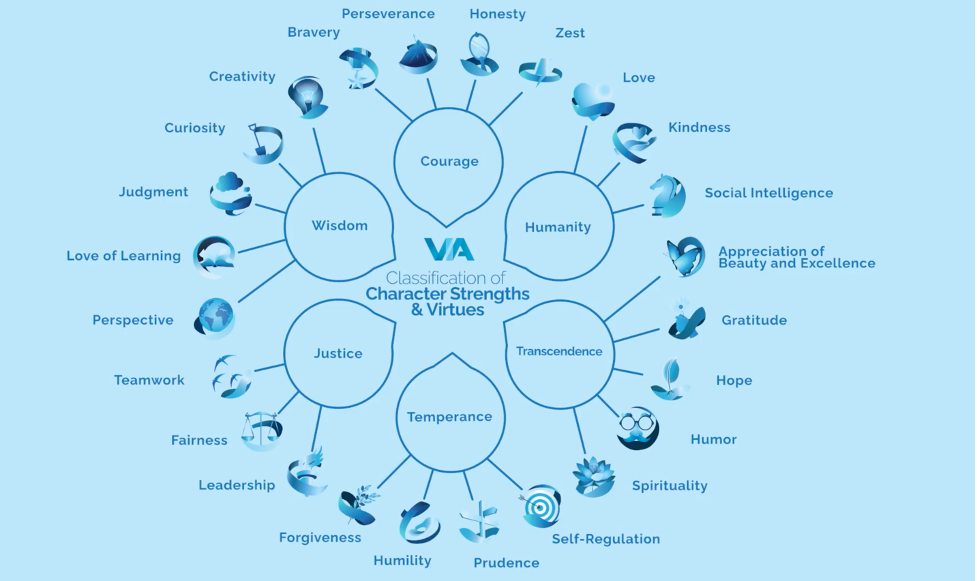
Who knew when I selected this topic that 2020 would be the proverbial project from hell for nearly everyone? Just making it from the start of the year to the end has been an insurmountable challenge for too many people around the world. For those who have survived – and for the few who even feel they have thrived – this article considers which of the Character Strengths have been most prevalent this year. Two of the generally lowest ranked (on average) character strengths in the world are prudence (the planning strength) and self-regulation[1]. Across the world, prudence is only rated as a signature strength by 10 – 20% of the population and self-regulation as a signature strength by less than 5% of the population[2]. This year though, our safety and well-being have depended on these two strengths – among many – to get us through. Tasks that were straightforward for some of us – such as picking up groceries – have become major projects with planning and execution strategies like never before even for the most privileged amongst us. Those of us who used to be able to “pop to the store,” to collect a missing ingredient or to top up supplies of a household staple now have to plan more carefully – who will go where, when and what do they need to be safe? Self-regulation which is what helps us to ensure that we put a mask on EVERY time we encounter someone from outside the household and not just some of the time, has been engaged by most of us to a much greater extent than in the past. Low strengths for me tooPrudence and Self-regulation are nowhere near my top strengths either. To boost those strengths, my focus has been on Kindness and Social Intelligence, Teamwork and Leadership. I want to be as responsible as I can be for those I come into contact with – I don’t want others to be put at risk because I am not mindful of my practices. I cannot expect others to mask up if I don’t. I cannot expect others to practice self-care if I don’t do the same. While planning (yes, I know, I am a project manager! How can planning be a challenge?) and self-regulation are not strengths I feel I can depend on day in and day out, being aware of the safety and needs of others is something I can always do. Which brings me to surviving tough projects through our strengths. It is a common question from workshop participants and coaching clients to ask “what are the best strengths to cultivate to be a leader? a good project manager? The best parent?” The answer I always give is “your top strengths used optimally” and recently I have added that cultivating optimal use of others’ strengths is also a great skill. When we engage the top character strengths of others, we know that they are likely to more engaged, more loyal and committed, make fewer errors and get more done! It can seem very hard to do. We are not used to highlighting the strengths of others. In the west at least, our focus tends to be on what is wrong and not what is strong. This is where the SEA method comes into play. Have a list of strengths you want to be on the look out for. There are many lists out on the internet. My personal favorite comes from the VIA Institute on Character. Their list of 24 character strengths is a common language we can all use and recognize to appreciate the strengths in ourselves and others. It is evidence-based and has been the focus of over 500 studies worldwide. For example, the wisdom strengths of Creativity, Curiosity, Judgment, Love of Learning and Perspective, or the humanity strengths of Kindness, Love and Social Intelligence are all concepts we tend to understand.
(From the VIA Institute on Character 2020) Then you use any opportunity – a family dinner, a work meeting on ZOOM/phone/in person, a movie night – to do the following three steps:
A couple of tips:
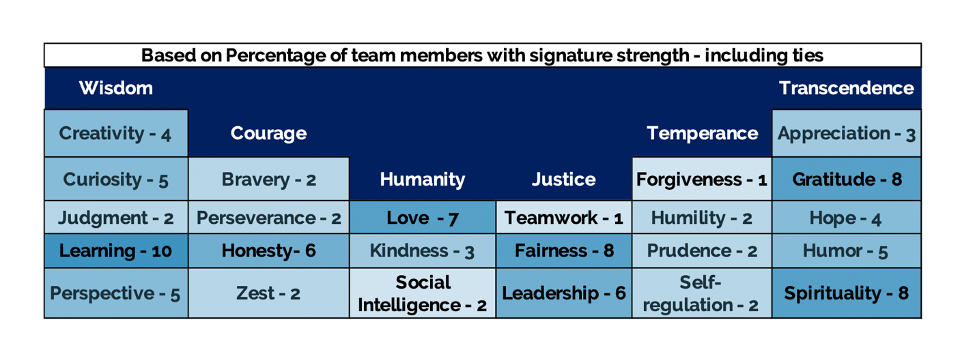
Good comes from not so goodAlthough this year has been stressful, unpredictable and downright unmanageable for some of us, there have been bright spots. For me personally, the most wonderful thing to come out of 2020 would have been wonderful in any year. In 2020, we launched our In It Together Coaching program – Navigating Challenges through Strengths in association with the North Carolina (NCPMI) and NC-Triad (PMI-Triad) chapters of PMI. 13 coaches have come together to create the program and two PMI chapters – NCPMI and PM-NC-TRIAD – are helping us to get the word out to project managers that support is here. It started when a few of us came together in March to share a pro-bono program for project managers suddenly faced with living at work (because they were working from home) as well as supporting family schooling, isolated parents and more. The world seemed to turn on its head and in that moment our team came together. And here is our In It Together VIA character strengths profile:
Signature strengths are those strengths generally at the top of our profile that are at our core – they are essential, energizing and effortless in their display and execution. We can hardly help but express our signature strengths in almost all that we do. Mine for example are appreciation of beauty, bravery, curiosity, fairness, and gratitude. The wonder of our team is created by both the top strengths we share – love of learning, gratitude, spirituality - as they provide a bond and common ground, balanced with those top strengths that we might miss out on if we did not team up with others. The other wonder is the authentic appreciation we have for those in the group who are like us and those who are not. We learn a lot from each other about different values, lived experiences and points of view. As one of our coaches says, “you may not like what you hear from me, but there is sure to be someone in the group who speaks to you in a way that is meaningful to you”. We are fortunate to have two team members who are high in what I call the “2020 strengths of the year,” self-regulation and prudence. Not only do they contribute those special and relatively rare ingredients to the team, their families and their communities; they also model behavior that may not come naturally to the rest of us. As we stride or tumble headlong into 2021 which is in itself a project full of uncertainty, look around you.
I feel that the team around me is the secret to navigating the new year in a fruitful and positive way. That at the end of 2021 I will still be alive and kicking! How about you? [1] McGrath, Robert. (2014). Character strengths in 75 nations: An update. The Journal of Positive Psychology. 10. 41-52. 10.1080/17439760.2014.888580. [2] McGrath, R. E. (2017). Technical report: The VIA Assessment Suite for Adults: Development and initial evaluation. Cincinnati, OH: VIA Institute on Character. |

You can’t get there from here – working with the strength of perspective
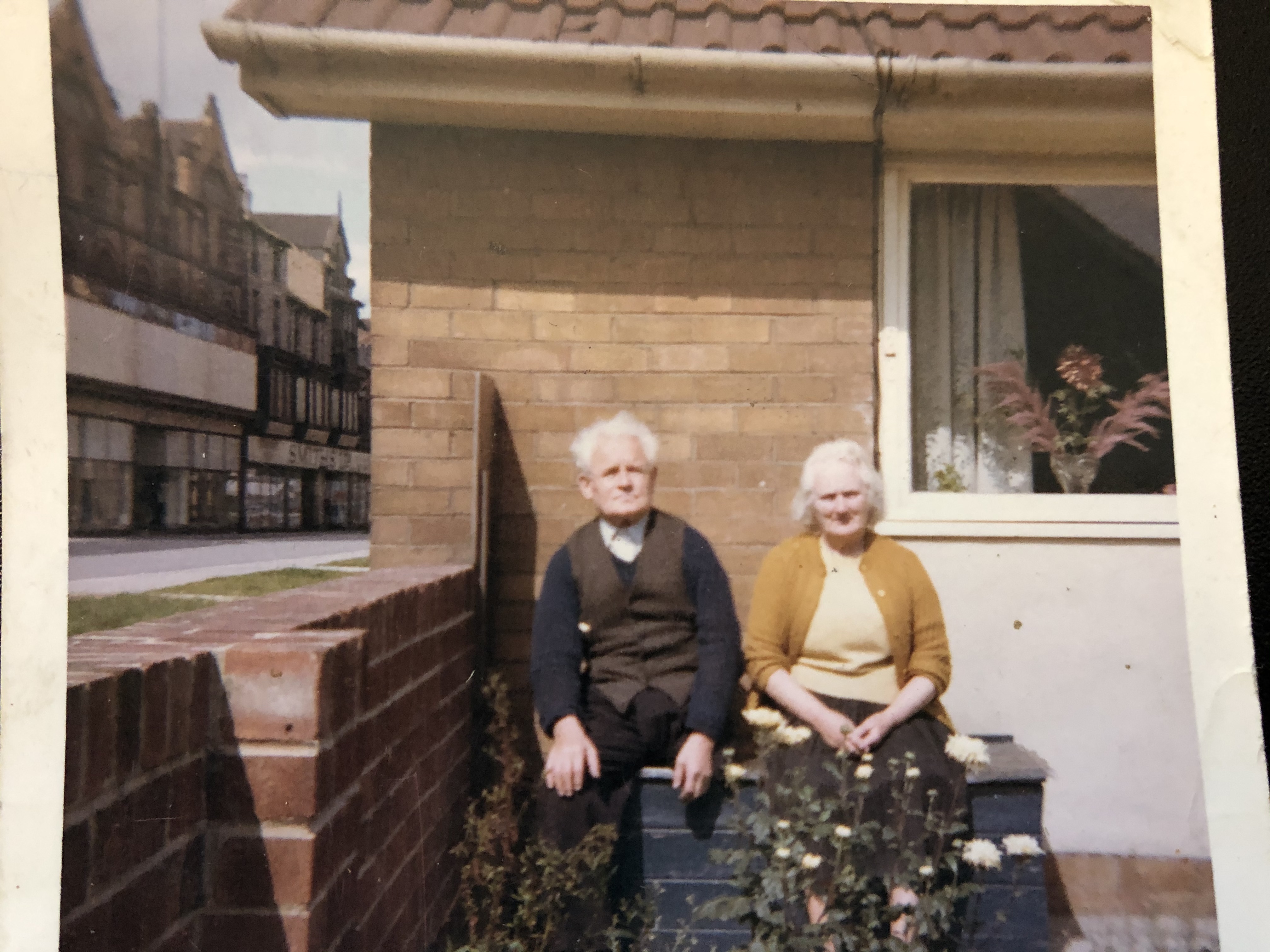
Perspective <> knowledgeI remember as a small child traveling on the bus with my grandmother. She was old and looked wise and knowledgeable. People would ask her, “Can you tell me how to get to… [fill in the desired destination]?”
The truth was that she really stayed in a very small area of the town in England where she lived. But rather than say “I am sorry, I don’t know” she would say, shaking her head from side to side sadly, “Oh, you can’t get there from here”. I would go home and tell my father the sorry tale and he would smile indulgently at my grandmother and then show me on a printed map of the town where the aforementioned location was in relation to where we had been. I learned to read maps that way. In this case, “you can’t get there from here” was shorthand for, “I cannot help you.” Or, more accurately, “I cannot get you there from here.” My grandmother’s perspective was that if she did not know the answer there was no answer.
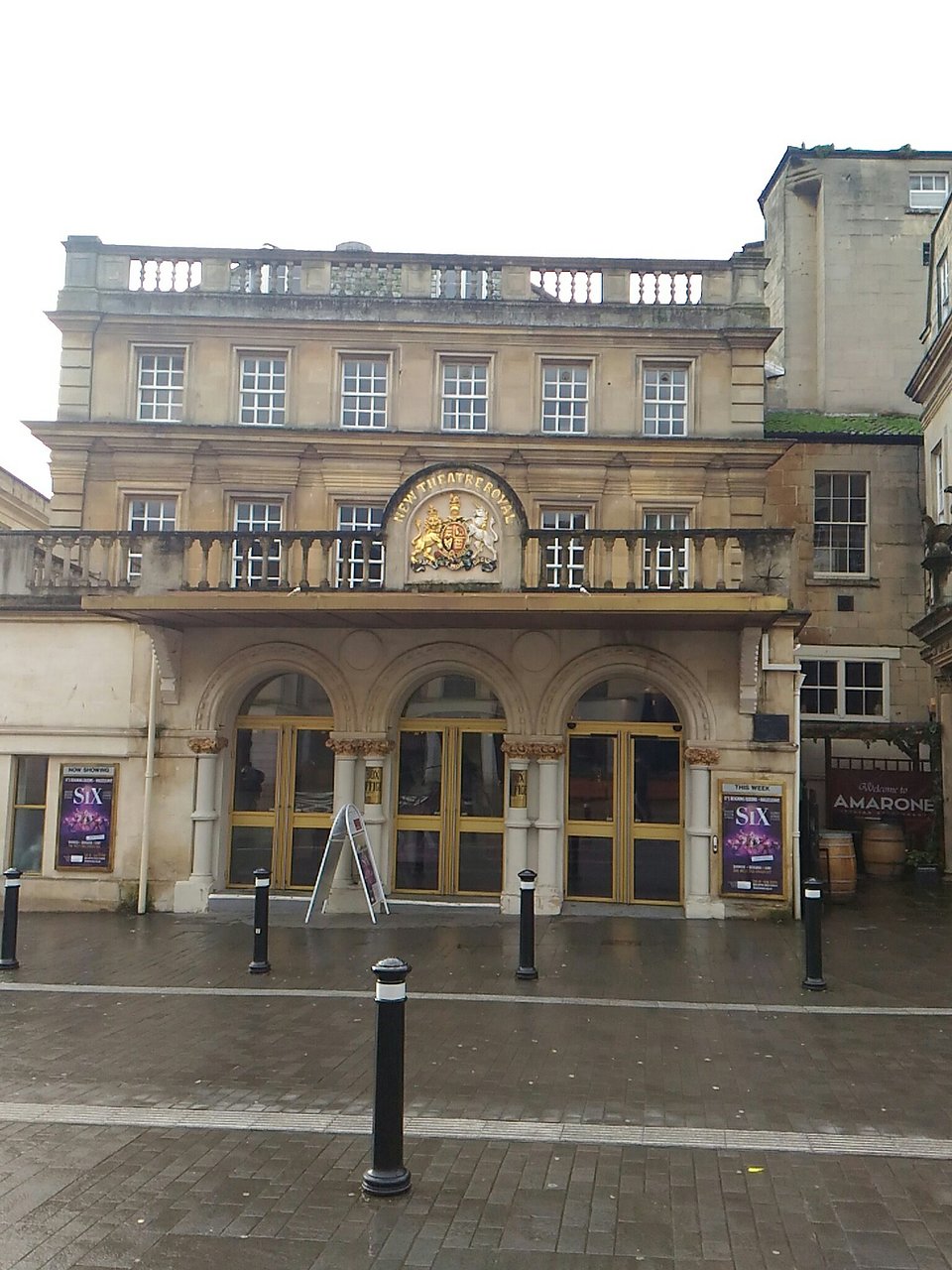
Perspective + Judgment < Perspective + CuriosityTwenty years later I was a student at Bath University in England, and I was walking in town. Bath is built in the hollow between seven hills and the traffic system was, at the time, well, a little confusing. A car pulled up and the driver rolled down the window and he asked, “can you tell me how to get to the Theatre Royal?” I looked across the pedestrian precinct directly at the theater and found myself saying, “Oh you can’t get there from here, not by car anyway.”
Needless to say, the driver looked bemused and slightly irritated. I suggested that he park right where he was and walk to the theater. But he explained that he was collecting his elderly mother from the matinée and she could not walk far. I went on to explain that although the theatre was less than 50 yards away from where he was talking to me, the route to get a CAR to the theatre was laborious to say the least. He would actually have to drive out of town, take a major highway around the outside of town, come in from the opposite side, navigate the one-way system, before he would end up outside the theater. A three-minute walk was going to turn into a 15- to 20-minute drive. In this case, “you can’t get there from here” meant “you can get there from here, but is it really worth the effort?” Assessing whether the effort is worth the result depends on perspective. My perspective was it was not worth the drive. His perspective was, “I have no choice because of other constraints”. I made a judgment without gathering all the facts. With some curiosity I could have discovered that there was more to the story. Perspective + curiosity + teamwork -> a new realityLater I became a project manager and the second project I was assigned to was to evaluate the efficacy of a particular IT project that was being implemented in London and whether that IT solution should be rolled out to the New York branch of our bank. When I arrived in the office, I was given a ‘guided tour” of the software. It had been sold to the bank as “totally configurable”. To this day those words give me chills – and not in a good way. That is, every switch, option, combination of fields, process etc. could be switched on and off based on the needs of the consumer. If you have ever gathered business requirements from consumers/users, you will understand that it is very difficult to imagine what could be. As Henry Ford famously said, “If I had asked people what they wanted, they would have said faster horses.” It is really rare and really difficult to imagine something that might get you to an end result in a totally different – and more efficient – way than the method you are currently using. Destination vs route to get there.For example, one of the staff at the bank “needed” to have trade confirmations and matching addressed envelopes printed off so that he could stuff the envelopes and mail out the confirmations at the end of the day. When he asked how that would be set up in the system, they confirmed that they could link to the print room and do exactly what he asked. After the set-up had been completed, his supervisor came to see how testing was going and was dismayed to discover that the system had been set up to use the old-style printing rather than a tri-fold confirmation/envelope printout that could be folded and sealed by the spiffy new printer in the printer room. He had conflated the end result with the route – what was needed was a trade confirmation in the hands of the customer within a given timeframe. When asked whether the system could be reconfigured to use the new process, the software vendor said, “you can’t change it now”. (I.e., we cannot get there from here!) Had we had a map, been curious about the destinations we want to reach (i.e., outcomes needed) instead of the routes to get there, had we had an expert guide, and had we worked as a team, that IT system implementation could have been a game changer for the bank. Instead, it was a very expensive, overwhelmingly daunting system. We ultimately came to the conclusion that WE could not get there from here. We did not have the resources, the expertise, the vision or even the real need to change our existing processes. It was the most expensive journey to nowhere that I have ever traveled. Three questions to help gain better perspective:
|
The role of Self-evolution in tiding over Changes
| Today when the external circumstances and rapid changes are so overwhelming, it makes absolute sense to pause and find ways to deal with the change. We could either cope or counter the CHANGE, resistance is the most obvious reaction. But is there really a way to not just combat the change but use this change to our advantage?
Some of the inspiring experiential accounts of people we have come across in recent times suggest there might be some ways. When faced with uncertainties externally, the efforts to change one’s own inner workings, evolving ourselves may help in discounting the external changes and its effects. Never miss a good crisis it is said. A crisis is an opportunity to contemplate on the true purpose of our life. There are times in life when we feel the way to redefine our actions and redefine ourselves. Times like these are the ones that bring out the best in us. Embarking on the journey within, on a journey of self-evolution is no easy task but it has the potential to even serve as an antidote to overwhelming change or uncertainty. It is highly likely that if we are busy developing ourselves, working on identifying our passions, then the failings or unpredictability of the world outside may even go unnoticed and not worth giving attention to. In unprecedented times, it is only prudent to choose our priorities and battles wisely. Casting our influence on the territory beyond our control doesn’t work but what might work which is well within our purview is our territory – our body, our mind and our soul. Building our inner world is the need of the hour, changing our perspectives; our inner map might hold the key to myriad possibilities. When was the last time we had indulged ourselves in a hobby? When was the last time we did have all the time in the world? Some of us were busy being BUSY. Now is the time we have to make that fresh start on this journey of discovering ourselves, finding what we stand for, what we enjoy doing, determining what we are made of, how are we serving ourselves and others? So of all the lessons that we could take away from this crisis, it is this lesson that holds the most promise – ‘Self-evolution is an art which when painted on the canvas of life makes all the external changes seem insignificant and immaterial. Every journey in life starts from within.’ So let’s start redefining ourselves in these moments of truth, moments of contemplation and redefine CHANGE itself! CHANGE could very well stand for - Convert Habits and Adapt Now to Gain Effectiveness! |
We Are Now More Risk Adaptable
|
Photo by Cristofer Jeschke on Unsplash As a result of Covid-19, leaders will learn that it’s okay to take on more risk. In my eBook, “Activate: Profitable Strategy Execution,” I discuss performing a risk assessment to ensure successful change. It’s important to identify major risks associated with the readiness of the organization to embrace change. This might include, for example, evaluating pockets of resistance, or how quickly a remote work force might accept the change. As a result of Covid-19, organizations learned to become more flexible and adaptable, and do to so more quickly. In March 2020, there was insufficient time to prepare to move employees back home to work. Employees had little choice but to accept the situation. We learned to mobilize quickly around a crisis. This in turn gives leaders a chance to become more risk adaptable. They are more willing to try things faster, be less cautious, and remove needless layers of bureaucracy. In short, leaders are now able to take on more risk. This does not mean that we throw out all our stable processes, or our traditional risk management tools and standards. It does mean that we look at these through a new lens and ensure that we are leveraging the learnings from the pandemic to drive greater organizational capacity. One client determined that they needed additional technology to reach employees working from home differently and faster. The pandemic caused them to add these technologies more quickly. In the past they would have spent far more time evaluating different tools based on a set of criteria, and then making a well thought out selection. With the pandemic upon us, they had to make decisions quickly. They learned they don’t need to be as methodical, and they were able to deliver solutions to employees faster. How does this benefit the bottom line? The impact of the digital age means that companies must embrace greater innovation to provide the most value to customers and do it faster. The pandemic taught that greater risk-reward is possible, which in turn means generating more income sooner. Leaders have the opportunity now to be more assertive in their assessment of risk. It’s time to look more closely at processes and standards used to identify and manage risk. It’s time to realistically ask, “How can we do this faster and better,” now that we’ve seen for ourselves that we are more flexible and adaptable.
|