Support to Develop
by Luis Branco

This blog addresses management-related topics and has three areas of focus: 1. Technical skills; 2. Competencies in the field of interpersonal relations and communication (including personal organization and delegation, leadership, teamwork, conflict resolution, conducting meetings, and negotiation); and 3. Strategy (including diagnosis, strategic guidelines, and implementation).4.Technology
Recent Posts
The Contestable Organization
The Self-Reinforcing Organization
What Should Never Be Optimized Away?
What If Organizing Work Is No Longer Primarily a Human Capability?
Where Does Organizational Wisdom Live?
Categories
Agile,
Career Development,
Career Development,
Career Development,
Career Development,
Career Development,
Career Development,
Career Development,
Career Development,
Career Development,
Career Development,
Career Development,
Career Development,
Career Development,
Career Development,
Career Development,
Career Development,
Career Development,
Career Development,
Career Development,
Career Development,
Career Development,
Career Development,
Career Development,
Career Development,
Career Development,
Career Development,
Career Development,
Career Development,
Career Development,
Career Development,
Career Development,
Career Development,
Career Development,
Career Development,
Career Development,
Career Development,
Career Development,
Career Development,
Career Development,
Career Development,
Career Development,
Career Development,
Career Development,
Career Development,
Career Development,
Career Development,
Career Development,
Career Development,
Career Development,
Career Development,
Career Development,
Career Development,
Career Development,
Career Development,
Career Development,
Career Development,
Career Development,
Career Development,
Career Development,
Career Development,
Career Development,
Career Development,
Career Development,
Career Development,
Career Development,
Career Development,
Career Development,
Career Development,
Career Development,
Career Development,
Career Development,
Career Development,
Career Development,
Career Development,
Career Development,
Career Development,
Career Development,
Career Development,
Career Development,
Career Development,
Career Development,
Career Development,
Career Development,
Career Development,
Career Development,
Career Development,
Career Development,
Career Development,
Career Development,
Career Development,
Career Development,
Career Development,
Career Development,
Career Development,
Career Development,
Career Development,
Career Development,
Interpersonal Skills,
Interpersonal Skills,
Interpersonal Skills,
Interpersonal Skills,
Interpersonal Skills,
Interpersonal Skills,
Interpersonal Skills,
Interpersonal Skills,
Interpersonal Skills,
Interpersonal Skills,
Interpersonal Skills,
Interpersonal Skills,
Interpersonal Skills,
Interpersonal Skills,
Interpersonal Skills,
Interpersonal Skills,
Interpersonal Skills,
Interpersonal Skills,
Interpersonal Skills,
Interpersonal Skills,
Interpersonal Skills,
Interpersonal Skills,
Interpersonal Skills,
Interpersonal Skills,
Interpersonal Skills,
Interpersonal Skills,
Interpersonal Skills,
Interpersonal Skills,
Interpersonal Skills,
Interpersonal Skills,
Interpersonal Skills,
Interpersonal Skills,
Interpersonal Skills,
Interpersonal Skills,
Interpersonal Skills,
Interpersonal Skills,
Interpersonal Skills,
Interpersonal Skills,
Interpersonal Skills,
Interpersonal Skills,
Interpersonal Skills,
Interpersonal Skills,
Interpersonal Skills,
Interpersonal Skills,
Interpersonal Skills,
Interpersonal Skills,
Interpersonal Skills,
Interpersonal Skills,
Interpersonal Skills,
Interpersonal Skills,
Interpersonal Skills,
Interpersonal Skills,
Interpersonal Skills,
Interpersonal Skills,
Interpersonal Skills,
Interpersonal Skills,
Interpersonal Skills,
Interpersonal Skills,
Interpersonal Skills,
Interpersonal Skills,
Interpersonal Skills,
Interpersonal Skills,
Interpersonal Skills,
Interpersonal Skills,
Interpersonal Skills,
Interpersonal Skills,
Interpersonal Skills,
Interpersonal Skills,
Interpersonal Skills,
Interpersonal Skills,
Interpersonal Skills,
Interpersonal Skills,
Interpersonal Skills,
Interpersonal Skills,
Interpersonal Skills,
Interpersonal Skills,
Interpersonal Skills,
Interpersonal Skills,
Interpersonal Skills,
Interpersonal Skills,
Interpersonal Skills,
Interpersonal Skills,
Interpersonal Skills,
Interpersonal Skills,
Interpersonal Skills,
Interpersonal Skills,
Interpersonal Skills,
Interpersonal Skills,
Interpersonal Skills,
Interpersonal Skills,
Interpersonal Skills,
Interpersonal Skills,
Interpersonal Skills,
Interpersonal Skills,
Interpersonal Skills,
Interpersonal Skills,
Interpersonal Skills,
Leadership,
Leadership,
Leadership,
Leadership,
Leadership,
Leadership,
Leadership,
Leadership,
Leadership,
Leadership,
Leadership,
Leadership,
Leadership,
Leadership,
Leadership,
Leadership,
Leadership,
Leadership,
Leadership,
Leadership,
Leadership,
Leadership,
Leadership,
Leadership,
Leadership,
Leadership,
Leadership,
Leadership,
Leadership,
Leadership,
Leadership,
Leadership,
Leadership,
Leadership,
Leadership,
Leadership,
Leadership,
Leadership,
Leadership,
Leadership,
Leadership,
Leadership,
Leadership,
Leadership,
Leadership,
Leadership,
Leadership,
Leadership,
Leadership,
Leadership,
Leadership,
Leadership,
Leadership,
Leadership,
Leadership,
Leadership,
Leadership,
Leadership,
Leadership,
Leadership,
Leadership,
Leadership,
Leadership,
Leadership,
Leadership,
Leadership,
Leadership,
Leadership,
Leadership,
Leadership,
Leadership,
Leadership,
Leadership,
Leadership,
Leadership,
Leadership,
Leadership,
Leadership,
Leadership,
Leadership,
Leadership,
Leadership,
Leadership,
Leadership,
Leadership,
Leadership,
Leadership,
Leadership,
Leadership,
Leadership,
Leadership,
Leadership,
Leadership,
Leadership,
Leadership,
Leadership,
Leadership,
Leadership,
Strategy,
Strategy,
Strategy,
Strategy,
Strategy,
Strategy,
Strategy,
Strategy,
Strategy,
Strategy,
Strategy,
Strategy,
Strategy,
Strategy,
Strategy,
Strategy,
Strategy,
Strategy,
Strategy,
Strategy,
Strategy,
Strategy,
Strategy,
Strategy,
Strategy,
Strategy,
Strategy,
Strategy,
Strategy,
Strategy,
Strategy,
Strategy,
Strategy,
Strategy,
Strategy,
Strategy,
Strategy,
Strategy,
Strategy,
Strategy,
Strategy,
Strategy,
Strategy,
Strategy,
Strategy,
Strategy,
Strategy,
Strategy,
Strategy,
Strategy,
Strategy,
Strategy,
Strategy,
Strategy,
Strategy,
Strategy,
Strategy,
Strategy,
Strategy,
Strategy,
Strategy,
Strategy,
Strategy,
Strategy,
Strategy,
Strategy,
Strategy,
Strategy,
Strategy,
Strategy,
Strategy,
Strategy,
Strategy,
Strategy,
Strategy,
Strategy,
Strategy,
Strategy,
Strategy,
Strategy,
Strategy,
Strategy,
Strategy,
Strategy,
Strategy,
Strategy,
Strategy,
Strategy,
Strategy,
Strategy,
Strategy,
Strategy,
Strategy,
Strategy,
Strategy,
Strategy,
Strategy,
Sustainability,
Talent Management,
Talent Management,
Talent Management,
Talent Management,
Talent Management,
Talent Management,
Talent Management,
Talent Management,
Talent Management,
Talent Management,
Talent Management,
Talent Management,
Talent Management,
Talent Management,
Talent Management,
Talent Management,
Talent Management,
Talent Management,
Talent Management,
Talent Management,
Talent Management,
Talent Management,
Talent Management,
Talent Management,
Talent Management,
Talent Management,
Talent Management,
Talent Management,
Talent Management,
Talent Management,
Talent Management,
Talent Management,
Talent Management,
Talent Management,
Talent Management,
Talent Management,
Talent Management,
Talent Management,
Talent Management,
Talent Management,
Talent Management,
Talent Management,
Talent Management,
Talent Management,
Talent Management,
Talent Management,
Talent Management,
Talent Management,
Talent Management,
Talent Management,
Talent Management,
Talent Management,
Talent Management,
Talent Management,
Talent Management,
Talent Management,
Talent Management,
Talent Management,
Talent Management,
Talent Management,
Talent Management,
Talent Management,
Talent Management,
Talent Management,
Talent Management,
Talent Management,
Talent Management,
Talent Management,
Talent Management,
Talent Management,
Talent Management,
Talent Management,
Talent Management,
Talent Management,
Talent Management,
Talent Management,
Talent Management,
Talent Management,
Talent Management,
Talent Management,
Talent Management,
Talent Management,
Talent Management,
Talent Management,
Talent Management,
Talent Management,
Talent Management,
Talent Management,
Talent Management,
Talent Management,
Talent Management,
Talent Management,
Talent Management,
Talent Management,
Talent Management,
Talent Management,
Talent Management
Date
| 
This is the sixth post in the series “The 11 Keys to Regenerative Leadership”
Flexibility is not weakness.
It is discernment in motion.
It’s the ability to adjust direction without losing your true north.
In regenerative leadership, flexibility is a conscious response to context, not an impulsive reaction to pressure.
It’s knowing when to hold the line… and when to redesign.
It’s listening to the system and adapting with purpose, not just reacting.
Healthy flexibility grows from three sources:
- Clarity of intention
- Capacity for deep listening
- Psychological safety to experiment and adjust
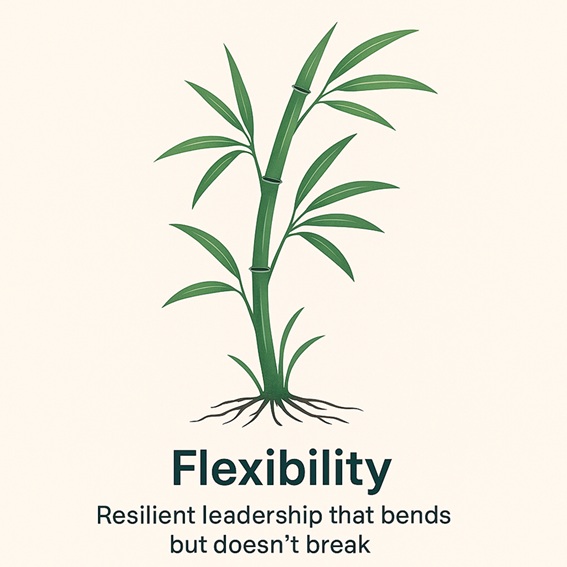
In complex, unpredictable environments, flexible leaders are like bamboo: they bend, but don’t break.
They know when to pause, when to reposition, and when to move forward with renewed courage.
Practical example:
In an ongoing organizational transformation, we realized the original plan no longer reflected current dynamics.
Instead of pushing forward blindly, we opened space for short feedback loops and iterative redesign, without losing sight of our purpose.
The result: greater agility, less resistance, and decisions with stronger collective buy-in.
Regenerative flexibility doesn’t abandon the vision, it adapts the path.
In your context: where is flexibility the key to protecting what truly matters?
This post is part of the series The 11 Keys to Regenerative Leadership
|
Posted on: October 08, 2025 09:54 AM
|
Permalink |
Comments (4)
| 
Complementary post to Pillar 5 – Purpose & Impact
A purpose that listens is a purpose that lives.
A recent comment in this series captured it perfectly:
“Purpose gains strength when it is not only redefined by leaders but revalidated through the voices of employees, partners and communities.”
And that changes everything.
Because a purpose only becomes living when it is no longer imposed, but co-owned, co-created, and revalidated by those who live it daily.
In regenerative leadership, purpose is not a sentence on a wall
It’s a living cycle of alignment, legitimacy, and shared meaning.
This demands strategic humility:
- Creating space for genuine dialogue
- Involving people who were once only executing
- And embracing the idea that listening to the context can reshape direction — without betraying essence
Practical example:
In a Portuguese business group expanding internationally, the original vision was:
“Bringing Portuguese excellence to the world.”
But once local teams in Mozambique and Brazil were invited to co-design the strategic shift, the purpose was enriched to:
“Growing with — not just in — each culture.”
Excellence remained a core value, but it was no longer something to export, it became something to build together.
That shift in mindset transformed partnerships, communication, and even KPIs.
It didn’t just align, it regenerated.
Revalidating purpose with those who live it is a core practice in the final phase of the RCPCV™ cycle: Verify.
Because regenerative coherence only exists when purpose listens, not just speaks.
And in your organization:
Is purpose just direction… or also dialogue?
This post is part of the series The 11 Keys to Regenerative Leadership
|
Posted on: October 06, 2025 09:01 AM
|
Permalink |
Comments (1)
| 
Complementary post to Pillar 5 – Purpose & Impact
Projects don’t end when they’re delivered.
They end when they stop transforming.
In regenerative leadership, delivery is not the finish line, it’s the beginning of something greater: a living legacy that grows through systems, behaviors and decisions that endure long after the team has stepped away.
A reader of this series expressed it perfectly:
“Designing for impact means anticipating not only how value is created during execution, but how it is sustained when the team steps away.”
Exactly.
When we design with intention, we’re not just managing scope, we're cultivating meaning.
And that requires more than planning, it demands an architecture of continuity.
Regenerative projects leave behind:
- Cultures that breathe purpose
- Processes that adapt with awareness
- People who carry forward what began as an initiative
Practical example:
In a healthcare organization, a digital transformation program didn’t end with the implementation of new technology.
The real impact emerged months later:
- Teams began sharing decisions, listening to patients with greater presence, and reconfiguring workflows, not because they were told to, but because it made sense.
That’s why approaches like the Benefits Realization Management practices (PMI) (focused on ensuring and sustaining long-term value) and frameworks like the GPM P5™ Standard, which embed sustainability into every dimension of project design, are so essential.
Impact is not measured at delivery. It’s measured by what remains.
And in your context: does the project end — or does it transform?
This post is part of the series The 11 Keys to Regenerative Leadership
|
Posted on: October 03, 2025 08:55 AM
|
Permalink |
Comments (1)
| 
Complementary post to Pillar 5 – Purpose & Impact
A reader of this series wrote:
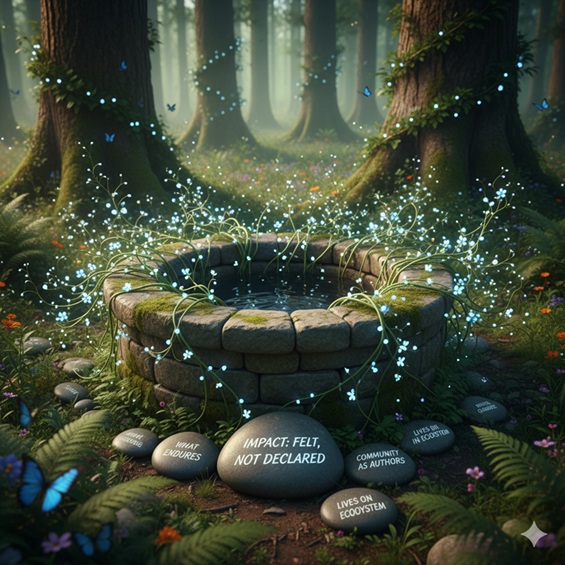
“Impact is not what we declare, but what others experience and what endures after us.”
That phrase captures the essence.
In regenerative leadership, good intentions are not enough.
True impact is not what we publish in reports, goals or manifestos.
It’s what people feel when we are no longer in the room.
It’s what the system sustains after we step away.
It’s what remains, even when we’re gone.
Regenerative impact is often quiet, yet alive:
- It’s not just measured in indicators, but in consequences
- It’s not imposed, it’s sensed
- It doesn’t end with the project, it lives on in the ecosystem
Practical example:
In a community capacity-building program, the contracting organization defined success as “training X people in 6 months.”
But the real impact emerged later:
- Two grassroots associations formed spontaneously among the participants
- Local projects flourished without funding
- The community began to see itself as authors, not just recipients
Real impact is not what we intend.
It’s what we provoke, even unknowingly.
It’s what endures.
In your context: how will impact be measured… when no one is watching?
This post is part of the series The 11 Keys to Regenerative Leadership
|
Posted on: October 01, 2025 10:06 AM
|
Permalink |
Comments (0)
| 
Complementary post to Pillar 5 – Purpose & Impact
One of the most striking comments I received in this series said:
“Even the most well-intentioned frameworks risk becoming static if leaders fail to revisit them as contexts change.”
And it’s true.
A purpose that isn’t revisited will stagnate.
It stops being a compass and becomes decoration.
In regenerative leadership, purpose is not just a starting point, it’s a cycle.
It’s not enough to align it once.
We must listen to it again whenever the context shifts.
Revalidate. Reinterpret. Realign.
Whenever needed — with strategic humility.
A living purpose:
- Guides decisions without becoming rigid
- Adapts without losing its core
- Stays coherent with what truly matters — today and tomorrow
Practical example:
An environmental NGO initially framed its purpose around “preservation.”
But as the climate crisis deepened, the leadership revisited its role.
They redefined their purpose as “regeneration.”
That shift transformed their partnerships, metrics, and public stance without losing their identity.
Revisiting purpose is also part of the final step of the RCPCV™ cycle: Verify.
A regenerative leader doesn’t just ask “Did we execute the plan?”
They ask:
- Does this purpose still make sense for those we serve?
- Is our impact still aligned with what truly matters now?
- Is our message alive — or has it gone static?
Purpose doesn’t fail when it evolves.
It fails when it refuses to listen to a changing world.
In your organization: is purpose still guiding — or just repeating?
This post is part of the series The 11 Keys to Regenerative Leadership
|
Posted on: September 29, 2025 09:18 AM
|
Permalink |
Comments (2)
|
Sometimes the road less traveled is less traveled for a reason.
- Jerry Seinfeld
|




