


This is the story of how, almost unintentionally, I moved from the world of chemistry into Life Sciences. It’s a journey of changes, lessons, and challenges. My hope is that, as you read it, you’ll find inspiration, a useful idea—or at least a good read.
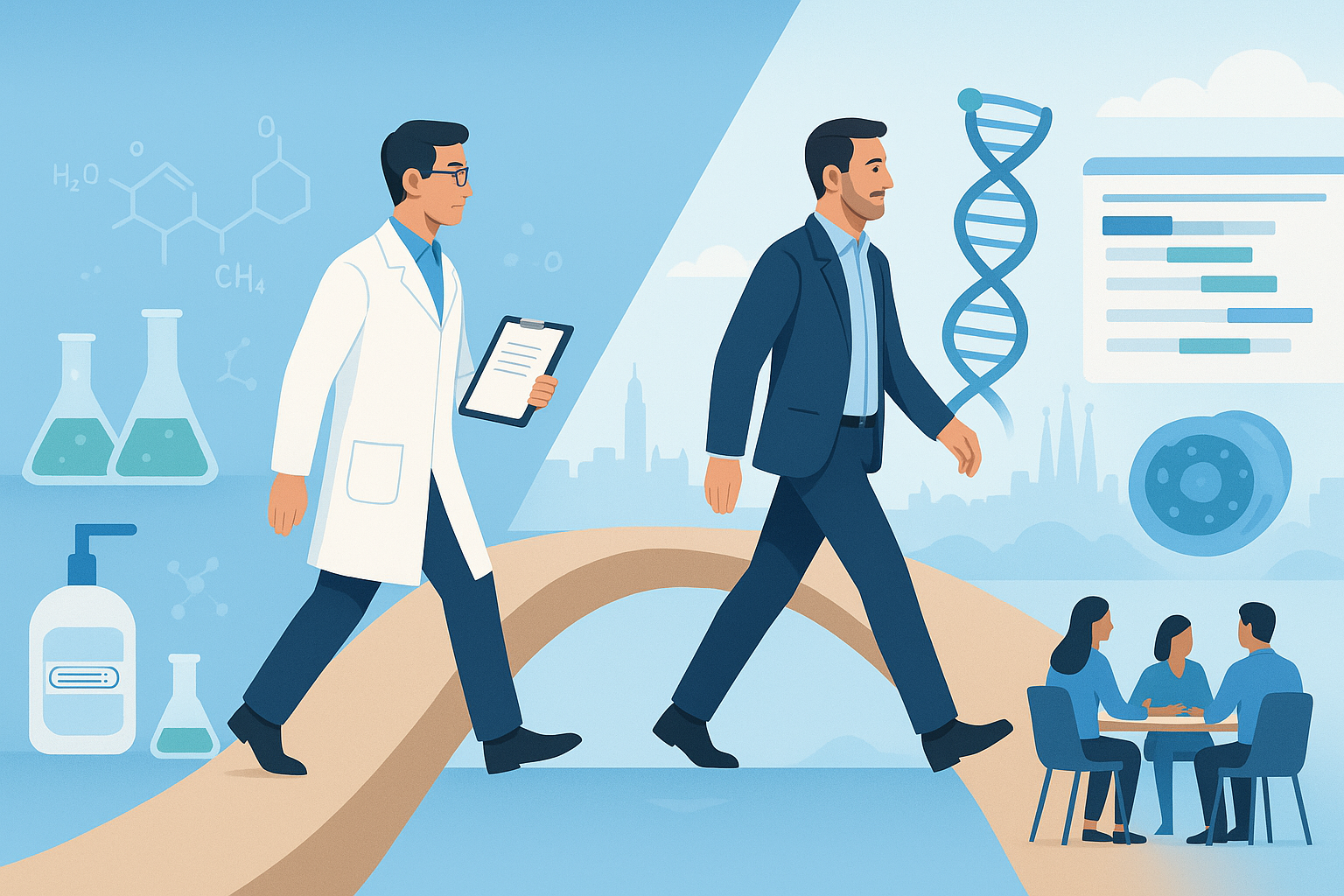 My entry into Life Sciences wasn’t something I actively sought from the start. With a background in Chemical Engineering and years of experience in R&D within the chemical sector, my professional aspirations eventually led me to explore opportunities outside the lab. That exploration opened the door to the world of medical devices.
I studied Chemical Engineering at the University of Barcelona, and when I graduated, I was convinced that job opportunities would come easily. They didn’t. At that time, the internet was still underdeveloped, and job applications meant sending résumés and cover letters by regular post. Many of those applications ended up as rejection letters—letters I still keep today as a reminder that perseverance pays off. Eventually, I earned a research grant at the Spanish National Research Council (CSIC, Consejo Superior de Investigaciones Científicas), marking the beginning of my professional career. There, I had an exceptional mentor who encouraged me to gain international experience. What was supposed to be one year in the U.S. turned into almost three and a half. During that time, I significantly improved my English and immersed myself in a new culture of work and life.
My first step into medical devices came from a desire to move beyond pure R&D and into project management. In that very first role as a project manager, I also created an account on ProjectManagement.com, which was an invaluable resource to start understanding this marvelous field. The guidance of great professionals like Kiron and Rami, amongst many others, made the early learning curve much smoother and inspired me to keep developing as a project leader.
That’s where I learned to lead complex initiatives and coordinate multiple stakeholders. I also discovered that a project plan is much more than a Gantt chart: it’s a living tool that must adapt constantly, reflect input from the people involved, and anticipate problems before they surface. This experience opened the door to the pharmaceutical industry in Amsterdam, where I further developed my career in Life Sciences.
Over the years, I’ve had the privilege to lead projects of all kinds: from strategic initiatives to supply medical devices to a key client, to digitalization projects with critical timelines, to technology transfers and scale-ups in both upstream processing (USP) and downstream processing (DSP). Each project pushed me to grow new skills and adapt to different rhythms and circumstances—while always keeping the ability to prioritize and move forward, even when things didn’t go as planned.
One of the most valuable lessons I’ve learned can be summed up in the principle of ABC: Assume nothing, Believe no one, Check everything. Never take things for granted. Validate assumptions. Execute diligently. And above all, keep communication flowing. Clear, consistent communication can be the difference between a project that moves forward and one that stalls.
For those starting out in Life Sciences, my advice is simple: know your value and your value proposition. Research the company, understand your strengths, and learn to sell yourself. Define your area of expertise, ensure you have the right training and certifications, and analyze what makes you a stronger candidate than others. It’s not enough to be good, you need to demonstrate it. And if you need support for that introspective work (something we all know we should do but often postpone), don’t hesitate to work with a good coach who can guide you and ask the right questions.
Follow your curiosity, stay humble enough to keep learning, and never underestimate the power of communication and collaboration. In the end, working in Life Sciences is about finding your own ikigai: that point where what you love, what you’re good at, what the world needs, and what you can be paid for all come together.



