


From the lab to the office. A brief story of my journey in Project Management


| This is the story of how, almost unintentionally, I moved from the world of chemistry into Life Sciences. It’s a journey of changes, lessons, and challenges. My hope is that, as you read it, you’ll find inspiration, a useful idea—or at least a good read.
I studied Chemical Engineering at the University of Barcelona, and when I graduated, I was convinced that job opportunities would come easily. They didn’t. At that time, the internet was still underdeveloped, and job applications meant sending résumés and cover letters by regular post. Many of those applications ended up as rejection letters—letters I still keep today as a reminder that perseverance pays off. Eventually, I earned a research grant at the Spanish National Research Council (CSIC, Consejo Superior de Investigaciones Científicas), marking the beginning of my professional career. There, I had an exceptional mentor who encouraged me to gain international experience. What was supposed to be one year in the U.S. turned into almost three and a half. During that time, I significantly improved my English and immersed myself in a new culture of work and life. My first step into medical devices came from a desire to move beyond pure R&D and into project management. In that very first role as a project manager, I also created an account on ProjectManagement.com, which was an invaluable resource to start understanding this marvelous field. The guidance of great professionals like Kiron and Rami, amongst many others, made the early learning curve much smoother and inspired me to keep developing as a project leader. That’s where I learned to lead complex initiatives and coordinate multiple stakeholders. I also discovered that a project plan is much more than a Gantt chart: it’s a living tool that must adapt constantly, reflect input from the people involved, and anticipate problems before they surface. This experience opened the door to the pharmaceutical industry in Amsterdam, where I further developed my career in Life Sciences. Over the years, I’ve had the privilege to lead projects of all kinds: from strategic initiatives to supply medical devices to a key client, to digitalization projects with critical timelines, to technology transfers and scale-ups in both upstream processing (USP) and downstream processing (DSP). Each project pushed me to grow new skills and adapt to different rhythms and circumstances—while always keeping the ability to prioritize and move forward, even when things didn’t go as planned. One of the most valuable lessons I’ve learned can be summed up in the principle of ABC: Assume nothing, Believe no one, Check everything. Never take things for granted. Validate assumptions. Execute diligently. And above all, keep communication flowing. Clear, consistent communication can be the difference between a project that moves forward and one that stalls. For those starting out in Life Sciences, my advice is simple: know your value and your value proposition. Research the company, understand your strengths, and learn to sell yourself. Define your area of expertise, ensure you have the right training and certifications, and analyze what makes you a stronger candidate than others. It’s not enough to be good, you need to demonstrate it. And if you need support for that introspective work (something we all know we should do but often postpone), don’t hesitate to work with a good coach who can guide you and ask the right questions. Follow your curiosity, stay humble enough to keep learning, and never underestimate the power of communication and collaboration. In the end, working in Life Sciences is about finding your own ikigai: that point where what you love, what you’re good at, what the world needs, and what you can be paid for all come together. |
 My entry into Life Sciences wasn’t something I actively sought from the start. With a background in Chemical Engineering and years of experience in R&D within the chemical sector, my professional aspirations eventually led me to explore opportunities outside the lab. That exploration opened the door to the world of medical devices.
What if Keanu Reeves ran your project?
Categories:
Leadership
Categories: Leadership
| In a previous post, we looked at Luis Enrique’s leadership style, intense and authentic. That exploration led us to ask broader questions about what leadership is about, beyond what has been written in numerous books. We often talk about what makes a good project manager: communication skills, time management (sense of urgency!), stakeholder engagement or risk management, among many others. These are important, even essential. But they aren’t the whole picture. What if we looked beyond competence? What if we imagined a project manager with not only the right skills but the right soul? This isn’t just about emotional intelligence. It’s about the human being behind the project manager — the person who shows up with values, resilience and compassion. Because at the end of the day, regardless of our role or personal wealth, we are all humans with an innate desire to cooperate, contribute, and connect.
- The death of his child - The passing of his partner - The loss of his close friend River Phoenix - Years of solitude and personal battles, including caring for his sister through leukemia And yet, through all of this, he continues to give and treat others with respect, whether it’s sharing his earnings with crew members or waiting in line like anyone else. He doesn’t just survive hardship. So what lessons could we draw from this “saintly” version of a project manager? Grace under pressure As just noted, Keanu Reeves is no stranger to tragedy. Yet, he remains grounded and composed. A “Keanu PM” wouldn’t lash out in a crisis or shift blame when things go wrong. They’d hold the team steady when the company changes project priorities for the third time in six months or when the vendor delays delivery again on critical equipment. Calm doesn’t mean passive — it means anchored. Lesson: A truly great PM is emotionally resilient. They’re a calming force when others are storming. Radical humility Despite a net worth estimated at over $380 million, Reeves is known for taking the subway, carrying his own gear on set, helping strangers, and staying out of the spotlight. He’s gifted millions to stunt crews and quietly supported cancer research without attaching his name to it. For project leadership, this translates into egoless management. The Keanu PM doesn’t need credit or control. They elevate the team, listen deeply, and let results speak for themselves. Lesson: The best PMs make space for others to shine. No preaching There’s a moral clarity in how Reeves lives — respectful, professional, generous. He doesn’t grandstand, but he doesn’t compromise on what matters either. For a PM, this might look like saying no to shortcuts that threaten quality. It might mean standing up for a team under unrealistic deadlines or pushing back when decisions are misaligned with values. Lesson: A strong ethical compass is most powerful when it’s lived, not lectured. Consistency over perfection Saints aren’t flawless — they’re consistent. Reeves is known for his discipline: showing up for every role with the same humility and dedication, whether it’s Hamlet on stage or The Matrix on screen. Likewise, the Keanu PM doesn’t need to be the smartest or fastest. They need to be the one who shows up fully every day, even when no one is watching. As the saying goes: "Quality is what you do when no one is watching." Lesson: Trust is built through small, consistent acts of responsibility. Silence (can be) golden We live in a world of noise: slack notifications, back to back meetings, fires to put out... Silence is underrated. The Keanu archetype brings something rare: stillness. Not inertia, but the ability to pause, reflect, and respond, instead of reacting. A mindful PM sees the bigger picture, reads the room, and leads from a place of groundedness. Lesson: Strategic pauses are not a luxury — they’re a leadership necessity. In a nutshell If we imagined a saintly project manager — someone with impeccable character, quiet strength, and a deep sense of care — it might not look flashy. But it would be unforgettable. Remember that quote: “People will forget what you said, but not how you made them feel.” The Keanu Reeves of project management may never trend on LinkedIn or win a flashy award. But their teams would trust them. Their projects would last. And their leadership would echo far beyond the final deliverable. Maybe that’s what real success looks like. |
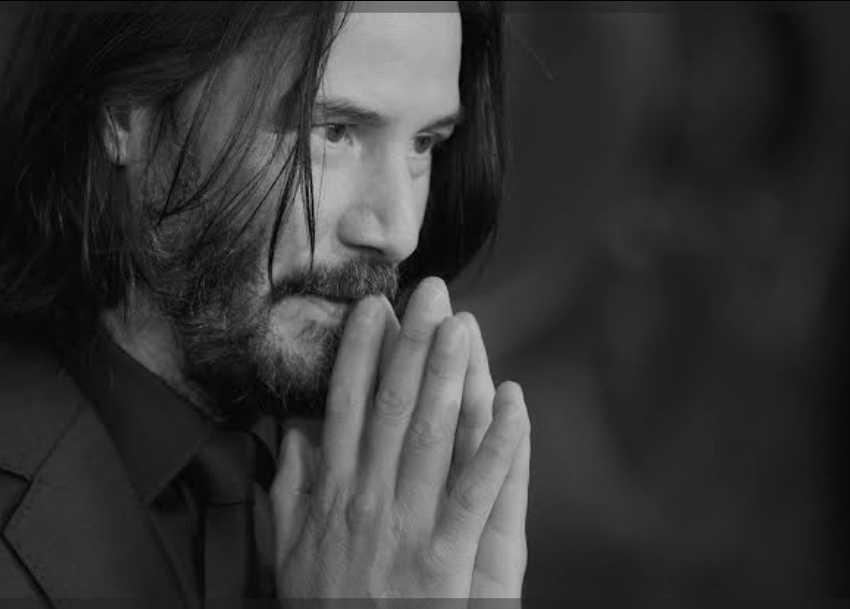 On that note, let’s explore a thought-provoking idea: what if Keanu Reeves were a project manager? Not the actor per se, but the essence of how he moves through the world. The internet is full of reels and short clips celebrating how Reeves has navigated enormous personal tragedy with humility and dignity:
From the pitch to the project; Leadership that delivers
Categories:
Leadership
Categories: Leadership
| Whether or not you follow football (or soccer), moments of exceptional leadership have a way of cutting through context and resonating universally. One such moment unfolded after Paris Saint-Germain’s (PSG) 5–0 victory over Inter Milan in the Champions League final on May 31st. In his post-match interview, coach Luis Enrique delivered more than just comments — he offered a masterclass in leadership. It was a timely reminder that leadership isn’t theoretical. It’s something you live, not just learn about in books. You can read hundreds of articles or attend workshops on leadership, but sometimes the clearest understanding comes from observing someone who leads with results — and substance.
🧠 Use of inclusive language builds Psychological Safety Rather than framing the win as a personal achievement, Luis Enrique repeatedly used “we” — reinforcing the idea that success was shared. This subtle choice of words builds unity and fosters psychological safety, creating space for collective ownership and trust. In project management, where team cohesion is vital, this mindset is essential. Success rarely hinges on individual brilliance alone. And in an environment like professional sports — often dominated by ego — such inclusive language is even more striking. It’s a reminder that even top performers thrive when their leader highlights team over self. 🌱 Spotting and nurturing potential drives long-term results Luis Enrique is known for putting faith in young and emerging talent, not just proven stars. As project managers, we face the same choice: do we stick with the tried-and-tested, or do we recognize and develop potential? Choosing the latter can unlock surprising, long-term value — and it’s what separates a task manager from a true leader. Simon Sinek touches on this beautifully in Leaders eat last, a book that left a strong impression on me. He writes that great leaders create environments where people feel safe, trusted, and empowered — and where they grow as a result. That sense of responsibility for others’ development is what defines leadership at its core. 🎲 Acknowledging the role of luck brings humility When asked about his team’s success, Enrique didn’t just highlight preparation or strategy — he acknowledged that luck also played a role. It was a humble, honest answer. In project management, this humility is vital. No matter how meticulous our planning, external factors — market shifts, stakeholder dynamics, unexpected delays — can influence the outcome. Seneca said it best: “Luck is what happens when preparation meets opportunity.” The best leaders understand this. They prepare rigorously but remain open to uncertainty, building flexibility and contingency into their plans. 🎯 Focusing on team goals builds trust Luis Enrique isn’t chasing personal accolades. His focus is clearly on collective performance and long-term growth — not just headlines. Project managers who prioritize team and project outcomes over personal credit build lasting trust. That trust creates an environment where collaboration can flourish. The same principle applies to entrepreneurs. When the focus shifts from “How much can I gain?” to “How much value can I deliver?”, success tends to follow. Recognition can be a byproduct, but it shouldn't be the end goal. 🔍 Developing other leaders multiplies impact A particularly telling moment was Enrique highlighting Ousmane Dembélé — a player who had often been overlooked, but who was instrumental in the win. Elevating others is a subtle yet powerful leadership move. For PMs, this means empowering senior team members, giving them space to lead, and encouraging mentorship within the team. It’s how resilient, self-sufficient teams are built. Too often, the “deputy” or second-in-command role is undervalued. But those individuals — the ones quietly making things happen — are essential to scaling leadership and ensuring continuity when you're not in the room. 🔥 Inspiring belief in the face of adversity After the departure of star player Kylian Mbappé, many expected PSG to stumble. Instead, the team doubled down and thrived. That speaks volumes about the culture Enrique has built. Projects are no different. Budget cuts, changing scopes, sudden resource losses — these can derail momentum. But great leaders keep the team grounded and optimistic, even when the landscape shifts. As the saying goes: no one is irreplaceable. What matters is the collective mindset — and the ability of the leader to keep belief alive, no matter the circumstances. 🪫 Managing success is harder than chasing it Luis Enrique made a compelling point: achieving success is one thing; managing it is another. After a project launch or key milestone, it’s tempting to relax. But that’s often when the real work begins. For PMs, the post-delivery phase — whether it’s optimization, user adoption, or continuous improvement — demands just as much attention. Sustaining performance and maintaining trust is a discipline in itself. 💔 Leading with humanity deepens connection Perhaps the most moving leadership lesson wasn’t tactical, but personal. Luis Enrique continues to lead with strength and grace despite the tragic loss of his daughter. His resilience and openness command deep respect. In a professional world that often prizes detachment, leading with humanity is powerful. It creates loyalty, builds authentic relationships, and fosters psychological safety. Compassion isn’t weakness — it’s leadership at its most real. Final thoughts Leadership books offer structure and ideas. But when we see leadership under real pressure — in a high-stakes final, under the scrutiny of millions — we’re reminded what it actually looks like. For project managers, Luis Enrique’s post-match interview wasn’t just a sports recap. It was a mirror. A reminder that leadership shows up in how we speak, how we decide, how we empower others, and how we carry ourselves when things go sideways. 🔅 What about you? Which of these traits resonate with you most? Are there other leadership moments — in or out of sport — that have stayed with you? |
.png) Here are eight powerful leadership lessons I took from that interview — applicable far beyond sports, and particularly valuable for anyone steering complex projects to success.
Here are eight powerful leadership lessons I took from that interview — applicable far beyond sports, and particularly valuable for anyone steering complex projects to success.The hidden cost of cutting corners; decisions that endanger lives
| In the past few weeks, I’ve watched several documentaries that left me shaken and reflective. These weren’t about natural disasters or distant conflicts—they were about human-made catastrophes that could have been avoided. What struck me was how often these tragedies were rooted in poor project decisions driven by cost-cutting. As a project manager, it’s deeply unsettling to see how choices made in a boardroom or on a spreadsheet can ripple out to impact—sometimes end—people’s lives. In this post, I want to reflect on a few cases where decisions to reduce costs ended up costing lives, and why we, as project professionals, must never forget our responsibility to safeguard the people affected by our work—directly and indirectly. 1. Grenfell Tower fire: Tragedy wrapped in flammable cladding In 2017, a devastating fire engulfed Grenfell Tower in London, killing 72 people. At the heart of the disaster was a refurbishment decision that prioritized cost over safety. A cheaper, flammable cladding material was used in the building’s facade renovation. Despite numerous warnings and concerns from residents, their voices were ignored.
2. Boeing 737 MAX: A race against time, at the cost of transparency The Boeing 737 MAX crashes in 2018 and 2019, which killed 346 people, are another sobering case. Boeing made design changes to the 737 to compete quickly with the Airbus A320neo. A key addition was the MCAS software, which pilots weren’t adequately trained on—or even made aware of. Internal pressures to deliver a cost-effective aircraft quickly, and without requiring expensive pilot retraining, led to a lack of transparency and critical safety oversights. Here, cost and time-to-market took precedence over thorough testing and pilot preparedness—with fatal results. 3. Ford Pinto: Cost-Benefit analysis over human life A classic (and chilling) example from the 1970s is the Ford Pinto. During development, it was discovered that the fuel tank design made the car highly susceptible to explosions in rear-end collisions. Engineers had solutions to make the vehicle safer, but they would add a cost of about $11 per vehicle. Internal memos revealed that Ford conducted a cost-benefit analysis, concluding that paying legal settlements for an estimated number of deaths would be cheaper than redesigning the car. The result? At least 27 people were killed in fiery accidents, and Ford’s reputation suffered irreparable damage. The Project Manager’s Ethical Compass These stories aren’t just about bad decisions. They’re about culture—where budget and timeline are prioritized over people’s lives. As project managers, we hold a pivotal role in shaping not just deliverables, but also how those deliverables affect the world. Simon Sinek, in his book Leaders Eat Last, introduces the idea of “abstraction.” He explains that when the people affected by our decisions are reduced to data points, targets, or “line items” in a spreadsheet, we lose our emotional connection to them. It becomes easier to justify risky shortcuts or to ignore concerns because we no longer see the human beings behind the numbers. In large, complex projects, this detachment can be dangerously seductive. We might be developing a product or managing a construction site, but at the other end of that project are people—real people, with names, families, and futures that can be profoundly impacted by our choices. This is why ethics must sit at the core of our profession. The PMI Code of Ethics and Professional Conduct reminds us that we have a duty to act responsibly, to protect the public, and to put safety before profit. The "Responsibility" principle explicitly calls for taking ownership of decisions and their consequences—especially when those decisions can affect the lives and welfare of others. Safety, ethics, and transparency aren’t optional checkboxes. They are non-negotiable responsibilities. We must champion a mindset where cutting costs is never done at the expense of human lives—whether it’s the people building the product or those using it. That means asking hard questions, pushing back when something doesn’t feel right, and keeping the bigger picture in focus—even when it’s uncomfortable. Because at the end of the day, success isn’t just delivering a project on time and under budget. It’s delivering something we can stand behind—knowing it didn’t put lives at risk or turn people into abstractions. |
 Investigations revealed that project decisions had been made under financial pressure—saving around £300,000 by switching to the cheaper cladding option. This tragic example shows how budget constraints, when not balanced with safety, can have horrific consequences.
Job hunting, Project Manager style
Categories:
Career Development
Categories: Career Development
| Looking for a job or the next career opportunity is a process that everyone goes through at some point—often more than once. It can be daunting, exhausting, and sometimes even disheartening when results don’t come as quickly as hoped. I’ve certainly felt that way. But one thing that has made a real difference in my approach is treating job hunting just like any other project.
1. Having a plan We all know how important it is to have a plan. As Seneca once said, “If one does not know to which port one is sailing, no wind is favorable.” The same logic applies to both project management and job hunting. Planning a project and planning a job search both require a clear understanding of where we are now (the "as-is" state) and where we want to be (the "to-be" state). Without a well-thought-out plan, job hunting can feel like drifting aimlessly, reacting to job postings without a clear direction. In both cases, it is essential to define the tools and techniques we will use to deliver results. Will I focus on networking or online applications? Will I need additional training to strengthen my profile? Just as in a project, it's also crucial to set milestones and regularly assess progress. What’s working? What isn’t? What needs to be reinforced, and what should be discarded entirely? This kind of retrospective thinking—something we practice in project management through lessons learned and iterative improvements—is just as valuable in job searching. And since job hunting can often be a solitary effort, it’s helpful to have a trusted companion who can provide feedback and a fresh perspective. In projects, this role is fulfilled by the team, but in job hunting, it could be a mentor, a career coach, or even a close friend who understands our goals and can challenge us to stay on track. 2. Stakeholder management In project management, we emphasize how crucial it is to understand and manage stakeholders—identifying their needs, expectations, and influence on the project's success. The same principle applies to job hunting. You’ve probably heard the phrase, “Your network is your net worth.” Well, I’ve come to understand just how true that is. Managing professional relationships isn’t something to be done only when I need a job; it’s an ongoing process of staying in touch with peers, industry leaders, and recruiters—even when I’m not actively looking. Developing these soft skills—engaging in insightful conversations, keeping up with industry trends, and adding value to my network—has led to opportunities I wouldn’t have come across otherwise. Just like in a project, understanding the landscape of key decision-makers is critical. I’ve found it useful to mentally draft a power-influence matrix to map out who plays what role in my job search. Who are the gatekeepers (recruiters, HR professionals)? Who are the decision-makers (hiring managers, executives)? Who can be advocates (mentors, industry connections)? Adjusting my communication style based on who I’m speaking with—whether it’s a recruiter screening candidates or a senior leader looking for strategic thinkers—has helped me tailor my approach and improve my chances of making a lasting impression. This strategic way of thinking has made networking feel less like a chore and more like a valuable part of my career development. And, just like in project management, when relationships are built with intention and authenticity, they often yield the best results. 3. Organization and documentation In project management, we know that what is not documented does not exist. Keeping clear records and excelling at organizational skills—whether through project documentation, dashboards, or structured communication—ensures that nothing falls through the cracks. The same applies to job hunting. Keeping a log of all job search activities is crucial, from tracking job applications and speculative applications to maintaining momentum with new contacts on LinkedIn, industry forums, or networking events. Without a structured approach, it's easy to lose track of follow-ups, forget where we've applied, or miss an opportunity to reconnect with someone valuable. There are multiple tools to stay organized. A simple notebook and pen can do the job for those who prefer traditional methods. Digital tools like Notion, Trello, or Google Calendar can help structure applications, networking follow-ups, and interview schedules. The key is to use a system that fits personal needs rather than forcing an unsuitable tool into the process. Beyond tracking, communication management is just as essential. In project management, we carefully define how and when to communicate—whether through meetings, status updates, or push/pull notifications. In job hunting, this translates into timely follow-ups, crafting thoughtful messages for recruiters or contacts, and ensuring that responses are professional, clear, and aligned with the job search strategy. By applying these organizational and documentation skills, job seekers can avoid unnecessary stress and improve efficiency—turning what often feels like a chaotic process into a structured and manageable one. Final thoughts Job hunting can feel overwhelming, but treating it like a project brings clarity, structure, and strategy to the process. Having a plan, managing stakeholders effectively, and staying organized are three core project management skills that significantly improve the chances of success. If you're currently searching for your next opportunity, consider applying these principles. The mindset shift alone can transform the way you approach job hunting—helping you stay focused, proactive, and in control of your journey. And, just like in project management, every challenge is an opportunity to learn, iterate, and improve. |
 Think about it: every project has a defined scope (what needs to be done), requirements (the type of role, industry, conditions, location), timelines (when I want to secure my next role), and even a budget (investments in courses, coaching, or networking events). With that mindset, I’ve realized that the project management skills I’ve developed over the years are invaluable when navigating this journey. In this blog, I want to highlight three key areas where PM skills can be successfully transferred to job hunting.

