


The Art of Delegation


| The word delegation comes from the Latin verb legare, which means “to send with a commission or charge” or “to appoint one’s representative”. It then morphed into the English term legate, “an official emissary of any kind”. In whichever language is used, one can readily grasp the importance of the delegation process and the responsibility it entails from both the delegator and the delegate. During my career, I have observed situations in which delegation has not been properly managed leading to unsuccessful results and, in the worst-case scenario, a toxic situation amongst colleagues. Read on to learn more about the three most relevant characteristics of a successful delegation.
Delegation ≠ assigning to do’s In a previous company, there was a manager that made extensive use of an IT tool to send to-dos to colleagues. The program had some degree of gamification; the more he used the platform, the more positions he moved up in the virtual hall of fame; you can easily imagine that he shot out to-dos like if there was no tomorrow… In his view, he was delegating work but in reality he was assigning owners to a list of activities, two very different things. In short, one can’t delegate what he can’t do himself. For example, an IT developer can’t delegate coding to an HR specialist or an engineer can’t delegate the qualification of new equipment to a quality control specialist. In the case of the manager, he did not have the knowledge to carry out the activities he assigned to his colleagues. He failed to understand, apply and optimize the difference between these two concepts! Set the right expectations right Delegation requires a big dose of trust. If I can’t attend a meeting and request someone to fill in, I must have full trust in this person. However, trust is necessary but not enough for an effective delegation. Just as important is setting the right expectations. Taking the ABC approach (Assume nothing, Believe no one, Check everything), the degree of success of delegation will ultimately depend on whether it has fulfilled the set expectations. Do not assume that the delegate and you have the same expectations or success acceptance criteria. A pre-delegation alignment between parties is required to put everyone on the same page and anchor the delegation boat on a safe port. Avoid micromanagement Micromanagement hinders the personal and professional development of individuals and leads to a poor relationship between colleagues. Micromanagers are insecure individuals who tend to fail miserably at delegating (and also at assigning tasks). Once the trust is built and the expectations are set, it is time to let the delegate carry out the work. There is no point in constantly checking on the status of delegated work because it will likely lead to frustration from both sides and could put in jeopardy the circle of trust that took so much time to build. Not to forget, empowerment and independence are what almost one third of professionals (27%) value the most in their jobs, according to a poll I recently published. Delegation and empowerment are moving parts that, if they are well oiled, fuel each other leading to an effective and productive working environment. |

Pulling is the new pushing
| This past Sunday I was waiting for the bus and noticed an advertisement that caught my attention. A varied assortment of coffee capsules with 40% off. I got up, scanned the QR code and swiftly closed the purchase. This got me thinking; would I have bought the capsules if a salesperson would have persuaded me over the phone? Most likely not. And this is because there is a fundamental difference between pushing and pulling. When someone pulls is making his own choices and is in complete control of his acts and thoughts. Pushing, on the contrary, leads to distrust and lack of motivation. This phenomenon can also be observed in the workplace. “You have There is a graphical manner to quickly visualize these concepts. Imagine a game in which three individuals must transfer as many balls as possible between two buckets with the condition that each ball must be touched by all six hands before it can be dropped off in the receiving bucket. In the first situation, the manager is feeding the balls to the team, one at a time. Once the first ball has been placed in the bucket, the manager feeds (pushes) the second ball, and so forth. In a second situation, in which the manager does not intervene, the team quickly realizes that they can handle more than one ball at a time. In this setting, the team picks new balls at their convenience, in a self-organized manner. You can rapidly figure out which situation yields the highest output of collected balls. In conclusion, a team – or an individual – that pulls his work will be not just more motivated, but also more efficient (more with less). The virtuous circle is then closed; higher motivation leads to higher output, which leads to even higher motivation, and so on. To wrap it up: think of a company’s vision. Is it something that should be decided on the top floor of the HQ office and trickle down to the rest of the organization? Or should it be a joint inclusive effort from all the workforce? Stephen Covey wrote that he once was in a hotel in which he felt extremely well treated. Every single employee went out of his way to ensure that he had an unforgettable stay. Upon checking out he asked a member of the staff how they managed to keep up such a great service. As Stephen suspected, every single hotel employee participated in defining the hotel’s vision. A valuable reminder that pulling – in this case, a company’s vision – can lead to long-term win-win states. |
 to do A (because I say so)”. Pushing work in this manner leads to unsatisfied and unmotivated individuals, a win/lose situation. The manager might get his people to complete the assigned work, but it will cost him dearly. Burn-outs and sick leaves will climb and thereby increase the working environment toxicity. On the contrary, when an individual pulls work he feels motivated and delivers results that often exceed expectations. A win-win setting is created. In this situation, the manager works alongside the team and ensures that they have all the required tools and knowledge to carry out the work. And he also removes any impediments the team may encounter along the way… (where have I heard that before?).
Politics going agile (or not)!
| As the worldwide vaccination against covid-19 is slowly progressing, I had to reflect on a statement given by the Dutch Minister of Health, Hugo de Jong, back in early January 2021. Due to poor risk management and non-optimal decision-making, the Netherlands kicked off the vaccination campaign a few weeks later than his European neighbors. Mr. de Jong claimed that the country could have started vaccinating people earlier but was not agile enough to take decisions back in November 2020. Agile enough. I am quite positive that he used this term in the sense of someone being able to move quickly and easily rather than referring to the manifesto written 20 years ago. It got me thinking. Can politics be run in an agile manner? Politics differ largely from country to country and are influenced by a large amount of environmental and cultural factors. However, and for the sake of simplification, one can carry out a preliminary assessment by measuring the degree of adherence to the three laws of agile developed by Steve Denning (author of the reference book Age of Agile). Does it comply with the Law of the Customer? In other words, is adding value to their customers (citizens) the top priority of politicians? At the end of the day, politicians are responsible for proposing, supporting and creating laws or policies to govern the land and, by extension, its people. The degree of success they achieve may be measured against the actual value delivered to the citizens and the efficiency of resources used to achieve the set goals. Assuming that political programs are developed to serve the citizens in the best possible manner, then the adherence to the law of the customer may be directly linked to the fulfillment of these programs. Does it comply with the Law of the Small Teams? This is about descaling complex problems into small pieces, working in small cycles and getting direct feedback from the citizen. A political cycle is defined by the time between two elections, typically four years. Therefore, the most direct feedback can only be given every four years by casting a vote. This is anything but frequent feedback and leaves the customer with a feeling of despair. The pandemic has been an example of how the involvement of too many stakeholders played against a quick and unified response. After the initial discoordination, the Dutch government launched an initiative to create the Outbreak Management Team, a small group of knowledgeable SMEs who report directly to the Ministry of Health. Overall, and despite some baby steps in the good direction, the adherence to this law fares low. Does it comply with the Law of the Network? Organizations that fulfill this law function as a fluid network, with communication flowing up, down and sideways. Ideas can come from anywhere. On the contrary, political systems are rather hierarchical with inflexible communication channels and responsibilities, similarly to what occurs in some large corporations. Even though politics are making efforts to increase their accessibility (Twitter has been a game-changer in this aspect), it is still a long way until they become truthfully fluid. In short: politics are currently not run in a fully agile manner. On the positive side, there is plenty of room and opportunities for further development in this field; on the less positive side, some of the usual dogmas are going to be hard to change. |
Predict or Adapt. Why should we choose?
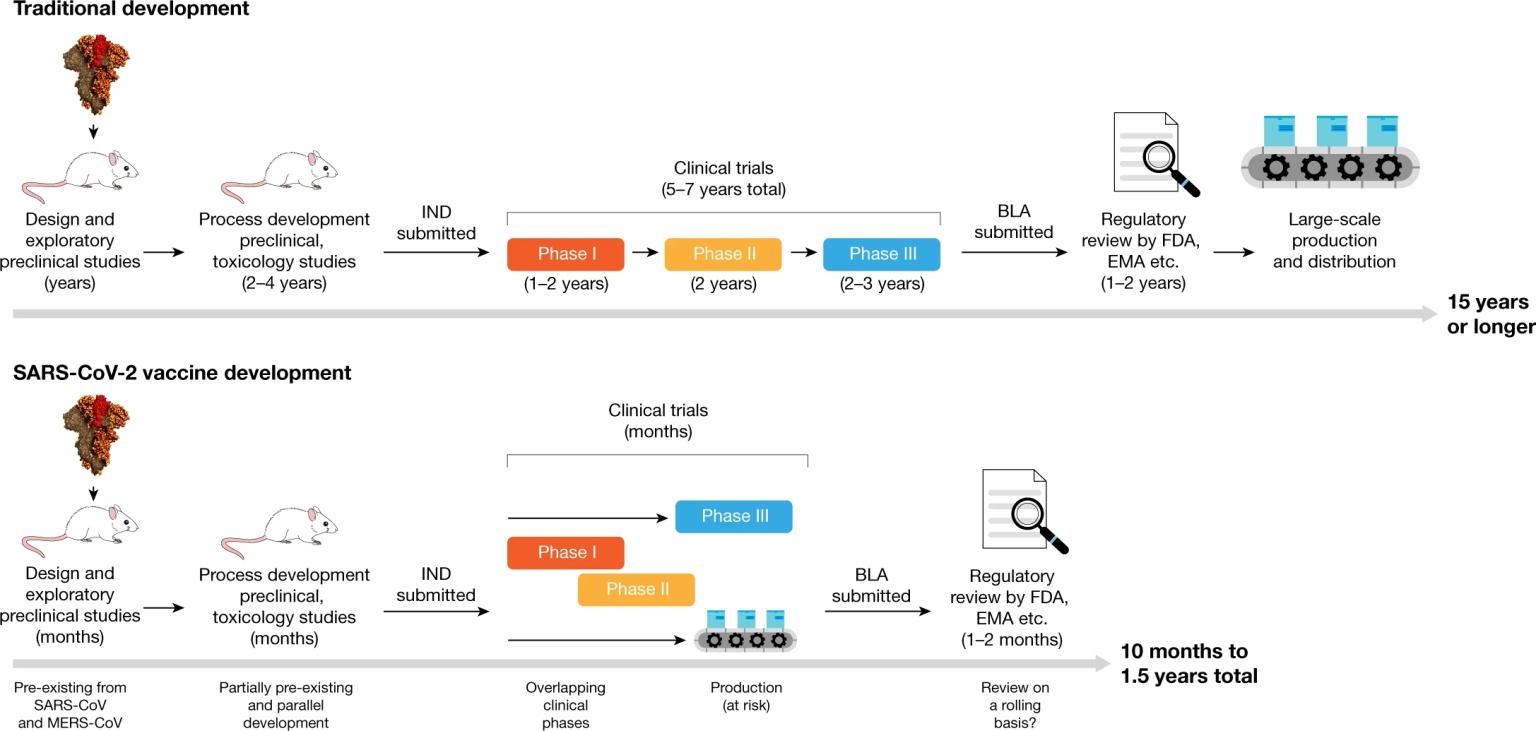
| One of the most popular thread in a project management forum is about predictive and adaptive project management methodologies, and whether only of the two will prevail. Black or white. Sweet or salty. Hot or cold. Like in most things in life, the sweet spot is somewhere in the middle. In this blog, I’d like to scratch the surface of this “dilemma” in the pharmaceutical industry. There are two factors to consider to assess the suitability of a predictive or an adaptive model in order to achieve the project goals: the need for creativity and the speed to market. If these two score low, a predictive model will likely be the best fit. Think of projects like the commissioning and qualification of a new manufacturing line or the implementation of a laboratory information management system. However, projects that require high doses of creativity or are time-to-market constrained fit better in an adaptive model. Think of projects related to the development of new drugs or investigation of new indications for existing products. At the end of the day, most projects are managed following a mix of these models, leaning more towards adaptive or predictive depending on the particularities of the project. The development of a vaccine against covid-19, the disease caused by SARS-CoV-2, is an example of this. On one hand, it was (still is) a project subjected to an enormous pressure. Speed to market scores very high. On the other hand, the steps to conceive, develop, register and mass produce a vaccine do not require creativity and are subjected to a stringent regulation from several regulatory bodies across the globe. The prestigious scientific journal Nature published a very informative infographic that depicts the roadmap for the development and commercialization of SARS-CoV-2 vaccine versus a traditional vaccine (Nature 586, 516–527, 2020). In short, both differ by a factor of 10! Compared to the traditional development, the schedule of SARS-CoV-2 vaccine makes use of two techniques that typically fall under the predictive model: fast tracking – by running clinical phases in parallel instead of sequentially – and crashing – throughout the whole project but more obvious in the assessment phase by the regulatory authorities (from 1 to 2 years to 1 to 2 months!). To summarize: “the best” model or a model that fits all does not exist. In a fast changing world it is crucial to avoid dogmatism and embrace the challenges that present themselves with an open mind. |
Berlin Airport... or The money pit project
| The Sydney Opera House is one of the best-known iconic buildings, recognized around the world as a global symbol of Australia. The project was originally scheduled for four years, with a budget of AUS $7 million. It ended up taking 14 years to be completed and cost AUS $102 million. Yet, it was included in PMI’s 50 most influential projects on basis of “demonstrating architecture’s power to redefine a city”. Time heals all wounds. This saying holds true for a building that was inaugurated 47 years ago. This past 31st of October Berlin Brandenburg airport finally opened its doors. With a delay of 9 years – its completion was originally planned by 2011 – the budget experienced a massive overshoot of 300%. In other words, CPI and SPI got their permanent residency in Land < 1.
Several reasons can be found to explain the enormous delay and skyrocketing costs. The list below captures the most significant.
The failure is such that the family of Willy Brandt – German chancellor after whom the airport is named – requested the authorities to remove his name from the airport. Time will tell whether this airport will be able to bloom in the future, just like it happened to the Opera House. In the meantime, this project can be depicted in the books as an example of what not to do or avoid in order to deliver a successful project. |



