Support to Develop
by Luis Branco

This blog addresses management-related topics and has three areas of focus: 1. Technical skills; 2. Competencies in the field of interpersonal relations and communication (including personal organization and delegation, leadership, teamwork, conflict resolution, conducting meetings, and negotiation); and 3. Strategy (including diagnosis, strategic guidelines, and implementation).4.Technology
Recent Posts
The Contestable Organization
The Self-Reinforcing Organization
What Should Never Be Optimized Away?
What If Organizing Work Is No Longer Primarily a Human Capability?
Where Does Organizational Wisdom Live?
Categories
Agile,
Career Development,
Career Development,
Career Development,
Career Development,
Career Development,
Career Development,
Career Development,
Career Development,
Career Development,
Career Development,
Career Development,
Career Development,
Career Development,
Career Development,
Career Development,
Career Development,
Career Development,
Career Development,
Career Development,
Career Development,
Career Development,
Career Development,
Career Development,
Career Development,
Career Development,
Career Development,
Career Development,
Career Development,
Career Development,
Career Development,
Career Development,
Career Development,
Career Development,
Career Development,
Career Development,
Career Development,
Career Development,
Career Development,
Career Development,
Career Development,
Career Development,
Career Development,
Career Development,
Career Development,
Career Development,
Career Development,
Career Development,
Career Development,
Career Development,
Career Development,
Career Development,
Career Development,
Career Development,
Career Development,
Career Development,
Career Development,
Career Development,
Career Development,
Career Development,
Career Development,
Career Development,
Career Development,
Career Development,
Career Development,
Career Development,
Career Development,
Career Development,
Career Development,
Career Development,
Career Development,
Career Development,
Career Development,
Career Development,
Career Development,
Career Development,
Career Development,
Career Development,
Career Development,
Career Development,
Career Development,
Career Development,
Career Development,
Career Development,
Career Development,
Career Development,
Career Development,
Career Development,
Career Development,
Career Development,
Career Development,
Career Development,
Career Development,
Career Development,
Career Development,
Career Development,
Career Development,
Career Development,
Interpersonal Skills,
Interpersonal Skills,
Interpersonal Skills,
Interpersonal Skills,
Interpersonal Skills,
Interpersonal Skills,
Interpersonal Skills,
Interpersonal Skills,
Interpersonal Skills,
Interpersonal Skills,
Interpersonal Skills,
Interpersonal Skills,
Interpersonal Skills,
Interpersonal Skills,
Interpersonal Skills,
Interpersonal Skills,
Interpersonal Skills,
Interpersonal Skills,
Interpersonal Skills,
Interpersonal Skills,
Interpersonal Skills,
Interpersonal Skills,
Interpersonal Skills,
Interpersonal Skills,
Interpersonal Skills,
Interpersonal Skills,
Interpersonal Skills,
Interpersonal Skills,
Interpersonal Skills,
Interpersonal Skills,
Interpersonal Skills,
Interpersonal Skills,
Interpersonal Skills,
Interpersonal Skills,
Interpersonal Skills,
Interpersonal Skills,
Interpersonal Skills,
Interpersonal Skills,
Interpersonal Skills,
Interpersonal Skills,
Interpersonal Skills,
Interpersonal Skills,
Interpersonal Skills,
Interpersonal Skills,
Interpersonal Skills,
Interpersonal Skills,
Interpersonal Skills,
Interpersonal Skills,
Interpersonal Skills,
Interpersonal Skills,
Interpersonal Skills,
Interpersonal Skills,
Interpersonal Skills,
Interpersonal Skills,
Interpersonal Skills,
Interpersonal Skills,
Interpersonal Skills,
Interpersonal Skills,
Interpersonal Skills,
Interpersonal Skills,
Interpersonal Skills,
Interpersonal Skills,
Interpersonal Skills,
Interpersonal Skills,
Interpersonal Skills,
Interpersonal Skills,
Interpersonal Skills,
Interpersonal Skills,
Interpersonal Skills,
Interpersonal Skills,
Interpersonal Skills,
Interpersonal Skills,
Interpersonal Skills,
Interpersonal Skills,
Interpersonal Skills,
Interpersonal Skills,
Interpersonal Skills,
Interpersonal Skills,
Interpersonal Skills,
Interpersonal Skills,
Interpersonal Skills,
Interpersonal Skills,
Interpersonal Skills,
Interpersonal Skills,
Interpersonal Skills,
Interpersonal Skills,
Interpersonal Skills,
Interpersonal Skills,
Interpersonal Skills,
Interpersonal Skills,
Interpersonal Skills,
Interpersonal Skills,
Interpersonal Skills,
Interpersonal Skills,
Interpersonal Skills,
Interpersonal Skills,
Interpersonal Skills,
Leadership,
Leadership,
Leadership,
Leadership,
Leadership,
Leadership,
Leadership,
Leadership,
Leadership,
Leadership,
Leadership,
Leadership,
Leadership,
Leadership,
Leadership,
Leadership,
Leadership,
Leadership,
Leadership,
Leadership,
Leadership,
Leadership,
Leadership,
Leadership,
Leadership,
Leadership,
Leadership,
Leadership,
Leadership,
Leadership,
Leadership,
Leadership,
Leadership,
Leadership,
Leadership,
Leadership,
Leadership,
Leadership,
Leadership,
Leadership,
Leadership,
Leadership,
Leadership,
Leadership,
Leadership,
Leadership,
Leadership,
Leadership,
Leadership,
Leadership,
Leadership,
Leadership,
Leadership,
Leadership,
Leadership,
Leadership,
Leadership,
Leadership,
Leadership,
Leadership,
Leadership,
Leadership,
Leadership,
Leadership,
Leadership,
Leadership,
Leadership,
Leadership,
Leadership,
Leadership,
Leadership,
Leadership,
Leadership,
Leadership,
Leadership,
Leadership,
Leadership,
Leadership,
Leadership,
Leadership,
Leadership,
Leadership,
Leadership,
Leadership,
Leadership,
Leadership,
Leadership,
Leadership,
Leadership,
Leadership,
Leadership,
Leadership,
Leadership,
Leadership,
Leadership,
Leadership,
Leadership,
Leadership,
Strategy,
Strategy,
Strategy,
Strategy,
Strategy,
Strategy,
Strategy,
Strategy,
Strategy,
Strategy,
Strategy,
Strategy,
Strategy,
Strategy,
Strategy,
Strategy,
Strategy,
Strategy,
Strategy,
Strategy,
Strategy,
Strategy,
Strategy,
Strategy,
Strategy,
Strategy,
Strategy,
Strategy,
Strategy,
Strategy,
Strategy,
Strategy,
Strategy,
Strategy,
Strategy,
Strategy,
Strategy,
Strategy,
Strategy,
Strategy,
Strategy,
Strategy,
Strategy,
Strategy,
Strategy,
Strategy,
Strategy,
Strategy,
Strategy,
Strategy,
Strategy,
Strategy,
Strategy,
Strategy,
Strategy,
Strategy,
Strategy,
Strategy,
Strategy,
Strategy,
Strategy,
Strategy,
Strategy,
Strategy,
Strategy,
Strategy,
Strategy,
Strategy,
Strategy,
Strategy,
Strategy,
Strategy,
Strategy,
Strategy,
Strategy,
Strategy,
Strategy,
Strategy,
Strategy,
Strategy,
Strategy,
Strategy,
Strategy,
Strategy,
Strategy,
Strategy,
Strategy,
Strategy,
Strategy,
Strategy,
Strategy,
Strategy,
Strategy,
Strategy,
Strategy,
Strategy,
Strategy,
Sustainability,
Talent Management,
Talent Management,
Talent Management,
Talent Management,
Talent Management,
Talent Management,
Talent Management,
Talent Management,
Talent Management,
Talent Management,
Talent Management,
Talent Management,
Talent Management,
Talent Management,
Talent Management,
Talent Management,
Talent Management,
Talent Management,
Talent Management,
Talent Management,
Talent Management,
Talent Management,
Talent Management,
Talent Management,
Talent Management,
Talent Management,
Talent Management,
Talent Management,
Talent Management,
Talent Management,
Talent Management,
Talent Management,
Talent Management,
Talent Management,
Talent Management,
Talent Management,
Talent Management,
Talent Management,
Talent Management,
Talent Management,
Talent Management,
Talent Management,
Talent Management,
Talent Management,
Talent Management,
Talent Management,
Talent Management,
Talent Management,
Talent Management,
Talent Management,
Talent Management,
Talent Management,
Talent Management,
Talent Management,
Talent Management,
Talent Management,
Talent Management,
Talent Management,
Talent Management,
Talent Management,
Talent Management,
Talent Management,
Talent Management,
Talent Management,
Talent Management,
Talent Management,
Talent Management,
Talent Management,
Talent Management,
Talent Management,
Talent Management,
Talent Management,
Talent Management,
Talent Management,
Talent Management,
Talent Management,
Talent Management,
Talent Management,
Talent Management,
Talent Management,
Talent Management,
Talent Management,
Talent Management,
Talent Management,
Talent Management,
Talent Management,
Talent Management,
Talent Management,
Talent Management,
Talent Management,
Talent Management,
Talent Management,
Talent Management,
Talent Management,
Talent Management,
Talent Management,
Talent Management
Date
| 
Complementary post to Pillar 5 – Purpose & Impact
This post was inspired by a thoughtful reflection from a reader of this series, who wrote:
“Creating effect is not a by-product but the result of intentional design, governance, and alignment with values.”
That phrase stayed with me — because it says everything.
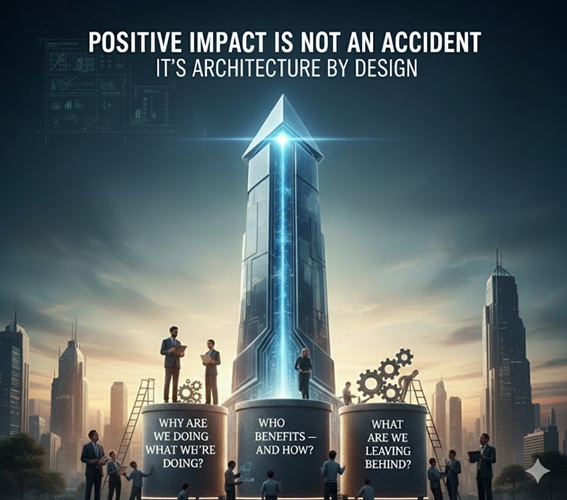
Positive impact is not luck. It’s architecture by intention.
That’s why I developed the Positive Impact by Design™ framework:
A practical model to help leaders and PMOs align action with legacy from the very beginning, based on three essential questions:
- Why are we doing what we’re doing?
- Who benefits — and how?
- What are we leaving behind?
Across the projects I’ve supported (from industrial innovation to institutional transformation) I’ve seen that the earlier purpose is integrated into project design, the greater the clarity, alignment and stakeholder support.
This approach aligns with leading frameworks such as:
- PMBOK® 7th Edition (focus on value delivery)
- PMO Practice Guide (adaptive governance)
- GPM P5 Standard (balancing people, planet and prosperity)
Because leading a project is not just about delivering scope.
It’s about architecting meaningful impact by design.
In your context: is impact an outcome of intention or just a by-product?
This post is part of the series The 11 Keys to Regenerative Leadership
|
Posted on: September 26, 2025 10:53 AM
|
Permalink |
Comments (2)
| 
This is the fifth post in the series “The 11 Keys to Regenerative Leadership”
Leading with purpose is not about having a beautiful sentence on the wall.
It’s about aligning action with legacy, every day.
In regenerative leadership, purpose is not an abstract idea.
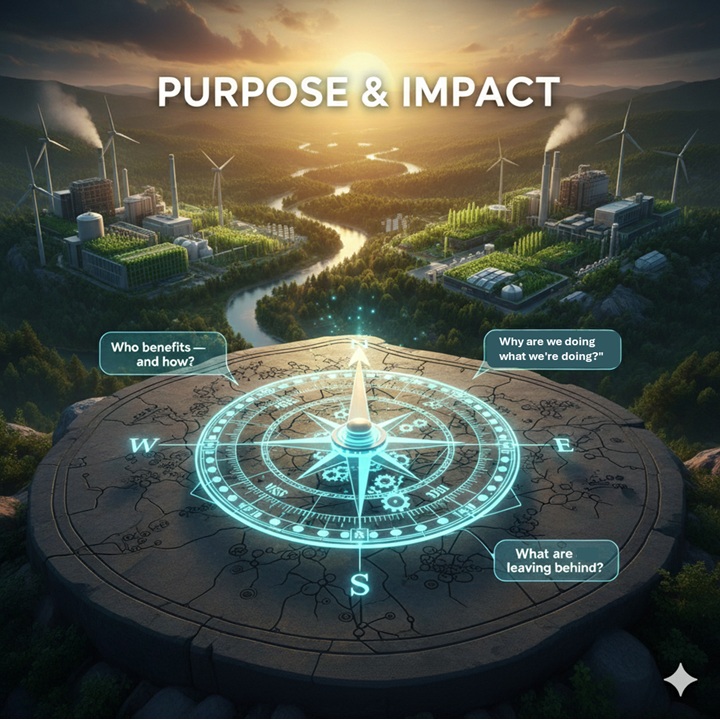
It’s a practical compass that guides decisions, mobilizes teams, and measures impact beyond short-term results.
That’s why I developed the Positive Impact by Design™ framework, a model that helps leaders and organizations intentionally design impact, using three essential questions:
- Why are we doing what we’re doing?
- Who benefits — and how?
- What are we leaving behind?
Practical example:
In an industrial organization, we used this model to reassess an investment project.
Instead of focusing only on financial ROI, we began measuring:
- Social value created
- Environmental contribution
- Perceived impact from local stakeholders
The result: greater clarity, stronger internal support, and a decision with regenerative legitimacy.
This framework also resonates with Stephen R. Covey’s four dimensions of human nature:
- Spiritual (purpose and legacy)
- Mental (clarity of intention)
- Emotional/social (shared benefit)
- Physical (real and sustainable impact)
Leading with purpose is not just a strategic choice.
It’s an integrated response to who we are, what we do, and what we leave behind.
And in your context: is purpose truly guiding impact or just decorating the mission statement?
This post is part of the series The 11 Keys to Regenerative Leadership
|
Posted on: September 24, 2025 09:06 AM
|
Permalink |
Comments (0)
| 
Collaboration is not just a cultural issue.
It’s also a matter of capital.
This week, a comment caught my attention:
“In M&A, I often see how collaboration between owners and managers directly impacts the transaction value: either the company demonstrates maturity and transparency, or internal conflicts destroy its capitalization. True partnership is born where shared decisions are valued over slogans.”
This idea touches on a critical point in regenerative leadership:
Collaboration creates value — not just symbolic value, but real value.
Collaboration as an Intangible Asset
In mergers and acquisitions, collaborative culture is far from invisible.
It reveals itself in:
- Alignment between ownership and management
- Maturity in conflict resolution
- Clarity in shared decision-making
- Relational stability and projected trust
All of this directly affects valuation, either raising the company’s value or undermining its credibility.
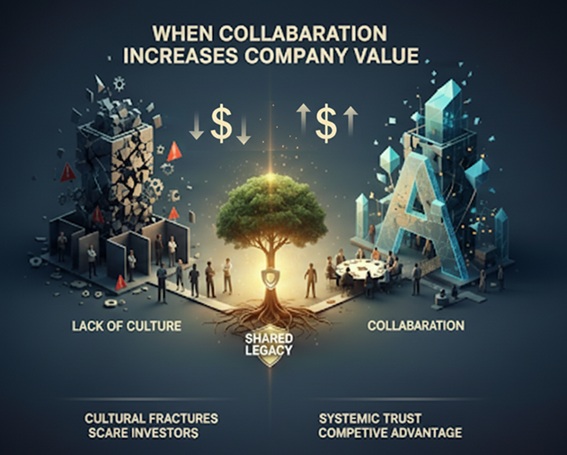
When Lack of Culture Reduces the Price
I’ve seen promising companies lose value because:
- They operate in silos and internal power struggles
- Management hides weaknesses instead of exposing them with transparency
- Leadership centralizes decisions instead of co-creating paths with their teams
The result?
During due diligence, cultural fractures emerge, scaring off investors and lowering acquisition interest.
Regenerative Leadership as a Value Strategy
A truly collaborative culture — not a decorative one — contributes to:
- Visible organizational maturity
- Relational stability that reduces risk
- Systemic trust as a competitive advantage
- A shared legacy, ready for sustainable transitions
In summary:
Collaboration creates value inside and outside the organization.
What starts as internal culture can become a strategic advantage in a multimillion-dollar deal.
Reflection question:
In your experience, how has internal culture influenced the real value of an organization whether to grow, attract investment, or prepare for a transition?
This post is part of the series The 11 Keys to Regenerative Leadership
|
Posted on: September 22, 2025 10:45 AM
|
Permalink |
Comments (4)
| 
Leadership that listens, co-creates, and transforms teams
What many still see as a “soft ideal” is, in fact, a high-impact strategy in real-world projects.
This post was inspired by a comment shared on the previous article in the series — “The Time for Regenerative Collaboration.”
In that comment, a professional shared a concrete example of how trust, active listening, and shared purpose led to sustainable results in complex projects, such as:
- Student housing developments
- Healthcare infrastructure
- Agile, multidisciplinary initiatives
Collaboration as a strategy in complex environments
In agile, collaborative, and highly interdependent contexts, collaboration is not a luxury — it's a requirement for real value creation.
Especially when:
- There are multiple stakeholders
- The impact is social and human
- The context demands constant adaptation
Regenerative collaboration provides the relational structure needed to act with clarity, even in high-uncertainty environments.
Leading without controlling: what changes in practice
This kind of collaboration requires a different kind of leadership.
Less hierarchy. More listening.
Less command. More co-creation.
It requires leaders who can:
- Listen before deciding
- Co-create instead of imposing
- Prioritize shared value over defending status or control
Visible results - not just desirable intentions
When these principles are applied:
- Teams become more engaged
- Decisions gain collective legitimacy
- Conflicts are handled with maturity
- Impact goes beyond delivery - it transforms relationships, communities, and institutions
In summary:
Regenerative collaboration is not a soft aspiration.
It is a concrete strategy that generates lasting results in environments where complexity, pressure, and responsibility coexist every day.
What about your experience?
- Have you worked in contexts where listening and co-creation made a real difference?
- What changes when leadership is exercised with empathy and trust, instead of control?
Share your experience in the comments or tag someone who knows how to lead with presence.
This post is part of the series The 11 Keys to Regenerative Leadership
|
Posted on: September 19, 2025 10:24 AM
|
Permalink |
Comments (2)
| 
This post was born from a comment shared on the previous article:
“The Time for Regenerative Collaboration - Why Culture Cannot Be Built in a Rush”
In that response, a reader brought forward a vital perspective:
The role of pauses and reflection in building a collaborative culture that endures.
Regenerative collaboration does not live on action alone.
It breathes through pauses — and flourishes through continuity.
Many teams confuse rhythm with urgency.
They believe collaborating well means staying constantly active and moving forward.
But the truth is: continuous action can exhaust more than it builds.
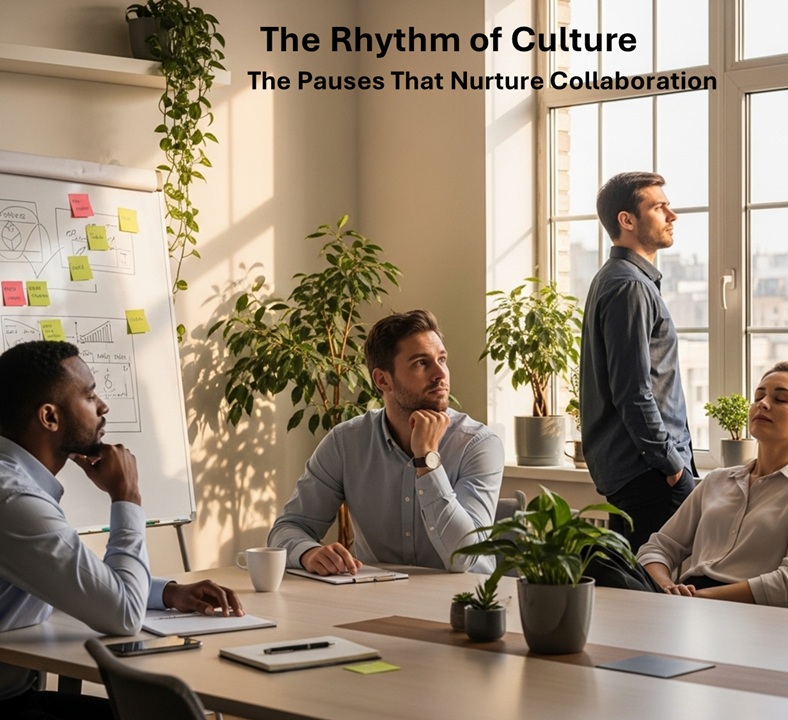
Pauses are not interruptions.
They are part of the regenerative rhythm.
Culture is not built in urgency.
It is cultivated through cadence.
And cadence includes pauses.
Intentional pauses are not wasted time.
They are moments of integration, realignment, and collective maturation.
Without them, a team may produce but it won’t deepen what it’s living.
What pauses allow:
- Consolidating learning before moving forward
- Letting shared meaning emerge naturally
- Establishing a common language
- Grounding the trust built through difficult moments
- Realigning intentions before defining new actions
Without pauses, there is movement.
With pauses, there is meaning.
What transforms collaboration into a living culture is not speed - it is awareness of the journey.
And that includes knowing when to stop, listen, integrate, and breathe.
In your experience:
- What regenerative practices help turn rhythm into culture?
- Does your team create real spaces for pause and integration?
Share your insights or tag someone who cultivates culture with patience and presence.
Special thanks
To the comment that inspired this post, which read:
“Collaboration also needs pauses and reflection... Pauses create space for meaning to evolve, for shared language to emerge, and for trust to settle more deeply.”
That sentence became the seed of a new chapter in this journey.
This post is part of the series The 11 Keys to Regenerative Leadership
|
Posted on: September 17, 2025 09:43 AM
|
Permalink |
Comments (1)
|
You suffer for your soup.
- Kramer
|




