


Categories: product management
I don’t know about you, but it sometimes feels as if me, and my project management colleagues, are already doing some product work. If you’re a project manager but have ended up pigeonholed in a particular software environment, or you’re attached to an agile team or unit, then you might find that a lot of your work centres around one product (or a few).
 hat can feel quite unsettling, and several times on mentoring calls project manager have asked me if it’s normal that they are doing work that could feasibly be considered as BAU. I think, the answer is yes. The job title might lag behind reality, but in practice, there could be a bit of merging of roles if that is what the company needs. Whether that makes it a ‘proper’ project management job? The jury is still out on that one.
 Project managers can drift into product roles because they are on long-life teams with continuous delivery models. There’s a focus on outcomes over outputs, so you’re naturally thinking in business terms, value and benefits. There are iterative deliveries and the work never seems to end. All these factors feed into making the job feel like it’s a long-term product delivery role, instead of a traditional ‘work on a project, close it and move to the next’ type role.
And that might suit some people who want to build subject matter expertise, and who enjoy working with the same team and technology. There’s certainly nothing to worry about if this is how your project management role has ended up (as long as that fits with your career plans).
We all know that a project is defined by a distinct time horizon. It will have measures of success and relationship to customers and users (as a product role would have). Projects have funding and prioritisation, and product roles will need to work within those parameters as well.
If you’re keen on product management, then that gentle shift could be a great move for you. There are a lot of project management skills that translate well into a Product Owner role. Like stakeholder facilitation, risk and dependency management, structured decision-making and communication under uncertainty – all these things will put you in a good position to be able to make smart product-led choices, whether it is formally part of your role or not.
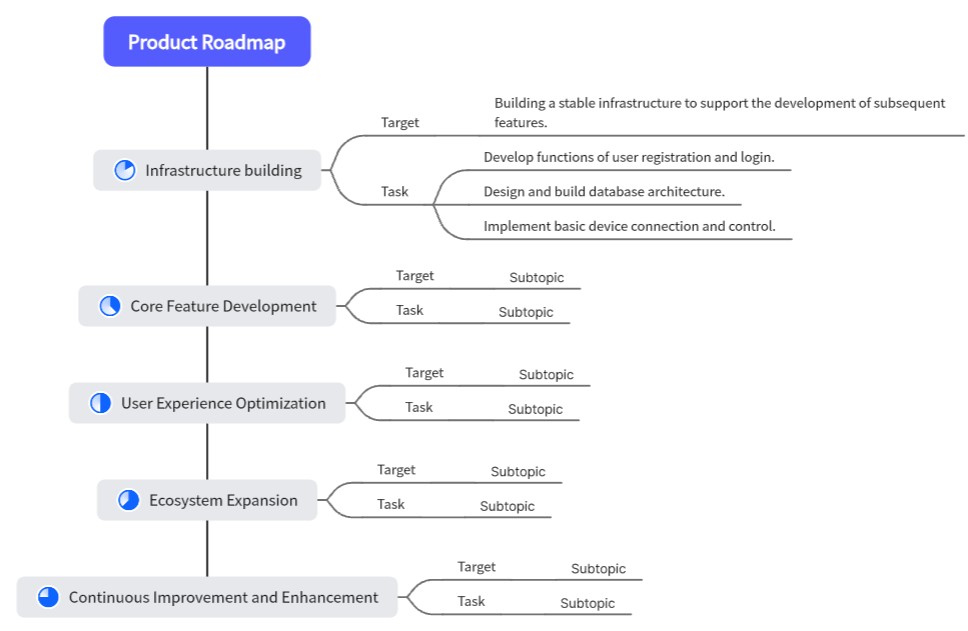
If you do want to make the shift more permanent, it would help to develop some skills in value framing for those stakeholder conversations, being able to work with a hypothesis and being comfortable testing things out, and definitely living with ambiguity. You’ll also need to be comfortable feeling like you can put together a product roadmap, like the (very simple and incomplete) one I've shared above as an example.
In my experience, project managers tend to be a little bit more comfortable living with control, and you might find a product role naturally has less of that, but it depends.
Product thinking can make us valuable as project managers, even if you are working alongside a Product Owner or team, because it helps us empathise with stakeholders. It’s an extension of what you do and you can adopt that product-based mindset without changing your job. And then, if you want to shift roles, it could be quite a straightforward shift.
What do you think? Does your project management role include elements of product-based work, especially where there isn’t a Product Owner in post yet? Let me know in the comments!
Posted on: May 04, 2026 12:00 AM |
Permalink



