


How real PM mentoring actually works
Categories:
Mentoring
Categories: Mentoring


| Does your organisation have a mentoring scheme? Some companies have schemes where they match individuals to mentors. Others publish mentoring ‘packs’ or training information so individuals can work it out between themselves, but within the guidance and expectations of the Learning & Development Team. The trouble with formal schemes – in my view – is that they make it hard to sustain meaningful mentoring relationships, and it’s not because of motivation, it’s part of the design. Formal mentoring can stallIf your company has a structured scheme, you might find it takes ages to be matched with someone, because normally there are more people wanting a mentor than there are mentors to go round. The mentor matching process is structured and that puts a big burden on the HR team to do the matching. Plus, you might end up with someone with whom you don’t ‘click’. In a formal scheme, it feels like there is pressure to ‘add value’ and show that to be the case. Mentoring in practiceWhat mentoring looks like in practice is short, focused conversations. It’s those calls when a colleague rings you and asks for a second opinion. It’s context-specific advice, often between peers. It’s you sharing some insight with your manager (reverse mentoring) and informal check ins when you know a colleague has had a hard day. As project managers, we mentor all the time, probably without thinking much about it. Any time you’ve said, “I know where that policy is, let me show you,” or, “Here’s how to raise that request, I know because I did it last week,” that’s mentoring.
|
 Mentoring without burning out
Posted on: May 11, 2026 12:00 AM
| Permalink |
Comments (2)
The Accidental Product Manager: What project managers need to know
Categories:
product management
Categories: product management
I don’t know about you, but it sometimes feels as if me, and my project management colleagues, are already doing some product work. If you’re a project manager but have ended up pigeonholed in a particular software environment, or you’re attached to an agile team or unit, then you might find that a lot of your work centres around one product (or a few).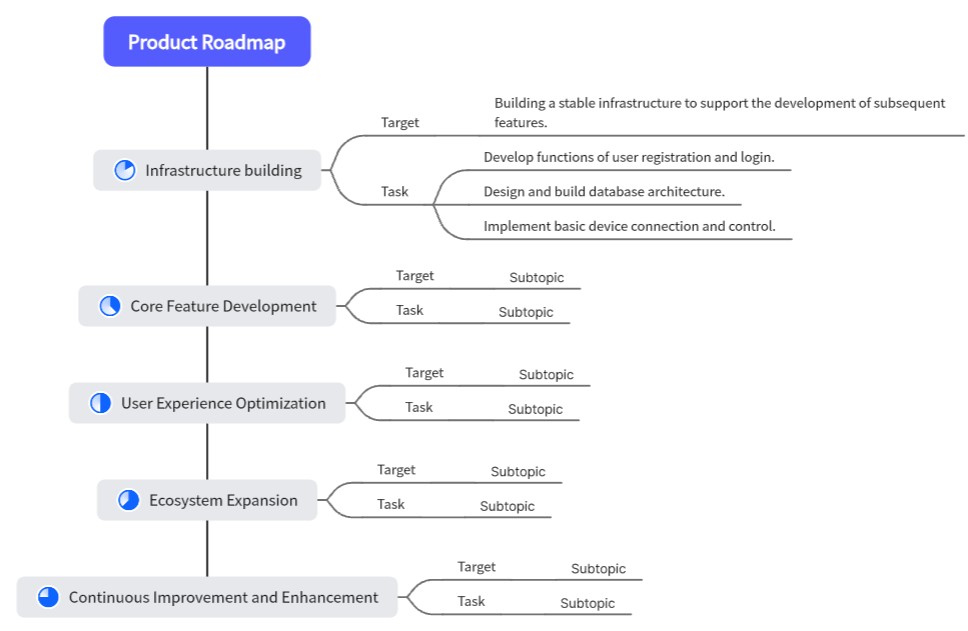 hat can feel quite unsettling, and several times on mentoring calls project manager have asked me if it’s normal that they are doing work that could feasibly be considered as BAU. I think, the answer is yes. The job title might lag behind reality, but in practice, there could be a bit of merging of roles if that is what the company needs. Whether that makes it a ‘proper’ project management job? The jury is still out on that one. hat can feel quite unsettling, and several times on mentoring calls project manager have asked me if it’s normal that they are doing work that could feasibly be considered as BAU. I think, the answer is yes. The job title might lag behind reality, but in practice, there could be a bit of merging of roles if that is what the company needs. Whether that makes it a ‘proper’ project management job? The jury is still out on that one. Project managers can drift into product roles because they are on long-life teams with continuous delivery models. There’s a focus on outcomes over outputs, so you’re naturally thinking in business terms, value and benefits. There are iterative deliveries and the work never seems to end. All these factors feed into making the job feel like it’s a long-term product delivery role, instead of a traditional ‘work on a project, close it and move to the next’ type role. And that might suit some people who want to build subject matter expertise, and who enjoy working with the same team and technology. There’s certainly nothing to worry about if this is how your project management role has ended up (as long as that fits with your career plans). We all know that a project is defined by a distinct time horizon. It will have measures of success and relationship to customers and users (as a product role would have). Projects have funding and prioritisation, and product roles will need to work within those parameters as well. If you’re keen on product management, then that gentle shift could be a great move for you. There are a lot of project management skills that translate well into a Product Owner role. Like stakeholder facilitation, risk and dependency management, structured decision-making and communication under uncertainty – all these things will put you in a good position to be able to make smart product-led choices, whether it is formally part of your role or not. If you do want to make the shift more permanent, it would help to develop some skills in value framing for those stakeholder conversations, being able to work with a hypothesis and being comfortable testing things out, and definitely living with ambiguity. You’ll also need to be comfortable feeling like you can put together a product roadmap, like the (very simple and incomplete) one I've shared above as an example. In my experience, project managers tend to be a little bit more comfortable living with control, and you might find a product role naturally has less of that, but it depends. Product thinking can make us valuable as project managers, even if you are working alongside a Product Owner or team, because it helps us empathise with stakeholders. It’s an extension of what you do and you can adopt that product-based mindset without changing your job. And then, if you want to shift roles, it could be quite a straightforward shift. What do you think? Does your project management role include elements of product-based work, especially where there isn’t a Product Owner in post yet? Let me know in the comments! |
Posted on: May 04, 2026 12:00 AM
| Permalink |
Comments (1)
How healthy are your project finances?
Categories:
financial management
Categories: financial management
| OK, we’re part way through the year and the reforecasting is already upon us! Unless your budgets have been managed to the penny and everything is on track, chances are you are probably facing some reforecasting for the remainder of the year. In my experience, many project managers are accountable for budgets but lack confidence in financial health – it’s one of the things I talk to project managers about in my mentoring calls a lot. But the thing is that financial problems rarely appear suddenly. They creep in quietly, in a little overspend here or there, or a supplier delay that doesn’t feel like a lot until it’s pushed your spend into next month and you’re dealing with accruals. So April is an ideal moment for a quick, painless financial health check before issues harden into forecasts. |

Posted on: April 23, 2026 10:00 AM
| Permalink |
Comments (3)
Is it time to rethink your PM career path?
Categories:
Career Development
Categories: Career Development
| There’s something about spring that makes me want to rethink everything – maybe it’s the fact that everything seems to be renewed, I know this is not an original thought! What it means for us at work is that I am hearing a lot of people talking about taking a moment to think about their career. Especially for those of us who are slightly older, we don’t want to end up with career drift instead of career choice. We want career moves to be meaningful and part of a rounded picture for the direction we want to take, instead of simply floating into the next role because it’s offered. Staying busy is good, but not at the expense of ending up somewhere you never expected to go. But it’s difficult to ‘plan’ your careerThe trouble with career reassessment exercises, or even a simple reflection on a Friday night with your favourite drink, is that the project management culture values resilience and ‘pushing through’. We are the doers, the people who drive change and get things done. Yes, there is of course space for lessons learned and reflection in the role, but there is a worry about appearing uncommitted if you are actively talking about career reflection and whether or not you are in the right place. It’s the conversation we need to have outside of our immediate line management team or colleagues because you never know, it might not come to anything. Also, I think in project management there is a lack of clear alternative paths. Unless you are up for taking larger and more strategically important (and therefore stressful projects), where do you go? What’s right for you?Think about these questions: What work energises me now? What work drains me? Where am I adding the most value? And then think about your skills: What skills am I underusing? What do I want less of? The GROW Model is a good starting point as well. It stands for:
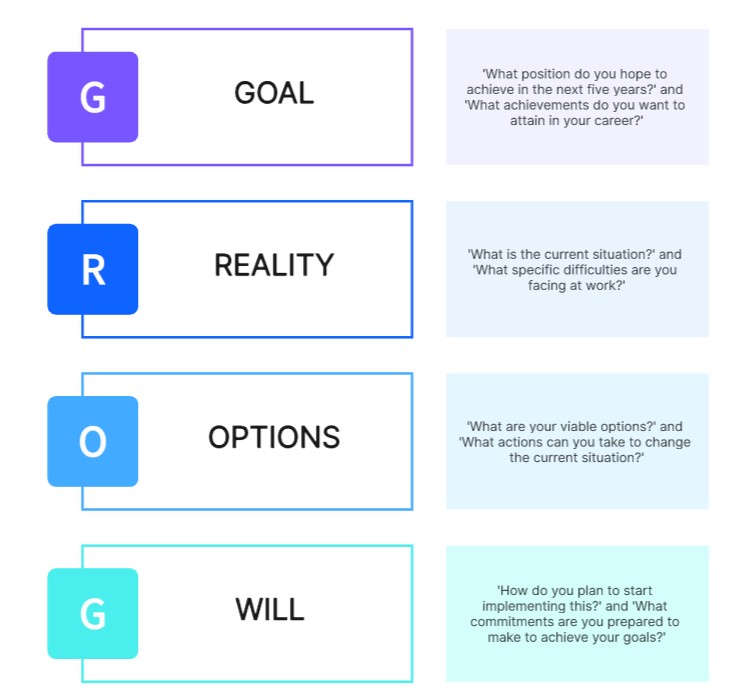 I know a lot of people are low-level job hunting for a portion of their time and if the perfect job came up, they’d jump ship. So you need to know what you are looking for in case it falls in your lap. I know a lot of people are low-level job hunting for a portion of their time and if the perfect job came up, they’d jump ship. So you need to know what you are looking for in case it falls in your lap. Where could you go?There are lots of job titles now that are PM-adjacent including:
Chat to your mentorIf you have a mentor, this is exactly the kind of thing your mentoring relationship is for. You should be able to talk to them informally, in confidence, about what you are thinking with regards to your current role. And any future role you might have in mind. They are not decision-makers in your life, but they will have an interesting perspective and can probably share some of their own thoughts from their career choices. If you don’t have a mentor, there are probably colleagues you trust, or friends or family members you could discuss with, or even type your thoughts into ChatGPT or Copilot (but take the output with a pinch of salt!). Career reflection is something we should all be doing because time passes quickly, and you want to steer your ship in the right direction for you. Don’t get me wrong, that direction is likely to change over time, but it’s better to have a loose plan than no plan at all. And project managers are great at planning, right? |
Posted on: April 13, 2026 08:00 AM
| Permalink |
Comments (4)
A Change Manager’s guide to spring resets
Categories:
Teams
Categories: Teams
| We’ve had the delivery pressure of Q1 and now April is here! Where I am in the northern hemisphere that means we are starting to see warmer weather and everything feels lighter and nicer, and that includes work. Somehow, it’s not so hard to get through the back to back meetings when the sun is shining outside the office window. April is a bit a breather after the struggle to get through Q1, but it also comes with the pressure of knowing that a big chunk of the year has already gone. So here’s what to do – don’t panic! Many teams push on instead of pausing to recalibrate, that doesn’t have to be you. You can pause here, regroup after the first three months of the year and think about what intentional change you want to manage for your team. Let’s start with the signs to look out for.  Warning signsLook out for change fatigue showing up as disengagement or cynicism – people who roll their eyes when you talk about the plans for the year. Another thing to put on your worry list is multiple initiatives competing for the same attention. There’s only so much change an organisation can deal with at any one time, and if you failed to land some biggies in Q1, that has just squeezed the change window into the remaining nine months. Talk to the PMO or project leaders and get a sense of how they are feeling, are they OK to pause if they need to, or are we into the “Everything is priority one” syndrome? How to resetAs a change manager, you have the power to help teams reset. It doesn’t mean stopping all the work or rebranding problems as “opportunities”. It’s about clarifying priorities for the rest of the year, the pace and the purpose. It’s about explaining what teams can manage to take onboard and resetting expectations with stakeholders. Practical reset opportunitiesI know I’ve used the word ‘opportunity’ there, but I don’t mean it negatively, I promise! Here are 5 things you could do if you know your teams are struggling and we’ve still got a lot of the year left to go. Pause low-value change activity. Can it wait? Does it have to be done at all? There might be some things you can take off people’s plates that everyone will benefit from. Reconfirm what success looks like now. Success might look different now to what it did when you first set these targets. Maybe you need a bit more benchmarking, or maybe other projects have shifted the art of the possible so you can set more challenging targets. Simplify governance temporarily. I am not going to make any friends for saying that, but it will make a difference! Ditch what you can. Talk to stakeholders. Remind them why you do what you do. Talk to them about expectations and how they sit within the wider programme of change across the organisation. Just because they have expectations doesn’t mean you can meet them, and it’s better to get that out in the open now rather than closer to the delivery date. Give teams psychological permission to say “this isn’t working”. We had a long talk in my team about psychological safety at the start of the year, and it’s something we’re actively working on. Assess how your teams are feeling and what you can do to make it safer and easier for them to express concerns in a way that is listened to (and feels listened to). As a change manager, you have the option to lead in a calm, considered way, it’s a leadership choice. We don’t need panic, and project managers are the same. We should be the stabilising influence on the team, even when everything is changing around us. We don’t just drive the change, we help people through it, and that’s a real skill. |
Posted on: April 06, 2026 05:00 AM
| Permalink |
Comments (3)


