

 However in some cases it was the process of doing the review was the most useful. The interview forced the project team to defend what was happening and therefore helped them uncover what was indefensible.
 "We should have seen it coming."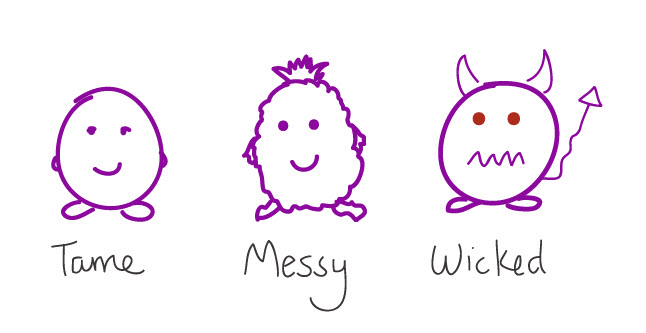
 For a book with ‘risk leadership’ in the title, the discussion about this doesn’t start until the book’s conclusion. In fact, there is only about two pages worth of explanation about risk leadership, and I felt short-changed.
 What time is it?
 I was at the


Guessing is not a strategy: How to build decision velocity with AI and real-time data
June 10, 2026 | Live Webinar

Who really owns the project budget? Clarifying financial accountability
How to learn AI the sensible way
Making sense of project cost reports
How real PM mentoring actually works
The Accidental Product Manager: What project managers need to know
accounting, agile, ai, appraisals, Artificial Intelligence, audit, Backlog, Benchmarking, benefits, Benefits Management, Benefits Realization, Bias, books, budget, Business Case, business case, business case, Career Development, Career Development, carnival, case study, Change Management, checklist, collaboration tools, communication, Communications Management, competition, complex projects, Conferences, config management, consultancy, contingency, contracts, corporate finance, corporate finance, cost, Cost Management, cost management, credit crunch, CRM, data, data security, debate, Decision Making, delegating, digite, earned value, Education, Energy and Utilities, Estimating, events, FAQ, financial management, financial management, forecasting, future, GDPR, general, Goals, Governance, green, Information Technology, Innovation, insurance, interviews, it, Knowledge Management, Leadership, Lessons Learned, measuring performance, Mentoring, merger, methods, metrics, multiple projects, negotiating, Networking, news, Olympics, organization, Organizational Culture, outsourcing, personal finance, Planning, pmi, PMO, PMO, Portfolio Management, portfolio management, presentations, privacy policy, process, procurement, product management, productivity, Program Management, project closure, project data, project delivery, Project Success, project testing, prototyping, qualifications, Quality, quality, Quarterly Review, records, recruitment, reports, requirements, research, resilience, Resource Management, resources, risk, Risk Management, ROI, salaries, Schedule Management, Scheduling, scope, Scope Management, security, small projects, Social Impact, social impact, social media, software, software, software, Stakeholder Management, stakeholders, Strategy, success factors, supplier management, team, Teams, testing, testing, timesheets, tips, training, transparency, trends, value management, vendors, video, virtual teams, workflow


| At the PMI Global Congress EMEA in Dublin last month Terry Williams spoke about his research into early warning signs on complex projects. Last week I wrote about what causes problems on projects. One of the things his research team considered was the role that external reviews have to play in uncovering those problems. External reviews at all points in the project are useful. These provide a sense of legitimacy; comfort that you are doing the right thing. However, they need to be well focused, with guidelines. And of course it is not enough just to do a review and create a list of issues: issues have to be acted on as well.
Having to justify the decisions made the project team question them and this process was identified as a good tool for flagging where things were going wrong. Barriers to identifying early warning signsYou may expect warning signs to be successfully identified and dealt with in an environment where gut feel is taken seriously and reviews are carried out. But it is not like that everywhere. Terry also shared some of the barriers to identifying early warning signs in projects. Here are some:
I am not a big fan of organisational politics, and I often wish we could cut through the hidden agendas and just get things done. However, fast tracking projects through politics means you don't have time to assess early warning signs, Terry said. What are the early warning signs?As a result of their research the team was able to make lists of typical early warning signs by project stage. These are helpful guidelines for people doing project reviews - pointers for what to be looking for. The lists included: During project set up
In early stages of project
During project execution stage
Do you do project reviews? If so, have you spotted any of these warning signs or any other signs that things might not be going to plan? |
|
Have you ever said that or felt that on a project? Terry Williams spoke about his research into early warning signs on complex projects at the PMI Global Congress EMEA in Dublin recently. The researchers looked at how successful project assessments are in uncovering the warning signs that something is going wrong on the project. They set out to discover what the most important early warning signs are, and what to look for in different contexts. Terry specifically focused on complex projects. "A complex project is one where you don't understand how the inputs generate the outputs," he said. The team went in to 14 organisations and interviewed people about what went wrong in their complex projects. The issues they asked about included: • Political processes and reasons for projects • Business case • Risks and opportunities • Stakeholders • How you learn lessons from other projects, and the difference between lessons identified and lessons learned. This last point was interesting. A public sector project lessons learned report included the advice that future projects needed a strong leader. That's not rocket science. But when the researchers dug into the reasons why the lack of leadership had been an issue on this project they found out all the political reasons behind it, which is much more useful. Understanding the context and the narrative around the lessons is helpful, Terry said. He cited the NASA lessons learned database which I also refer people to when I give talks - it is a great example of managing organisational knowledge. What causes the problems?Problems on projects are caused by all kinds of things, and the researchers uncovered some common themes: • Overly ambitious plans • Development of new technology • Difficulty of stopping projects when they have gathered steam. • Complexity • People in senior roles forgetting what managing projects is like as they have moved to levels in the organisation where they have no recent relevant operational experience • Group-think Then they took a step back and looked at what warning signs came before these problems. The researchers saw that early warning signs include 'gut feel' and non-verbal, people-related issues. "Early warning signs may be evident from people's behaviour," Terry said. Unfortunately, project managers and executives don't always pick up on these signs, or know what to do if they notice them. And the more complex the project, the more likely they are to ignore them. Half of the companies taking part in the research distinguished what a complex project was. They had guidelines set by the company specifying what 'complex' meant for them. "We got this feeling that people doing complex projects define more things to look at and this takes away reliance on gut feel," Terry explained. "The more complicated guidance distracted you from using gut feel." The more structured and complicated the organisational structure, the harder it is to allow soft interpretations of concerns.
Next time I’ll be looking at the value of using external reviews to assess early warning signs on complex projects. |
| Things are always going wrong. No matter how hard we try to keep everything under control, something will always happen to mess up our hard work. Now I’ve read David Hancock’s book, Tame, Messy and Wicked Risk Leadership, I wonder if I shouldn’t be blaming everyone else for messing up, but myself. Hancock presents the view that actually the world is a lot more complicated than our traditional risk management models can cope with. He argues that we should be looking to the worlds of sociology, philosophy and politics to establish new ways of interacting with risk.
We need to do this because the equation risk = likelihood x consequence only works when the risk is as a result of a knowledge gap. Get more information, analyse it, and you can reduce the risk. Sometimes all the knowledge in the world won’t help you reduce the risk. He says: Yesterday’s response to a given set of circumstances is only a hint of what tomorrow’s response to that set of circumstances will be and, in any case, today’s circumstances will never reappear tomorrow precisely as they were today. So we really do not know what the future holds. Risk in our world is nothing more than uncertainty about the decisions that other human beings are going to make and how we can best respond to those decisions. Much of what Hancock describes is most applicable to large, complex projects with multiple stakeholder groups, like public sector initiatives. He uses examples from transport (he was responsible for the risk management system for the Heathrow Terminal 5 Project) and space exploration to give you an idea of the scale. When you are dealing with projects this big, he says it no longer makes sense to split risk management across different functions or initiatives. We need to address the total uncertainty facing an organisation, in any instant, and how risks correlate, before we can take responsible action. He goes on to explain this in action by giving an explanation of the recent financial collapse – with clarity that rivals Robert Peston’s headline-grabbing approach. Tame, Messy and WickedMost of the book is taken up with explaining what tame, messy and wicked problems are all about. Here’s a summary: Tame problems: these have “simple, linear causal relationships that have clear beginning and end points.” The traditional approach to risk management works for these. You gather data, analyse the situation, formulate a mitigation plan and then implement your plan. Messy problems: these are “problems of organised complexity, clusters or interrelated or interdependent problems, or systems of problems.” You can’t solve them in isolation. Systems thinking helps unpack these problems. One example he gives is alleviating traffic congestion. You can’t solve it by widening the motorways or increasing road tax. There are lots of issues at stake, even if we all agree that sitting in traffic jams is bad. Wicked problems: these are more complicated than messy problems. We can unravel messy problems eventually “as long as most of us share an overriding social theory or overriding social ethic.” If we don’t, we end up with wicked problems. These are where the solution proposed will likely depend less on a probability model and more on your view of the world. Consequently, there is no right answer and five stakeholders will have five different approaches to managing the risk. Risk leadership
Risk leadership is about putting aside traditional linear risk processes and developing relationships with stakeholders, scenario planning, helping others live with uncertainty and facilitating mitigation plans to achieve the best possible compromise, understanding that there is no right answer. This sounds fascinating, and I wanted to read more about it. Maybe Hancock will write another volume exploring the concept of risk leadership in more depth? As one of the UK’s leading experts on risk I’m sure he’s got more to say on the subject. I would certainly read it. |
| I was at the PMI Global Congress EMEA in Dublin last this week and I attended a presentation by Dr Penny Pullan about making the best of virtual meetings. In my last article I wrote about why we have so many virtual meetings – some people attending the presentation were spending over 20 hours per week in virtual meetings – and also the frustrations project team members have when they are participating in virtual meetings. If virtual meetings are so bad, but we have to do them for cost and other reasons, what can we do t make them better? “If you put in a little bit of really focused preparation you can improve them,” Penny said. Here are some tips from her presentation to improve your virtual project meetings.
|
|
Meeting virtually means conference calls, webinars, video calls, and any type of discussion where you are not in the same room as the person or people you are talking to. Travelling to meet someone face-to-face normally incurs a cost. In several of my previous companies we have had multiple buildings in the same town and the ability to walk between them – but even that takes time. And time is money. A few years ago, there perhaps wasn’t the driver to cut down on travel, but now there are many reasons why project teams would choose to meet virtually. Penny listed some drivers for virtual meetings from her research:
She summarised that more people are working virtually for a number of different reasons. So why do we all still fall asleep on conference calls? Penny went on to describe the frustrations that project teams had raised with her when asked to attend a virtual meeting. They said:
With all those issues plaguing project conference calls and virtual meetings, it is a wonder that we get anything done on the phone or via video conference at all. Penny had some suggestions for how to improve virtual project meetings, and I’ll talk about them next time. In the meantime, what other reasons for conference calls or frustrations with virtual meetings do you have to add to these lists? |
|
"If I were two-faced, would I be wearing this one?" - Abraham Lincoln |