


How To Measure Project Performance


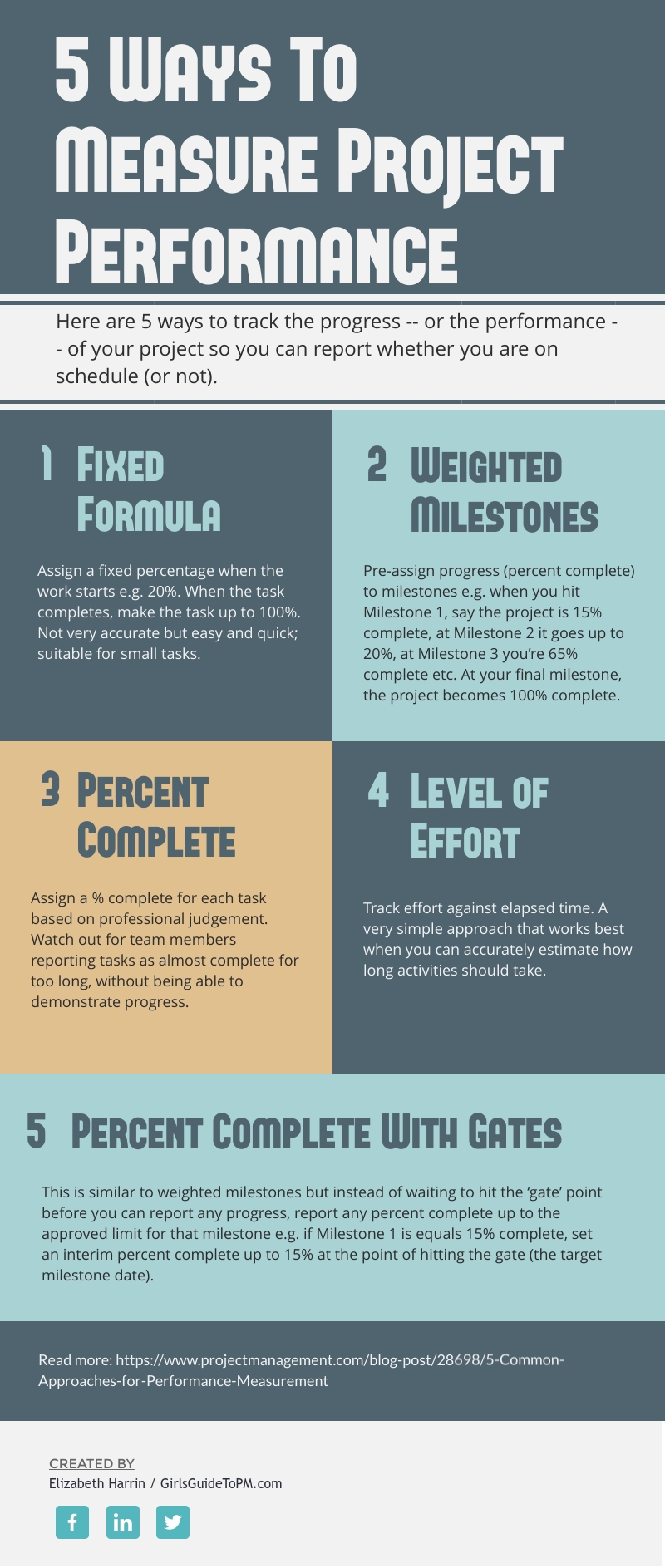
| We need to measure project performance to see if the project is on track. The graphic below shares some ideas on the different ways you can measure work performance. None of these suggestions is better than any other – they are all appropriate for different projects, environments and levels of project management maturity.
Do you use any of these approaches to measure progress on your projects? Why (or why not)? Let us know in the comments section below! For more on this idea, and a bit more background on the performance measures, check out this article: |
7 Things to Include in a Business Case [Video]
Categories:
business case
Categories: business case
| You’ve got a new project… and new sponsor asking for input into the business case. This video gives you a quick refresher on the top 7 things that you should include in the business case. Include these elements to help you business case sail through the approval process! |
Dates Every Budget Holder Should Know
Categories:
budget
Categories: budget
|
When you’re managing a project budget, there are some key dates you should know! These general accounting dates can be laid over your project schedule so you don’t miss any major financial milestones. 1. Year EndFinancial year end could be any time in the calendar year. I’ve worked with businesses that align their financial year end to the tax year, to the end of the calendar year (i.e. December) or to the date of incorporation (in the case of my business, that’s May). It doesn’t matter when year end falls for you, as long as you know when it is! Year end is important because it marks the close of one financial period and the start of another. You may have to get involved with accrual calculations and budget carry overs. If you miss the deadlines, you might not get your project budget in the next financial year! 2. Project Phase DatesSome businesses work by releasing project funds according to the stage of the project. In other words, you don’t get the full amount of the project budget on Day 1. As the project moves through the lifecycle, funding is released in chunks. Normally the dates align to stage gates or project reviews, where the steering group will approve the project to move to the next phase. That then triggers the release of the funding required to do the next phase of work. Be ready! Especially if you need to change your original forecasted budget request based on what you have learned during the current phase. 3. ReportingReporting dates relate to so many different areas of your project. They are important for project budgeting because you will need to prepare a short budget summary to go into the report. As you approach the reporting deadline day, make sure your financials are up to date so you can drop the most recent figures into your report template. 4. Tax DatesTax rates don’t change often, but I did once work on a project where the rate of VAT changed halfway through the work we were doing. It made budgeting very confusing! If you know of upcoming changes to tax (typically linked to government announcements and budget cycles), then watch out for whatever impact that might have on your project and make sure you note the date the changes come in! 5. Project ClosureYes, you surely know the project closure date – the target milestone you are working to for everything to be done! It’s important for budgeting purposes because you may have to calculate budget at completion, or staff run rates, all of which need you to know when the final expenses on the project will be accounted for. What other dates should project budget holders know about? Let us know in the comments below! Pin for later reading:
|


4 Tools for Cost Control
Categories:
cost management
Categories: cost management
| Staying on top of your project expenses is really important if you want to bring the project in on budget. However, how you actually do that changes as you go through the project. You’ll want to take a different approach to cost control depending on where you are in the project and how you need to respond to the project budget situation. The graphic below shows four tools for cost control at each point in the project lifecycle. You can pick and choose from these to select a way to manage expenses on your project, wherever you are in the lifecycle.
For more on this idea, check out this article. http://www.projectmanagement.com/blog/The-Money-Files/19000/ |

Deep Dive: Project Scope Management Part 1: Plan Scope Management
Categories:
Scheduling
Categories: Scheduling
|
It’s time to look at another project management Knowledge Area from the PMBOK Guide®-- Sixth Edition. This time, we’re diving into Project Scope Management. I’m going to be looking in detail at the major changes between the Fifth Edition and the current version. It feels like the Fifth Edition came out of circulation a while ago, but I know (anecdotally) that some people are still yet to update their internal processes to align to the Sixth Edition. In practice, I don’t think that matters much. The changes aren’t radical – and while it’s good for new people being certified to work in an environment where the language and expectations align to what they studied as part of their PMP® prep, no one is going to find it difficult to work in a v5 environment. So, onwards to this Knowledge Area. Let’s dive in! Plan Scope Management ProcessThis is the first process in the Knowledge Area, and it makes sure you are setting yourself up for success. As with many Knowledge Areas, we start by planning out what we are going to do in this domain before getting on with the work. InputsThe inputs haven’t changed from the Fifth Edition. They are still:
The objective of this process is to consider how you are going to get to an understanding of what the project scope is, so you need all of those things.
Tools & TechniquesThere isn’t much change here either. Expert judgment and meetings remain as they were before, and there is the addition of data analysis. You might recall that data analysis was added in as a tool and technique to schedule management too. Data analysis is a lovely catch all for the kinds of things you might be looking at during your planning. For example, you will probably do some alternatives evaluation to decide which requirements and specific functionality or solutions you want to move forward with.
OutputsNothing has changed here either. At the end of working through this process, you’ll have the scope management plan and the requirements management plan. I’d say that if you have a repeatable process in place with solid templates and expectations for managing scope, you should be able to complete the work required here quite quickly. You might not need to write a detailed document for requirements management and scope management, if you can include a paragraph in your main project management plan. There’s nothing in the PMBOK Guide®-- Sixth Edition that specifies you have to have separate documents, so go light on paperwork where you can!
Next time I’ll be looking at the second process in this Knowledge Area: Collect Requirements. |




