Doers vs. Talkers. A fun take on Project Management personas


| In the world of project management, we encounter all kinds of personalities. Some people talk a big game but don’t deliver, while others quietly get things done. The classic "walk the talk" dilemma can be visualized in a simple 2x2 matrix, with one axis representing "Doing" (from limited to extensive) and the other "Talking" (from limited to extensive). Based on these two traits, we can categorize project team members into four personas. While this is meant to be a lighthearted take, it does shed some truth on team dynamics. Let’s dive in! 1. The sleepy spectator (limited do, limited talk)Real-world equivalent: aristocrats, royalty, or anyone who avoids the spotlight. 2. The big pretender (limited do, extensive talk)Real-world equivalent: certain politicians or self-proclaimed “thought leaders” who talk circles around actual work. 3. The silent powerhouse (extensive do, limited talk)Real-world equivalent: factory workers, skilled specialists, or the behind-the-scenes MVPs. 4. The hyper achiever (extensive do, extensive talk)Real-world equivalent: entrepreneurs, visionary leaders, or unstoppable go-getters. Final thoughtsEvery p Now, which quadrant do you think you fit into? And what about your colleagues? Let’s hear your thoughts! |
 roject team has a mix of these personalities, and while this categorization is meant to be taken with a grain of salt, it does highlight an important reality: balance is key. A team full of sleepy spectators won’t go anywhere, but a team of only hyper achievers might struggle with cohesion. Recognizing these traits early can help project managers build stronger, more effective teams.
Project Management hits all the right notes. Lessons from “We are the world”
| In January 1985, a groundbreaking project brought together 46 of the most famous musicians in the world to record We are the world, a charity single to aid famine relief in Africa. Among the participants were icons like Stevie Wonder, Diana Ross, Bruce Springsteen, Ray Charles, Bob Dylan, Tina Turner, and Cyndi Lauper.
The power of a great sponsor No project succeeds without a strong sponsor, and Quincy Jones played this role to perfection. As the producer, Jones managed the project’s vision, coordinated logistics, and ensured the group stayed focused. He wielded influence, respect, and clarity to align the egos and energies of the artists. His ability to navigate the creative chaos while keeping the big picture in mind was pivotal in translating the project’s vision into reality. Adherence to timelines The stakes were high: the entire recording had to be completed in a single night, immediately following the American Music Awards. With a tight schedule and a studio filled with superstars, there was no room for delays. Strict planning and coordination ensured the recording was completed on time without compromising quality. This showcases how clear deadlines, coupled with disciplined execution, can keep even the most complex projects on track. Stakeholder management and servant leadership Managing an ensemble of superstars required diplomacy and servant leadership, qualities embodied by Lionel Richie and Michael Jackson. Both leaders prioritized the collective goal over personal glory, fostering a collaborative environment. A sign in the studio famously read, “Check your ego at the door,” setting the tone for teamwork. Another example of humility came during the chorus: participants who couldn’t reach the high notes simply remained silent. This act of knowing and respecting one’s limits reinforced the principle that projects succeed when individuals contribute according to their strengths. Allowing the right person to perform each task ensured the final output was harmonious and polished. Change and scope management During the session, Stevie Wonder suggested incorporating African lyrics into the song. While the idea aligned with the theme, it posed risks to the project’s scope and messaging. After careful deliberation, the team clarified that We are the world was not just about Africa but a global call to action for everyone to help Africa. By revisiting the project’s purpose, they honored the spirit of collaboration while maintaining focus, showcasing exemplary scope management. A blueprint for future success Beyond its immediate impact, We are the world inspired other successful humanitarian efforts, such as Do they know it's Christmas? and Live Aid. The project demonstrated that well-managed collaboration could create lasting change, extending its influence beyond its original ambition. Key takeaways The success of We are the world was driven by great sponsorship, strict adherence to timelines, servant leadership, and effective scope management. These principles remind project managers to respect their teams, leverage individual strengths, and remain adaptable under pressure. As the song reminds us, “We’re saving our own lives.” Project management is about making the critical choices that lead to transformative results. Let’s aim to make every project we lead as impactful as this unforgettable collaboration. |
 Spearheaded by Lionel Richie and Michael Jackson, and produced by Quincy Jones, the project achieved extraordinary success: over 20 million copies sold, more than $63 million raised, and a song that continues to inspire humanitarian efforts. This success was made possible by exceptional project management that transformed a star-studded gathering into a unified and impactful initiative.
The ABC Principle in Project Management
| The ABC principle is often linked to learning fundamentals, as famously sung by the Jackson 5 in ABC. But in project management, ABC stands for Assume nothing, Believe no one, Check everything. This take on ABC highlights the importance of risk mitigation by challenging information. It closely relates to PDCA (Plan, Do, Check, Act), but with a heavier emphasis on skepticism and validation.
Assume nothingEvery assumption is a potential risk. When unverified assumptions guide a project, it opens the door to disaster. A classic example is NASA’s 1999 Mars Climate Orbiter. The spacecraft was lost because of a simple yet catastrophic error: a failure to convert units. One engineering team used metric units (Newtons) for the spacecraft's thrust data, while another team used imperial units (pounds-force). This mismatch was never corrected, leading the spacecraft to come much closer to Mars than planned—so close that it disintegrated in the planet’s atmosphere. This $125 million failure was a direct result of an unchecked assumption. In project management, assumptions like this one often fly under the radar, making it crucial to question even the smallest details to avoid colossal mistakes. Many assumptions in project management are tied to communication, which makes it crucial to communicate often and clearly. In one of my early years as a project manager, I encountered this first-hand. I assumed that project sponsorship would transfer from a departing managing director to the incoming one without issues. I went ahead and updated the project documentation to reflect the new sponsor. However, I failed to communicate this change to the incoming managing director. Later, the new sponsor humorously remarked, “Oh, thanks for making me the new sponsor. It would have been nice if you had informed me.” This taught me that assumptions around roles and expectations should always be clearly communicated. Believe no one“Believe no one” should be taken with a grain of salt, but even reliable sources need to be cross-examined. Everyone tends to believe what they’re told—especially if it comes from trusted sources. But in project management, relying on verbal assurances without verification can lead to failure. Cross-examination and double-checking are essential to increase the odds of delivering a successful project. A perfect example is the 2017 Fyre Festival disaster. The organizers believed the assurances of suppliers who lacked the capability to deliver. Even reputable sources can be wrong, and failing to dig deeper can cause significant setbacks. In today's world, this principle has become increasingly interesting due to the sheer volume of information at our fingertips. The rise of AI is playing a pivotal role here as well. Even AI tools like ChatGPT, which can provide valuable insights, come with a disclaimer that they may make mistakes and suggest verifying the information provided. This reminds us of the importance of skepticism in any project. Check everythingBeing diligent is essential. Always validate that information is up to date and relevant. Boeing’s 737 Max crisis is a stark reminder—outdated assumptions about the aircraft’s MCAS software, and failure to thoroughly check system changes, led to two fatal crashes. Not verifying critical details led to widespread fallout. "Check everything" loops back to the first two rules. By assuming nothing and believing no one, you are effectively checking everything. But again, what is "everything"? This touches on the concept of WYSIATI—"What You See Is All There Is," a term coined by Daniel Kahneman. It humorously points out that no matter how thorough we think we are, we likely missed something. Funny, isn’t it? In project management, the ABC rule is as simple yet vital as the Jackson 5 tune. It’s about consistently challenging information, assumptions, and sources to avoid risks and ensure project success. |
 Before diving into the ABC Principle in project management, it's important to take this with a grain of salt. These ideas encourage a healthy level of skepticism, but like any approach, they should be balanced with trust, teamwork, and effective communication.
Navigating the “What’s next” feeling in your Project Management career
| After several years in project management, it’s natural to wonder, “What’s next?” Similar to a mid-life crisis, where one has secured a stable career, raised a family, and achieved personal milestones, project managers may also face a sense of plateau. The excitement of early career challenges begins to wane, leaving a desire for something more fulfilling or ambitious. Fortunately, there are various ways to reignite passion and elevate one’s career.
Interestingly, this sense of “what’s next?” is not uncommon. I recently conducted a poll on LinkedIn asking project management professionals how they approached this crossroads in their careers. The results? About 38% of respondents chose to transition to a new role—whether that’s climbing the leadership ladder or making a lateral move to leverage transferable skills. Another 30% opted to focus on personal projects, while 28% were eager to tackle bigger, more challenging assignments. Climbing the leadership ladder. One option is to transition into line management roles. If one is looking to take on more strategic responsibilities, positions like Program Manager, Portfolio Manager, or PMO Manager might be appealing. However, as Peter Drucker famously noted, “In a hierarchy, every employee tends to rise to their level of incompetence.” Not everyone is naturally suited to leadership, especially when it involves managing people. There’s a risk that the skills that made someone a great project manager may not translate to success in people management. It’s important to consider whether this path aligns with one’s strengths. Lateral moves for skill transfer. Project management skills are highly transferable to roles like Operations, Business Analysis, or Change Management. This offers a fresh perspective while keeping one close to the project world. However, a lateral move might mean stepping into an unfamiliar domain where one will need to develop new expertise. While this can be a rewarding challenge, the learning curve could feel steep, and it may take time to establish credibility in the new role. Tackle bigger challenges. If one is craving a deeper sense of achievement, seeking out larger, more complex projects can provide a rewarding sense of accomplishment. But bigger projects come with bigger risks and higher stakes. Is one prepared for the added stress? On the other hand, this strategy can open doors to uncharted opportunities. Take Arnold Schwarzenegger, for example. He didn’t stop at becoming a top actor—he kept pushing until he became the Governor of California. Tackling challenges head-on can lead to unexpected, game-changing results in one’s career, too. Engage outside of work. Many professionals find renewed purpose by engaging in projects outside of their core job—whether through pro bono work, mentoring, or pursuing long-neglected hobbies. This can sometimes lead to unexpected opportunities. For example, after finding fulfillment in charitable endeavors, actor Paul Newman founded Newman’s Own, a successful food company that donates all profits to charity. Similarly, professional shifts like this can reinvigorate one’s passion and even open the door to new career avenues. However, balancing these projects with regular work may require careful time management to avoid burnout. At the end of the day, there’s no one-size-fits-all solution. Whether it’s stepping up the ladder, making a lateral move, chasing bigger projects, or diving into personal passions—one should ensure it aligns with what keeps them motivated. As the poll results show, professionals take diverse paths. So, why not explore, experiment, and keep things exciting? There’s always more to learn, do, and experience! |

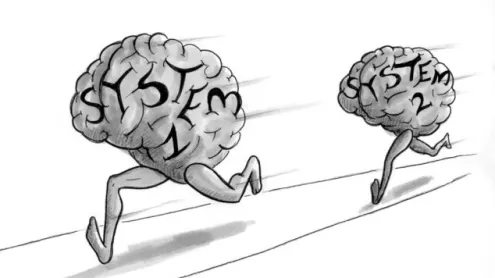
Harnessing System 1 and System 2 thinking in Project Management
| As a project manager, navigating the complexities of a project often feels like steering a ship through unpredictable waters. If you’ve read Daniel Kahneman’s Thinking, Fast and Slow, you’ll recognize this as the interplay of System 1 and System 2 thinking. These two systems—one fast and intuitive, the other slow and deliberate—shape our decision-making processes. Let's explore how understanding these systems can enhance project management. System 1: the speedy intuitive pilot System 1 is our brain's autopilot. It operates quickly and effortlessly, using gut reactions and heuristics—mental shortcuts—to make decisions. In project management, System 1 is invaluable for swift decision-making. For example, imagine you’re in a project meeting and a team member proposes a solution to a minor issue. Your immediate response, based on past experiences and intuition, might be to agree and implement the fix right away. This rapid response keeps the project moving forward without getting bogged down in analysis. However, System 1 can also lead to biases. Consider the “availability heuristic,” where decisions are influenced by what comes to mind most easily. If your last project was delayed due to a vendor issue, you might overestimate the likelihood of the same problem recurring, even if the context is different. Recognizing when you’re relying too much on System 1 can help you pause and reassess your assumptions. System 2: the thoughtful strategist System 2, on the other hand, is slow, analytical, and effortful. It kicks in when we need to think things through, such as planning a project timeline or analyzing risk factors. This system is crucial for complex problem-solving and making informed decisions that require thorough consideration. For instance, when drafting a project plan, System 2 ensures you consider all variables—resources, timelines, stakeholder expectations—and meticulously outline each step. This deliberate thinking helps prevent oversight and ensures a comprehensive approach. However, engaging System 2 can be mentally exhausting, so it’s important to balance it with the efficiency of System 1.
Balancing act: when to use each system The key to effective project management is knowing when to engage System 1 and when to switch to System 2. Use System 1 for routine decisions to keep the project moving smoothly. For instance, if a trusted team member suggests a minor tweak, your quick approval can maintain momentum. Reserve System 2 for critical decisions that require detailed analysis, such as risk assessments or major project milestones. Example: the factory automation upgrade Let’s say you’re overseeing a project to upgrade the automation system in a manufacturing plant. Your System 1 might quickly decide on the initial steps based on previous automation projects, such as choosing a vendor that has proven reliable in the past. But to ensure the new system integrates seamlessly with existing operations and meets all regulatory requirements, System 2 will help you conduct a thorough analysis, consult with stakeholders, and plan the implementation in detail. By understanding and balancing System 1 and System 2 thinking, project managers can navigate both the routine and the complex aspects of their projects more effectively. This dynamic approach leads to better decision-making, fewer biases, and ultimately, successful project outcomes. So, next time you’re in the project trenches, remember to toggle between your intuitive pilot and your thoughtful strategist. |