4 factors that make a project risky
From the The Money Files Blog
by Elizabeth Harrin

A blog that looks at all aspects of project and program finances from budgets, estimating and accounting to getting a pay rise and managing contracts.
Written by Elizabeth Harrin from RebelsGuideToPM.com.
Recent Posts
When projects get serious: what changes after the “easy” phase
How to run a retrospective that isn’t awful
A practical guide to stakeholder influence mapping
Why Your Project Forecast Keeps Changing (and What to Do About It)
Invisible progress: how to show value when nothing big has launched yet
Categories
accounting,
agile,
ai,
appraisals,
Artificial Intelligence,
audit,
Backlog,
Benchmarking,
benefits,
Benefits Management,
Benefits Realization,
Bias,
books,
budget,
Business Case,
business case,
business case,
Career Development,
Career Development,
carnival,
case study,
Change Management,
checklist,
collaboration tools,
communication,
Communications Management,
competition,
complex projects,
Conferences,
config management,
consultancy,
contingency,
contracts,
corporate finance,
corporate finance,
cost,
Cost Management,
cost management,
credit crunch,
CRM,
data,
data security,
debate,
Decision Making,
delegating,
digite,
earned value,
Education,
Energy and Utilities,
Estimating,
events,
FAQ,
financial management,
financial management,
forecasting,
future,
GDPR,
general,
Goals,
Governance,
green,
Information Technology,
Innovation,
insurance,
interviews,
it,
Knowledge Management,
Leadership,
Lessons Learned,
measuring performance,
Mentoring,
merger,
methods,
metrics,
multiple projects,
negotiating,
Networking,
news,
Olympics,
organization,
Organizational Culture,
outsourcing,
personal finance,
Planning,
pmi,
PMO,
PMO,
Portfolio Management,
portfolio management,
presentations,
privacy policy,
process,
procurement,
product management,
productivity,
Program Management,
project closure,
project data,
project delivery,
Project Success,
project testing,
prototyping,
qualifications,
Quality,
quality,
Quarterly Review,
records,
recruitment,
reports,
requirements,
research,
resilience,
Resource Management,
resources,
risk,
Risk Management,
ROI,
salaries,
Schedule Management,
Scheduling,
scope,
Scope Management,
security,
small projects,
Social Impact,
social impact,
social media,
software,
software,
software,
Stakeholder Management,
stakeholders,
Strategy,
success factors,
supplier management,
team,
Teams,
testing,
testing,
timesheets,
tips,
training,
transparency,
trends,
value management,
vendors,
video,
virtual teams,
workflow
Date
 Risk is inherent to all projects, and you need to know the risk profile of your project in order to be able to budget accordingly and prepare your contingency funds. So what does make a project risky?
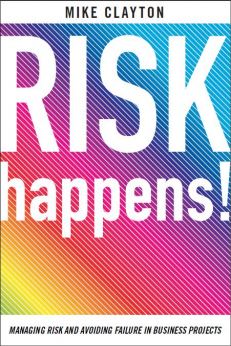
In his book, Risk Happens: Managing Risk and Avoiding Failure in Business Projects, Mike Clayton shares some of the typical factors that bump up the risk level on projects. These are categorised into 4 areas.
Strategic
Strategic factors include weaknesses due to operational strategy. For example, if there is a weak link between the objectives of the project and the organisation’s goals, that increases project risk. Poor sponsorship and buy-in at senior levels also increases the risk of a project. This can lead to unrealistic expectations – again, another risk factor. Finally, if you have a poorly defined scope, or project goals that keep changing, you increase the risk of the project.
Capability
Even strong project sponsorship and clear goals won’t help you if you or your project team don’t have the skills to do a good job. Poor processes in place across the project organisation can also increase the risk levels on the project, especially if these are not designed to be scaled up (or down) to fit the size of your project. Finally, if your team is under-resourced this also influences the risk profile.
 Process factors
Processes keep projects running. Communication is one process that has a major impact on project risk. Don’t forget communication between the team and any partner organisations, as well as communication between team members and other internal departments. Using technology that doesn’t work because it hasn’t been properly tested, or technology that you don’t really understand are also ways to increase the project risk profile. Inadequate (or non-existent) governance processes including a suitable way to quality assure your project are contributing factors to increasing risk.
Organisational factors
How the organisation works can also influence the risk levels on the project. For example, low morale across the company makes a project more risky, as does resistance to change. If your company is focused on price and cost as the way to determine if something provides good value, that could also introduce more risk to your project. That ties into immature procurement practices – buying stuff is normally a risky area of projects anyway, so a poor organisational approach to procurement can have a detrimental effect on project risk.
Managing risk
You can use these four headings as way to categorise and structure your risk log. I’m sure you’ll also find that there are other risks affecting your project that don’t fit into these headings – there are a number of other ways to structure and organise risk logs, so you should adapt your own to meet the needs of your project and your team.
What additional factors do you consider that increase the risk profile of your project? And how do you manage them?
Posted on: September 30, 2012 06:05 AM |
Permalink
Comments (3)
Please login or join to subscribe to this item

Ian Whittingham
Managing Director| Calixo Consulting
Golden Cross, East Sussex, United Kingdom
An over-looked risk influencing the outcome of projects--often invisible to project participants--is the presence of systematic biases embedded in an organisation's culture that shapes decision-making. When bias becomes institutionalised in an organisation it skews decisions to allow for only a limited set of responses to any given situation.
Back in 2008 Professor Barry Shore, a professor of decision sciences at the University of New Hampshire, published a paper on this in the Project Management Journal (Vol. 9, issue 4). I wrote about this in an article for gantthead using some well-known project failures to illustrate how disastrous for projects organisational bias can be http://www.gantthead.com/content/articles/247058.cfm

Mark Price Perry
Business Driven PMO Evangelist| BOT International
Orlando, Fl, United States
Very nice article. Many folks advocate that effective processes (and continual improvement of processes) can be a tremendous aid in the overall effort to understand and manage risk. This along with the other factors cited in this article would be helpful for just about any organization to consider and use.
Ian, the book does talk about systematic bias and how organisational culture shapes decision making. That was one of the interesting things for me - I hadn't considered how much my views were shaped by the culture of my team, department and business.
Mark, I've recently seen some examples of poor processes (not at my company) and it is astounding how much risk they add to workflow - human error, people using the back door because the process is not clear, and so on. Clear processes and standardised working practices take a lot of that away. Great point!
Please Login/Register to leave a comment.
|
"The only thing to do with good advice is pass it on; it is never of any use to oneself."
- Oscar Wilde
|




