


Green is good, right? But a project that is on budget can still be in trouble, even if all the signs are pointing to a Green RAG status. Let’s look at some early warning indicators beyond headline budget, which are sometimes financial signals that project managers miss.
 Hidden financial risks
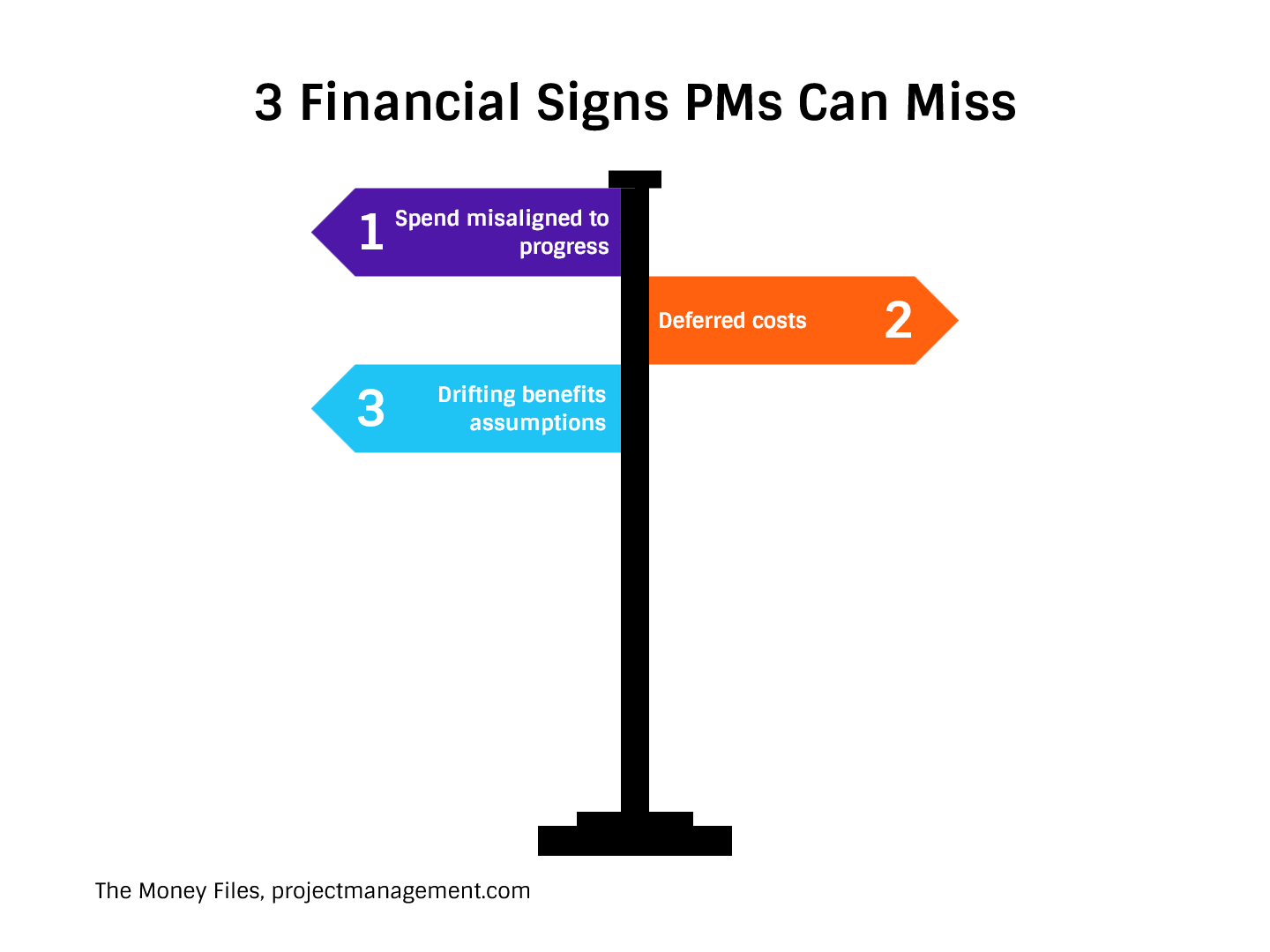
Here are three hidden financial risks.
Spend not aligned to progress
One warning sign is misalignment between spend and progress. Earned Value Management techniques help flag this, but in my experience most projects don't use them. EVM is seen as pretty complex and overkill for small projects, but the principles behind it can help you identify where you are spending but not progressing.To give you an example, if a large proportion of the budget has been spent but delivery milestones have slipped, future costs are likely to increase. It’s not rocket science – you’ve still got more work to do than cost, because you’re spending to your limits but not making the progress you were expecting. So it’s going to cost you more in time and therefore labour costs (and hire of any materials, contractors etc) for longer.
Deferred costs
Another signal is deferred cost. Pushing work into later phases or future financial periods can make current reports look healthy while storing up problems for later. It’s similar to the issue above – all you are doing is rephasing the cost profile of the project. When you look at it holistically, as an overall project, that might still be OK, but if later phases are going to cost more, then the current ‘today’ picture of your budget is understating the reality.You can get round this by sharing estimate to complete numbers, the whole amount you are expecting to spend instead of just spend to date against budget.
Benefits assumptions drifting
Finally, fragile assumptions are another risk. Forecasts often rely on assumptions about productivity, supplier performance, or scope stability, and experienced project managers know that those might not hold true for the whole project.When those assumptions are no longer realistic but remain unchallenged, the budget may technically still balance while confidence quietly drains away – you’re only one vacation period away from not hitting those final milestones and therefore needing more money to get the project done.
Questions you should ask monthly
You can help keep your project properly Green by asking:
- What costs are still to come?
- What assumptions feel fragile?
- What is our phasing looking like?
- What is our overall whole-project forecast including actuals to date and forecasts to come?
Simple techniques to surface issues early
You don’t have to worry about this, because it can be easy to identify what’s going on. Compare cumulative spend against milestone completion. Review forecast changes over time (is the forecast getting a little higher every month?). Sanity-check the remaining work against the remaining budget, remembering (if necessary) that you have to cross-charge internal resource as well. All these can highlight emerging problems before they become crises. And trust me, stakeholders don’t like crises, especially those that relate to money!
My takeaway for you today is that being ‘on budget’ is not the same as being financially healthy in project terms. Financial awareness is about understanding what the numbers are really saying, not just whether they fit within a predefined limit.
The good news is that you can do something about the numbers to bring projects back in line, and it is possible to flag issues early if you spot something going on – and you don’t need to invest in EVM to do it.
Posted on: July 27, 2026 12:00 AM |
Permalink


 Community Champion


