


Budgeting for the Olympics


|
The construction involved all the civil engineering works required to get that area of London ready for the Games. It required building:
The Games team had committed to developing the site in a sustainable way, which was a challenge in itself given the level of contamination in the soil and the risk of unexploded ordnance left over from the Blitz. Needless to say, that area of London wasn’t used for much before the Games bid was won, and a strong focus of the construction work has been on making sure the investment leaves a legacy for the surrounding area. Louise said that there were 3 things that kept them on track. 1. Rigorous change control Louise said that clear reporting at project level was one thing that helped keep the whole project on track. Changes were discussed at this level. When the project started, there were 60-80 people in the project reporting meetings, which took about 4 hours. A strong change control process, with everyone involved, meant that the cost of change could be properly analysed. 2. Rigorous management of cost Cost management involved a firm hand establishing and monitoring contingency spending. Contingency levels were based on quantitative risk analysis (QRA) with an 80% level of confidence. All contingency budgets were identified as part of a project or programme; there were no general buckets of money to be drawn from at a later date. Cost management was particularly important because “the media were fierce in the early days.” Louise said that there was wide belief that the UK in general was not capable of managing the civil engineering works required to put on an Olympic and Paralympic Games. The media were on the look out for examples of where projects were overspent or poorly managed. 3. Performance management The most important area for controlling cost seemed to be performance management. There were several techniques in use at the Olympic Park for performance management, including project reporting meetings. The reports did not just focus on historical information. While this was useful, it doesn’t help the stakeholders see what could happen in the future, so Louise and her team put some effort into preparing monthly trend reports. “It’s given us good visibility and enhanced reporting at government level,” she said. She also showed us an example of the monthly report, which was a graphic representation of the project’s performance that fitted on piece of A3 paper. Variance analysis, total cost and key milestones were also reported. Once stakeholders felt that the project was being well managed and the performance was on track, the number of people attending these meetings dropped significantly. In the end, the project reporting meetings were only attended by 6 people, and they took about an hour. The main message from Louise was that earned value analysis was a critical part of keeping the project on track. “It was absolutely essential to undertake earned value analysis on all areas of the programme,” she said. “There was a surprising amount of resistance.” She knew it was the only way to generate trust and belief in the schedule and the project’s achievements. In order to overcome the resistance, the project team undertook a training and education initiative to bring everyone on board with EVA. It all paid off. The construction work is already complete, and it finished a year before the Games begin. This gives the other Olympics teams plenty of time to make the final preparations before Olympics fever descends on London in 2012. |
 At
At Video: The Millennium Dome Case Study
|
Transcript Good morning. I’m Elizabeth Harrin from Gantthead’s blog, The Money Files. I’m standing outside the O2 Arena here in South East London. The building behind me used to be known as The Millennium Dome and it was the first case study that I produced for my book, Project Management in the Real World, back in 2006. I looked at it from a financial perspective as it was a really interesting budgetary case study. The project was widely considered in the press at the time to be a bit of a white elephant. It was overspent and it needed to be bailed out by National Lottery funds. The National Audit Office did a study on the project itself and concluded that projects of that size needed to really be based on a full understanding of cradle to grave costs for the entire initiative. Having said that, the building opened on time, it had over than double the amount of visitors than the next highest UK visitor attraction. 5.5m people came along to see the exhibition inside, and another 1m got in for free. They had worked on the basis that they would get 12m visitors so again their costings were out, but, as you can see, nearly 12 years later the building is still going strong. It is used today as a convention centre and a concert venue and they also have things like tennis there. So, overall, looking back with a historical perspective I think it has been a huge success. |
A Results Management Office could improve your financial return
Categories:
benefits
Categories: benefits
|
She explained that IT programs really need to focus on business results. “IT for IT’s sake really doesn’t cut it any more,” she added. Diane talked about a $500m IT project that was shut down because the team working on it failed to partner adequately with other business teams. They hit a wall as a result of losing focus on dealing with the business needs. “Focus on business results and make your decision as a program manager with those results in mind,” she explained. “Traditional project and program management is not always enough.” She presented the differences between traditional project management and the vision of results-driven project management, which can be seen in the diagram below.
The focus on results is what led Diane and her colleague Kavitha Prabhakar to develop a new approach for enabling and supporting IT programs. “Today’s PMO must transform into a results management office,” she said. Benefits management and working to ensure projects and programs are aligned with strategies is not new. However, the idea of the RMO – a results management office – is something that takes this idea further and gives some structure to the concept of delivering that woolliest of things, value. “It is important to have a very clear vision of where you’re heading,” Kavitha said. “When you’re chartering a program, you’re looking at where the enterprise is heading and it’s not just at the start but through program execution.” The RMO idea ensures that there is a results focus for the life of the project or program, which in turn should mean that benefits and financial returns are better aligned. This structure means there’s less risk of your project turning into that $500m hole: an RMO would keep checking that the strategic benefits are being achieved with that single-minded focus on results. During the presentation Diane and Kavitha explained that an RMO and a PMO sit happily side by side. You don’t need both. In fact, their suggestion was that the RMO is part of the function of the PMO. The structure, concept and framework that an RMO provides offers the guidance to keep projects and programs on track to continually deliver and improve business results, with fewer pointless and cancelled projects. |
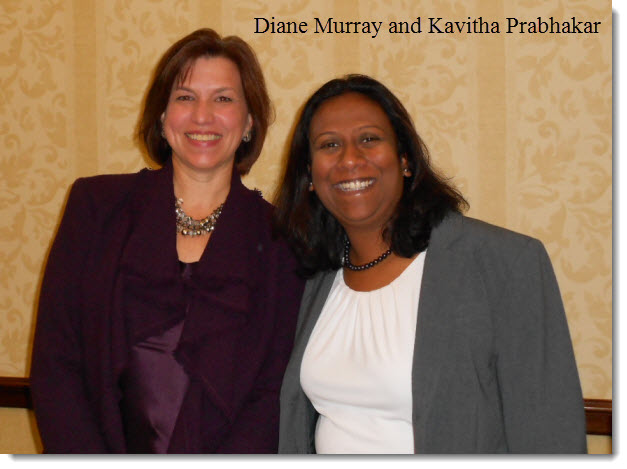 "What we’re finding in today’s fast-paced environment is that the definition of success has changed,” said Diane Murray from Deloitte Consulting, at a presentation at PMI’s Global Congress North America in Dallas, Texas, earlier this week. “Today’s project managers have a lot more challenges on their hands. Programs and projects are getting more complex.”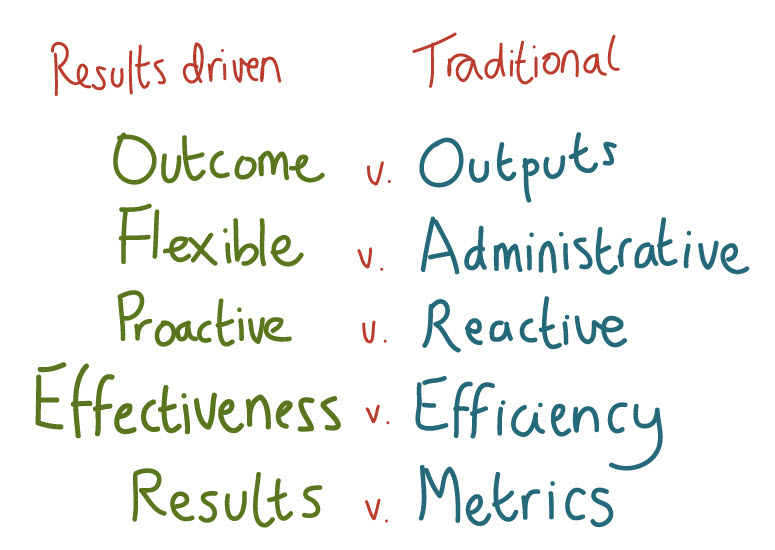
5 levels of financial management maturity
|
One of the perspectives is financial management. Here’s how you should be performing at each of the different levels. Level 1There is a “general lack of accountability” for monitoring what project budgets are spent on. Projects have few, if any, financial controls and generally don’t have formal business cases. This means it is hard for the company to properly assess potential projects and decide where the organisation’s funds should be spent. Level 2There are a few more business cases around, although there is no standard template. The best business cases will explain the rationale for the project but not necessarily have a lot of financial information in. Still, it is something to go on when deciding what investment decisions to make. Project managers are applying financial controls haphazardly, depending on their previous experience and skill level. Contingency planning and risk management are done without much consideration of costs. For example, contingency budgets are just made up, instead of being calculated on the basis of likely risk. Level 3There are standards for business cases and how to get business cases approved. Business cases have one owner. Project managers manage cost and expenditure – and there are corporate guidelines that show how to get these done. There will be links to the Financial department or other teams who carry out financial controls. Level 4 (this is where you should be aiming, if you aren’t already here)There are processes in place to enable the organisation to prioritize investment decisions. In other words, the financial information available prior to a project starting is good enough to work out whether it is a strategically important project, given the available funds and resources. Project budgets are managed well by project managers, and there are tools in place to enable tracking and comparison of financial information.
|
 The OGC’s Portfolio, Programme and Project Office (P3O) guidance includes some information about project management maturity. Maturity is measured on a 5 point scale from Level 1 (not very mature) to Level 5 (very mature) against 7 areas – in P3O speak, ‘perspectives’.
 Level 5
PRINCE2 and PMBOK together
| As this month's theme is global projects, I thought I'd share with you this video about PRINCE2 and The PMBOK® Guide. When you work with people from different countries, especially across the Atlantic divide, you'll often find that they gravitate to one or the other way of working. As this video shows, the two approaches are equally valid and work well together. So that's one less international conflict to have to worry about when working on projects across borders.
|


