A Results Management Office could improve your financial return
From the The Money Files Blog
by Elizabeth Harrin

A blog that looks at all aspects of project and program finances from budgets, estimating and accounting to getting a pay rise and managing contracts.
Written by Elizabeth Harrin from RebelsGuideToPM.com.
Recent Posts
When projects get serious: what changes after the “easy” phase
How to run a retrospective that isn’t awful
A practical guide to stakeholder influence mapping
Why Your Project Forecast Keeps Changing (and What to Do About It)
Invisible progress: how to show value when nothing big has launched yet
Categories
accounting,
agile,
ai,
appraisals,
Artificial Intelligence,
audit,
Backlog,
Benchmarking,
benefits,
Benefits Management,
Benefits Realization,
Bias,
books,
budget,
Business Case,
business case,
business case,
Career Development,
Career Development,
carnival,
case study,
Change Management,
checklist,
collaboration tools,
communication,
Communications Management,
competition,
complex projects,
Conferences,
config management,
consultancy,
contingency,
contracts,
corporate finance,
corporate finance,
cost,
Cost Management,
cost management,
credit crunch,
CRM,
data,
data security,
debate,
Decision Making,
delegating,
digite,
earned value,
Education,
Energy and Utilities,
Estimating,
events,
FAQ,
financial management,
financial management,
forecasting,
future,
GDPR,
general,
Goals,
Governance,
green,
Information Technology,
Innovation,
insurance,
interviews,
it,
Knowledge Management,
Leadership,
Lessons Learned,
measuring performance,
Mentoring,
merger,
methods,
metrics,
multiple projects,
negotiating,
Networking,
news,
Olympics,
organization,
Organizational Culture,
outsourcing,
personal finance,
Planning,
pmi,
PMO,
PMO,
Portfolio Management,
portfolio management,
presentations,
privacy policy,
process,
procurement,
product management,
productivity,
Program Management,
project closure,
project data,
project delivery,
Project Success,
project testing,
prototyping,
qualifications,
Quality,
quality,
Quarterly Review,
records,
recruitment,
reports,
requirements,
research,
resilience,
Resource Management,
resources,
risk,
Risk Management,
ROI,
salaries,
Schedule Management,
Scheduling,
scope,
Scope Management,
security,
small projects,
Social Impact,
social impact,
social media,
software,
software,
software,
Stakeholder Management,
stakeholders,
Strategy,
success factors,
supplier management,
team,
Teams,
testing,
testing,
timesheets,
tips,
training,
transparency,
trends,
value management,
vendors,
video,
virtual teams,
workflow
Date
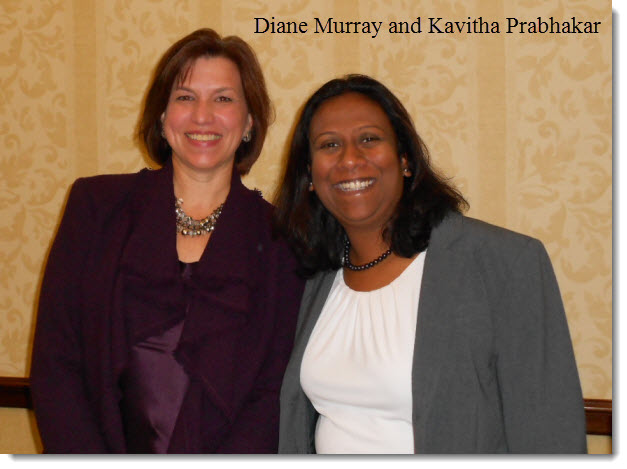 "What we’re finding in today’s fast-paced environment is that the definition of success has changed,” said Diane Murray from Deloitte Consulting, at a presentation at PMI’s Global Congress North America in Dallas, Texas, earlier this week. “Today’s project managers have a lot more challenges on their hands. Programs and projects are getting more complex.”
She explained that IT programs really need to focus on business results. “IT for IT’s sake really doesn’t cut it any more,” she added.
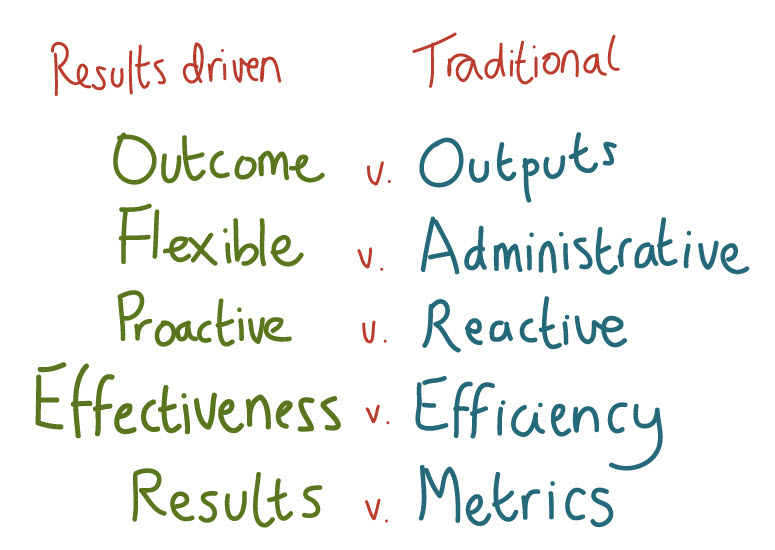
Diane talked about a $500m IT project that was shut down because the team working on it failed to partner adequately with other business teams. They hit a wall as a result of losing focus on dealing with the business needs. “Focus on business results and make your decision as a program manager with those results in mind,” she explained. “Traditional project and program management is not always enough.” She presented the differences between traditional project management and the vision of results-driven project management, which can be seen in the diagram below.
The focus on results is what led Diane and her colleague Kavitha Prabhakar to develop a new approach for enabling and supporting IT programs. “Today’s PMO must transform into a results management office,” she said.
Benefits management and working to ensure projects and programs are aligned with strategies is not new. However, the idea of the RMO – a results management office – is something that takes this idea further and gives some structure to the concept of delivering that woolliest of things, value.
“It is important to have a very clear vision of where you’re heading,” Kavitha said. “When you’re chartering a program, you’re looking at where the enterprise is heading and it’s not just at the start but through program execution.”
The RMO idea ensures that there is a results focus for the life of the project or program, which in turn should mean that benefits and financial returns are better aligned. This structure means there’s less risk of your project turning into that $500m hole: an RMO would keep checking that the strategic benefits are being achieved with that single-minded focus on results.
During the presentation Diane and Kavitha explained that an RMO and a PMO sit happily side by side. You don’t need both. In fact, their suggestion was that the RMO is part of the function of the PMO. The structure, concept and framework that an RMO provides offers the guidance to keep projects and programs on track to continually deliver and improve business results, with fewer pointless and cancelled projects.
Posted on: October 27, 2011 03:39 PM |
Permalink
Comments (3)
Please login or join to subscribe to this item

Wai Mun Koo
PMO Director| Intergraph PP&M
Singapore, Singapore
Interesting concept. Would be interesting to see more details of RMO. Do you know if there is any source on this topic?
Wai Mun Koo
PMO Director| Intergraph PP&M
Singapore, Singapore
Liz, thanks for the link and look forward to you next post.
Please Login/Register to leave a comment.
|
"No opera plot can be sensible, for in sensible situations people do not sing."
- W.H. Auden
|




