Take the project management & social media survey!


| This year I am once again running the Social Media in a Project Environment survey. This time last year lots of you completed the survey and the results (which you can access on my blog; scroll down to Social Media Survey Results 2010) provided a snapshot of how social media tools were being used by project managers and in project environments.
This year I have tweaked the survey slightly to give us clearer results, but it should allow for a comparison between 2010 and 2011. As before, there are 9 questions which take less than 5 minutes to complete. The last question gives you the option to enter your email address to receive a copy of the results when they are available. Click here to complete the survey now.The survey closes at the end of February, so you still have a short time to complete it. Thank you! |
Book review: Business Case Essentials
|
The book started life as a white paper in 1998 and has grown to book size over the years in response to requests from Schmidt’s consulting clients. The author’s aim is to provide a step-by-step guide for building a business case. Project managers sometimes get involved in the analysis that goes into working out if a project is worth doing or not, and that’s where the business case comes in. The book is set out logically, and is very pragmatic: “A successful business case meets these criteria:
The book uses examples from real business cases to illustrate what should go into a case and how best to structure the business case document. Schmidt favours an approach that includes an executive summary, sets out various scenarios, documents the business objectives and describes the proposed actions. This is set out in Chapter 2, and the remainder of the book is given over to putting some content into each of those sections, with specific emphasis on financial metrics. The approach to benefits is particularly useful, as people often struggle to quantify the benefits that projects deliver. It also cuts through the bad practices you may have come across in the past: “Truly intangible benefits and costs do not belong in a business case,” Schmidt writes. In fact, even if you aren’t preparing a business case, some of the information about cost modelling in Chapter 3 would be useful for planning a project budget. Ideally, you’d see the business case (if you weren’t involved in developing it) but for projects that are approved without one, the cost model section in the book would help you construct a valid and pragmatic budget. There is a lot of information about Monte Carlo simulation and risk analysis in Chapter 5. This section is technical, as Monte Carlo simulation requires simulation software designed for the purpose. However, there is also a short section on simple sensitivity analysis, which is basically changing the underlying values and assumptions in your cost spreadsheet and watching what happens to the results. Overall, this is a useful reference book to have for those times when someone says, “Can you help me write the business case for my project?” You can read the original white paper online. If, after that taster, you want to buy the whole book, it’s available as an ebook in .pdf format or you can get a printed version from Amazon. |
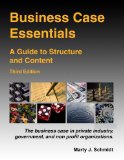 I’ve held on to Business Case Essentials: A Guide to Structure and Content by Marty J. Schmidt for quite some time, so apologies to the author for taking so long to review it. The reason it’s taken a while is because I’ve been using it.
Hiring: Getting it right first time
|
Why does it cost so much to hire the wrong person? There are two scenarios to look at when trying to calculate the cost of hiring the wrong person. The first has to do with the direct costs of when hiring the wrong person results in turnover. The estimated costs of turnover vary from 50% to 150% of the employee’s salary. Experts say to increase those numbers when considering managerial positions. Needless to say whether you are calculating the costs on the lower or higher end, both are unacceptable. That’s potentially a lot of money to a cash-strapped PMO. What are these costs made up of? I’ll list a few of the biggest expenses and keep in mind all of the costs to replace this employee were already expensed to bring the outgoing employee on board in the first place. Cost associated with hiring the wrong person include: Advertising for the position, HR costs to receive and sort through possibly hundreds of applicants, time to phone screen, coordinate and conduct interviews and travel expenses that are associated with the interviews. Once initial interviews are conducted there may be second or third interviews, reference checks, back ground checks, developing a package, the offer, the medical check and then the on-boarding process begins. For some companies the on-boarding process is a few days for others it’s weeks or months of training. One must think about the time it will take from beginning of the process up until the employee becomes productive. Have you considered the costs associated with efforts to cover the open position by other associates? The longer the position stays open the greater the burden on those covering and the pressure to fill the open spot increases. Many times it’s the increase pressure to fill that leads to poor choices and the cycle is set to repeat. What’s the second way of looking at the cost of hiring someone? The second scenario when looking at costs associated with hiring the wrong person may be even more costly. It occurs when the wrong person is hired and they don’t leave but they stay. The cost of having an employee that is a poor fit or that is missing an essential quality can be devastating to productivity. As valuable management and HR resources are mobilized to address and or try to “fix” the hire the morale and productivity of others may be negatively affected while the issues are addressed. When wrong employees are brought into the company there is also a cost to the hiring manager’s reputation. The life blood of the company depends on bringing excellent talent on board and when this doesn’t occur the hiring manager is falling short of his or her greatest responsibility.
We can never eliminate hiring errors but we can put ourselves in the best position to get it right. Here are just a few thoughts:
Often our interviews are conducted in sterile environments where the atmosphere is very stiff, safe and controlled. I think it is appropriate to conduct initial interviews in these settings because you want to set the candidate up for success. I find that conducting second interviews in a different, less predictable environment can help shed light on a candidate. For example conducting the second interview in the company café adds a whole host of factors. As you are standing in line you may bump into colleagues which may trigger spontaneous conversations, how did the candidate react and conduct themselves? Was the candidate polite to those behind the counter, were they patient, nervous, did they pick up after themselves? All of these help me see the whole person. If I’m going to interview them anyway, why not mix things up, you may be surprised by what you see, hear and observe. That’s interesting. So, finally, what are your top tips for hiring new project managers or project personnel? For some the tendency is to look for someone who is a driver and can just get things done! Though this is a great quality to have on the team, I also want someone who also possesses the quality of Humility. I define Humility as the ‘ability and willingness to learn’. I need project managers that are always in the learning mode. They are open to new ideas and actually solicit ideas from others. They may have had terrific success doing things their way but they are willing to really listen. Pride is at the root of a lot of projects that have gone wrong. In the project review process you will often hear the question, “Why didn’t you ask for help or let me know that you were stuck?” Humility lends itself to cooperation, collaboration and good coaching opportunities.
More about my interviewee: Garrett Miller is a workplace productivity coach and trainer, keynote speaker, and author of Hire on a WHIM: The Four Qualities that Make for Great Employees (2010, www.HireonaWHIM.com). Known for his extensive experience in hiring, training, attracting, and retaining top talent, he is president and CEO of CoTria, a company that provides time-saving solutions to help clients manage more efficiently. |
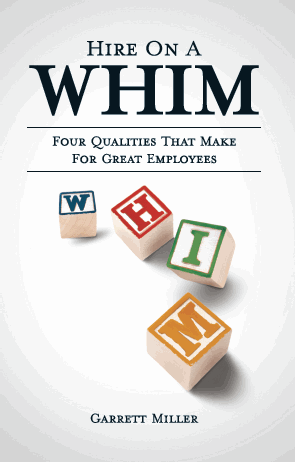
 It’s costly to hire someone only to find that they are not a good fit for the project team. I spoke to Garrett Miller, an expert in hiring and author of Hire on a WHIM (more on what WHIM is below). Here’s what he had to say about finding the right person for the job.
 OK. We want to avoid that. How can managers avoid this when recruiting new project managers, by getting the right person first time?
6 Steps for managing benefits realisation
Categories:
benefits
Categories: benefits
| A benefit is the improvement you get from a change. Projects deliver change, and we should always be doing things that deliver some kind of benefit to a group of stakeholders or the organisation. Benefits realisation management is the process of ensuring benefits are identified, defined, linked to strategic outcomes and delivered. Benefits realisation management is a key topic in programme management, but it’s equally relevant for large projects. There are six steps to planning a successful approach to managing benefits. 1. Create a benefit management strategyThis is the outline for how the project or programme will achieve the desired benefits. How will you measure benefits? Who will be responsible for doing so? How long will you track them for? 2. Identify benefits and tie them back to project/programme objectivesBenefits, like project tasks, have dependencies. What are your benefits dependent on? What benefits do you hope to see as a result of your project or programme? How do they all fit together to deliver coherent change, and does this take you in the right direction? 3. Plan when benefits will appearJust as you plan tasks on a schedule, plan out when you expect the benefits to appear. Some deliverables will have benefits immediately. Others may take longer before you start to see any tangible results. If the benefits are going to appear after the project or programme is finished, who is going to be responsible for recording and tracking them? Tie this back to the benefit management strategy. 4. Realise the benefitsOK – now’s the time to deliver the change and make those benefits possible! 5. Conduct a benefit reviewReview the expected benefits against the actual results seen. How do they match up? Are your original plans still valid? Do the stakeholders want to see anything else? 6. Identify new benefits and tweak existing benefitsPart of the ongoing project and programme management (or the role of the benefits manager, if the project work is over) is to see if the change can result in any new benefits. What else has been identified as positive improvement as a result of the project? What improvements can be delivered to further enhance the benefits that are being delivered already? The benefits realisation management approach is set out below. I’ve adapted this from the benefits realisation process in Managing Successful Programmes.
|

New consumerism: managing the impact on projects
Categories:
books
Categories: books
|
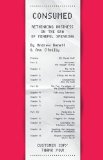
Every so often it is good to read a non-fiction book that isn’t about project management. It helps me see that there are management theories that aren’t tied to models of project delivery or stakeholder management. Consumed: Rethinking business in the era of mindful spending, by Andrew Benett and Ann O’Reilly, is one of those. It’s about how, as we come out of the global recession, consumers everywhere are changing what and how they buy. The authors argue that there are clear indications that the way we shop has changed forever. We are now more mindful consumers – we care about where our products come from. We also are happy enough to ‘rightsize’ – to get rid of all our extra stuff through methods like Freecycle, and we feel satisfaction from reducing purchases and tightening our belts. The book cites research that says that 75% of adults believe Americans are becoming more rude and less civilised. We are nastier because we consumer: hyperconsumerism is a root cause of selfishness. Fortunately, the tide of hyperconsumerism has turned, and we are moving towards a new paradigm of shopping, one that doesn’t require packing more and more features into products, one of simplicity and fit for purposeness rather than ‘fully loaded’. One that embraces ‘green’. How does this tie in to project management? Research in the Netherlands, cited in the book, says that half of all ‘malfunctioning’ products returned to the shop actually work fine. It’s simply that the consumers haven’t figured out how to make them work. Consumers don’t want all the extras on products they buy – that you help launch. They only want the functions they really need. Project managers can tap into this new wave of rightsized consumerism by making sure that software products, or anything else we are working on, have the features that are fit for purpose. Don’t let developers increase the scope and functionality without involving customer representatives. Question the research from Marketing that says users want thirty different options. Challenge the green credentials of your project, and find ways to make your work more appealing to those who will be making the decision to buy it once your job is done. How are you managing the shift to New Consumerism? |