New consumerism: managing the impact on projects
From the The Money Files Blog
by Elizabeth Harrin

A blog that looks at all aspects of project and program finances from budgets, estimating and accounting to getting a pay rise and managing contracts.
Written by Elizabeth Harrin from RebelsGuideToPM.com.
Recent Posts
Budget confidence vs budget optimism
When projects get serious: what changes after the “easy” phase
How to run a retrospective that isn’t awful
A practical guide to stakeholder influence mapping
Why Your Project Forecast Keeps Changing (and What to Do About It)
Categories
accounting,
agile,
ai,
appraisals,
Artificial Intelligence,
audit,
Backlog,
Benchmarking,
benefits,
Benefits Management,
Benefits Realization,
Bias,
books,
budget,
Business Case,
business case,
business case,
Career Development,
Career Development,
carnival,
case study,
Change Management,
checklist,
collaboration tools,
communication,
Communications Management,
competition,
complex projects,
Conferences,
config management,
consultancy,
contingency,
contracts,
corporate finance,
corporate finance,
cost,
Cost Management,
cost management,
credit crunch,
CRM,
data,
data security,
debate,
Decision Making,
delegating,
digite,
earned value,
Education,
Energy and Utilities,
Estimating,
events,
FAQ,
financial management,
financial management,
forecasting,
future,
GDPR,
general,
Goals,
Governance,
green,
Information Technology,
Innovation,
insurance,
interviews,
it,
Knowledge Management,
Leadership,
Lessons Learned,
measuring performance,
Mentoring,
merger,
methods,
metrics,
multiple projects,
negotiating,
Networking,
news,
Olympics,
organization,
Organizational Culture,
outsourcing,
personal finance,
Planning,
pmi,
PMO,
PMO,
Portfolio Management,
portfolio management,
presentations,
privacy policy,
process,
procurement,
product management,
productivity,
Program Management,
project closure,
project data,
project delivery,
Project Success,
project testing,
prototyping,
qualifications,
Quality,
quality,
Quarterly Review,
records,
recruitment,
reports,
requirements,
research,
resilience,
Resource Management,
resources,
risk,
Risk Management,
ROI,
salaries,
Schedule Management,
Scheduling,
scope,
Scope Management,
security,
small projects,
Social Impact,
social impact,
social media,
software,
software,
software,
Stakeholder Management,
stakeholders,
Strategy,
success factors,
supplier management,
team,
Teams,
testing,
testing,
timesheets,
tips,
training,
transparency,
trends,
value management,
vendors,
video,
virtual teams,
workflow
Date
 Ty blogged recently about reading, and it made me realise that I read a lot – a lot more than most people, by the sounds of it. I commute, so that gives me plenty of reading time. And I’m a writer – and all writers read; we have to, it’s part of how we improve.
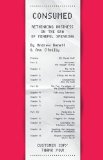
Every so often it is good to read a non-fiction book that isn’t about project management. It helps me see that there are management theories that aren’t tied to models of project delivery or stakeholder management. Consumed: Rethinking business in the era of mindful spending, by Andrew Benett and Ann O’Reilly, is one of those.
It’s about how, as we come out of the global recession, consumers everywhere are changing what and how they buy. The authors argue that there are clear indications that the way we shop has changed forever.
We are now more mindful consumers – we care about where our products come from. We also are happy enough to ‘rightsize’ – to get rid of all our extra stuff through methods like Freecycle, and we feel satisfaction from reducing purchases and tightening our belts.
The book cites research that says that 75% of adults believe Americans are becoming more rude and less civilised. We are nastier because we consumer: hyperconsumerism is a root cause of selfishness.
Fortunately, the tide of hyperconsumerism has turned, and we are moving towards a new paradigm of shopping, one that doesn’t require packing more and more features into products, one of simplicity and fit for purposeness rather than ‘fully loaded’. One that embraces ‘green’.
How does this tie in to project management? Research in the Netherlands, cited in the book, says that half of all ‘malfunctioning’ products returned to the shop actually work fine. It’s simply that the consumers haven’t figured out how to make them work. Consumers don’t want all the extras on products they buy – that you help launch. They only want the functions they really need.
Project managers can tap into this new wave of rightsized consumerism by making sure that software products, or anything else we are working on, have the features that are fit for purpose. Don’t let developers increase the scope and functionality without involving customer representatives. Question the research from Marketing that says users want thirty different options. Challenge the green credentials of your project, and find ways to make your work more appealing to those who will be making the decision to buy it once your job is done.
How are you managing the shift to New Consumerism?
Posted on: January 16, 2011 08:40 AM |
Permalink
Comments (1)
Please login or join to subscribe to this item

Paul Naybour
Founder and Director| Parallel Project Training
Nailsworth, United Kingdom
You are right the world has changed. I went to buy a car for my daughter to learn to drive in this weekend. I looked on auto trader first. Only one garage in the area has the sort of car I want at a reasonable price. The second hand car sales man I went to visit said the Internet had ruined his job. People just turn up saying they wan this car that they have seen on the Internet. If they price to high no one comes. So much more choice and power in the hands of the consumer.
Where will it end....
Please Login/Register to leave a comment.
|
"He who asks is a fool for five minutes, but he who does not ask remains a fool forever."
- Chinese Proverb
|




