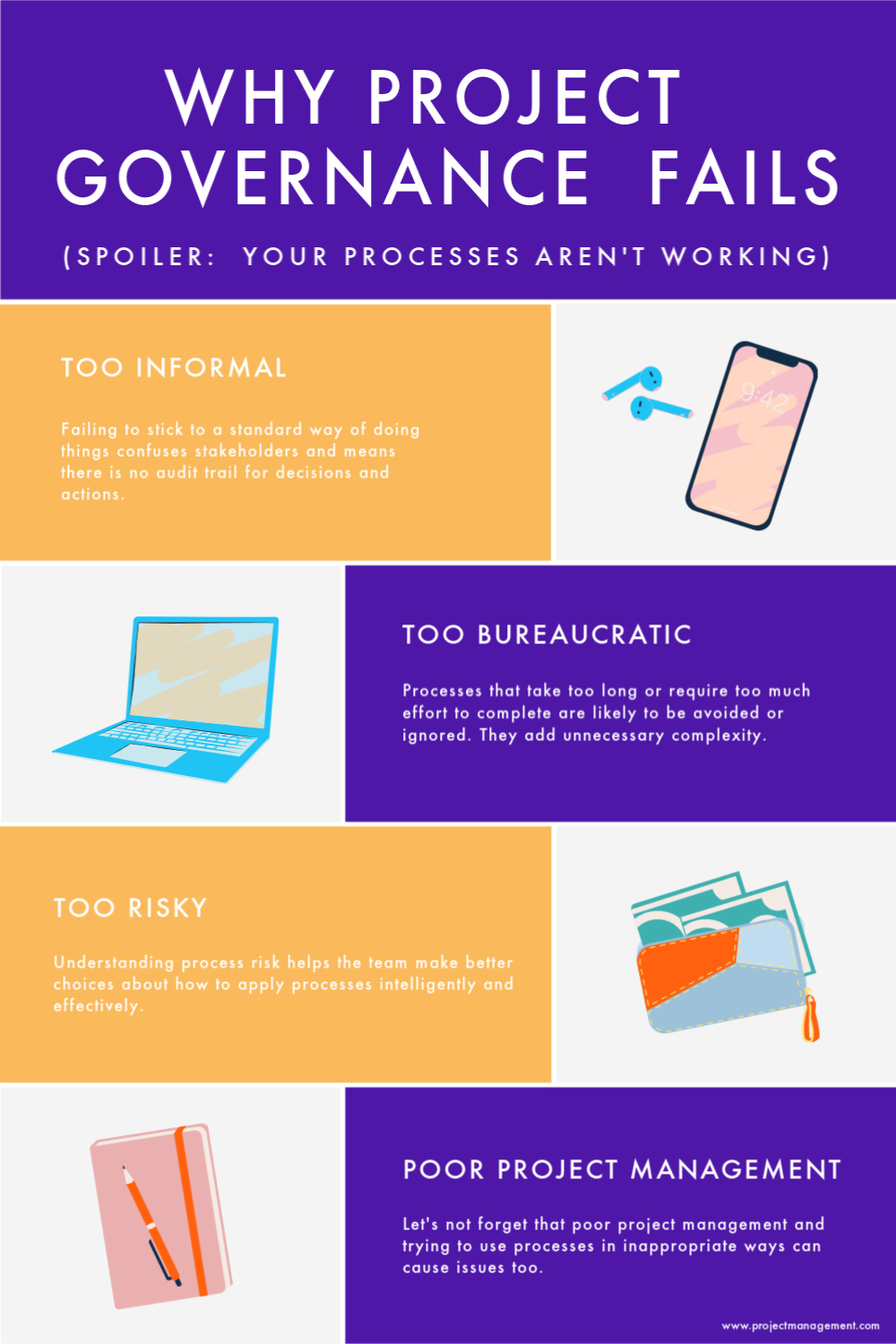
Why are your governance processes failing? [Infographic]
Categories:
process
Categories: process


| Are you finding it hard to get governance working right on your project? Governance, in the widest sense of the topic, is everything that helps you manage and control the project, so strong processes are part of that. And when your projects let you down, it’s impossible to provide the level of governance you need. The infographic below shows reasons why project processes might not be robust enough to support good project control. When processes are too informal, no one really knows what to do to get things done, or how to record that they happened.
|
What tool do I use for tracking a project budget? [Video]
Categories:
budget
Categories: budget
|
If I had a pound for every time someone asked me what tool I use for tracking my project budget… Unfortunately, it’s one of those questions where the answer isn’t as clear cut as you might hope. In this video I talk through the challenge of choosing a tool and there’s a teeny rant about why ultimately it doesn’t much matter as long as you get on with tracking somehow and just make a decision! What tool do you use to track your project budget? Let us know in the comments section! Pin for later reading:
|

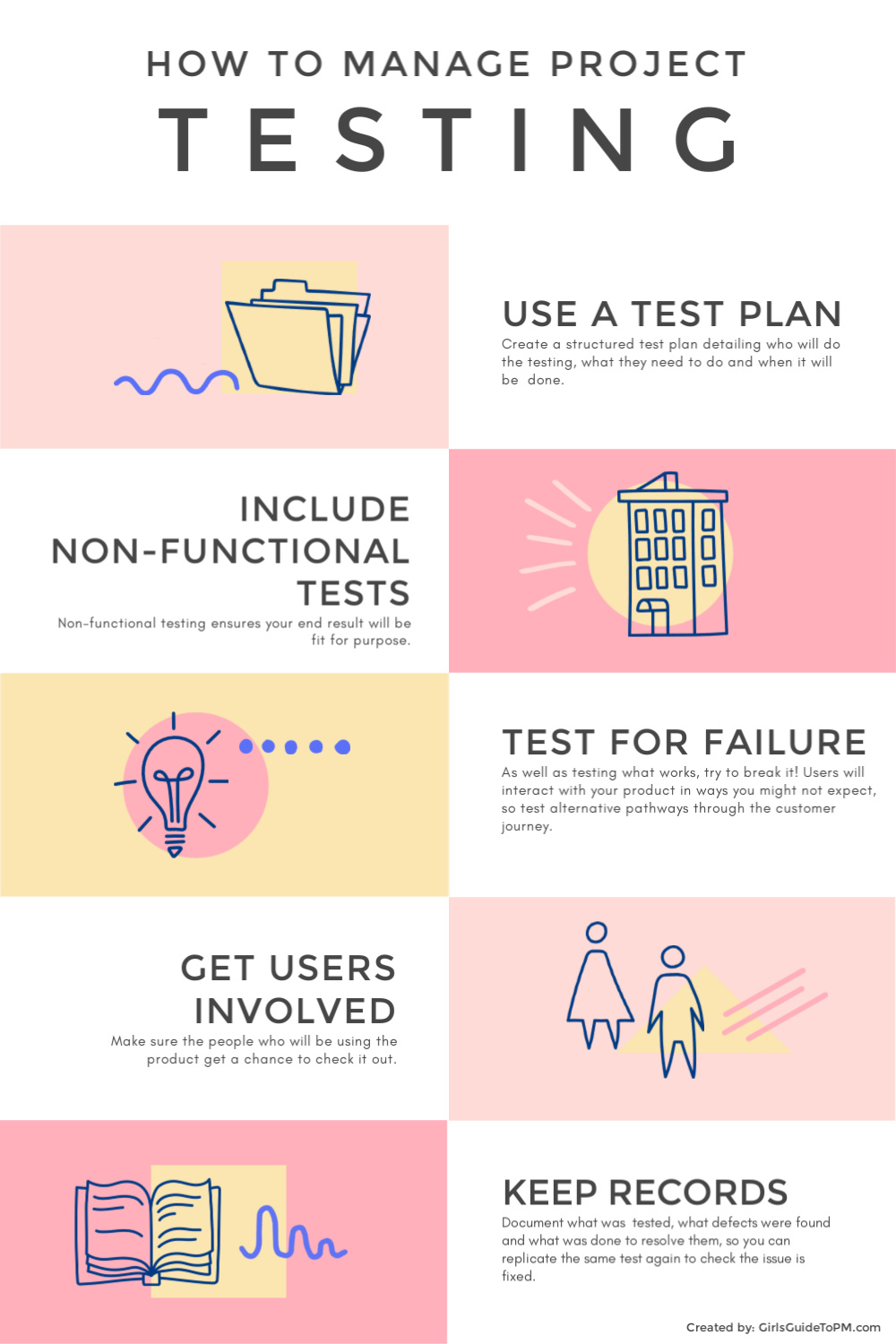
5 Considerations for Project Testing
Categories:
project testing
Categories: project testing
| The testing phase of a project is the time, in my experience, that the schedule gets squeezed. I’ve been on projects with an ‘official’ testing team made up of experienced, trained testers, and also worked on projects where the testing has been done by me. Yep. Not great. In most cases, it’s been somewhere in between, and often I’ve ended up training users in how to test so they can join the ranks of project team members helping squash bugs. The infographic below shows 5 things to think about when preparing the testing part of a project: Use a test plan (sounds obvious, but it’s extra – often unwelcome – documentation that is resisted) Include non-functional tests – because it’s not all about the stuff your users will be doing with the product, but also about security, scalability, data protection and more Test to the point of breaking – just because you use the product in the way it has been designed doesn’t mean users will. Test the ‘wrong’ way to use it and see what happens Get users involved – obviously Keep records – because trying to remember exactly what steps you took to get a bug, so you can replicate what you did and see if the bug is now fixed… that’s no fun, trust me!
|
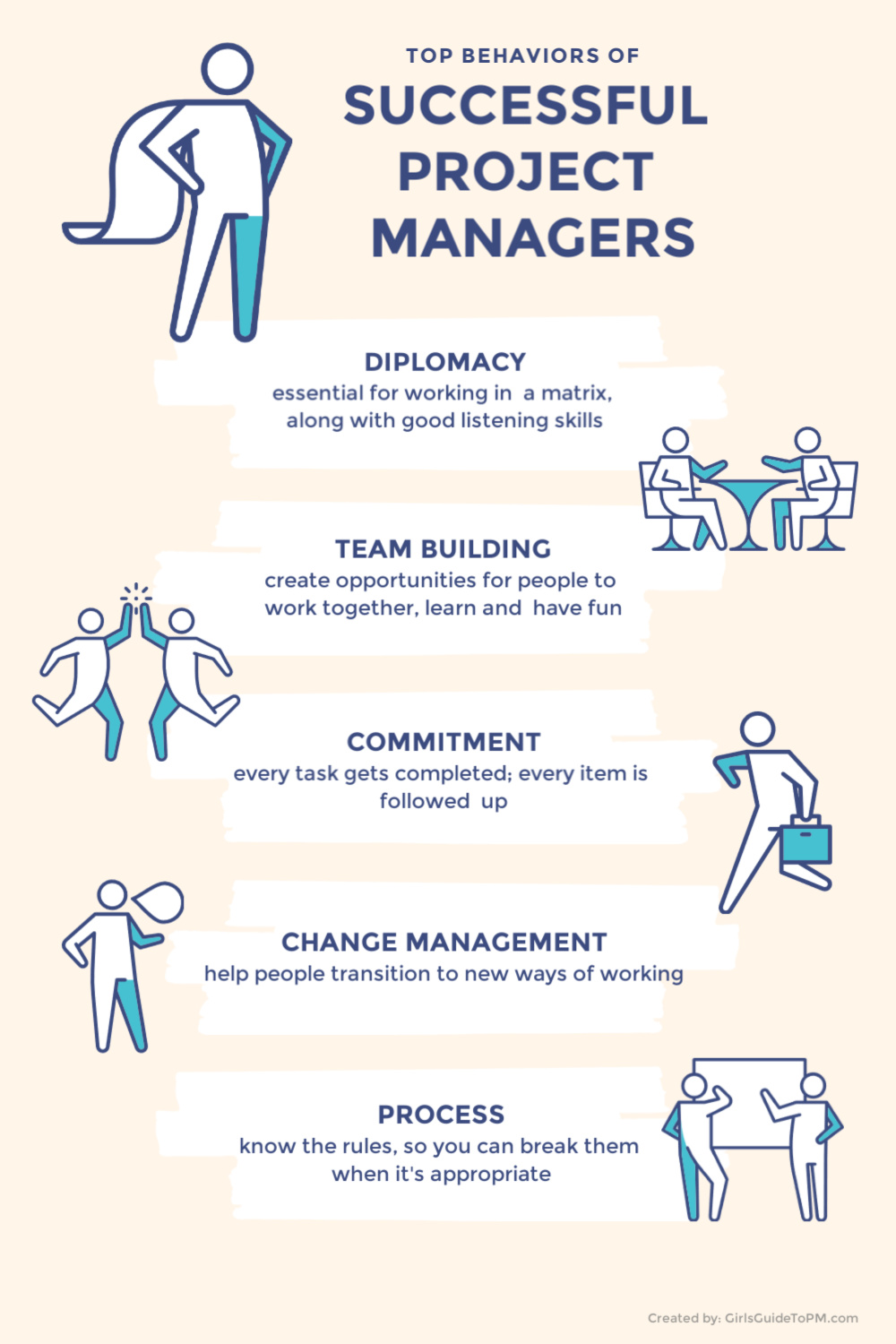
5 Behaviours of Successful Project Managers
Categories:
success factors
Categories: success factors
| What makes a project manager successful? It’s no secret that it’s hundreds of small decisions and behavioural traits. I’ve been thinking recently, as I’m writing a new book, about the things I believe make the biggest difference. The infographic below isn’t based on scientific research, but on my experience working with project managers and leading teams. What do you think makes the biggest difference in whether a project manager is successful at work or not? Let me know in the comments, I’d love to hear!
|
What is ROI?
Categories:
ROI
Categories: ROI
|
Return on Investment. That’s a term you’ll have come across before, I’m sure. Let’s dig into what it means and how we can use it on projects. What’s the best ROI?Big. Big is best! The bigger the ROI, the better, so in terms of project selection, prioritise projects with the biggest return. Return on investment is a calculation used to work out the rate of return for a particular investment over a specific period of time. In the business cases I am most familiar with, we worked out ROI over a 5 year period. I say “worked out” but often it is a case of plugging a few numbers into a spreadsheet that Finance provided and typing the output into the business case. Or the Finance team simply provided the numbers, based on what I gave them from the project financial projections. ROI is often expressed as a percent. For example, if you are building a new hospital, the ROI on the new facility might be 6%. That’s 6% of the initial investment, so in order to deduce anything useful from ROI it helps to know the initial investment cost too! If it costs us £10,000 to build a new hospital (ha ha) then that’s a very different ROI to if it cost £10 million. There are multiple different ways to calculate return on investment, and for 99.9% of what you do as a project manager, you aren’t going to need to know how it’s worked out, so I’m not going to cover that today. What do you use ROI for?The major point of ROI in a project environment is to compare projects. Because you are creating a percent figure, you can compare across projects, even projects that are substantively different, with different lifecycles, delivery methods, or for different clients. ROI is a great leveller in the stakes for project selection. Pin for later reading:
|